

Event Marketing Strategies: A Complete Guide for Business Growth


Event marketing strategies are the plans a business uses to fill an event, run it well and turn the people who attend into customers. The work splits into four jobs: pick the right format for the goal, promote it across the channels the audience already uses, design the room so people can touch the product and talk to an expert, and follow up in a way that carries the relationship past the last session.
Quick Summary
Good event marketing comes down to four decisions made before any money is committed: the objective, the audience, the format and how the budget is split. The biggest single lever is what happens in the 48 hours after the doors close, which is the phase most programs treat as tidying up. Freeman's 2025 research found 74% of attendees name in-person events as their best source for discovering new products, and 96% of those who got hands-on with a product said it made it easier to advocate internally for buying it. This guide covers the strategies, the formats, how to measure the return, current trends and eleven campaigns with the numbers attached.
That last part is where most of the value sits and where most programs leak. An event is the only marketing channel that gives a business hours of a buyer's attention in a room the business controls. This guide covers what event marketing is, the strategies that work for each stage of an event, how to measure the return, the trends reshaping the format, and eleven campaigns worth studying.
What Is Event Marketing
Event marketing is the practice of promoting a brand, product or service through an event the business hosts, sponsors or exhibits at. The event can be physical, virtual or a mix of the two. The category covers trade shows, conferences, customer summits, product launches, roadshows, webinars, workshops, sponsored festivals and pop-up activations.
What separates it from most other channels is duration and direction. A display ad gets a second. A landing page gets a minute. A conference session gets forty minutes of attention from someone who chose to be there, and an expo floor gives a buyer the chance to pick a product up, ask a question and get an answer from the person who built it.
The Events Industry Council measured the scale of this with Oxford Economics in 2023. Business events across 50 countries drew 1.6 billion participants and $1.2 trillion in direct spending in 2019, supported 27.5 million jobs, and contributed $1.6 trillion to global GDP1. The same study surveyed more than 1,600 meeting professionals, exhibitors and venues and found that 67% considered relationship-building through face-to-face interaction the hardest outcome to replace, that as much as 22% of new customers come through in-person events, and that organizers believed an average of 44% of revenue would be lost without hosting them1.
The Formats
- Trade shows and exhibitions. Someone else owns the audience and sells floor space. The business shows up with a stand, a demo and a reason for a buyer to stop.
- Conferences and summits. Multi-session programs built around education. The host controls the agenda, which makes it the strongest format for positioning a company as a source of expertise.
- Product launches. A single announcement staged for press, customers and staff at once.
- Workshops and training days. Small, hands-on, high-intent. They convert better per head than anything else because attendance is a real commitment.
- Webinars and virtual conferences. No travel, no venue, global reach, and a recording that keeps working afterwards.
- Hybrid events. An in-person core with a broadcast layer for people who cannot travel.
- Experiential activations. Pop-ups, installations, sampling and stunts placed where the audience already is.
- Sponsorships. Buying association with an event someone else runs, from a local 10K to a sector's flagship show.
Event Marketing, Event Management and Event Promotion
These three get used interchangeably and they are different jobs. Event management is logistics: venue, catering, staging, badges, health and safety. Event promotion is the campaign that fills the room. Event marketing is the whole commercial case, from choosing which events to do at all through to what the pipeline looked like ninety days later. A business can outsource management, run promotion in-house and still have no event marketing strategy, which is the usual state of things.
Why Event Marketing Works
The argument for events used to rest on atmosphere. It now rests on data, and the data is unusually consistent across sources.
Buyers Say Events Are Where They Find Things
Freeman surveyed 1,022 attendees and 969 exhibitors for its Commercial Trends Report, published in April 2025. Asked where they go to discover new products and services, 74% of attendees named in-person events, ahead of company websites at 56%, professional and trade organizations at 55%, search engines or generative AI tools at 42%, and social platforms at 23%2. Even among the younger cohort Freeman calls NowGen, 32% of whom use TikTok, Instagram or Facebook for product discovery, in-person still came first2.
Freeman's 2024 attendee study, covered by PCMA, found the same pattern a year earlier: four out of five respondents rated in-person events the most trustworthy source of information and picked them first for product discovery3.
Discovery Is What Buyers Came For
Freeman asked attendees to rank their top career priorities. Discovering new products and solutions came first at 52%, ahead of training at 42% and building a network at 39%2. Asked for their top commercial objectives at the most important business event they attended that year, 58% said discovering new products and solutions, 32% said meeting existing providers, and 29% said speaking with subject matter experts2.
That is a useful corrective for anyone planning a stand around a lounge and a coffee machine. People are on the floor to find things.
The Room Does Something a Screen Cannot
Freeman asked what happens when attendees get hands-on with a product. Of those who did, 96% agreed it made it easier to advocate internally for buying it, 95% said it helped them judge whether the product fitted their organization, 93% said it improved their awareness of the offering, 79% said it eased concerns about the purchase, and 70% said it sped up the decision2.
The reverse is just as sharp. Nearly a quarter of attendees, 24%, had no hands-on interaction at their most important event of the year, and 42% of that group said they were more likely to shift their attention to a different vendor as a result. Among NowGen attendees the figure was 48%2.
The oldest evidence for the same effect comes from outside the events industry. Mahdi Roghanizad and Vanessa Bohns had 45 people each ask ten strangers to complete a survey, half by email and half in person, using identical wording. The in-person requests were 34 times more successful, and the people sending emails were just as confident in their approach as the people asking face to face4.
Exhibitors Are Solving for the Wrong Thing
The most useful finding in the Freeman data is a gap. Asked what would most improve their interactions on the floor, 58% of attendees said speaking with subject matter experts from exhibiting companies. Only 26% of exhibitors said the same. Asked the same question, 49% of exhibitors picked being scanned and emailed afterwards about products and services. Only 23% of attendees did2.
The same gap shows up on demonstrations. Product samples and service demonstrations were named by 63% of attendees as a factor that positively influences how they evaluate an offering, against 34% of exhibitors. Hands-on or interactive demonstrations: 60% of attendees, 44% of exhibitors2.
Attendees also rate booth staff as the single most important thing about a stand. 93% said staff capable of answering all their questions were very or extremely important, but only 78% felt exhibitors were delivering it2.
The strategy that follows from this is not complicated. Put the people who actually know the product on the stand, give visitors something to hold, and treat the badge scan as a record of the conversation rather than a substitute for it.
Twenty Event Marketing Strategies
The rest of this guide works through these in detail. Taken together they cover the four stages of an event program: deciding, promoting, running and measuring.
Deciding What to Run
1. Write a single numbered objective before choosing a format.
2. Build the audience picture from registration data, CRM segments and ten real conversations.
3. Match the format to the objective rather than repeating last year's.
4. Split the budget by objective, and ring-fence the follow-up money first.
5. Plan the timeline backwards from the doors opening, including the two days afterwards.
Filling the Room
6. Start with the list you already own, segmented and written to differently.
7. Publish the agenda early, even in draft.
8. Use tiered pricing or capped places to convert "maybe" into "now".
9. Run email as a sequence of five messages with different jobs.
10. Give every speaker and partner an asset pack they can post in one click.
11. Put paid spend behind retargeting the people who reached the registration page.
12. Use each platform for what it is instead of posting one asset everywhere.
Running the Day
13. Build hands-on contact with the product into the floor plan.
14. Put subject matter experts on the stand, not only sales staff.
15. Stream the sessions worth streaming and give the remote audience its own host.
16. Capture properly: photography of conversations, video of sessions, testimonials on the day.
17. Record what was said in every conversation, not just who was scanned.
Measuring and Following Up
18. Follow up inside 48 hours, personally and segmented by behavior.
19. Repurpose the event into a year of content.
20. Report pipeline at 30, 60 and 90 days against a baseline you set beforehand.
Building an Event Marketing Strategy
A strategy is the set of decisions made before any money is committed. Get these five right and the promotion work becomes obvious. Get them wrong and no amount of clever social content rescues the event.

1. Write the Objective Before the Brief
Most event plans start with a format and work backwards to a reason. Reverse it. The objective decides the format, the budget split and the measurement.
Useful objectives are specific, numbered and dated. "Raise awareness" is not an objective. "Add 100 qualified names to the pipeline list by the close of the show" is, because it can be checked on the Monday after. The SMART frame is the standard shorthand for this: specific, measurable, achievable, relevant and time-bound.
Different objectives pull the plan in different directions:
- Pipeline. Optimize for qualified conversations. Fewer, better meetings beat footfall. Book meetings in advance.
- Retention. Optimize for existing customers. Programming should be training and roadmap.
- Category positioning. Optimize for the agenda and the speaker list. The stage matters more than the stand.
- Product validation. Optimize for structured feedback. Build in a way to record what people say when they use the thing.
- Recruitment. Optimize for the people not currently looking. Content about how the work gets done does more than a careers banner.
Write down which one is primary. An event with three equal priorities has none.
2. Define the Audience Narrowly
Audience work for events is more demanding than for digital campaigns because the audience has to physically turn up. That is a much higher bar than a click, and it means you need to know what would make attendance worth a day out of someone's week.
Build the picture from:
- Registration and attendance data from previous events, including who registered and did not show
- CRM segments, especially the accounts already in an open opportunity
- Post-event survey responses and sales notes from past shows
- The agendas and speaker lists of events your buyers already attend
- Direct conversations with ten or fifteen customers about which events they go to and why
Freeman's data gives a shortcut on what to build for. Attendees ranked the four reasons they attend as commerce at 30 points out of 100, networking at 28, learning at 26 and experience at 162. Among key decision-makers the commerce share rises to 35%2. Programme accordingly.
Audience insight then drives practical choices: which sessions to run, who to put on stage, what time of day to hold it, which city, which platform, and how to write to people. A compliance audience wants detail and evidence. A creative audience wants the work shown.
3. Choose the Format That Matches the Goal
The format decision is the largest single lever on cost and on return, and it is usually made by habit.
- Exhibiting at a third-party show buys access to an audience someone else spent years building. It suits pipeline goals in markets with one or two dominant shows. It gives the least control.
- Hosting your own conference costs far more and takes a year. It suits category positioning and retention, and it is the only format where you own the agenda, the list and the data.
- A roadshow of small dinners or workshops is the cheapest route to senior buyers. Twenty people in a private room out-produces a thousand badge scans for enterprise deals.
- Webinars suit top-of-funnel education and work well as the pre-event or post-event layer around something physical.
- Hybrid widens reach but doubles the production job. Run it when there is a genuine remote audience waiting.
In-person and online are not competing options so much as different tools. In-person builds relationships and lets people handle the product. Online reaches people who were never going to travel, at a fraction of the cost per head. Most mature programs run both and use the online tier to feed the in-person one.
4. Set the Budget Around the Objective
Budget is where strategy either holds or collapses. The common failure is spending almost everything on the venue and the stand, then finding there is nothing left for the follow-up that produces the return.
A workable split by objective:
- Pipeline events should weight spend towards pre-booked meetings, demo hardware, expert staffing and post-event follow-up.
- Positioning events should weight spend towards program, speakers, production and content capture.
- Retention events should weight spend towards the attendee experience itself, since the product is the day.
Three practical habits:
- Justify each line from zero. Repeating last year's budget preserves last year's mistakes. Every line should earn its place against this year's objective.
- Protect the follow-up budget first. Ring-fence it before anything else, because it is the line that always gets raided and it is the line closest to revenue.
- Use partners to stretch reach. Co-hosting with a non-competing brand that shares your audience, taking sponsors for specific elements, working with trade associations, or running an exhibitor program all extend reach without a proportional increase in cost.
5. Build the Timeline Backwards From the Doors Opening
Work back from the event date. A rough shape for a mid-sized event:
- Twelve to sixteen weeks out. Objective, audience, format, budget and the measurement plan signed off. Venue and date locked. Speakers approached.
- Eight to twelve weeks out. Registration page live. Agenda published, even in draft. First email to the house list. Early-bird pricing opens. Sales team briefed to invite their own accounts.
- Four to eight weeks out. Content campaign running: speaker interviews, session previews, a useful piece of research. Paid promotion starts. Partners and speakers given assets to share.
- One to four weeks out. Meeting booking opens. Reminder sequence by segment. Logistics confirmed. Staff briefed on the demo and the qualifying questions.
- The week itself. Final reminders, joining instructions, live coverage plan agreed, follow-up templates already written and approved.
- The 48 hours after. Every conversation logged and every follow-up sent. This is the window where warmth is highest.
- Two to twelve weeks after. Content repurposing, nurture sequences, and the pipeline review that tells you whether to do it again.
The single most common structural mistake is loading effort into the pre-event phase and treating the post-event phase as tidying up. The pre-event phase fills the room. The post-event phase produces the revenue.
Types of Event Marketing and What Each One Is For
Format is a strategy decision, and it gets made by habit far too often. Each of these does one job well and the others badly.
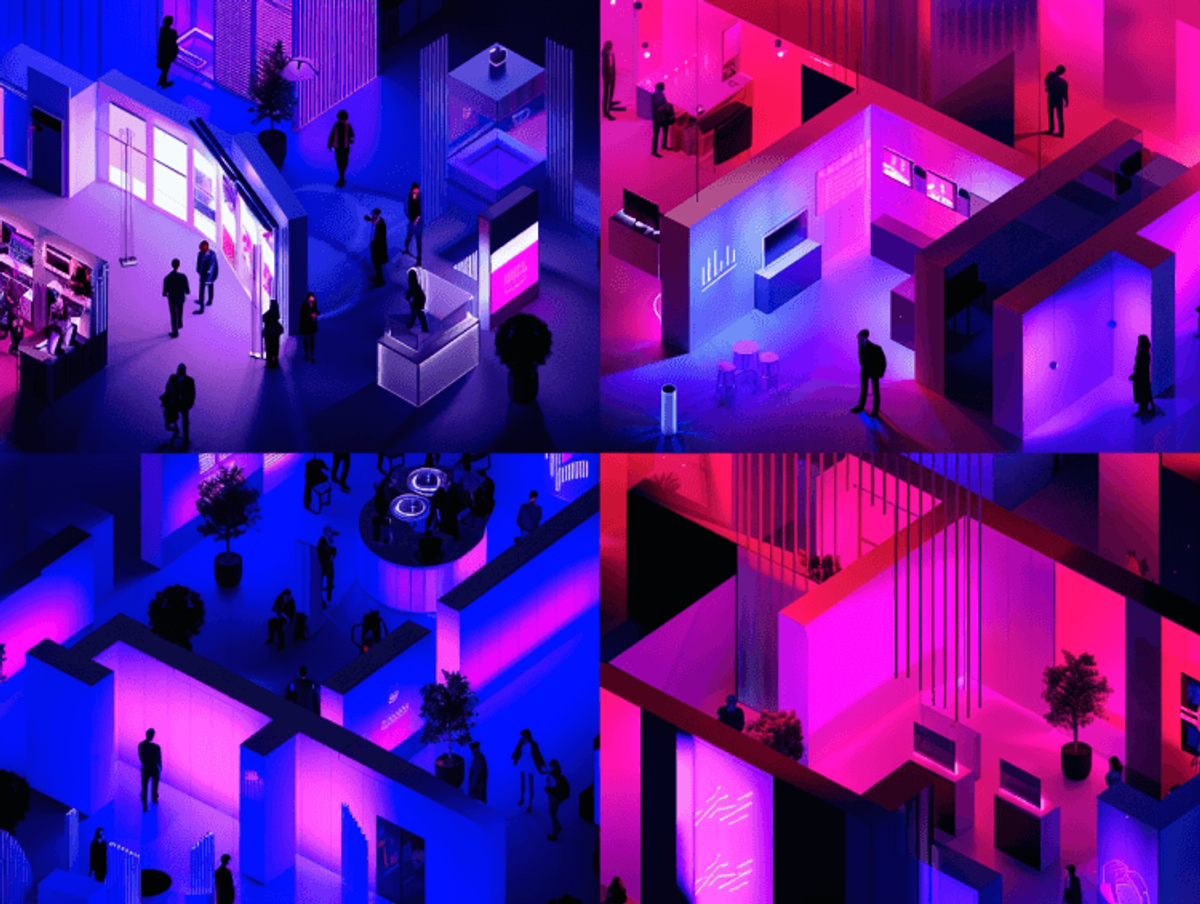
Trade Shows and Exhibitions
What it is for: meeting a concentrated group of buyers in a market where one or two shows dominate, in a short window.
What it costs: floor space, stand build, freight, staff travel and a week of senior people's time. It is usually the largest single line in a B2B event budget.
How to market it: the show fills the hall, but nobody fills your stand for you. Pre-book meetings with target accounts before you arrive, tell your customer base you will be there, and publish something worth walking over for. Freeman's data says what should be waiting when they arrive: a product they can put their hands on and an expert who can answer for it2.
The common mistake: treating the stand as a display. Attendees ranked limited hands-on exposure as the single biggest barrier to achieving their commercial objectives, named by 44%2.
Conferences and Summits
What it is for: establishing a company as a credible source in its field, and giving customers a reason to spend a day with you that is not a sales meeting.
What it costs: a year of planning and a budget that will surprise anyone doing it for the first time. Venue, production, speakers, catering and staff are only the visible part.
How to market it: the agenda is the product. Publish it early, name the speakers, and let each of them bring their own audience. Programming broad business subjects rather than product sessions is what makes the event attractive to people who are not yet customers.
The common mistake: filling the agenda with internal speakers. A conference where every session is your own company talking is a long sales presentation with catering.
Product Launches
What it is for: controlling the moment a market learns something, and giving press, customers and staff the same story at the same time.
What it costs: less than a conference and more than a webinar, with most of the money in production and rehearsal.
How to market it: embargoed briefings before the event, a clean live stream, assets ready the second the announcement lands, and a demonstration people can watch instead of a description they have to imagine.
The common mistake: announcing something the audience cannot get yet. A launch with no availability date converts interest into a diary note that never gets actioned.
Workshops, Roadshows and Field Events
What it is for: senior conversations at a scale that allows them. A private dinner, a half-day workshop or a small roundtable produces depth that a show floor cannot.
What it costs: very little per event, quite a lot per attendee, and it is almost always worth it for considered purchases.
How to market it: individual invitations, sent by a person, to a named list. Mass promotion undermines the exclusivity that makes the format work. Forrester found this to be the fastest-growing event type in B2B, with 58% of marketers planning to do more of them5.
The common mistake: letting it become a pitch. The invitation promised peers and a subject. Deliver those, and the commercial conversation happens on its own.
Webinars and Virtual Events
What it is for: reach without travel, and a recording that keeps working. They are the most efficient way to build an audience that later fills a physical room.
What it costs: a fraction of anything physical, mostly in the presenter's preparation time.
How to market it: a specific promise in the title, a short registration form, a single reminder on the day, and a recording sent to everyone who registered whether or not they showed. B2B marketers rated webinars their second most effective distribution channel at 51%, just behind in-person events at 52%6.
The common mistake: running it as a talk when it should be a session. The Q&A is the reason to attend live, so leave real time for it.
Hybrid Events
What it is for: serving a genuine remote audience alongside people in the room, usually for a flagship event that people cannot all reach.
What it costs: roughly a physical event plus a broadcast production. Underestimating the second part is the usual cause of a bad hybrid event.
How to market it: sell them as two different products. The in-person ticket promises the room, the conversations and the hands-on access. The online ticket promises the content and the ability to ask questions. Pricing them the same tells the online audience they are getting less for the same money.
The common mistake: pointing a camera at a stage and calling it hybrid. The remote audience needs its own host, its own chat and its own reason to stay.
Experiential Activations
What it is for: reaching people where they already are, usually in a consumer context, with something they will photograph.
What it costs: varies from a sampling table to a touring installation. The content budget matters as much as the build.
How to market it: the activation and the content about the activation are one project. Design for the camera, staff it with people who can explain what the brand does, and put it where the audience already goes rather than where the venue is cheap.
The common mistake: building something impressive that says nothing about the company. If the photograph works equally well for any brand, the money bought a photograph.
Sponsorships
What it is for: borrowing the association and the audience of an event someone else has built.
What it costs: whatever the rate card says, plus the activation budget that most sponsors forget. A logo with no presence is close to worthless.
How to market it: negotiate for access rather than visibility. A session, a workshop, a hosted dinner or the attendee list is worth more than a bigger logo. Then spend at least as much again on doing something with it.
The common mistake: measuring impressions. Sponsorship is bought for association and access, and both can be checked against something more useful than a reach number.
Exhibiting at Someone Else's Show
Most business event budget goes on exhibiting rather than hosting, and it is the least written-about part of the discipline. The Freeman research is unusually direct about what exhibitors get wrong, because it asked both sides the same questions.
Staff the stand with people who know the product. 93% of attendees said booth staff capable of answering all their questions were very or extremely important, and only 78% felt exhibitors delivered it2. More than half, 58%, said speaking with subject matter experts from exhibiting companies would most improve their interactions, against 26% of exhibitors who thought the same2.
Put the product in people's hands. 63% of attendees named product samples or service demonstrations as a factor that positively shapes how they evaluate an offering, against 34% of exhibitors. For hands-on or interactive demonstrations it was 60% against 44%2. If the product is software, a guided sandbox on the visitor's own scenario counts, and Freeman found that 26% of hands-on experiences were digital rather than physical2.
Treat the scan as a record, not a result. 49% of exhibitors said being scanned and emailed afterwards would most improve interactions. Only 23% of attendees agreed2. A scan with a two-word note about what the person actually wanted is worth ten scans without one.
Know what they came for. 58% of attendees named discovering new products and solutions as their top commercial objective, and only 6% said making a decision on a purchase2. A stand built to close is built for the wrong visitor. A stand built to let someone discover, test and ask produces the conversation that closes later.
Book meetings before you go. The floor is a poor place to find a buyer and a good place to meet one you already identified. Pre-arranged meetings were named by 41% of exhibitors as a factor in good commercial interactions2, and they are the only part of a show you fully control.
How Event Marketing Fits With Everything Else
Events rarely justify themselves as a standalone channel, and they are not supposed to. They work as the part of a program that produces things the other channels need.
Events feed content. A single conference produces session recordings, clips, quotes, photography, research and testimonial video. That is a year of material for social, email and the website, made in two days, with real people in it.
Events feed data. Registration forms, session choices, meeting requests and stand conversations produce first-party data about named individuals at named companies. That is worth more than behavioral data from anonymous website traffic, and it gets more valuable as third-party tracking degrades.
Events feed sales. The Events Industry Council's survey found organizers attributing as much as 22% of new customers to in-person events, and estimating that an average of 44% of revenue would be lost without them1.
Other channels feed events. Email fills the room. Paid search catches people looking for the event by name. Content published in the weeks before gives people a reason to register. The relationship runs both ways, which is why an event run in isolation from the rest of marketing tends to underperform.
The measurement follows from this. An event that generates no direct revenue but produces the research paper, the customer video and the fifteen conversations that turn into opportunities over the next two quarters has done its job. Counting only same-week revenue will always make events look expensive.
Event Branding and Experience Design
An event is the most complete expression of a brand a business ever gets to make. Everything is on show at once: how the room looks, how the staff behave, what the coffee is like, whether the wifi works, how the talks are written. People read all of it.
Give the Event a Theme That Means Something
A theme is a promise about what the day is for. A good one can be said in a sentence and used to settle arguments: does this session belong, does this speaker fit, does this stand design make sense. A bad one is a decorative layer applied at the end, and attendees can always tell the difference.
The test is whether the theme survives contact with the program. If a sustainability-led brand runs an event, the theme should show up in the catering, the materials, the transport and the choice of venue as well as on the backdrop. If a company's positioning is about doing complex things simply, the registration process is where that gets proven or disproven.
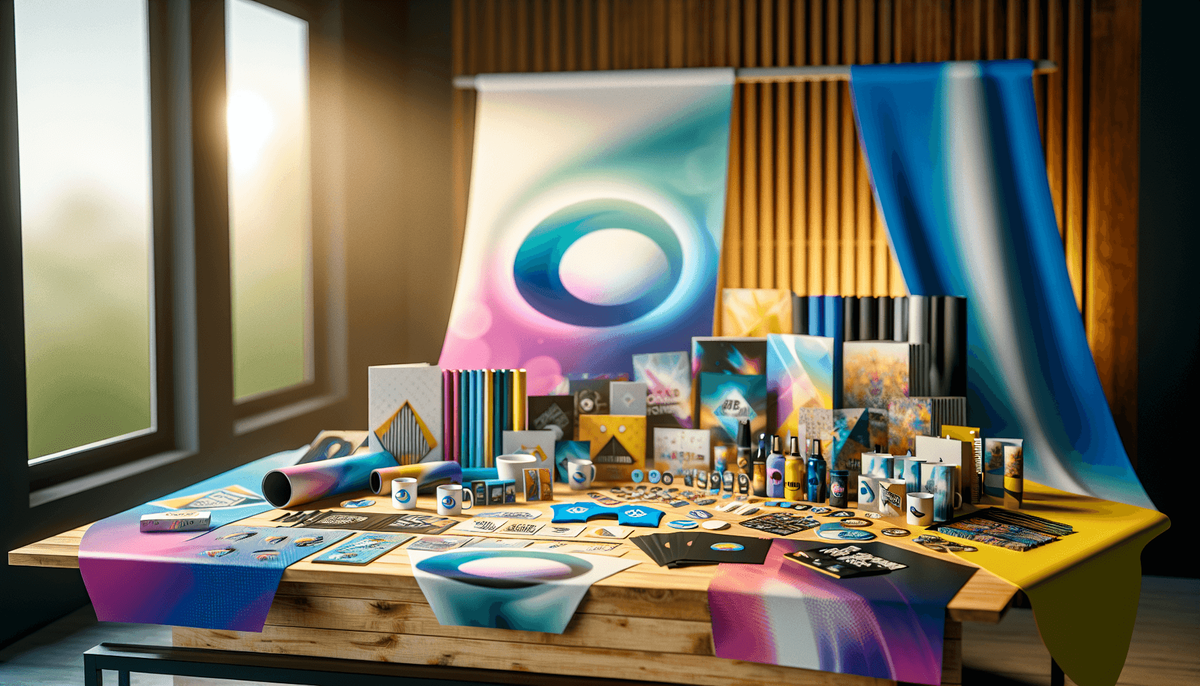
Design the Promotional Materials as a System
Promotional material is usually someone's first contact with the event, and it is doing two jobs at once: telling people what the event is, and showing them what kind of organization runs it.
The pieces that matter most:
- The registration page. More people see this than anything else. It needs the date, the location, the price, the agenda and the register button visible without scrolling, and it needs to work on a phone.
- The agenda. Publishing it early, even in draft, converts better than a teaser. People are deciding whether to spend a day.
- Speaker and session cards. The assets speakers and partners will actually share. Make them easy to post and correct on first use.
- The stand or set. Designed so a passer-by can tell in three seconds what the company does.
- Signage and wayfinding. Unglamorous and the thing attendees notice most when it is wrong.
Design the Room Around Contact
Freeman's finding that limited hands-on exposure is the single biggest barrier to attendees hitting their commercial objectives, named by 44% of them, should change how floor plans get drawn2. Build the demo into the traffic flow rather than tucking it behind a meeting table.
Freeman also makes the point that a physical product is not a requirement. Of attendees who had a hands-on experience, 74% described it as physically handling or consuming a product, and 26% described using a computer or interactive tool to try software or an experience2. A guided sandbox, a whiteboard exercise or an interactive Q&A all count.
Interactive Elements That Earn Their Place
- Hands-on stations where someone can use the product on their own data rather than a canned demo
- Live polling and audience Q&A, which give the room a voice and give the speaker something real to respond to
- Gamified routes across a floor plan, which work when the prize is worth having and fail when they feel like homework
- Personalisation, from customised agendas to configuring a product to a visitor's specification
- Photo-worthy moments, which are genuinely useful when they are tied to the idea of the event and embarrassing when they are a branded wall
Two cautions. First, technology that solves no problem adds friction. A headset that takes four minutes to fit will lose a queue. Second, novelty ages fast. The measure is whether the element helps someone understand or decide, not whether it is new.
Tell a Story People Can Repeat
The through-line of an event is a story, and the useful test is whether an attendee can explain it to a colleague on Monday in two sentences. Stories that travel tend to be built from customer accounts of a problem being solved, from the origin of a decision the company made, or from a demonstration of something working in front of a live audience.
Influencer and industry-voice participation extends that story to audiences the brand does not own. It works when the person genuinely uses the product or covers the field, and it reads as paid when they do not.
Promoting an Event
Promotion is the visible part of event marketing and the part most often mistaken for the whole discipline. It splits cleanly into three phases.
Before: Filling the Room
Start with the people you already have. The house list, past attendees and open opportunities convert at many times the rate of cold audiences. Segment them and write differently to each: past attendees get "what is new this year", open opportunities get a personal invitation from their salesperson, lapsed customers get a reason to come back.
Publish something useful early. A piece of original research, a speaker interview or a preview of what a session will cover gives people a reason to engage before they are asked to commit a day. It also gives partners and speakers something to share that is not an advert.
Price to create decisions. Tiered early-bird pricing works because it converts "maybe later" into "now or more expensive". The same effect is available on free events through capped session places or limited workshop seats.
Run email as a sequence. Announcement, agenda release, speaker spotlights, a last-chance note and a joining-instructions email carry different information and different urgency. Test subject lines and send times, and suppress people who have already registered.
Use each platform for what it is. LinkedIn carries the professional invitation and the targeted paid campaign. Instagram carries the look of the thing. Short-form video platforms carry speaker clips and behind-the-scenes footage. X carries live updates. The mistake is posting one asset everywhere.
Put paid behind the pages that convert. Search ads on the event name and the topic, social ads to lookalike and job-title audiences, and retargeting for people who reached the registration page and did not finish. Retargeting is usually the highest-return line in an event's paid budget.
Recruit the speakers and partners as a channel. Give every speaker a short asset pack: a graphic with their session details, three lines of suggested copy, and a link that works. Most will share it. Few will make their own.
Let the audience do some of the work. Referral codes, a discount for bringing a colleague, and simple hashtag competitions all turn registrants into recruiters, which matters most for the second and third year of an event.
During: Covering the Event
Stream the sessions worth streaming. A keynote and two or three signature sessions, announced in advance so people plan around them, reach the audience that could not travel and produce assets for later.
Post as a narrative. Session highlights, a quote worth reading on its own, a photograph of a full room. The aim is to give people who are not there a reason to come next year.
Use one hashtag and put it everywhere. Screens showing live posts, staff prompting its use, and a social team amplifying the good ones.
Bridge the two audiences. Live polls whose results show on the room screens and online at once, and a Q&A tool that lets remote viewers put questions to speakers, stop the online tier feeling like a broadcast of someone else's event.
Capture properly. A photographer briefed to shoot faces and conversations rather than empty rooms, and video capture of the sessions, are the raw material for months of content. Book them before the venue.
After: Turning It Into Revenue
The two days after an event are worth more than the two months before it, and they are usually the least planned part of the program.
Follow up inside 48 hours, personally. Every conversation logged and every note acted on. A generic email to a list of badge scans is not follow-up.
Segment the follow-up by behavior. Someone who sat through a technical session and asked two questions is in a different place from someone who took a tote bag.
Send something to the people who registered and did not come. They were interested enough to sign up. A recording and a summary often recover them.
Repurpose the content. One event produces session recordings, short clips, written recaps, speaker interviews, slide decks, testimonial video, an audio series, and data visualisations from any research presented. Each of those reaches someone the original session did not.
Collect testimonials on the day. Enthusiasm peaks in the room. Video captured at the coffee break will be better than anything gathered by email a fortnight later.
Keep the community going. A group, a channel or a quarterly online session keeps a one-day event working for a year and makes the next one easier to fill.
Event Technology and the Tools That Matter
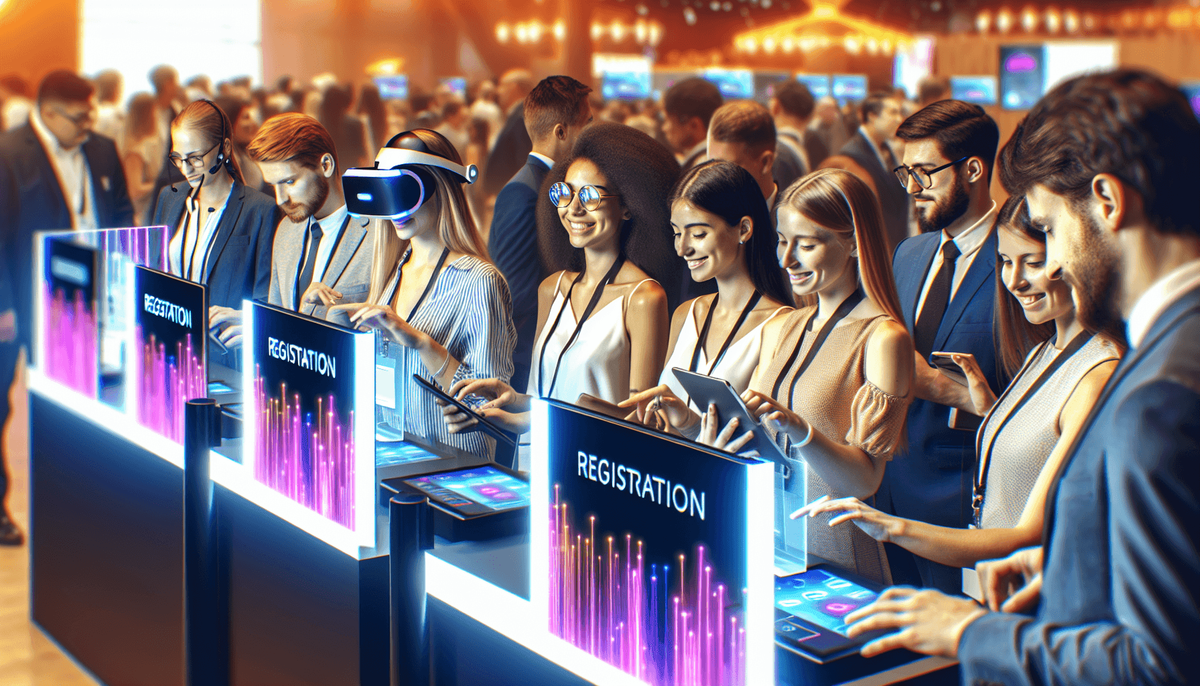
Event technology has expanded into a crowded category, and most of it can be ignored. Four layers do the work.
Registration and ticketing. The system that takes the money, holds the list and issues the badges. The important features are a registration form that works on a phone, sensible pricing tiers, the ability to ask qualifying questions at sign-up, and a clean export into the CRM. Everything else is optional.
The event app or web schedule. Useful at a few hundred attendees and above. It carries the agenda, lets people build a personal schedule, handles session Q&A and supports meeting requests. Below that size, a good mobile web page beats an app nobody downloads.
Lead capture . Badge scanning, QR codes and forms. The part that usually goes wrong is that nothing gets written down about the conversation. A scan with no note is a name, not a lead. Require a two-word qualifier at the point of scan.
The virtual layer. Streaming, chat, remote Q&A and on-demand recordings. Freeman's data is a warning against leaning on it too hard. Attendees ranked online events at 40% as a source of product discovery against 74% for in-person2, so the virtual layer is a reach extension rather than a replacement.
Two things to insist on before buying anything. It has to write into the CRM without a manual export, or the follow-up will not happen. And the data it collects has to be something you will actually act on, because collecting session attendance you never look at is a cost with no return.
Partnerships and Sponsorship
Partnerships do two jobs: they reduce what the event costs and they extend who hears about it. Both matter more for a first or second-year event than almost anything else in the plan.
Co-hosting. A partner who shares the audience but sells something different doubles the invitation list and halves the venue bill. The requirement is a genuine overlap in who the audience is and no overlap in what the two companies sell.
Sponsorship. Selling parts of your own event. Build tiers so that a small partner can take a workshop and a large one can take the keynote slot and the networking lounge, and price each against what it actually delivers to the sponsor rather than against a price list.
Formats worth offering beyond a logo on a banner:
- A sponsored networking lounge or a hosted dinner
- An interactive demo zone with staff and hardware
- A co-branded workshop where the sponsor teaches something useful
- A research piece published under both names
- The recording sponsorship, which keeps the sponsor visible for the full year the content is online
Association and media partnerships. Trade bodies and industry publications have lists a business cannot buy and credibility a business cannot rent. They usually trade access for content or for places at the event.
Whatever the shape, agree the measures before the money moves. Both sides should know what counts as success, who owns the data and what each will publish afterwards. A partnership with no shared numbers becomes an argument in the debrief.
Measuring Event Marketing ROI
Measurement is the part that decides whether the program grows or gets cut, and it fails for a predictable reason: nobody defined success before the event, so afterwards everyone argues from whichever number flatters them.
Fix it by writing the measurement plan at the same time as the objective, and by tracking both the numbers and the things numbers do not catch.
The Numbers
| What to measure | Metrics | Where the data comes from |
|---|---|---|
| Turnout | Registrations, attendance rate, no-show rate, session attendance | Registration platform, badge scans, app analytics |
| Engagement | Questions asked, poll participation, meeting requests, dwell time at the stand, hashtag use | Event app, meeting scheduler, social listening |
| Pipeline | Qualified conversations, meetings booked, opportunities created, average deal size from event-sourced leads | CRM, lead scoring |
| Commercial | Revenue closed within 30, 60 and 90 days, cost per qualified lead, cost per opportunity | CRM attribution, finance |
| Brand | Media coverage, share of industry conversation, sentiment of mentions, inbound enquiries in the following month | Media monitoring, social listening, web analytics |
| Content | Views of recordings, downloads of decks, time on recap pages | Video platform, web analytics |
Two rules make these numbers usable.
Set the comparison before the event. Cost per opportunity from an event only means something next to cost per opportunity from every other channel. Pull that baseline first.
Use a window. Events influence deals that close months later. Measuring at day 30 undercounts almost every B2B event, and measuring only at day 180 lets a bad event hide. Report at 30, 60 and 90 days.
Working Out the Return
The calculation itself is simple. The argument is about what goes in it.
A defensible version has three lines. Fully loaded cost includes the obvious items and the ones that get left out: floor space or venue, build and production, travel and accommodation, staff time at a real day rate, technology, catering, and the promotion budget. Directly sourced revenue is closed business where the event was the first recorded touch. Influenced pipeline is open opportunity value where the event appears anywhere in the trail.
Report all three:
- Cost per qualified conversation. Fully loaded cost divided by the number of conversations that met the qualification bar agreed with sales beforehand. This is the only figure available on the day, and it is the fastest way to compare one show against another.
- Cost per opportunity. Fully loaded cost divided by opportunities created within 90 days. Compare it against the same figure for every other channel.
- Influenced pipeline multiple. Open and closed opportunity value where the event appears in the trail, divided by fully loaded cost. Present it as influence, and say so, because claiming sole credit for a deal an event touched is how event measurement loses credibility with a finance team.
Two things make these numbers survive scrutiny. Agree the qualification bar with sales in writing before the event, because a disagreement about what counts as a lead after the fact is unwinnable. And set the baseline for comparison first, since a cost per opportunity of $900 means nothing until you know what the rest of the mix produces.
Bizzabo's finding that 70% of organizers struggled to prove event ROI in 2024 is mostly a symptom of skipping those two steps7.
The Things Numbers Miss
- Post-event surveys, sent within 24 hours while the day is fresh, kept to five questions, with one open text box that is usually where the real information is.
- Small group debriefs with a handful of attendees who represent different segments. Thirty minutes with six customers explains a net promoter score that a dashboard cannot.
- Sales team debrief. The people who worked the stand know within an hour which conversations were real. Capture it before they fly home.
- Follow-up calls with key accounts, which produce the most honest feedback and frequently produce the next meeting at the same time.
- Recorded reactions. Video testimonials taken at the event, and the questions people asked during sessions, together tell you what the audience actually cared about.
Feeding It Into the Next Event
The debrief is only worth running if it changes something. Three questions, answered honestly in writing within two weeks:
- Did the event hit the objective written down before it started, and by how much?
- Which single element produced the most qualified conversations, and which produced none?
- What would we cut to fund doing more of the first one?
Keeping the answers in a running document across events is how an event program becomes a pipeline rather than a series of one-offs. Add to that a consistent view of the audience, a platform that keeps the data in one place, and ongoing community activity between events, and the second year costs less and returns more than the first.
Event Marketing on a Small Budget
Most of the published advice on events assumes a team and a six-figure budget. The formats below work for a business with neither, and the research suggests they are where the larger companies are heading anyway.
Run small and often instead of large and annual. A monthly breakfast for twelve people in a private room costs very little and produces conversations a trade show rarely does. Forrester found small hosted and owned in-person events to be the fastest-growing category in B2B, with 58% of marketers planning more of them5. A business without a marketing department can run this format better than a large one, because the invitation comes from someone the guest will actually meet.
Co-host to halve the cost and double the list. A partner who sells something different to the same buyers brings their audience and takes half the bill. The requirement is real overlap in who the audience is and none in what the two companies sell.
Speak at other people's events before running your own. A conference slot costs nothing but preparation, reaches an audience someone else assembled, and produces the recording and the credibility that make your own event easier to fill later.
Exhibit small and staff well. A modest stand with two people who genuinely know the product beats a large one staffed by people reading from a card. Attendees rate capable staff as the most important thing about a stand, at 93%2, and that is the cheapest thing on the list to get right.
Use webinars as the engine. A monthly session on a specific problem builds a list, produces a recording, and gives you the audience that fills a physical event later. It is the highest-return format available to a small team, and B2B marketers rate webinars second only to in-person events for effectiveness6.
Spend the savings on follow-up. The advantage a small business has is that the person who had the conversation can send the follow-up themselves, within hours, referencing something specific. That is worth more than any amount of stand build, and it is the thing large organizations are trying to buy their way back to.
One caution. The temptation with a small budget is to go wide and cheap: a large free webinar, a busy stand with a prize draw, a big list of names collected. Wide and cheap produces volume that nobody has the capacity to follow up, which is the same as producing nothing. Narrow and well-followed-up is the right trade for a small team.
Event Marketing Trends
Six shifts show up consistently across the research published in 2024 and early 2025. They are worth planning around because each one changes where the money should go.
Smaller Owned Events Are Growing Fastest
Forrester surveyed more than 200 B2B event decision-makers in the first quarter of 2024 and found that small hosted and owned in-person events were the fastest-growing category, with 58% of marketers planning to hold more of them. Webinars came second5.
The economics explain it. A dinner for twenty senior buyers costs a fraction of a stand at a flagship show and produces a conversation that a show floor rarely allows. At the same time, Forrester reported that a majority of event teams were working with flat or declining budgets5, which pushes spend towards formats with a visible link to pipeline.
For most businesses this means a portfolio rather than a single event: one or two large shows for presence, a regular series of small hosted sessions for pipeline, and a webinar program feeding both.
Follow-Up Is Where Teams Are Investing
The clearest statement of intent in Forrester's data is that 92% of respondents planned to improve their post-event attendee follow-up, and 77% wanted to go further and build year-round engagement with attendees5.
That is an admission that the follow-up has been the weak link. It also points at the thing worth fixing first: Forrester found only one in five enterprises had integrated its main event technology platform with the rest of its marketing stack5. Until the data flows automatically into the CRM, year-round engagement stays an ambition.
Proving Return Is the Industry's Hardest Problem
Bizzabo's 2025 State of Events, fielded in November 2024 across 1,558 respondents, found that 70% of organizers struggled to prove event ROI in 2024, up from the year before. One respondent put the reason plainly: objectives were not built with ROI in mind, so they are harder to measure with the data available7.
The same study found the top priority for in-person B2B conferences had shifted towards sales pipeline growth, named by 24% of organizers against 16% the year before7.
The practical response is the boring one. Decide the commercial measure before the event, instrument the capture for it, and accept a pipeline-influenced number reported over a 90-day window rather than arguing for a clean attribution model that does not exist.
In-Person Holds, Virtual Settles Into a Supporting Role
Content Marketing Institute and MarketingProfs surveyed B2B marketers for their 2025 benchmarks and found in-person events rated the most effective distribution channel at 52%, with webinars just behind at 51%. Both were used by 55% of respondents, and 40% ran digital events6.
The split between the two is becoming clearer. MPI's Meetings Outlook for the first quarter of 2025 found 76% of respondents expecting favorable live attendance across the year, up from just under 71% a year earlier, while 47% expected virtual attendance to decline, the highest that figure had been in a year8. Bizzabo found webinar attendance moving the other way, with 61% of organizers reporting increased participation7.
Read together, these say that the in-person event is where decisions get made and the webinar is where the audience is built. Running both, with the webinar program feeding registrations to the in-person one, is the pattern that works.
Budgets Are Growing, and So Are Costs
American Express Global Business Travel surveyed 519 meeting professionals across four regions in mid-2024 for its 2025 forecast. Two-thirds, 66%, expected increased budgets, and 74% described themselves as optimistic about the year9.
MPI's numbers add the caution. 61% expected favorable budgets, down from 72% a year earlier, 47% were very concerned about costs outpacing budgets, and more than half had seen food, beverage and audiovisual costs rise by more than 6% in 20248.
A rising budget that rises slower than venue and catering costs is a shrinking event. This is the strongest practical argument for the shift towards smaller formats.
AI, Personalisation and Sustainability Move From Talk to Line Items
AI is the main technology focus for half of the planners in the Amex GBT survey, with the leading applications named as attendee matchmaking at 42%, content creation at 41%, theme development at 40% and tracking attendee engagement at 39%9. Those are all workable uses today. Matchmaking in particular addresses the thing attendees say they want most, which is the right conversation with the right person.
On personalization, Bizzabo found 39% of organizers naming on-site personalized activations as the most impactful tactic and 26% naming content personalization7. Attendee expectations of technology have risen with it: 73% of attendees expect in-person conferences to use modern event technology, up from 63% two years earlier, and 65% say the mobile event app can make or break the experience, up from 56%7.
Sustainability has moved from a stated value to a selection criterion. Asked for their number one priority when deciding whether to attend an in-person event, 18% of Bizzabo's respondents cited sustainable practices, up from 11% in 2023, placing it ahead of registration cost at 8% and networking opportunities at 13%7. Amex GBT found 54% of planners considered sustainability highly important and 47% had established goals and action plans9. Forrester's data adds a regional split worth knowing about: event teams in EMEA were far more likely to keep ESG as a priority than those in North America, at 79% against 32%5.
The Gap Nobody Has Closed
The most useful single finding in the Bizzabo data is a mismatch. 74% of attendees said immersive experiences that let them disconnect were important, but only 38% of organizers prioritized creating them. Only 23% of attendees said their most recent in-person event had plenty of interactive sessions, 27% experienced gamification, and 30% felt there were plenty of networking opportunities7.
Alongside Freeman's finding that limited hands-on exposure is the biggest barrier to attendees hitting their commercial objectives2, this is the clearest opportunity in the field. The events that win the next few years will be the ones that make the room do something a screen cannot.
When an Event Underperforms
Most guidance assumes the event works. Three failures are common enough to plan for.
Registrations are behind with four weeks to go. Stop adding channels and go back to the list you own. Personal invitations from salespeople to named accounts convert better than any paid campaign at this stage. Add a reason to decide now: a workshop with capped places, a named guest confirmed late, or a price step. Check that the registration page works on a phone, since that is where a surprising share of abandoned sign-ups happen.
Registrations are strong and turnout is not. Free events routinely lose a third or more of registrants. The fixes are unglamorous: a reminder sequence in the final week with joining details in every message, a calendar invitation that actually attaches, something in the program that only exists in the room, and a small commitment at sign-up such as choosing a session.
The event ran well and produced nothing. This is almost always a follow-up failure rather than an event failure. Check three things in order: whether conversations were recorded as notes or only as scans, whether follow-up went out within 48 hours, and whether sales had agreed what a qualified event lead looks like before the doors opened. If the answer to any of them is no, the event is not the thing to cut.
Eleven Event Marketing Campaigns Worth Studying

The campaigns below are the ones with figures attached that can be checked. Each one is included for a specific transferable idea rather than for its budget.
Red Bull Stratos
On 14 October 2012 Felix Baumgartner jumped from a balloon capsule at the edge of space. YouTube recorded the attempt as setting three marks: a highest jump from a platform of 128,100 feet, a longest freefall distance of 119,846 feet, and a maximum vertical velocity of 833.9mph, or Mach 1.24. The live stream drew more than eight million concurrent viewers at its peak, which YouTube said was the most concurrent live streams it had ever carried10.
The transferable idea is ownership. Red Bull did not sponsor someone else's moment, it created one that only made sense coming from a brand whose whole proposition is about the limits of what a person can do. The company sold 12.138 billion cans in 2023, up 4.8% on the previous year, on a marketing model built around events and content it owns rather than advertising it buys11.
Apple Product Launches
Apple's launches are the clearest example of an event used as a control mechanism. The company decides when the information exists, who is in the room, and what the first images look like, and the rest of the technology press works around that schedule.
The scale is real. Apple's September 2019 iPhone event peaked at more than 1.8 million concurrent viewers on YouTube alone12. When the pandemic forced WWDC online in 2020, Tim Cook told analysts the all-online format drew 22 million viewers across Apple's streams, alongside 72 hours of developer content and 4,500 one-to-one labs13. The quarter that followed the iPhone 12 launch produced revenue of $111.4 billion for the three months to 26 December 202014.
The transferable idea is that a launch event is a scheduling tool. Deciding when a market is allowed to learn something is worth more than any single piece of creative.
Salesforce Dreamforce
Dreamforce is the clearest case of a software company building an event into its main marketing asset. In 2019 it drew more than 171,000 registered attendees across 2,700 sessions and workshops15. The 2024 edition brought more than 45,000 people to San Francisco in person from over 140 countries, with more watching online16, and the city projected at least $93 million of economic impact from the week17.
Two things make it work. The program is mostly education with little product pitch, which is why people who are not yet customers attend. And the entertainment budget is treated as part of the product, because it is what makes an enterprise software conference somewhere people want to be.
The transferable idea is that an owned conference is the only format where a company controls the agenda of its whole category for three days.
HubSpot INBOUND
INBOUND shows both the upside of an owned conference and its honest limits. The first edition in 2012 sold out with close to 2,800 marketers in Boston18. By 2019 it had passed 26,000 attendees19. It then contracted sharply, running at around 11,000 in 2023 and roughly 12,000 on site in 202420.
HubSpot uses it as its main product announcement platform. The 2022 edition carried a platform-wide set of launches including customer journey analytics, a data quality command center, quote-to-cash tooling and a WhatsApp integration for its service product21.
The transferable idea is the programming choice. INBOUND books speakers on broad business subjects and keeps product sessions to a minority of the agenda, which is why it attracts people who do not use the software. The contraction after 2019 is the other half of the lesson: an owned conference is a product that has to keep earning its audience.
Tesla Product Reveals
Tesla built demand with launch events and press coverage instead of a conventional advertising program. The company told the SEC that media coverage and word of mouth are its primary source of sales leads and that this has helped it "achieve sales without traditional advertising and at relatively low marketing costs"22. Over the same period it delivered 1.31 million vehicles in 2022, 40% up on the year before23.
The Cybertruck reveal in November 2019 is the case study inside the case study. The armoured glass demonstration failed live on stage, and the coverage was larger than it would have been if the demonstration had worked.
The transferable idea is that a launch event built around a live demonstration carries risk that a scripted video does not, and that the risk is the reason people watch. It is also worth noting the limit: "no advertising" has never been literally true, since Tesla's filings disclose advertising costs in earlier years and the company said in 2023 it would try some.
Spotify Wrapped
Wrapped is an event without a venue. Every year Spotify turns its own usage data into a personalized summary that people share, and it lands in the same week each December.
The numbers come from Spotify's own reporting to shareholders. The 2021 campaign launched in 103 markets and saw nearly 60 million shares of Wrapped stories and cards, with the two personalized playlists it produced accounting for almost 8% of all listening hours on the platform within 48 hours of launch24. The 2022 campaign ran in 111 markets, and 156 million monthly active users engaged with Wrapped content during the quarter, up 30% year on year. Spotify also recorded its highest-grossing week for artist merchandise sales in company history during the campaign, and a 2.7 times increase in visits to artist tour pages25.
The transferable idea is that a date on the calendar creates the event. Wrapped works because it is annual, personal and designed to be shown to someone else.
Nike Breaking2
Nike staged its own race instead of sponsoring an existing one. On 6 May 2017, on the Formula One circuit at Monza, Eliud Kipchoge ran the fastest marathon distance in history at two hours and 25 seconds26. It was not a record, because the conditions were engineered, and that was the point: Nike controlled the course, the pacing and the shoes.
The transferable idea is building the event around a product question that the public can watch being answered. The attempt was a live test of the shoe technology Nike had been developing, and it worked as marketing because the outcome was genuinely unknown.
Airbnb's Night At Series
Airbnb turned a competition into a media event. For the 30th anniversary of the Louvre's glass pyramid, it offered one night inside the museum, with dinner beside the Venus de Milo, a concert in Napoleon III's apartments and a bed beneath the pyramid. More than 182,000 people entered, over a quarter of them from France, and the winners stayed on 30 April 201927.
The transferable idea is that a single, unrepeatable experience produces more attention than a large number of ordinary ones, and that the entry mechanic collects a list of people who have just told you exactly what kind of travel they want.
Refinery29's 29Rooms
29Rooms began in 2015 as Refinery29's tenth birthday party and became a ticketed touring exhibition of interactive installations made with artists, designers and brand partners28. The 2017 edition in Williamsburg drew more than 20,000 visitors from 47 states and 24 countries over four days, and was credited with 729 million potential social media impressions, roughly double the previous year. Tickets were $19, and more than 60% of the 18,000 available sold in the first week28,29.
The transferable idea is that brand partnerships inside an experience read as part of the show rather than as advertising, which is a position a sponsor cannot buy on a banner.
Coca-Cola's Experiential Programmes
Coca-Cola has run the same play in two forms. The Happiness Machine in 2010 was a vending machine rigged to dispense unexpected gifts on a college campus, filmed and released as a video; Coca-Cola reported it had been watched by more than 2.2 million people on YouTube within weeks and that it won a Gold Interactive CLIO30.
Share a Coke took the same idea physical. Alongside the named bottles, Coca-Cola ran traveling personalization kiosks that stopped at more than 500 locations, from the Essence Festival to Daytona Beach, where people could have a can made on the spot. The company reported 15% volume growth for the promotional packages, more than two million personalized cans shared, and sentiment that was 99% positive or neutral31.
The transferable idea is that the physical activation and the content are the same project. The kiosk exists to be photographed.
Patagonia's Worn Wear Tour
Patagonia launched Worn Wear in 2013 and put it on the road in 2015 with a mobile repair shop: a solar-powered camper built on a 1991 Dodge running biodiesel, carrying an industrial sewing machine, open to anyone with a damaged garment regardless of brand, fixing zips, rips, tears and buttons for free and teaching people to do it themselves32. In 2019 the European leg ran 56 repair events, involved 25,000 people and repaired 100,288 garments33.
The transferable idea is that an event can argue for the brand's position instead of for a purchase. A repair tour is a strange thing for a clothing company to fund, which is exactly why it is believed.
What This Adds Up To
Event marketing is the only channel where a business gets hours of a buyer's attention in a space it controls, and the research keeps pointing at the same three things.
Buyers come to discover, so build for discovery. 74% of attendees name in-person events as their best source for finding new products and services, and 58% say discovery is their top commercial objective at an event2. The stand, the agenda and the demo should all be built for someone who does not yet know what they need.
Contact with the product is what moves a decision. 96% of attendees who got hands-on said it made it easier to advocate internally for a purchase, and 42% of those who got none said they would give their attention to a different vendor instead2. Everything else on the floor is secondary to that.
The return is made after the event, not during it. Forrester found 92% of event teams planning to improve their follow-up5, which is an admission that it has been the weak point. The two days after an event are worth more than the two months before.
Do those three well and the rest of the plan gets easier, because the event stops being a cost to justify and becomes the place the pipeline comes from.
Frequently Asked Questions
What is event marketing?
Event marketing is promoting a brand, product or service through an event a business hosts, sponsors or exhibits at, whether physical, virtual or a mix of the two. It covers trade shows, conferences, product launches, webinars, workshops, sponsored events and experiential activations. What makes it different from other channels is duration and direction: people choose to be there, and they stay for hours rather than seconds.
What are the top event marketing strategies?
The ones that consistently matter are: write a single numbered objective before choosing a format; promote first to the list you already own; publish the agenda early; use tiered pricing or capped places to create a decision; build hands-on contact with the product into the floor plan; put subject matter experts rather than only sales staff in front of visitors; record what was said in every conversation; follow up within 48 hours; repurpose the event into a year of content; and report pipeline at 30, 60 and 90 days against a baseline set beforehand.
What is an event marketing strategy?
It is the set of decisions made before any money is committed: what the event is for, who it is for, which format serves that, what the budget split is, and how success will be measured. Promotion is what people usually mean by event marketing, but it is the part that follows from the strategy rather than the strategy itself.
What are the 5 P's of event marketing?
The phrase is the classic marketing mix applied to an event: product, which is the experience itself and what an attendee takes away; price, meaning ticket tiers and what is included; place, the venue, city or platform; promotion, the campaign that fills the room; and people, both the staff who deliver it and the audience you are trying to attract. It is a useful checklist rather than a formal framework, and the same ground is covered in more detail by working through objective, audience, format, budget and timeline.
What are the current event marketing trends?
Six show up across the research published in 2024 and early 2025. Small hosted and owned events are the fastest-growing B2B format, with 58% of marketers planning more of them5. Post-event follow-up is the main area of planned investment, named by 92%5. Proving return remains the hardest problem, with 70% of organizers struggling with it7. In-person holds its position as the most effective channel at 52%, with webinars just behind6. Budgets are rising for two-thirds of planners, but venue and catering costs are rising alongside them9,8. And AI, personalization and sustainability have moved from talk into budget lines, with AI named the main technology focus by half of planners9.
How do you market an event?
Work in three phases. Before: promote to your own list first, segmented, then partners and speakers, then paid, with retargeting on the registration page. During: stream what is worth streaming, post as a narrative, run one hashtag, and capture photography and video properly. After: follow up personally within 48 hours, send the recording to people who registered and did not attend, and repurpose the material across the following months.
What are event marketing best practices?
Set the objective and the qualification bar with sales before anything is booked. Publish the agenda early. Staff the stand with people who can answer technical questions. Give visitors something to handle. Write a note against every scan. Protect the follow-up budget from the venue budget. Report at 30, 60 and 90 days. Debrief in writing within two weeks and change one thing for the next event.
What are the best event marketing strategies for associations?
Associations have an advantage most companies do not: a defined membership with a shared professional interest. Programme from member demand instead of from sponsors, since sponsors follow attendance. Use chapters and committees as the promotion channel, because a personal invitation from a peer converts better than a central email. Make sessions count towards professional development where the field allows it, which turns attendance into a work expense that is easy to justify. Build sponsorship tiers around access and education instead of logo placement. And run something between the annual conference, online and small, so the community does not go quiet for eleven months.
What is corporate event marketing?
It is event marketing done by a company for commercial goals, as opposed to a venue or organizer selling tickets. In practice it covers three things: exhibiting at industry shows, hosting owned events such as customer summits and workshops, and sponsoring events other people run. The measurement is pipeline and retention, not ticket revenue.
How do you measure event marketing ROI?
Report three figures. Cost per qualified conversation, using a bar agreed with sales beforehand. Cost per opportunity created within 90 days, compared against the same figure for every other channel. And influenced pipeline as a multiple of fully loaded cost, labeled as influence. Fully loaded cost has to include staff time, travel and promotion, not only the stand or venue.
What is the difference between in-person, virtual and hybrid events?
In-person events build relationships and let people handle the product, and they cost the most per attendee. Virtual events reach people who were never going to travel, cost far less and leave a recording behind. Hybrid serves both audiences at once and costs roughly the sum of the two, because the online tier needs its own host and production. B2B marketers rate in-person most effective at 52% and webinars at 51%6, so most mature programs run both and use the online tier to feed the physical one.
What is attendee marketing?
Attendee marketing is the part of the job aimed at the people who will be in the room, as opposed to sponsors or exhibitors. It covers filling the event, getting registrants to actually turn up, keeping them engaged on the day, and bringing them back next time. It is worth separating out because the tactics are different: registration is a marketing problem, attendance is a reminder and commitment problem, and return attendance is a follow-up problem.
How much should you budget for event marketing?
There is no reliable universal percentage, and any figure quoted as one should be treated carefully. Budget from the objective instead. Pipeline events should weight spend towards pre-booked meetings, demo hardware, expert staffing and follow-up. Positioning events should weight it towards program, speakers and content capture. Retention events should weight it towards the experience itself. Two rules hold across all of them: justify each line from zero instead of repeating last year, and ring-fence the follow-up budget before anything else, because it is the line closest to revenue and the first one raided when the venue quote comes in.
What should an event marketing plan contain?
An objective with a number and a date, the audience it is aimed at, the format and why that format, the budget split by objective, a timeline that runs from sixteen weeks out to twelve weeks after, the measurement plan and its baseline, and the qualification bar agreed with sales. If a plan has no measurement section and no follow-up section, it is a promotion plan.
Sources
- 1
- 2
- 3
- 4
- 5
- 6
-
7
2025 State of Events, benchmarking report
- 8
- 9
- 10
- 11
- 12
- 13
- 14
- 15
- 16
- 17
- 18
- 19
- 20
- 21
- 22
-
23
Tesla Q4 2022 Vehicle Production and Deliveries, Form 8-K exhibit 99.1, filed with the SEC 3, Jan 2023
- 24
-
25
Q4 2022 Update, shareholder deck, 31, Jan 2023
-
26
Nike: Breaking2, agency case page
- 27
- 28
- 29
-
30
Coca-Cola 'Happiness Machine' Wins Top Honors at the 2010 CLIO Awards, investor newsroom, 28, May 2010
- 31
- 32
- 33

Frequently Asked Questions
What is event marketing?
Event marketing is promoting a brand, product or service through an event a business hosts, sponsors or exhibits at, whether physical, virtual or a mix of the two. It covers trade shows, conferences, product launches, webinars, workshops, sponsorships and experiential activations. What separates it from other channels is duration and direction: people choose to be there, and they stay for hours instead of seconds.
What are the top event marketing strategies?
Write a single numbered objective before choosing a format. Promote first to the list you already own, segmented. Publish the agenda early. Use tiered pricing or capped places to create a decision. Build hands-on contact with the product into the floor plan. Put subject matter experts in front of visitors, not only sales staff. Record what was said in every conversation. Follow up within 48 hours. Repurpose the event into a year of content. Report pipeline at 30, 60 and 90 days against a baseline set beforehand.
What are the current event marketing trends?
Research published in 2024 and early 2025 points at six. Forrester found small hosted and owned in-person events to be the fastest-growing B2B format, with 58% of marketers planning more of them, and 92% planning to improve post-event follow-up. Bizzabo found 70% of organizers struggling to prove event ROI. Content Marketing Institute rated in-person events the most effective distribution channel at 52%, with webinars at 51%. American Express Global Business Travel found two-thirds of planners expecting bigger budgets, while MPI recorded food, beverage and audiovisual costs rising faster. AI, personalization and sustainability have all moved into budget lines.
How do you market an event?
Work in three phases. Before the event, promote to your own list first, segmented, then through partners and speakers, then paid, with retargeting on people who reached the registration page. During the event, stream the sessions worth streaming, post as a narrative, run one hashtag and capture photography and video properly. After the event, follow up personally within 48 hours, send the recording to people who registered and did not attend, and repurpose the material across the following months.
How do you measure event marketing ROI?
Report three figures instead of one. Cost per qualified conversation, using a bar agreed with sales beforehand. Cost per opportunity created within 90 days, compared against the same figure for every other channel. And influenced pipeline as a multiple of fully loaded cost, labeled as influence. Fully loaded cost has to include staff time, travel and promotion, not only the stand or venue. Bizzabo found 70% of organizers struggled to prove event ROI in 2024, which is usually a symptom of setting objectives that were never built to be measured.
What is the difference between in-person, virtual and hybrid events?
In-person events build relationships and let people handle the product, and they cost the most per attendee. Virtual events reach people who were never going to travel, cost far less and leave a recording behind. Hybrid serves both audiences at once and costs roughly the sum of the two, because the online tier needs its own host and production. B2B marketers rate in-person most effective at 52% and webinars at 51%, so most mature programs run both and use the online tier to feed the physical one.
How much should you budget for event marketing?
There is no reliable universal percentage, and any figure quoted as one should be treated carefully. Budget from the objective instead. Pipeline events should weight spend towards pre-booked meetings, demo hardware, expert staffing and follow-up. Positioning events should weight it towards program, speakers and content capture. Retention events should weight it towards the experience itself. Two rules hold across all of them: justify each line from zero instead of repeating last year, and ring-fence the follow-up budget before anything else.
Related Resources
Related Articles
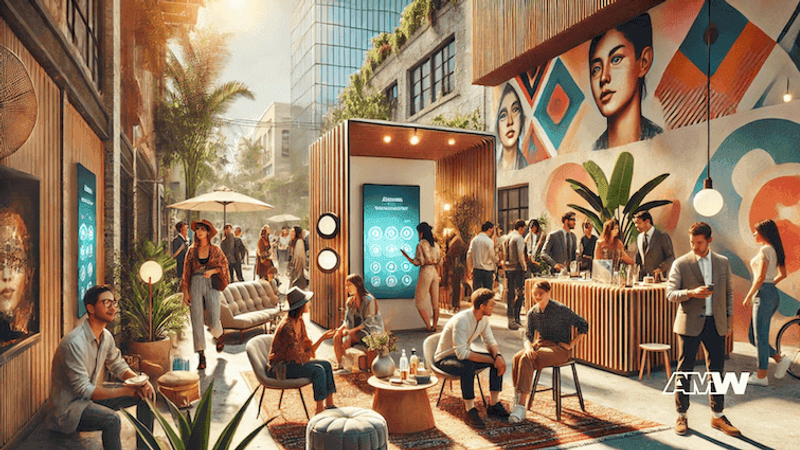
Experiential Marketing: Creating Immersive Brand Experiences
Experiential marketing is rapidly becoming a cornerstone of modern marketing strategies. This approach focuses on creating memorable, immersive experiences that engage customers on a level deeper

Mastering Corporate Event Marketing for Maximum Business Impact
Corporate event marketing has evolved into a sophisticated strategy that transforms business gatherings into powerful brand experiences. Companies now recognize that well-executed events create deeper