

AI Answers Cite Your Press Before Your Founder Bio

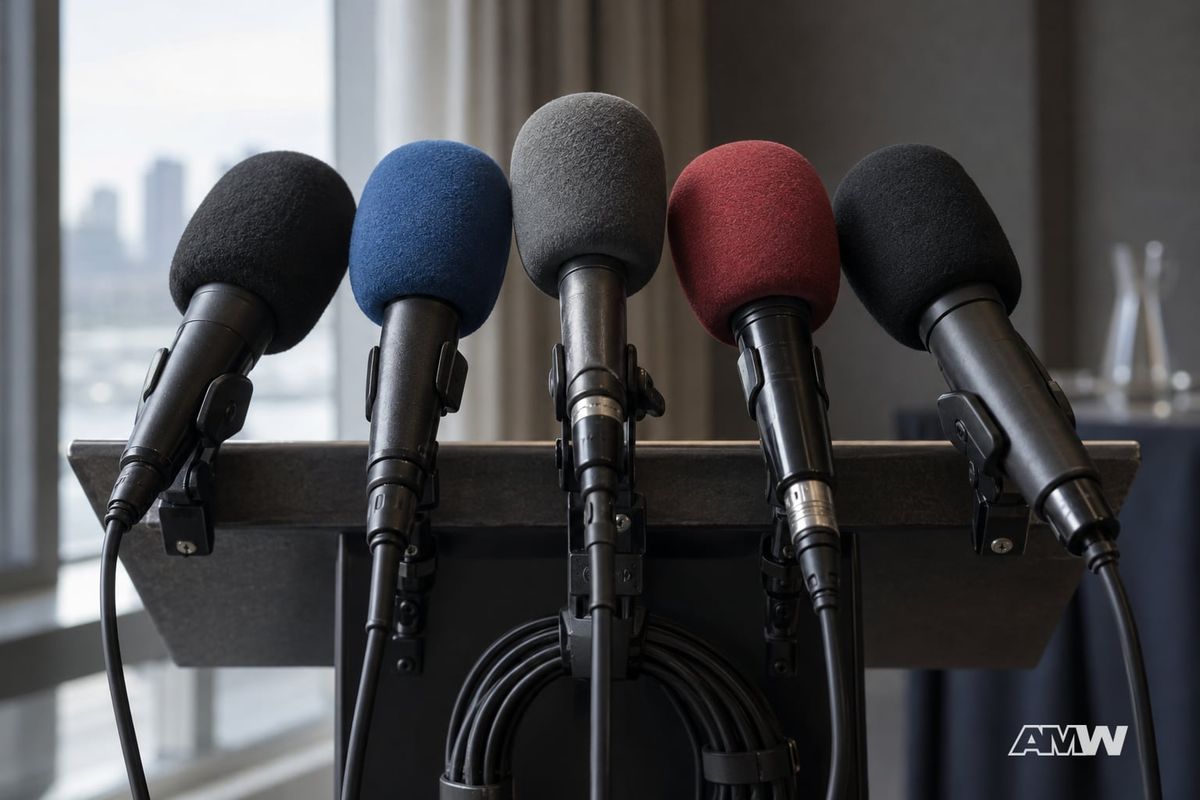
Nearly 84% of the sources AI models cited in a May 2026 study of realistic questions were earned media, a category that covers journalism, academic research, government sites and encyclopedia-style sites1. Journalism alone made up 27%1. A company's own pages get a much smaller share. In a separate study of US queries about AI-visibility software, brand-owned domains accounted for roughly 12% of AI Overview citations2.
Quick Summary
AI answers draw mostly on what others publish about a company: in a May 2026 study, nearly 84% of AI citations came from earned media, with journalism alone at 27%. That makes the founder line in your press releases, the one reporters copy into coverage, more likely to be what an answer draws on than your bio page. The exceptions are how-to questions and firms with little coverage, where your own pages carry more weight. Writing the attribution as one complete sentence that says what the company does, and using it the same way everywhere, gives reporters and AI answers an accurate description to repeat.
AI answers draw mostly on what other people publish about a company, so the description of your founder that reporters and press releases carry is more likely to be what an answer draws on than the one on your own bio page. This doesn't hold for every kind of question, and it barely applies to a firm nobody has written about yet. Both cases are covered further down. For most other companies, it changes where the founder description is worth writing carefully.
What the citation counts say about your own pages
The May figures come from a recurring report series on the sources AI models cite. An earlier round, released in December 2025, analyzed more than one million links cited by leading AI models and traced how those citations had shifted since July 20253. The prompts spanned many industries, and some named specific companies while others didn't3.
Academic work points the same way. A paper posted to arXiv on what drives AI citations analyzed 396,188 citations to 39,043 URLs on 7,234 websites, with data collected daily from June 24 to September 21, 20264. In reviewing earlier research, the authors list "a strong preference for third-party (earned) media over brand-owned content" among the patterns already documented, citing work by Chen and colleagues from 20254.
For a founder, this moves the place where the description of you gets settled. A buyer who wanted to know who ran a firm used to open the team page and read what was there. A buyer who asks an assistant first gets an answer assembled mostly from coverage, so the founder they meet is often the one a reporter wrote down, which may be a year old, slightly off, or borrowed from whatever bio was handy on deadline.
Where your own words still get through
The same research has a useful exception built in. The May 2026 report split results by the kind of question asked: "When consumers ask what is happening in an industry, AI reaches for news coverage"1. It goes on: "When they ask how to do something, AI leans on reference content and brand-owned material instead."1
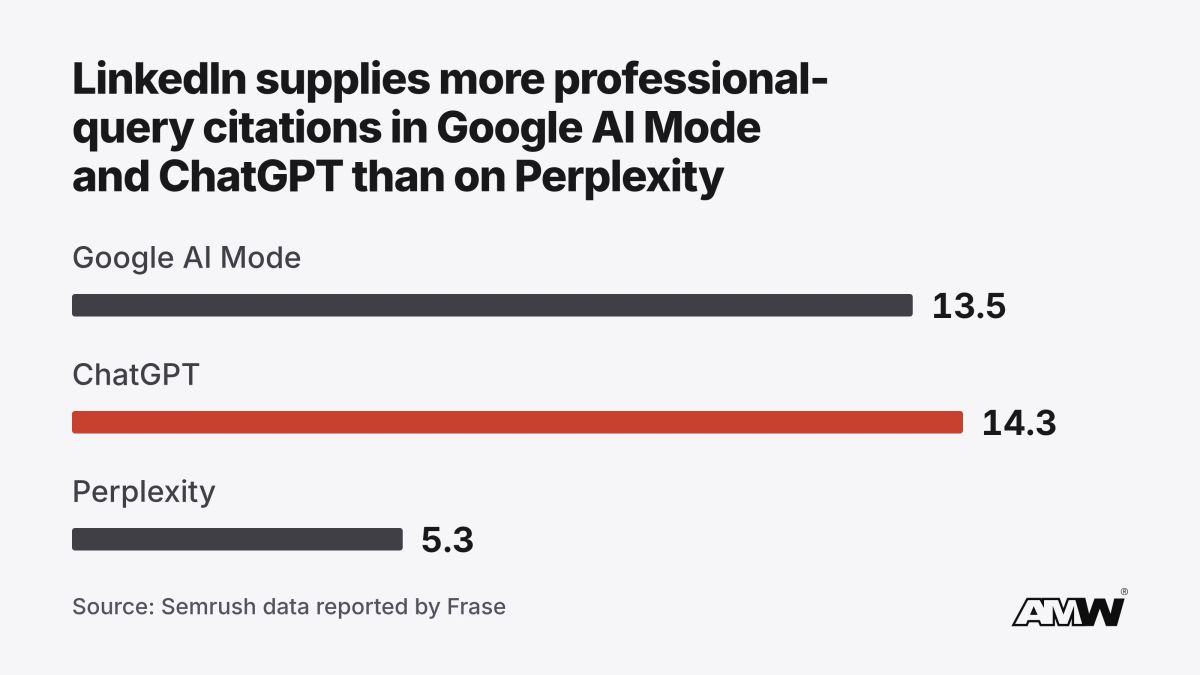
Professional profiles are another route. In Semrush data reported by Frase, LinkedIn made up 13.5% of citations in Google's AI Mode and 14.3% on ChatGPT for professional queries, against 5.3% on Perplexity5. A founder's LinkedIn summary is self-written, yet it sits on a site two of those assistants cite often.
Press releases are the third route. The December findings showed that "structure plays a role in what AI models choose to cite"3. A release feeds coverage too. The attribution under a quote, the paragraph about the company at the bottom and the one-line description of what the business does are the parts reporters tend to lift into their stories, so the founder line in a release can reach an answer twice: once if the release itself is cited, and again inside a story built from it.
The founder line in a press release
A typical press release makes a handy example. Its one quote usually comes from the company's chief executive, and the attribution often reads something like this:
"said [Name], [title] of [Company]."
Inside the release, that's plenty. The opening sentence has usually already said what the company makes, so someone reading top to bottom has the context. Pulled out on its own, which is what happens when a reporter quotes [Name] or an answer cites that reporter's story, the line tells a reader who the founder is and nothing about what the company does. One added clause, using facts already in the release's first sentence, carries the description along with the name:
said [Name], [title] of [Company], which [what the company does, for whom].
A reporter who copies that attribution copies the whole description, and an answer that quotes the reporter picks it up as well. The same sentence can then sit, word for word, on the bio page and speaker pages, so every source a model finds describes the founder the same way.
This example shows a risk, and the sources stop short of measuring the outcome: no study here follows a release attribution into a news story or an AI answer. What the counts do show is that releases and the coverage built from them both reach answers. Press releases made up 1.2% of citations in the July 2025 report and 6% in December 2025, then fell back near the July level by May 2026, which the report says was "mostly due to ChatGPT citing press releases less often"1. Journalism, the kind of coverage a release tends to feed, was cited in 46% of answers to questions about industry trends1. Those are the two paths a release line can take, and the attribution is the part of a release most likely to make the trip intact.
When your own bio page is the better bet
The press-first picture has real limits. The first is the how-to split above: when buyers ask how to do something, models lean more on brand-owned material1. A firm whose buyers mostly ask practical questions has good reason to put its effort into its own pages.
The second is size. For a five-person firm no reporter has covered, there is nothing for a model to cite except the bio page, the LinkedIn profile and any directory listings, and for a firm in that position most of this article matters less than an afternoon spent on its own pages. Brand familiarity makes that work more urgent. The arXiv authors point to research showing that models prefer well-known brands, global ones over local ones and incumbents over equivalent products4. A large, long-covered company already has a picture in the model before a single source is read. A newer firm has no such head start, so the model's picture of it comes almost entirely from the few sources it retrieves, and if those describe the founder three different ways, the answer can land on any of them.
The third is what the numbers do and don't show. Earned media is a broad bucket, and journalism is only part of it; the May report notes journalism has consistently landed between 20% and 30% of citations across its studies1. Some figures also get stretched in the retelling. The brand-owned figure from the opening was later passed around as "88% of AI citations are journalism"2, when the rest of that sample was mostly forums, reviews, aggregators and documentation, with editorial and press pages a much smaller slice2. These studies count which sources an answer links to. None of them trace a sentence from a founder bio into the wording of a specific answer, so the case for writing the release line carefully rests on how coverage gets put together as much as on the counts.
Pitch the outlets the answers already cite

The December research points to a gap between where PR teams send pitches and where AI looks. It found only a 2% overlap between the outlets PR teams pitch and the outlets AI cites3.
The trend-question figure above is the part to plan around. The same research series, as summarized by BrandMentions, found journalism cited on trend questions at more than twice the rate for how-to and comparative questions2. Questions about where an industry is heading are where coverage carries the most weight in an answer, so they're the ones worth using to find outlets.
The engines don't agree with one another, which matters when you build a list from them. In a BrightEdge analysis reported by Frase, the overlap between the sources two engines cited for the same topics ran as low as 16%5. Pew Research findings, also reported by Frase, put Wikipedia, YouTube and Reddit at the top of the sources cited in Google's AI summaries5. ChatGPT combines what it learned in training with Bing-powered search, while Perplexity runs a live web search for every question6.
So a pitch list drawn from a single assistant can miss much of what another one cites. A workable exercise is to write down the trend questions your buyers ask (for a software firm selling to accountants, that might be a question about how mid-size accounting firms are putting AI to work), run them through two or three assistants, and note which publications keep showing up. Then compare that list with the outlets you pitch now. Where the two lists don't overlap, the outlets the answers cite are the ones most likely to put your founder's description in front of a buyer, and the attribution you hand those reporters is the sentence that comes along with it.
Why the same question gets a different answer a month later
None of this sits still. The arXiv study found citation variation that is "repeatable but unexplained by page properties and changes over weeks"4, and it points to earlier work showing that visibility varies across repeated queries "and must be measured as a distribution"4. The swing in press-release citations between the July, December and May reports1 is the same movement at the scale of a whole category, and the December methodology note says it plainly: "Because these systems evolve quickly and operate opaquely, their citation behavior may change as models are updated or retrained."3
That's why a single check tells you so little. Typing one question and saving a screenshot gives you one draw from a range of possible answers2, while the same questions run several times over several weeks give a fairer picture2.
For the founder line, the check can stay small. Ask two or three assistants who runs your company and what it does, repeat that over a few weeks, and note which sentence about your founder comes back and which source it links to. If it matches the attribution in your releases, that line is reaching answers. If it's an old bio or a reporter's loose paraphrase, you know which version to rewrite. A good place to start is your last three pieces of coverage: copy out the sentence each one uses to describe your founder, and see whether a stranger reading only that sentence would know what your company does.
Sources
- 1
- 2
- 3
- 4
- 5
- 6

Valencia Jackson is a Communications Director at AMW, where she develops creative strategy and brand positioning for clients ranging from emerging brands to Fortune 500 companies.
Frequently Asked Questions
Do AI assistants read company bio pages at all?
Yes, but they make up a small share of citations. In one study of US queries about AI-visibility software, brand-owned domains accounted for roughly 12% of AI Overview citations. Brand-owned material counts for more when people ask how to do something, according to Muck Rack's May 2026 What Is AI Reading? report.
Why does the attribution line under a press release quote matter?
It's the part reporters tend to copy when they quote a founder, and the quoted story is what an AI answer may cite. A bare name and title tells a reader nothing about the company once it's lifted out. Adding one clause about what the company does carries the description along with the name.
What if my company has never had press coverage?
Then there's little for a model to cite beyond your own bio page, LinkedIn profile and directory listings. Research also shows models favor well-known brands, so a small firm benefits most from getting those self-written descriptions plain and consistent before it thinks about pitching.
How should I check what AI says about my founder?
Ask two or three assistants who runs your company and what it does, and repeat the check over several weeks, since answers vary from run to run and change as models update. Note which sentence comes back and which source it links to, then compare it with the attribution in your releases.
Related Resources
Pricing Guides
Related Articles
The Story of Polaroid: Edwin Land and the Instant Photo
A child's question in Santa Fe in 1943 became the SX-70, the Giant Polaroid and one of America's most admired brands. Then came Kodak, the phone and a factory set for demolition.

Nano Banana 2.1 Review: Spelling Right, Details Slip
We gave Google's Nano Banana 2.1 a bakery chalkboard sign and a candle product shot. It spelled every price correctly, then slipped on smaller details worth checking.
How Colonel Sanders Franchised a Recipe Before Fast Food
In 1952 Harland Sanders licensed his fried chicken to a Utah restaurant for four cents a bird. Here's how the deal worked and what service firms packaging their know-how can learn from it.