

The Story of Polaroid: Edwin Land and the Instant Photo

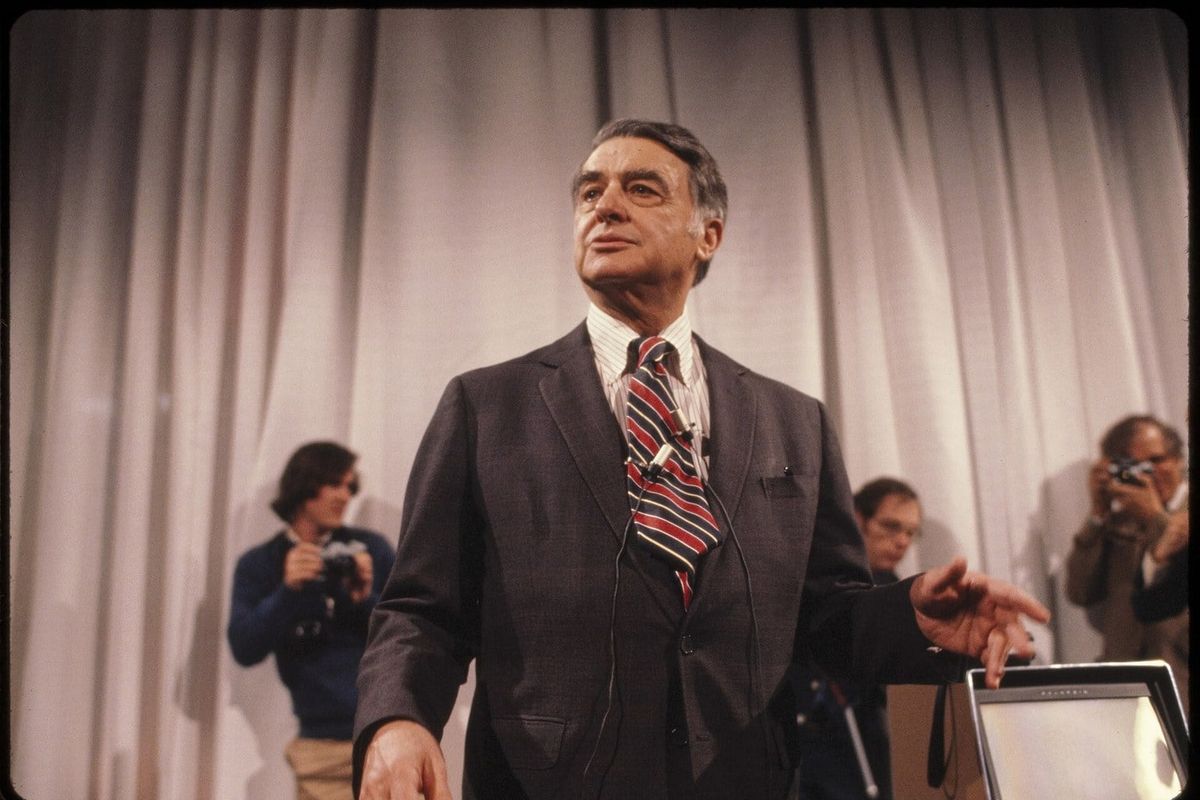
In 1943, Edwin Land was on vacation with his family in Santa Fe, New Mexico, when he took a photograph of his young daughter, Jennifer. She asked him why she couldn't see it1. Any adult at the time could have given her the ordinary answer: the film had to be sent off and developed, and the picture would turn up days later. Land kept turning the question over instead. “Within an hour, the camera, the film, and the physical chemistry became so clear to me,” he later recounted1.

Quick Summary
The story of Polaroid runs from Edwin Land's answer to his daughter's 1943 question, why she couldn't see a photo right away, to a 2001 bankruptcy after competition from Kodak, the expensive Polavision failure and digital cameras wore the company down. Its peak was the SX-70 of 1972, built under such secrecy that its chipmakers designed circuits without knowing the power source. Polaroid stopped making film in 2008 while it still sold around 10 million a year, and a small team saved the last factory's machines. The story shows founders how customer questions, barriers to the buyer and hidden information shape a business, and why a loved product can outlive its maker.
Polaroid put that idea on sale five years later1. By the 1960s, about half of all American households were estimated to own a Polaroid camera2. In 2001 the company filed for bankruptcy protection3. Yet film for the SX-70, Polaroid's most famous camera, is still sold today under the Polaroid name4.
So this story answers a strange pair of questions. How did a company built around a child's question become one of the most admired brands in America, and why did the instant picture outlive the company that invented it?
A copy of Physical Optics under his pillow
As a boy, Land slept with a copy of R.W. Wood's Physical Optics under his pillow5. Wood taught experimental physics at Johns Hopkins and did his best-known work in optics, light, electricity and photography, which covers most of what Land would spend his life on5.
At Harvard, while still a freshman, Land set out to find a cheap, efficient way to make a polarizer, the kind of filter that lets a viewer or a camera see through glare on a reflective surface5,6. The tool scientists already had for the job, the Nicol prism, was made from cemented crystals of Iceland spar, and it was expensive, bulky and small5. Land left the freshman physics class of 1926 and carried on his education in the New York Public Library, much as Thomas Edison had done before him5.
The breakthrough came from an old and very odd piece of reading. Edwin and Helen Land, reading daily at the library, came across the work of an English physician, William Bird Herapath, who in 1852 had noticed that dogs given quinine had tiny crystalline needles in their urine5. Where two needles crossed at right angles they looked black, and where they lay parallel they stayed clear5. Land's idea was to line up enormous numbers of tiny crystals in the same direction and set them in clear plastic so they couldn't drift apart5. The Rowland Institute at Harvard dates the polarizer patent to 19295, while Harvard Library's records date his first patent, for “Polarizing Refracting Bodies,” to 19333. He would go on to collect more than 5003.
He never went back to finish the degree. Bradford Washburn, who knew him at Harvard, was once asked why, and replied, “He didn’t need to.”5 Harvard gave him an honorary doctorate in 1957, and with some 20 more from other universities he became “Dr. Land” to nearly everyone, though close friends called him Din, his childhood nickname5.
In 1932 he and his Harvard physics instructor, George Wheelwright III, set up Land-Wheelwright Laboratories5. The word that later entered the dictionary came from Clarence Kennedy, a Smith College art scholar who worked with Land on 3-D photographs of Renaissance sculpture and coined the trademark Polaroid5. Land brought Kennedy in as one of the company's early consultants, and Barbara Hitchcock, who later ran cultural affairs at Polaroid, describes that friendship as the start of a long run of collaboration between artists and the company1.
It would have saved 400 lives a night
In 1936 the young inventor took his synthetic polarizing discs to the Waldorf Astoria hotel in New York to introduce them, and the New York Times, the Christian Science Monitor and the New York Herald Tribune all covered the event7. H. I. Day of Electrical Research Products came away impressed: “Land has solved a problem that every physicist working with light has struggled with for nearly a century.”7
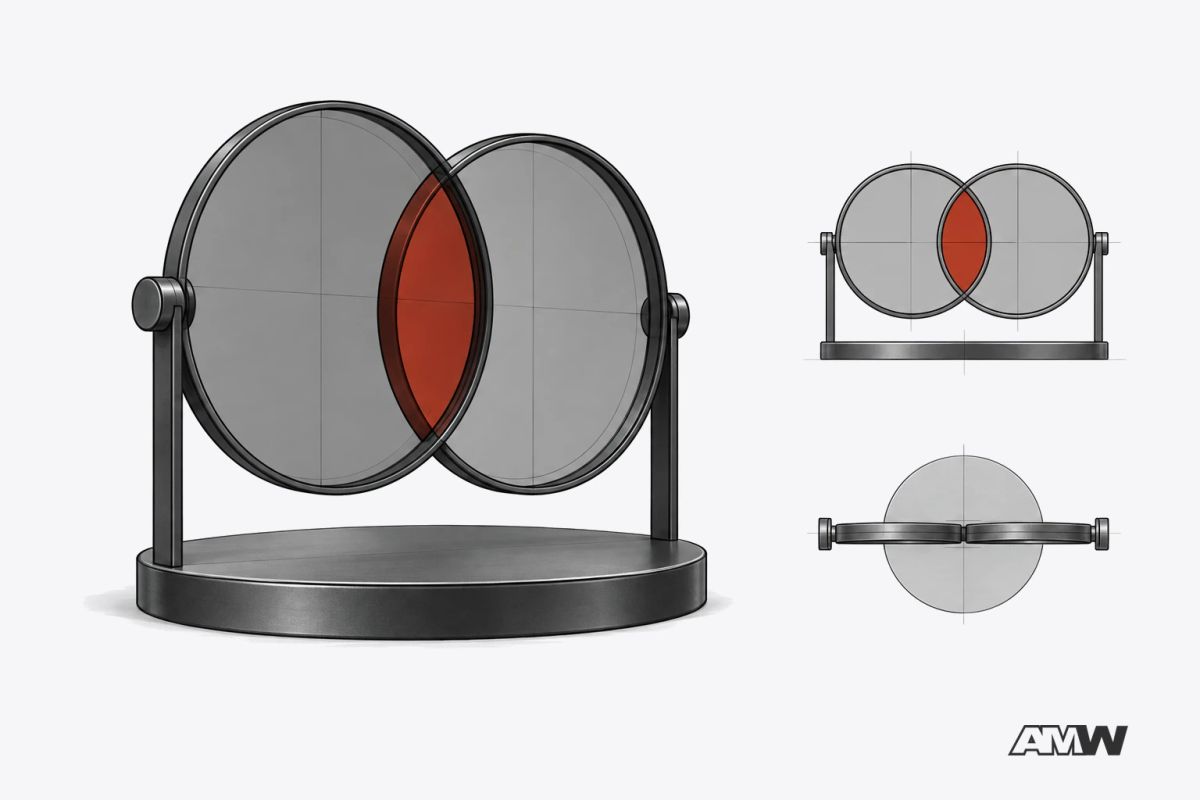
The demonstrations were part science lesson and part theater. At the National Academy of Sciences in Washington that same year, Wheelwright held up two discs of polarizing material and turned them until part of his face seemed to disappear7. Those two overlapping discs became the Polaroid logo7. The attention reached Wall Street, and in 1937 Land-Wheelwright Laboratories was reincorporated as the Polaroid Corporation with money from the banker James P. Warburg, the railroad investor Averell Harriman, J. P. Morgan, and the investment banks Kuhn, Loeb & Company and Schroder, Rockefeller & Company7.
Land's own favorite use for the polarizer was car headlights. Glare from oncoming cars had been on his mind since the 1920s, and from 1932 he was talking with automobile executives and engineers, including Charles Kettering, the head of research at General Motors7. He was open about what drove him. “I didn't set out to make money but to get the polarizer used,” he said. “It would have saved 400 lives a night.”7
It never shipped. Every carmaker would have had to fit new headlights and new windshield glass, and every state would have needed to change its rules on how cars were built7. After years of effort, Land took away a lesson he carried for the rest of his career: “I knew then that I would never go into a commercial field that put a barrier between us and the customer.”7
The products that did sell were ones a single person could pick up and try. One of Land's colleagues went fishing with a scrap of Polaroid, found he could see through the reflection of the sky on the water, and came back with a large trout, and the first Polaroid spectacles were sold in fish-and-gun shops before the wider public took them up as sunglasses5. Desk lamps came with promotional kits by the industrial designer Walter Dorwin Teague that walked salespeople through folders, display cards and demonstration lamps7. On the Union Pacific streamliner City of Los Angeles, passengers could turn an inner window pane to dim the light coming in7. And at the 1939 New York World's Fair, Polaroid sold more than 1.5 million stereo viewers for a 3-D Chrysler film called In Tune with Tomorrow7. Strong sales of sunglass lenses and camera filters paid for the research that came next7.
“The falling-off of military income”
The war turned Polaroid into a military supplier. It made polarizing filters for gunsights, binoculars, periscopes, rangefinders and goggles1, along with infrared night-viewing devices and variable-density goggles that let anti-aircraft and machine gunners darken their field of vision by turning the lenses8. It also developed the Vectograph, a 3-D process that laminated an image for the left eye and an image for the right eye onto a single strip of film8.
Then the military contracts began to shrink.
In 1945, Polaroid's net sales reached $16 million and it had more than 1,000 employees. By 1947, net sales had dropped to $1,503,608, the company posted a net loss of $954,410, and the workforce hovered around 3001.
That's a fall in sales of more than 90 percent in two years1. Land's note on the layoffs is careful and a little stiff: “With the falling-off of military income, we have reduced the number of our employees substantially, preserving the essential effectiveness of the organization as far as possible,”1.
What makes the moment interesting is what Land had been writing just before it. In a 1945 employee handbook called “The Purpose of the Company,” he described a second product beyond the goods themselves, which was a working life worth having1. “We are becoming a prototype company, a company which is learning how to make the all-day working life a worthwhile thing,” he explained, adding, “The function of industry is not just the making of goods, the function of industry is the development of people.”1 Within two years the same founder was writing the note about reducing his staff1.
He also had a clear idea of what a company like his would need to be to get through moments like this. A line of Land's that Baker Library uses to open its account of the polarizer years puts it this way: “I believe quite simply that the small company of the future will be as much a research organization as it is a manufacturing company, and that this new kind of company is the frontier for the next generation.”7 The research he was counting on to restart growth in peacetime was the idea from Santa Fe1.
“It’s easy!”
In April 1947, Land stood before a camera of his own and demonstrated Polaroid Land instant film, a moment kept in a photograph in Harvard Library's Polaroid collection3. Four years after Jennifer's question, the picture now developed in the hands of the person who took it. Harvard Library counts that year as the company's breakthrough with instant photography3, and the first Land Camera was introduced in 19479. The commercial launch followed in 19481,3.
The pitch to the public was short. An instruction leaflet from around 1949 made the promise in two words: “It’s easy!”10 The early films were peel-apart, with covers the user tore away once the print had developed11.
The person who put that promise to the hardest test arrived in 1949. Ansel Adams joined as Polaroid's consultant photographer that year and stayed until 1984, testing nearly every product the company made3. His memos and test photographs, now in the Harvard collection, record his experiences and his opinions of each one3. The company's link to him was Meroë Morse, a key contributor to the development of instant photography and a trusted adviser to Land, whose career Baker Library gave its own exhibition in 20243.
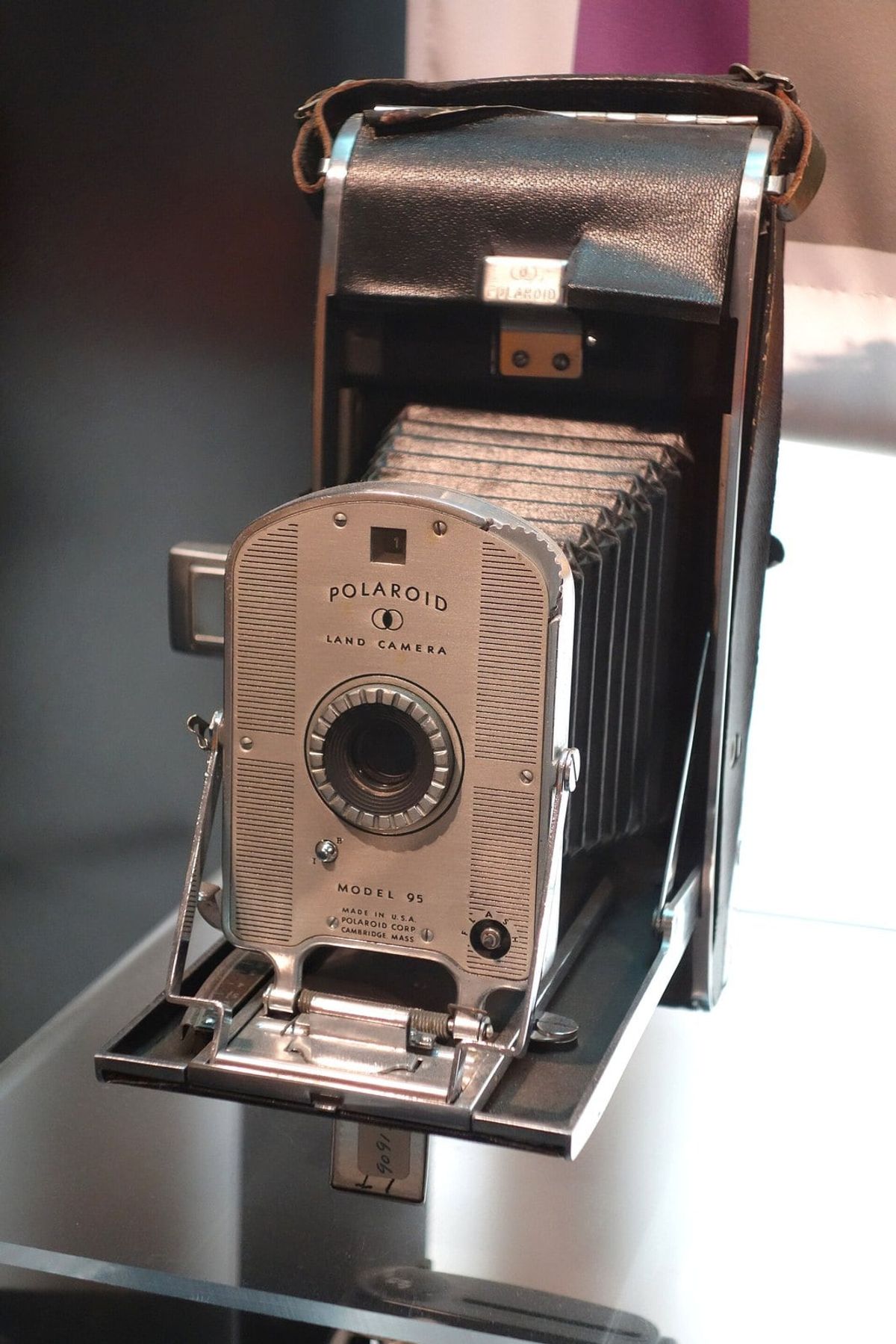
From there the cameras spread from photography magazines to ordinary family shopping trips. In February 1950 the Model 95 Land Camera was advertised in Camera magazine10. A 1963 cross-section of the Polaroid Automatic shows how the trick worked inside, with a pod of chemicals and a sandwich of film layers10. By 1965 the Swinger had its own store display, and by 1967 it was being advertised to a wide audience10.
Land kept talking to the people who owned the company, too. Each annual report from 1946 to 2000 usually opened with a letter from Land12. And in a 1965 address to a patent and trademark research institute in Washington, he wrote that the idea for instant photography had come to him all at once in 19438.
Special experiment number 70
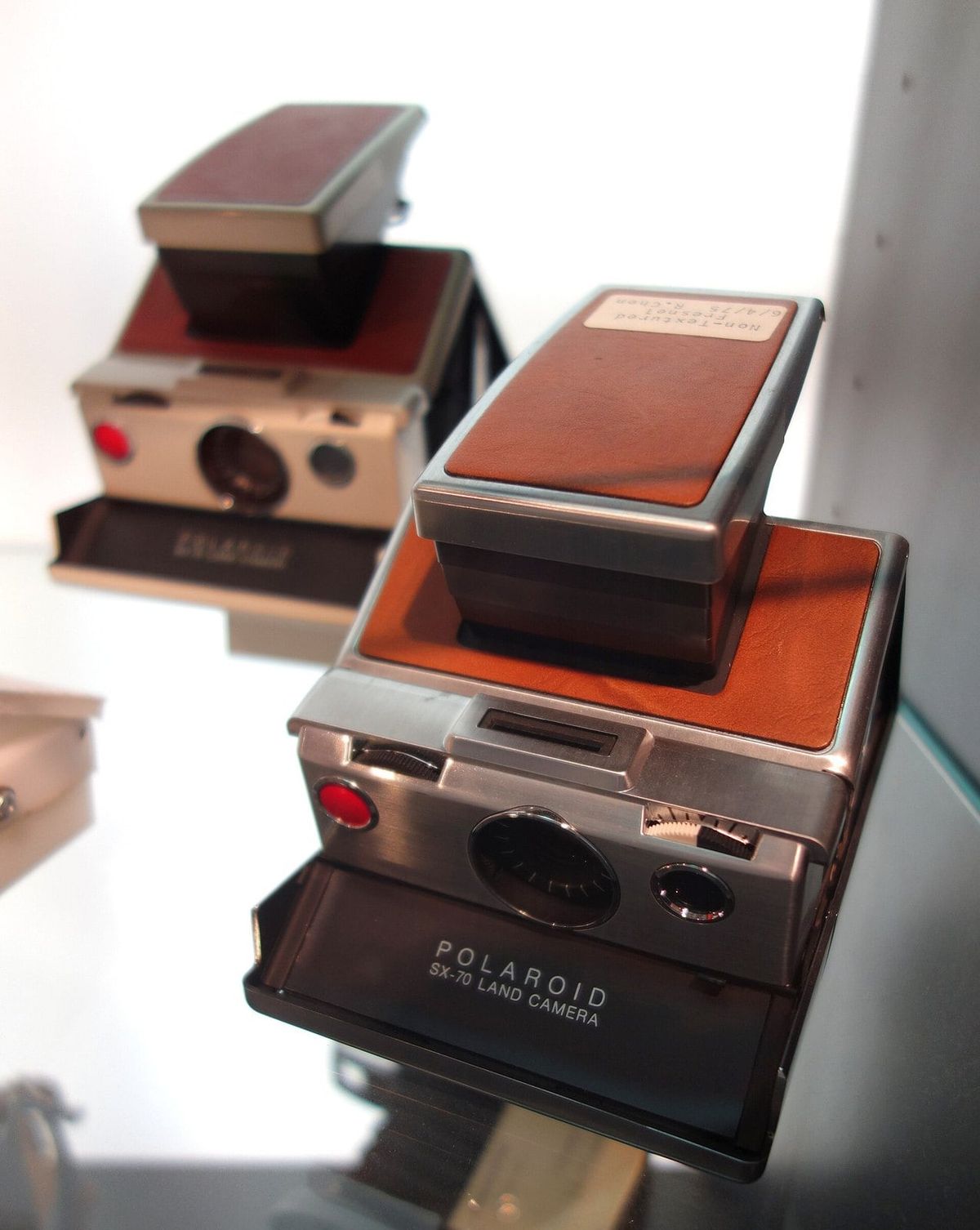
Land kept a notebook of numbered experiments, and his instant picture experiment was number 704. When the camera carrying that name arrived about 30 years later, he felt it was the system he had pictured in the mid-1940s4. Land called it special experiment 704,1; Peter C. Wensberg, a Polaroid executive quoted in The Guardian, remembered it as “Secret Experiment 70,” abbreviated in the style of Land's classified wartime work6.
What Land wanted was a camera that did everything itself. The SX-70 used a new film that developed while exposed to light, which got rid of the tear-away covers of the older Polaroid films11. The square photos came into view over a few minutes4, and the film was a sandwich of 11 layers of chemicals that first developed a negative and then formed the visible color image4.
The camera needed electronics to match. Its circuits handled flashbulb selection, exposure control, moving the mirror, starting the print's development and ejecting the print, split into three modules for the motor, the exposure and logic, and the flash11. By the final count it used some 400 transistors11. It was the first instant single-lens reflex camera, meaning you looked through the same lens that took the picture4, and it folded flat; Analog.Cafe calls it the first and only foldable SLR instant camera6.
Analog.Cafe also describes the supply chain behind it as unusually complex, with factories around the world working at once on different parts, exchanging materials and coordinating assembly6. Through all of it, Polaroid was worried about one company in particular. Fearing that Kodak might enter the instant camera business, it wanted no leaks at all11.
“I won’t tell you what the power source will be”
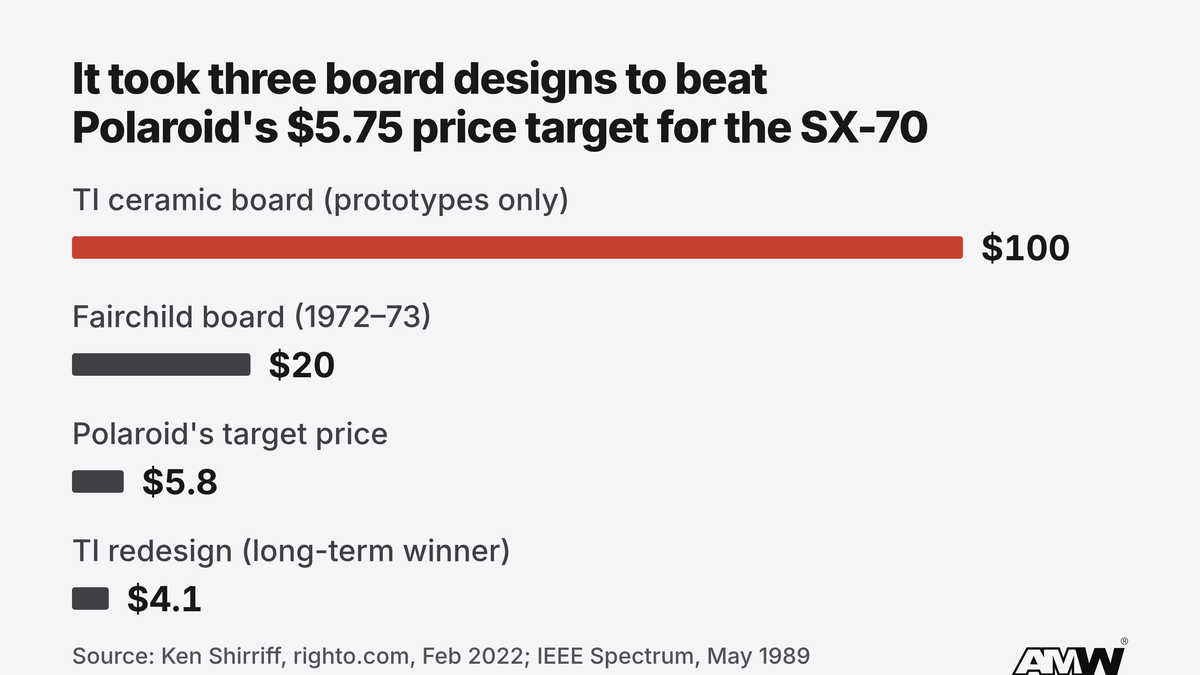
IEEE Spectrum's 1989 account of what came next reads like a boxing card: Texas Instruments in one corner, Fairchild Semiconductor in the other, and Polaroid as referee, judge, promoter and only spectator11. The research contracts for the exposure electronics went out in 196911. At the time there were no semicustom chips, standard chip packages were at least 0.125 inch thick, and logic and power transistors couldn't yet share the same piece of silicon11. Polaroid wanted to buy the exposure controller for $5.7511.
Both teams worked half-blind. Polaroid told neither of them about the new film, or that the camera had been redesigned as an SLR, and kept the design teams from seeing a prototype11. TI's executive vice president at the time, Fred Bucy, had seen a demonstration of the early non-SLR version in 1969, and he said nothing about it to his own engineers11. Peter Carcia, a Polaroid engineer on the project, summed up the chipmakers' position: “They had very little to work with”11. What they had were stacks of specifications.
Seymour Ellin, later a senior technical manager at Polaroid, remembered how far the secrecy went: “We didn’t tell them whether a load on the electronics was from a solenoid or a relay, just that it was an inductive load,”11. Polaroid was designing its own battery at the same time, so even the power supply was a blank. Carcia again: “I would tell them ‘I want you to design a circuit, but I won’t tell you what the power source will be,’ and they would look at me strangely.”11
The specification the chip engineers puzzled over most was the “Y” delay, a short pause between pressing the button and the start of the exposure11. Polaroid engineers told IEEE Spectrum the name came from the “why” the Fairchild and TI teams kept asking about it11. The real reason, which Polaroid preferred not to share, was that the mirror needed a moment to stop vibrating after it snapped out of the way of the film11. The motor was another surprise. Clark Williams, then a TI design engineer, said the noise problem had been understated: “That motor pulled 3 amps of current and put out a rich spectrum of noise that played havoc with our circuits,”11.
Each attempt at the board shows how hard that target was to hit. TI's first exposure board, built on a ceramic base with laser-trimmed resistors, came in around $100, and Polaroid used it only in prototype cameras4. Fairchild's design was accepted at $20, still well over the target, and went into cameras in 1972 and 19734. Then TI came back with an all-new design at $4.10, and that board won for the long run4. It used a low-power style of chip logic called I2L, because the camera ran off a battery inside the film pack and every bit of current counted4. The flash controller had its own saga: the contract went first to General Electric and then, after GE left the chip business in 1971, to Sprague, Fairchild and TI, and only Fairchild and Sprague ended up producing one11.
The cover of Life, October 27, 1972
When the SX-70 was ready, Land and the camera appeared on the cover of Life magazine on October 27, 19724. LIFE photographer Co Rentmeester shot the cover story and experimented with the camera before it went on sale, making pictures of two dancers from the Joffrey Ballet, a fashion model and a farm in Pennsylvania9. Time later wrote that the SX-70 became associated with the early Seventies and in a sense helped define them9.
Land described his aim in plain terms, wanting to “provide an opportunity for creativity that other photography doesn’t allow.”9 Ray and Charles Eames made a 10-minute film about the camera in 1972 that marketed it, explained how to use it and walked through how it worked inside4. Millions of people eventually bought one11.
The admiration lasted for decades. The technology writer Harry McCracken said he could not think “of a greater gadget than the SX-70 Land Camera. . . . The sheer magnitude of its ambition and innovation dwarfs the Walkman, iPod, and nearly every other consumer-electronics product you can name.”9
Analog.Cafe writes that from the 1970s through the 1990s Polaroid held a reputation a lot like the one Apple enjoys today, and that Steve Jobs, who met Land, described their meeting as “like visiting a shrine”6.
An 800-pound camera at the Waldorf
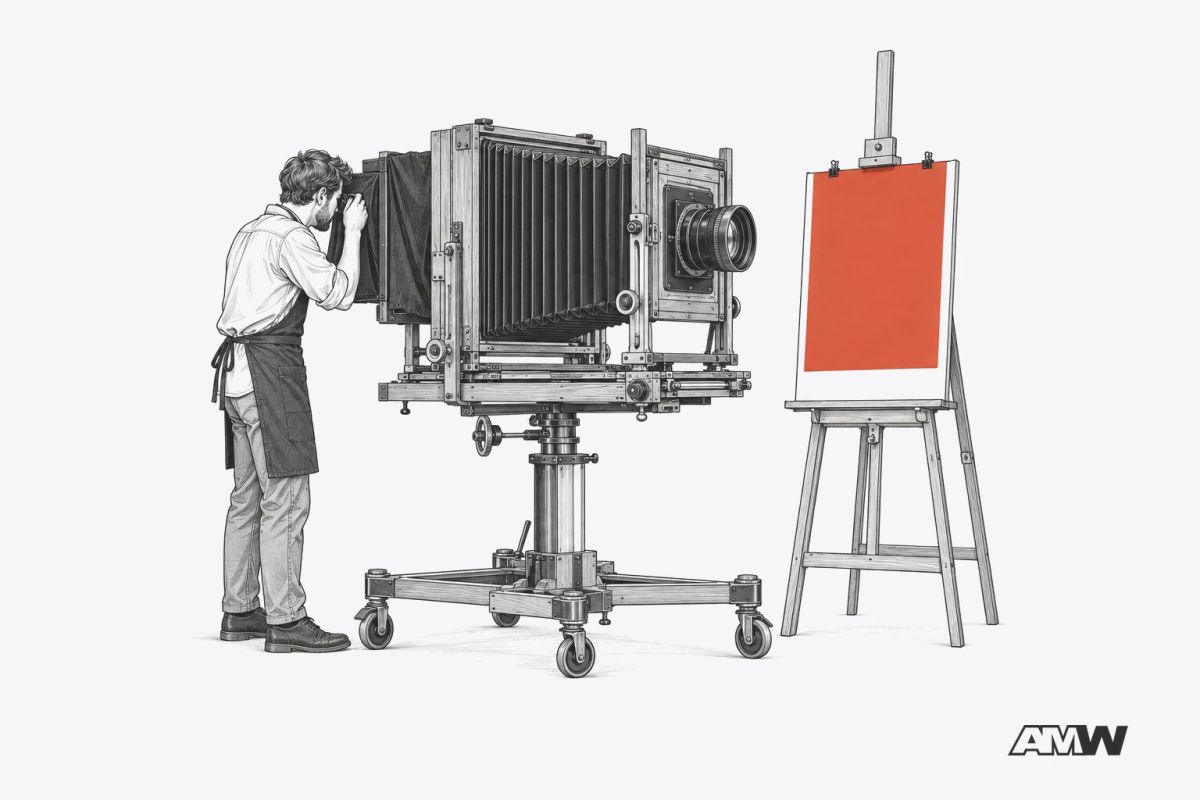
On January 31, 1978, Polaroid went back to the Waldorf Astoria, the New York hotel where Land had introduced his polarizing discs in 193613,7. More than 700 journalists, Wall Street analysts and curious onlookers crowded into the grand ballroom13. The star was an 800-pound camera of wood and metal, part camera, part darkroom and part instant printer, that made color portraits 20 inches wide by 24 inches high13.
Andy Warhol was among the guests brought up to pose. Barbara Hitchcock, the former Polaroid executive, later described the moment: “The shutter clicked, the strobes flashed and the negative was exposed.”13 The film came out the back of the camera and was hung on an easel. “Sixty seconds later, the negative portion was peeled away and a brilliant color portrait was revealed,”13, detailed enough to show every mark on Warhol's skin13. The photographic artist JoAnn Verburg, who was in the audience, remembered the scene as “a debutante ball for the camera.”13
Polaroid's teams of scientists, engineers, woodworkers and metalworkers went on to build five production models in a slimmer 225-pound version13. Then the company set up its Artist Support Program, inviting photographers and painters to experiment with the camera free of charge13. It fit a corporate culture that, in Airmail's words, disdained bean counting, led by a founder who famously said the bottom line “is in heaven”13. Robert Rauschenberg, Chuck Close, Elsa Dorfman, Mary Ellen Mark and Warhol all used it13.
William Wegman worked with the camera from 1979 until 2007, often staging scenes with his Weimaraner dogs13. He went in skeptical. “I wanted my photographs to look like they were in a magazine or in a book, rather than on a wall,” he told Airmail13. On his first session, posing his dog Man Ray against a black cloth, he broke his own no-color rule by painting one of the dog's toenails Revlon Red. “It really broke apart my rigid manifesto, and it opened me up to an amazing amount of directions, with or without the dogs,” he said13.
Also in 1978, the year of the Waldorf launch, Polaroid made a 20-minute in-house documentary, The History of Polaroid, that was never meant for theaters or broadcast8. The scholar Patrick Ellis found the only known copy in the company records at Baker Library, and the Orphan Film Symposium notes that it was made just before the camera's popularity began to wane8.
Most people’s instant camera of choice
In 2007, the Polaroid Corporation announced that it had stopped manufacturing instant cameras2. The cell phone had by then become most people's instant camera of choice, and the following year Polaroid stopped making instant film too2. The decision did not follow a collapse in demand. Marlene Kelnreiter, a spokeswoman for the Impossible Project, told The Guardian's reporter that annual sales of Polaroid film were still around 10 million when production ended2. The final batch expired in November 20092.
By then the company Land built was already gone. The 2001 bankruptcy broke it up4, and the brand name went on to be licensed for various electronics3. Ken Shirriff, the engineer who examined the SX-70's chip in detail, traces the decline to three things: competition from Kodak, the expensive failure of Polavision, and the rise of digital cameras4. The notes for a 2024 Orphan Film Symposium screening put it more bluntly: “Polaroid has not been able to shake the problems that troubled the company since the 1980s.”8
The Kodak part of the story has an uncomfortable twist. Polaroid had kept the SX-70's chipmakers in the dark in 1969 for fear of Kodak11, and Analog.Cafe says Kodak was at the same time Polaroid's supplier of essential chemical components6. According to Analog.Cafe, Kodak went on to build similar cameras for the US market that infringed on Land's work, and the legal battle that followed, which it dates to 1988 to 1990, dealt a devastating blow to morale and largely brought on the eventual bankruptcy6.
Polavision deserves its own place in the list. It was an instant home movie system, Land's idea of the picture you didn't have to wait for, carried over to film that moves4. Shirriff counts its failure among the three causes of Polaroid's decline and describes it as expensive4. The sources gathered here give no launch date, sales figures or losses for it, so how much it cost the company is a figure this account can only point toward.
Meanwhile the product line kept changing. Analog.Cafe says Polaroid released progressively cheaper SX-70 models with plastic parts and rigid bodies before discontinuing the line in 19816. Spectra followed in 1986, then the Captiva and, around 2002, the I-Zone10. Company materials from 1985 to 1987 described “Polaroid’s broad approach to imaging,” and at the stockholders' meeting on May 7, 1991, the company presented a memo on photo-document integration10. The sources differ on which cause weighed most, with Analog.Cafe putting the lawsuit first and Shirriff listing three side by side, and none of them lays out Polaroid's finances through the 1990s.
The destruction team arrives on Monday
Florian Kaps, an Austrian businessman, started shooting instant film in 2003 after picking up a camera at a flea market, and in 2005 he founded a business selling instant film equipment6,2. He met André Bosman, formerly the head engineer of a large Polaroid plant in the Netherlands, as that plant was heading toward shutdown2,6. Bosman remembers what he told Kaps at their first meeting: “I’m responsible for destroying the machines, and the destruction team arrives on Monday.”6
Kaps, as he later told Wired, made his case on demand. “I told him that I was selling the films and that there was demand.”6 They agreed that Bosman would stop the machines being destroyed while Kaps went to Polaroid's management, and Kaps was clear about the lever he planned to use: “Please talk to us - or we’ll have to tell the press that there is a chance to keep Polaroid instant film alive, but you prefer to destroy it.”6 In October 2008, Kaps, Bosman and Marwan Saba raised $3.1 million to buy the production machinery from the last remaining factory6.
The founders named their venture the Impossible Project after one of Land's lines: “Don't undertake a project”, he once said, “unless it is manifestly important and nearly impossible”2. Their first films, PX 100 and PX 600 Silver Shade, reached reviewers in 2010 to mixed reactions; bloggers said they performed poorly in cold weather and looked even more old-fashioned than the originals2. The photographer Martin Parr suggested the whole revival might be a kind of “processed nostalgia,” and The Guardian asked why people didn't settle for phone apps like Hipstamatic that faked the look2.
The venture kept going anyway. The company now selling SX-70 film and cameras acquired the Polaroid name in 20174, and Analog.Cafe compares today's Polaroid to the Ship of Theseus, rebuilt piece by piece by artists, scientists and entrepreneurs who couldn't stand to see it fade6. The habit asks something of the people who keep it. A Polaroid pack holds 8 exposures against 24 or 36 on a roll of 35mm, and the Orphan Film Symposium writer says the analog shooters they know prefer 35mm because it is cheaper8. Analog.Cafe still argued in 2023 that no digital camera with a built-in printer could match an instant film camera for speed and print quality6.
What Jennifer’s question still teaches
These lessons come from a large manufacturer with more than 500 patents to its founder's name and factories around the world, so some of them will fit a small service business loosely or not at all.
Start from the question the customer asks, then go find the technology. By 1943 Land had the polarizer, the chemistry and a research lab, and none of it pointed at instant photography until his daughter asked why she had to wait1. The camera, the film and the chemistry fell into place after the question did1. In most businesses the same order tends to work: the step a customer is waiting on comes first, and the way of shortening it comes second.
Count the people who stand between you and the buyer. The headlight polarizer needed every carmaker and every state to change at once, and it never reached a single car7. Sunglasses sold first in fishing shops, where one person could look through a lens and decide on the spot5. For a service business, the same shape shows up as a sale where procurement, legal and a board must all sign off before the client feels the benefit. It can still be worth chasing, and it usually takes far longer than a sale where the person with the problem can say yes.
Hidden information gets paid for somewhere else. Polaroid had real reasons to keep the SX-70 from Kodak's view11. The cost showed up in chips designed without knowing the battery, the load or the purpose of a delay, and in a first board too expensive for anything but prototypes11,4. Many businesses meet a smaller version of this when the person writing a proposal can't see what sales promised, or the team doing the work can't see what the client signed, and the gap usually comes back as rework.
Know which product pays for the experiments. Sunglass lenses and camera filters funded the 3-D research7, and military contracts carried Polaroid through the war1. When those contracts shrank, the company had to cut deeply before instant photography could take their place1. Founders betting on a new line often find it helps to know, in plain numbers, which existing work is keeping the lights on while the bet matures.
A long fight with a rival can hide the shift that matters. Polaroid spent decades watching Kodak, from the secrecy of 196911 to the court battle Analog.Cafe says largely brought on the bankruptcy6. The change that ended instant film's mass market came from somewhere else, the phone in people's pockets2. Shifts in how customers choose are easy to see afterward and hard to see from inside a dispute, so many companies find it helps to give someone the job of watching how customers decide, apart from the people handling today's fight.
The people who love what you make may keep it alive. Kaps's pitch to Bosman rested on one fact, that people were still buying the film6, and the brand came back under new owners who built on that loyalty4,6.
The answer to Jennifer Land's question took her father five years to put on sale. It still arrives the same way, a square print coming into view in your hand over a few minutes4.
Sources
- 1
- 2
- 3
- 4
- 5
- 6
- 7
- 8
- 9
- 10
- 11
- 12
- 13

Valencia Jackson is a Communications Director at AMW, where she develops creative strategy and brand positioning for clients ranging from emerging brands to Fortune 500 companies.
Frequently Asked Questions
How did Edwin Land come up with instant photography?
In 1943, on vacation in Santa Fe, New Mexico, his young daughter Jennifer asked why she couldn't see a photograph he had just taken of her. Land said that within an hour the camera, the film and the chemistry became clear to him, and Polaroid launched instant photography commercially five years later.
What does SX-70 stand for?
Land numbered his experiments in a notebook, and his instant picture experiment was number 70, so SX-70 is usually read as special experiment 70. Polaroid executive Peter C. Wensberg remembered it as Secret Experiment 70, styled after Land's classified wartime work.
Why was the SX-70 so hard to build?
It needed a new 11-layer film that developed in light and about 400 transistors to run exposure, the mirror, flash and print ejection. Polaroid kept the chipmakers, Texas Instruments and Fairchild, from seeing a prototype or knowing the power source, and wanted the exposure controller for $5.75. It took three board designs before TI's version met the target.
Why did Polaroid go bankrupt?
Engineer Ken Shirriff points to competition from Kodak, the expensive failure of the Polavision instant home movie system, and the rise of digital cameras. Analog.Cafe puts most of the weight on a legal battle with Kodak, which it dates to 1988 to 1990. Polaroid filed for bankruptcy in 2001 and was broken up.
How did Polaroid film survive after the company stopped making it?
Florian Kaps, André Bosman and Marwan Saba raised $3.1 million in October 2008 to buy the machinery from the last remaining factory, founding the Impossible Project. The company now selling SX-70 film and cameras acquired the Polaroid name in 2017.
Related Resources
Related Articles

Nano Banana 2.1 Review: Spelling Right, Details Slip
We gave Google's Nano Banana 2.1 a bakery chalkboard sign and a candle product shot. It spelled every price correctly, then slipped on smaller details worth checking.
How Colonel Sanders Franchised a Recipe Before Fast Food
In 1952 Harland Sanders licensed his fried chicken to a Utah restaurant for four cents a bird. Here's how the deal worked and what service firms packaging their know-how can learn from it.
What Apple's PR Team Does That B2B Launches Can Copy
Apple's launch habits are mostly discipline: checkable numbers, early briefings, named customers. Here's which ones a smaller B2B company can use, and which it can't.