Nano Banana 2.1 Review: Spelling Right, Details Slip

We asked Google's new image model, Nano Banana 2.1, to make a chalkboard sign for a bakery's Saturday sale. It spelled all four lines exactly as written: "SATURDAY SALE," sourdough at $6, cinnamon rolls 2 for $5, open 7am to 2pm. It also put numbers and blurred lettering above the bakery door in the background, even though the prompt ended with "No other words anywhere in the image." Correct wording with small extras crept in around it was the pattern in both jobs we gave it.
Quick Summary
Nano Banana 2.1 spelled every word and price correctly in our two small-business tests, and it also added or changed small things on its own. A bakery chalkboard sign came back with stray lettering above the door and lines set toward the left, and in a candle product photo the lit candle's lid was set down on the tabletop and a folded cloth came back crumpled. Independent testers at Oasis, JXP and Fuser saw similar extras, so the model suits wording-heavy mockups and social graphics, while product listing images still need a careful full-size check.
Google DeepMind released Nano Banana 2.1 on October 6, 20261. For this review, we called gemini-nano-banana-2.1 directly through Google's API on October 15, 2026. The second job was a product photo of three candles for an online shop listing. The jar heights, the amber glass and the lit flame came out right. The lit candle's lid, though, had been taken off and set down on the tabletop, a placement the prompt never described, and a linen cloth we asked for folded came back crumpled. Two tests, each run once, are a small sample, so this review can't tell you how often these slips happen. What it can show is the kind of slip to look for.
According to the model card, Nano Banana 2.1 is built on Gemini 3.6 Flash and takes in text and pictures, then sends back images and text1. Google's Cloud documentation describes it as offering "a balance of price and performance," with output at 1K, 2K or 4K resolution and up to 14 images allowed in a single prompt2.
Test one: a bakery's Saturday chalkboard sign
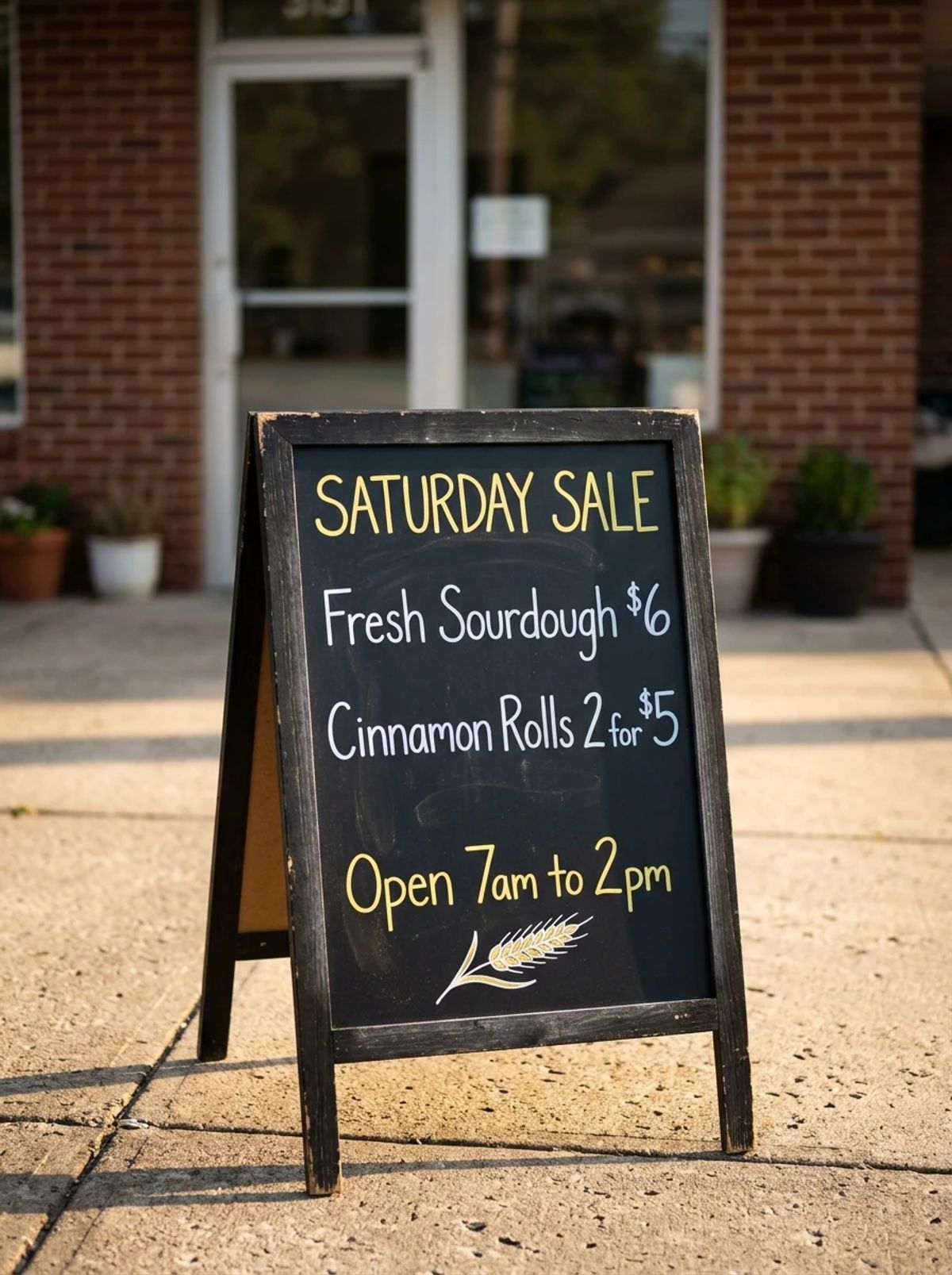
The first job is a common small-business need. A bakery wants a realistic mockup of its sidewalk A-frame sign for a weekend sale, maybe to post on social media the night before, maybe just to settle the wording before someone picks up the chalk. The wording has to be right, prices included. We set the frame shape to 3:4.
Prompt: A realistic photograph of a black A-frame chalkboard sign standing on a sunny sidewalk outside a small brick-front bakery, shallow depth of field, warm morning light. The chalkboard is hand-lettered in white and yellow chalk with exactly this text, in four lines, centered: line 1 "SATURDAY SALE", line 2 "Fresh Sourdough $6", line 3 "Cinnamon Rolls 2 for $5", line 4 "Open 7am to 2pm". Neat chalk lettering, every word spelled exactly as written, with a small chalk drawing of a wheat stalk below the text. No other words anywhere in the image.
The image came back in 23 seconds. It shows a black A-frame chalkboard on a sunny concrete sidewalk outside a brick-front storefront, lettered in yellow and white chalk as asked, with a small wheat stalk drawn below the text. The light is warm, the setting matches the prompt, and every word and price on the board matches what we typed.
Two things went wrong. Above the doorway in the background there are numbers and some blurred text, which breaks the last line of the prompt. And the four lines sit mostly toward the left side of the board, where we had asked for them centered.
Neither slip changes a price on the sign. Both are small enough to miss when the image is viewed as a thumbnail, and a half-legible number over the door is the sort of detail a regular customer might point out.
Why "no other words" is the instruction it keeps breaking
The extra lettering above the door turned up in other people's tests too. On October 7, Oasis asked the model for a launch poster for a made-up sparkling tea called DAYBREAK, with exactly three lines of text and no extra words. The model repeated DAYBREAK on the can and added a 330 ml marking, which broke the instruction3. JXP had better luck with a coffee poster for "BREW BOLD," which came through spelled correctly, and with a second poster carrying a line of small print, also spelled correctly. On that second poster the model set two lines in capitals that JXP had written in mixed case4. In every case the requested words came through, and the model's own additions crept in around them.
Google's prompting guide for its Nano Banana models hints at why. Its advice is to "Describe what you want, not what you don’t want", and its example is asking for an empty street in place of saying there should be no cars5. A rule like "no other words anywhere" asks the model to hold an absence in mind across the whole frame, and a brick storefront is full of spots where real buildings carry numbers and signs.
A version of our prompt that follows Google's advice would spell out the background in positive terms: a plain brick wall above the door, a blank glass door, an empty window. We haven't rerun the test that way, so treat it as the next thing to try. The same guide recommends putting the exact words you want inside quotation marks5. We did that, and the spelling held.
Alignment is a separate issue. "Centered" is a layout instruction, and the model followed the content of each line closely while placing the block loosely. If the layout of a sign matters to you, this kind of output works well as a draft for settling the wording, with a person lettering the final board.
Test two: three candles for a shop listing
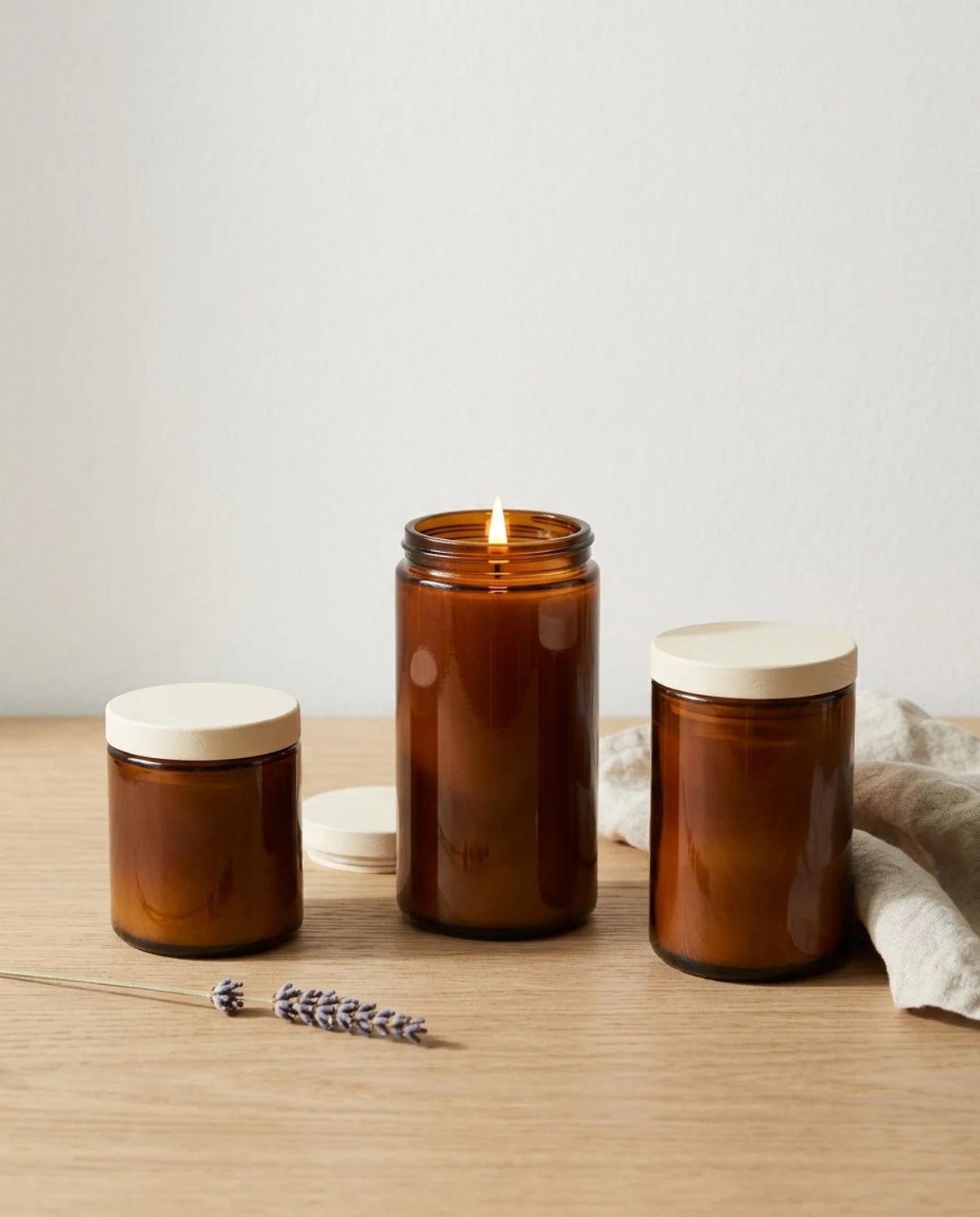
The second job tested how well the model follows a detailed arrangement. A small candle maker wants a clean studio-style product photo with three jars in a set order, one of them lit, plus two props in particular places. We set the frame shape to 4:5.
Prompt: A studio product photograph of three hand-poured soy candles in matching amber glass jars with plain cream-colored wooden lids, arranged on a light oak table against a soft off-white wall. The left jar is short, the middle jar is tall, the right jar is medium height. The middle candle is lit with a small steady flame; the other two are unlit. A sprig of dried lavender lies in front of the left jar, and a folded linen cloth sits behind the right jar. Soft window light from the left, gentle shadows to the right, crisp focus, no text on the jars.
This one came back faster, in 14 seconds. The heights are right: short on the left, tall in the middle, medium on the right. The jars are amber glass with no labels or text, the light falls softly from one side, the middle candle is lit, and the lavender sprig lies in front of the left jar as asked. The left and right jars wear their cream lids.
Two details drifted. The middle candle's lid was taken off and set on the tabletop, a placement the prompt never described. You could argue the model reasoned that a lit candle needs its lid off and had to put it somewhere, which is fair. Where it ended up was still the model's own choice, in a scene we had otherwise laid out item by item. The linen cloth, which we asked to be folded, is loosely draped and crumpled.
Small physical details are where product shots drift
The same pattern shows up in other testers' work, and it matters more for products than for signs. In Fuser's release-day comparison, each model was given a studio product photo of an amber serum bottle labeled "LUMA 02" and asked to move it outdoors onto a mossy river stone. Nano Banana 2.1 kept the bottle's shape, the amber glass and the label, and it kept the label clean where Nano Banana 2 and Nano Banana Pro added water droplets. Like the other two models, it also swapped the cap's smooth, glossy collar for a ribbed one6. In JXP's 4K skincare test the label lettering was clean, and the model put the "50 ml" text near the base of the bottle, where JXP had asked for it directly under the brand name4.
Remio's analysis of Google's published numbers puts the risk this way: "A creative composite may tolerate minor geometry changes, while an ecommerce image may fail if a logo, port, button, material, or package quantity changes."7 A small change to a product's shape can be harmless in a mood picture and a real problem on a shop listing, where the photo is a promise about what ships. A candle lid lying on the table is fine in a social post. On a listing, a buyer might reasonably wonder whether that lid comes with the candle.
There's also a limit that careful prompting won't fix. Our candle photo shows three jars that don't exist, and a customer compares a listing photo with what arrives in the mail. Fuser's test points to a more honest route: photograph the real product, ask the model to change the setting around it, then check the product itself for drift6. For a shop with a handful of products and decent photos already, the gain from any of this may be small.
What Google's scores and dates leave open
Google measured quality mainly through side-by-side human comparisons, scored with the Elo rating system1. Remio's October 14 analysis explains that a higher Elo means people preferred those images more often in Google's comparisons7. How often the model gets your own sign's wording right is something your own tests will show better than the chart. Remio also notes that Google labels its benchmark setup only as "Thinking," without saying which thinking setting it used7.
One date is unsettled. Fuser, which ran its comparison on release day, reports that Google is shutting down the older Nano Banana 2 on October 29, 20266. JXP, testing on October 9, read Google's changelog as marking the older model deprecated with no shutdown date announced4. If a tool you pay for runs on Nano Banana 2, Google's changelog is the place to check the current answer.
How long it took, and where the time goes now
The sign took 23 seconds and the candles took 14. JXP logged one poster at 31.9 seconds4. At these speeds, most of the time a business spends on an image goes into checking it.
Our two images fell short at that check. The baker reading the board would notice the numbers above the door and the off-center lines. The candle maker would notice a lid lying loose on the table and a cloth that should have been folded. Neither image would be ready to publish without another try or a hand fix.
Remio makes the same point in cost terms. By its reading of Google's price list, 2.1's image output costs 50% less than Nano Banana 2 at 1K and 2K and 25% less at 4K, before retries and other charges, and its advice is to "Measure cost per accepted asset, not merely price per generated image."7 An image that needs three attempts costs three attempts, plus the time of whoever checks each one.
A checking routine built from these tests is short. Open the file at full size. Read every word against your original copy, as JXP did on every run4. Look at the background on its own, since the stray text turned up there in our sign, and read the product itself for added words, since Oasis found them on the can3. Then count the objects and look at their smallest parts: lids, caps, folds and labels.
Which small-business jobs it suits today
From our two tests and the independent ones, Nano Banana 2.1 fits best where the exact words carry the job and a small visual slip is easy to catch or doesn't matter much. That covers mockups for agreeing on sign wording, social posts announcing a sale, concept images to brief a photographer, and simple marketing graphics. JXP's infographic test is encouraging here: all six text strings matched the prompt character for character, down to "205°F"4.
It's a weaker fit for images that stand in for a real product, and for anything printed or published without a careful look. Google lists 2K and 4K output2, and JXP received a 4096 x 4096 file from a 4K request4, so anyone planning to print can test those sizes directly. We didn't test editing an existing photo, working from reference images, or 2K and 4K output at all, so everything in this review comes from new images made from a written prompt.
Sources
- 1
- 2
- 3
- 4
- 5
- 6
- 7

Valencia Jackson is a Communications Director at AMW, where she develops creative strategy and brand positioning for clients ranging from emerging brands to Fortune 500 companies.
Frequently Asked Questions
When was Nano Banana 2.1 released?
Google DeepMind released Nano Banana 2.1 on October 6, 2026. Its model card says it is built on Gemini 3.6 Flash.
Does Nano Banana 2.1 spell text correctly in images?
In our bakery sign test it spelled all four lines and every price exactly as written. JXP's poster and infographic tests also came back spelled correctly. The weak spot was extra text: it added numbers above a doorway in our test, and Oasis saw it add words to a product can.
Is Nano Banana 2.1 good for product listing photos?
It placed the main pieces of our candle scene correctly, but small physical details changed: a lid ended up on the tabletop and a folded cloth came back crumpled. Fuser saw a bottle cap's collar change too. For listings, check the product closely at full size, and consider starting from a photo of your real product.
How fast is Nano Banana 2.1?
Our chalkboard sign took 23 seconds and the candle photo took 14 seconds. JXP logged one of its posters at 31.9 seconds.
What did this review not test?
We did not test editing an existing photo, using reference images, or 2K and 4K output. Both of our tests were new images made from a written prompt, each run once.
Related Articles
How Colonel Sanders Franchised a Recipe Before Fast Food
In 1952 Harland Sanders licensed his fried chicken to a Utah restaurant for four cents a bird. Here's how the deal worked and what service firms packaging their know-how can learn from it.
What Apple's PR Team Does That B2B Launches Can Copy
Apple's launch habits are mostly discipline: checkable numbers, early briefings, named customers. Here's which ones a smaller B2B company can use, and which it can't.
Sam Walton's Data Habit: Lessons for Service Businesses
Sam Walton read store sales figures from his hospital bed. The habit behind that began on lunch breaks in Des Moines, and it holds a lesson for growing service firms in 2026.