

How Colonel Sanders Franchised a Recipe Before Fast Food

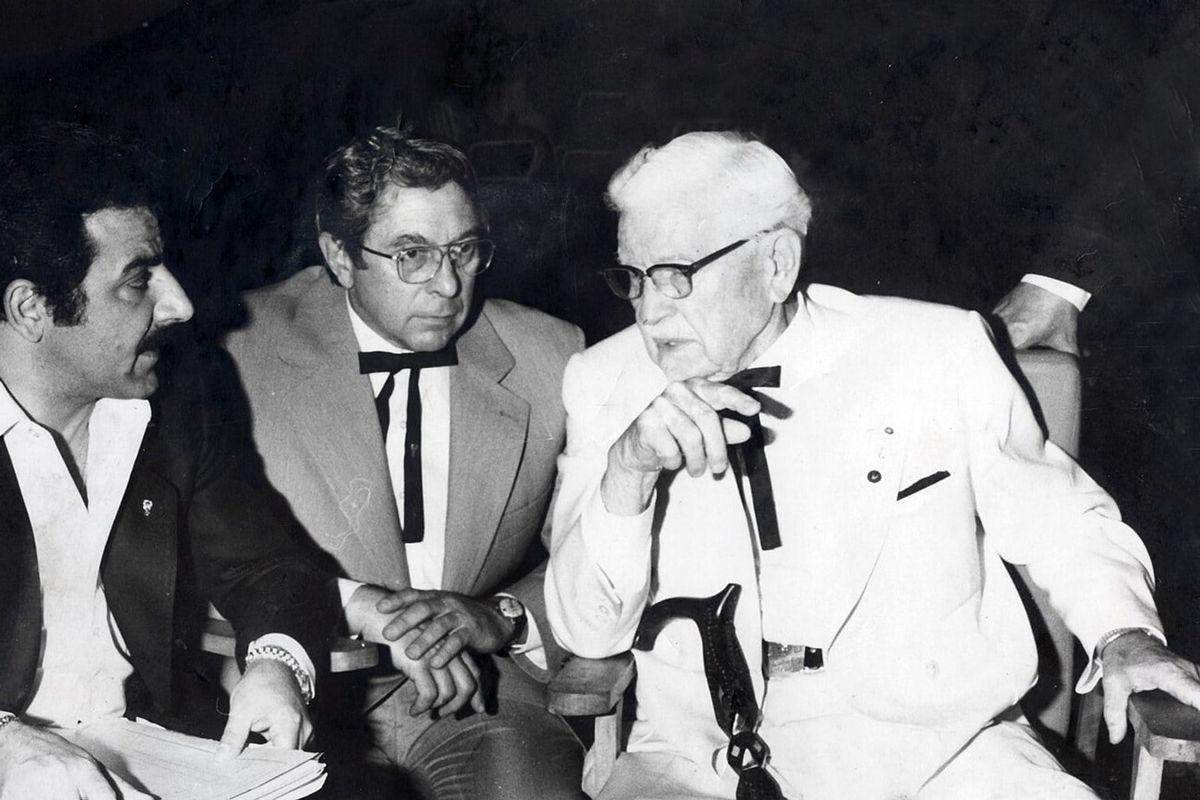
In 1952, Harland Sanders reached an agreement that let Pete Harman, a restaurant owner in South Salt Lake, Utah, cook and sell Sanders' fried chicken. In return, Harman paid him four cents for every chicken sold. Sanders was in his early sixties and had no chain, no headquarters and no plans to build restaurants. What he had was a recipe, a cooking method built around a pressure cooker, and a blend of eleven herbs and spices1. Within a few years he was driving around the country signing up more restaurants on similar terms, and by the late 1950s the business had a headquarters in Shelbyville, Kentucky.

Quick Summary
Colonel Sanders franchised a recipe before fast food chains existed by licensing his fried chicken method to existing restaurants instead of building his own. His first deal, with Pete Harman in South Salt Lake, Utah, in 1952, paid him four cents per chicken sold, while the owner carried the cost of the building, kitchen and staff. The model shows founders how to separate the repeatable part of their work from the judgment they need to keep.
The usual telling is about persistence. It's also a story about a business model. Sanders found a way to get paid for what he knew without paying for the buildings, kitchens and staff that normally came with it. Service businesses are making a similar move right now, selling a method separately from the labor of carrying it out. The Sanders version shows both why that model can grow fast and where it tends to wear thin.
The First Kentucky Fried Chicken Franchise Was One Dish on Another Restaurant's Menu
The first franchise was a single item added to the menu of Pete Harman's existing restaurant, with a per-chicken fee going back to Sanders. Harman already had a building, a kitchen, staff and regular customers. Sanders supplied the recipe, the method and his name.
The title of this piece needs one honest qualification. Quick-service food was around before 1952. White Castle opened in Wichita, Kansas, in 1921, and the McDonald brothers rebuilt their San Bernardino restaurant around a fast, limited menu in 1948. What hadn't arrived yet was the national franchised chain most people now picture, with standard buildings and the same menu in every town. Ray Kroc wouldn't open his first McDonald's franchise in Des Plaines, Illinois, until 1955. So Sanders wasn't franchising into an established system. He had to explain to each owner what a deal like this even was. By most accounts, the name "Kentucky Fried Chicken" itself came from Harman's side of the partnership, from a sign painter he hired to advertise the new dish.
The road to that first deal was long, and the timeline helps explain why Sanders built the business the way he did.
| Year | What happened |
|---|---|
| 1890 | Harland Sanders is born in Indiana, the oldest of three children2 |
| Mid-1890s | His father dies when Harland is five4 |
| 1930 | He's running a Shell Oil service station in North Corbin, Kentucky4 |
| Late 1930s | His restaurant and service station business runs into trouble4 |
| 1952 | First franchise agreement, with Pete Harman in South Salt Lake, Utah |
| Late 1950s | The business sets up headquarters in Shelbyville, Kentucky |
| 1964 | Sanders sells the company, reportedly for about $2 million |
Why Did Sanders License a Recipe Instead of Opening Restaurants?
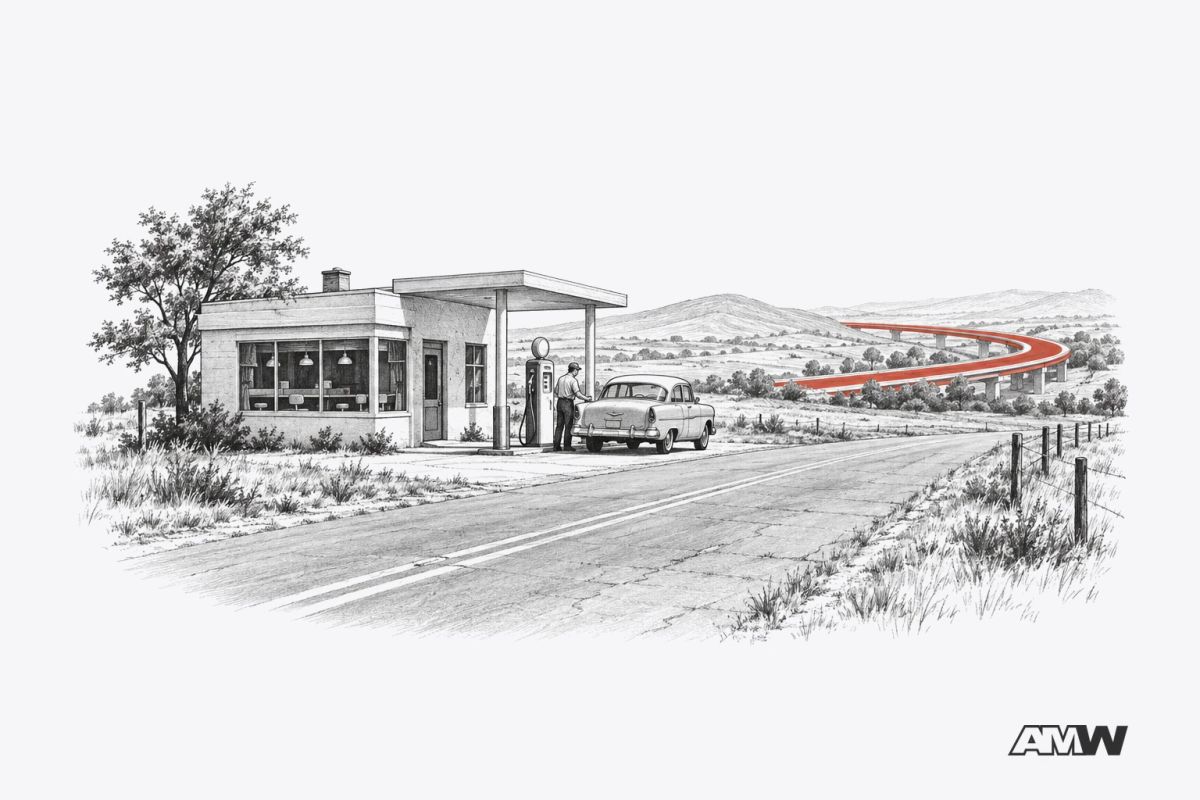
Sanders had concluded that setting up and maintaining a restaurant was a high-risk business that needed a lot of capital. So he chose to franchise model franchise his best product, the recipe, and let other owners carry the cost of everything else3. He'd earned that caution the hard way.
His early working life was a run of false starts. His move to Kentucky had nothing to do with chicken; he went there to sell tires2. He worked as a lawyer for a while, until a courtroom fight with his own client ended that career. After that came odd jobs, until Shell Oil offered him a service station5. He began serving meals to travelers at the station in Corbin, and the food became the reason people stopped. By the late 1930s the business was struggling4. In the mid-1950s, according to most accounts, a new highway route drew traffic away from Corbin, and he sold the property at auction. He was reportedly living on a Social Security check when he went out on the road with his recipe.
Someone who had watched a good business sink because of where it stood had every reason to look for a model that didn't depend on one location. The comparison below shows what he was choosing between.
| Opening his own restaurants | Licensing the recipe to existing restaurants | |
|---|---|---|
| Money needed up front | A building, equipment, staff and stock for every site | Travel and cooking demonstrations |
| Who absorbs a failed location | Sanders | The restaurant owner |
| How income arrives | Whatever profit remains after every expense | A fee on each chicken sold |
| How fast locations can be added | One build-out at a time | As fast as owners agree to sign |
| Control over how the food is made | Direct and daily | Depends on each owner following the method |
The last row is the one that came back to trouble him, and it gets its own section further down.
What Four Cents a Chicken Paid For
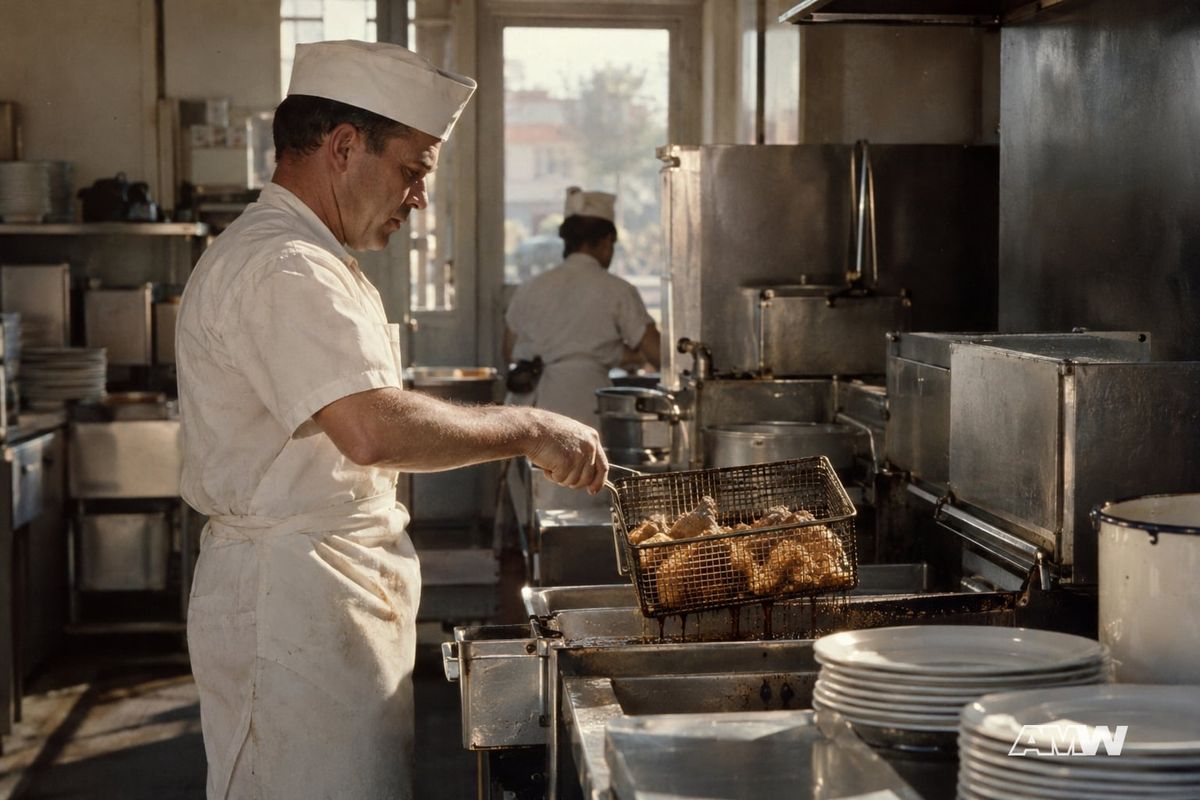
The fee bought the franchisee a proven dish, a way of cooking it, and eventually a name and a face customers recognized. For Sanders, it bought income from kitchens he never paid for. Because the fee was tied to each chicken sold, both sides wanted the same thing: more chicken leaving the kitchen.
Harman's fee was set per chicken sold, so Sanders earned nothing until a customer bought dinner, and he earned more every time a restaurant got busier. Neither side had to agree on a sales forecast before signing.
A per-unit royalty structure like this lowered the bar for a skeptical owner. There was no large upfront payment to justify, and an owner who tried the dish and found it didn't sell had lost very little. It also meant Sanders' income depended on something he couldn't see directly: the count of chickens in kitchens hundreds of miles away. Early on, he's widely described as relying on handshake agreements and trust in the owners he'd met in person.
Here's what each side brought to the arrangement:
- Sanders: the recipe and seasoning, the pressure-cooking method1, hands-on training, and his own personality as a promoter.
- The restaurant owner: a working kitchen, trained staff, a location with existing customers, and the daily labor of cooking and serving.
- Both: a reason to sell as much chicken as possible, and a shared interest in the dish tasting the same each time.
The owner's existing customers were an advantage that's easy to overlook. Every restaurant Sanders signed already had people walking through the door, so the new dish started with an audience on day one.
Sanders Made Sales by Cooking in Other People's Kitchens
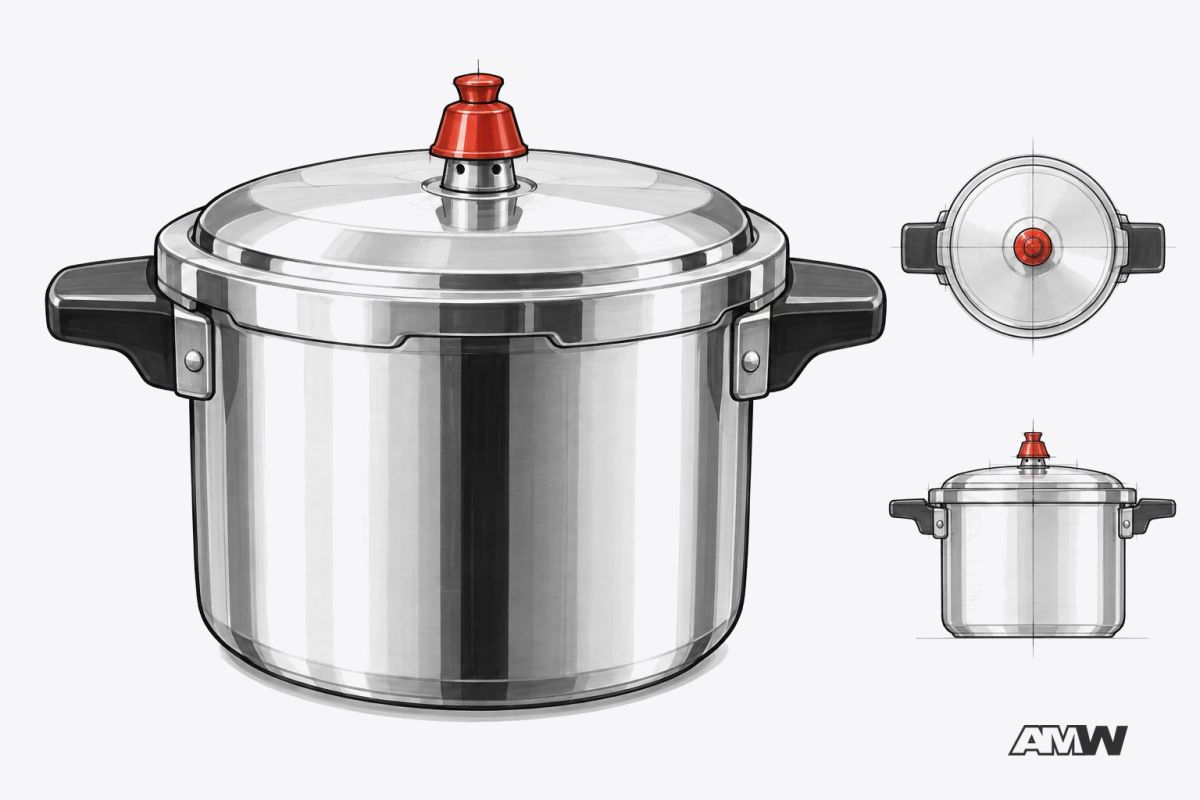
Sanders toured the country meeting restaurant owners to sell them on the plan3. By the usual account, he'd cook a batch of chicken for the owner and staff on the spot, and if they liked it, they'd talk terms. The product did most of the persuading.
Why a demonstration worked better than a pitch
An owner being asked to add a stranger's dish to the menu had good reasons to say no: the cost of ingredients, the risk of disappointing regulars, the hassle of training cooks. A plate of chicken on the counter answered most of those doubts faster than any explanation could. It also showed the owner's own cooks that the method was something they could learn, which mattered as much as the taste. For anyone selling a service that's hard to describe in the abstract, founder-led sales built around showing the result tends to move faster than describing it.
The persona did sales work too
The white suit and black tie became part of the product1. Sanders' title as a Kentucky Colonel made him one of the state's best-known residents2, and he wore it everywhere he went. For franchisees, that meant a ready-made brand persona to put on signs and menus, one that told customers the chicken came from a specific person with a specific recipe. It's an early example of a founder's public identity doing marketing work for dozens of businesses he didn't own.
As more restaurants signed on, the operation outgrew a man and his car. By the late 1950s it needed a headquarters, and it set one up in Shelbyville, Kentucky.
Where the Model Strained: Quality Sanders Couldn't Watch Over
The licensing model grew fast, but it gave Sanders limited control over how the chicken was actually made, and late in life he said so publicly. He sold the company in 1964, reportedly for about $2 million, to a group led by John Y. Brown Jr. and Jack Massey. In later years he was openly critical of what KFC had become and believed the quality of the food had been sacrificed for profits5.
This is the honest limit of the story. Licensing works well for the parts of a business that can be written down and repeated: a seasoning blend, a cooking time, a pressure setting. It works less well for anything that depends on someone's judgment in the moment, and it gets harder to protect as the number of people carrying out the method grows. Sanders could train one owner in person. Hundreds of kitchens, run by people he'd never met, were a different matter.
There's also a point below which the model doesn't make much sense. A firm whose value lies almost entirely in one founder's judgment on each client, such as a small advisory practice, often has little that a partner could carry out alone. Licensing that kind of work tends to produce a weaker copy with the founder's name on it. Growth by owning every location remains a perfectly sound path, and it's the one traced in How Whole Foods Market Continues to Lead in Natural Foods Retail , where a single Austin store grew into a national chain.
Service Firms Are Now Packaging Their Know-How the Same Way
Service businesses are increasingly splitting their work the way Sanders split his: the repeatable steps get written into software, templates and AI workflows that clients or partners can run, while the firm keeps the decisions that need experience. As AI makes the doing cheaper, those decisions become a larger share of what a client is paying for.
Take a hypothetical bookkeeping firm with a month-end process its team has refined over a decade. The checklist, the reconciliation steps and the standard reports can be packaged and run by smaller practices or by clients' own staff, much as Harman's cooks followed the Colonel's method. What doesn't fit on the checklist is the judgment: noticing that a client's cash pattern looks off, or knowing when a tax position needs a second look. That part stays with the experienced people, and it's where the firm's reputation is made or lost. A sales consultancy turning its discovery-call method into a playbook for client teams faces the same split. Sanders' recipe card was simply an early version of this idea, and the general pattern is showing up widely in AI in service businesses .
A useful test: write down the steps a capable stranger would need to get your result. The steps that fit on the page can be licensed, delegated or automated. The ones you can't write down are the judgment that has to stay with someone experienced.
The Sanders story also shows the practical cost of this model. Once a method is running in many places, the person responsible for quality needs to know what's happening at each one: who's active, who's gone quiet, which partner keeps raising the same problem. Sanders carried most of that in his head and learned it on the road. A firm doing this today can keep every partner relationship, deal and support conversation in one connected customer record. AMW CRM does that, with AI agents reading through the history so the person making the judgment calls can see a partner drifting before customers start to notice.
The parallel has limits. Chicken is more repeatable than most professional services, and the hype around packaging expertise into software often runs ahead of what clients will actually use without help. Still, the basic structure Sanders used, with the method licensed and the judgment kept close, is a fair description of where many service firms are heading.
If you're weighing whether part of your own service could be packaged this way, a good first step is writing out your version of the recipe card: the steps, the inputs, and the calls only you make. That list will show you what you can hand off and what you need to keep.
Sources
- 1
- 2
- 3
- 4
- 5

Halima Kiani writes for AMW on technology, business, marketing and AI: the tools, trends and decisions shaping how companies work and grow.
Frequently Asked Questions
Who was the first Kentucky Fried Chicken franchisee?
Pete Harman, who ran a restaurant in South Salt Lake, Utah, signed the first franchise agreement with Harland Sanders in 1952. He added Sanders' fried chicken to his existing menu and paid a fee on each chicken sold.
How much did Colonel Sanders charge his first franchisee?
Harman paid Sanders four cents per chicken sold. Because the fee was tied to volume, the owner had no large upfront cost, and Sanders earned more as the restaurant sold more chicken.
Why didn't Colonel Sanders open his own restaurants?
Did fast food exist before KFC?
Quick-service food did. White Castle opened in 1921 and the McDonald brothers reworked their San Bernardino restaurant around a fast, limited menu in 1948. What didn't exist yet was the national franchised chain; Ray Kroc's first McDonald's franchise opened in 1955, three years after Sanders' first deal.
What did Harland Sanders do before fried chicken?
Why did Colonel Sanders criticize KFC later in life?
After selling the company in 1964, Sanders became critical of what KFC had become and believed the quality of the food had been sacrificed for profits5. It reflects the main weakness of licensing: the originator loses close control over how the method is carried out.
Can a service business license its method the way Sanders licensed his recipe?
Often, for the parts that can be written down as repeatable steps, such as checklists, templates and standard processes. The parts that depend on experienced judgment are much harder to hand off, and for small firms whose value lies mostly in the founder's judgment, licensing may produce a weaker copy rather than growth.
Related Articles
What Apple's PR Team Does That B2B Launches Can Copy
Apple's launch habits are mostly discipline: checkable numbers, early briefings, named customers. Here's which ones a smaller B2B company can use, and which it can't.
Sam Walton's Data Habit: Lessons for Service Businesses
Sam Walton read store sales figures from his hospital bed. The habit behind that began on lunch breaks in Des Moines, and it holds a lesson for growing service firms in 2026.

Howard Schultz and the Starbucks Third Place Strategy
Howard Schultz built Starbucks around a room people wanted to stay in. Seventy percent of orders now skip that room. What changed, and what it means for service firms.