

Sam Walton's Data Habit: Lessons for Service Businesses

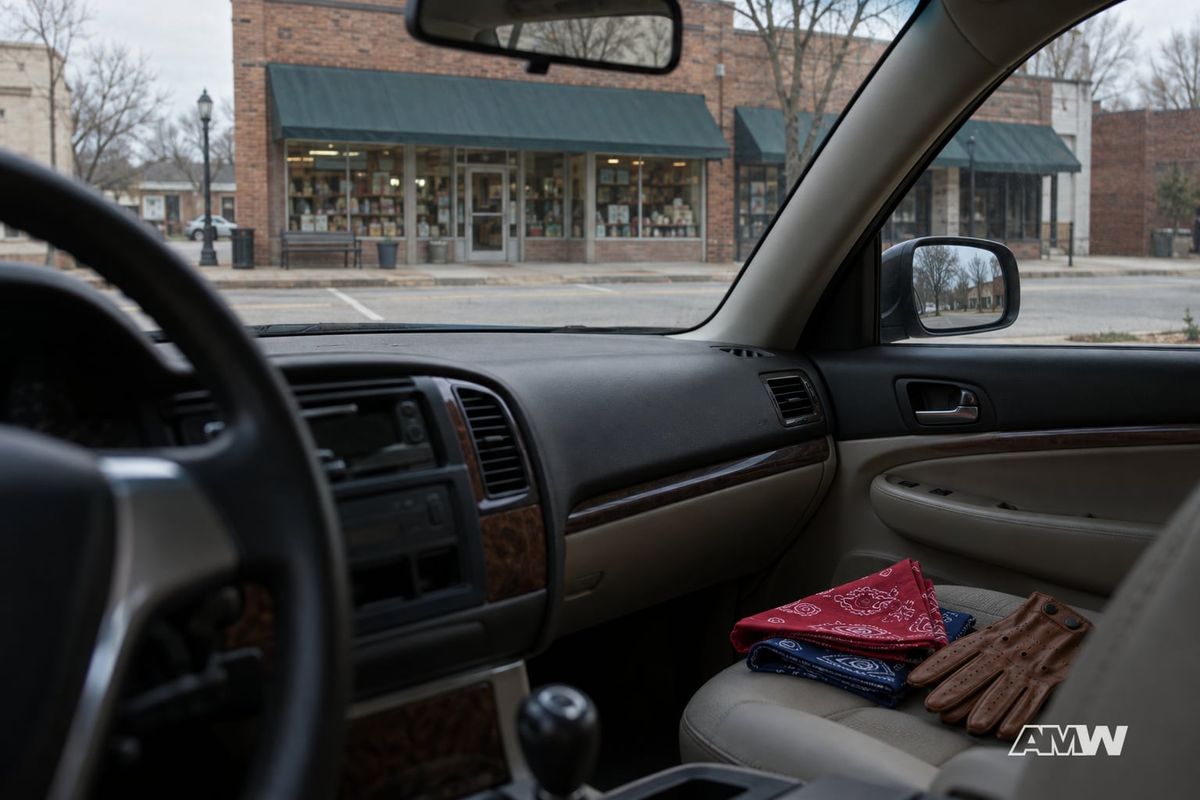
Days before he died in 1992, Sam Walton was going through store-level sales figures from his hospital bed, according to his oldest son, as recounted in Charles Fishman's book The Wal-Mart Effect4. He was 74, and the company he founded was on its way to becoming the largest in the world by revenue1. The habit on display in that hospital room was close to fifty years old. It began with a young trainee walking through rival department stores on his lunch break, and it carried him through a franchise store, a lost lease and an early bet on discounting.

Quick Summary
Sam Walton won retail with a data habit: from lunch-hour walks through Sears in Des Moines to reading store-level sales figures in his hospital bed in 1992, he kept watching what sold, what rivals charged and what was catching on. That habit outlasted his first store, which he lost in 1950, and led him to discounting in 1962. For a growing firm today, gathering those numbers is cheap; the advantage comes from looking every week and acting on it.
That story usually gets told as retail folklore. For someone running a service business in 2026 it reads a little differently. The part of Walton's habit that used to cost him hours, going out and gathering what was happening, has become cheap and fast. The part that stayed hard is the one he kept up until the end: looking every week and deciding what to do about what he saw.
The Habit Began on Lunch Breaks in Des Moines
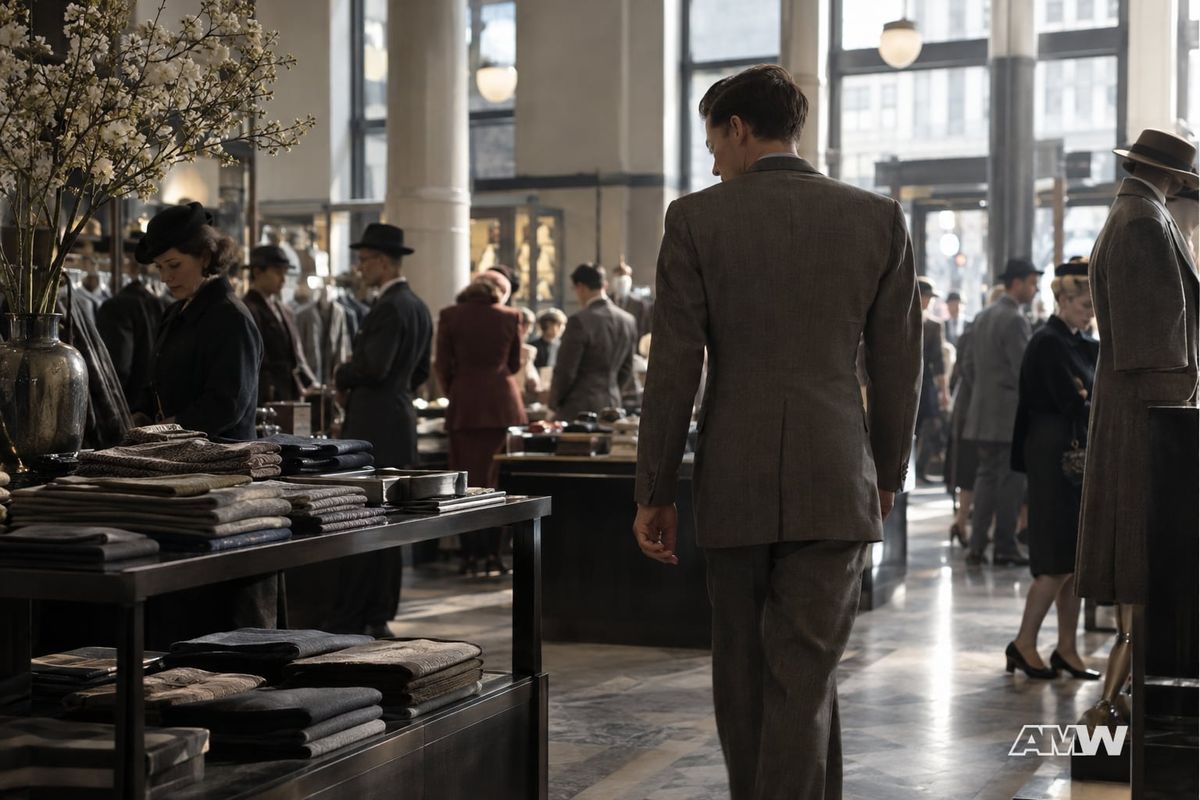
Walton started studying competitors while working at a J.C. Penney store in Des Moines, Iowa, a job he held for about eighteen months before the war interrupted it1. A Sears and the big Younker Brothers department store stood at the same downtown intersection, and he spent every lunch hour walking through them1.
He went in looking for ideas he could adapt and use. Over those months he also came to a view he held for the rest of his life, that strong competition was good for any store, because good competitors kept you "on your feet"1. For a junior employee at Penney's, that's an unusual way to see the stores down the block. Most people in his position would have treated Sears as a rival to beat, and Walton treated it as a place where somebody else was running experiments he could watch for the price of a walk.
The routine itself was simple. He showed up, looked at what was on the shelves, noticed what customers picked up and what it cost, and carried the good ideas back with him. Anyone who does competitive research for a living would recognize every step of it.
In Newport, the Benchmark Was a Store Across the Street
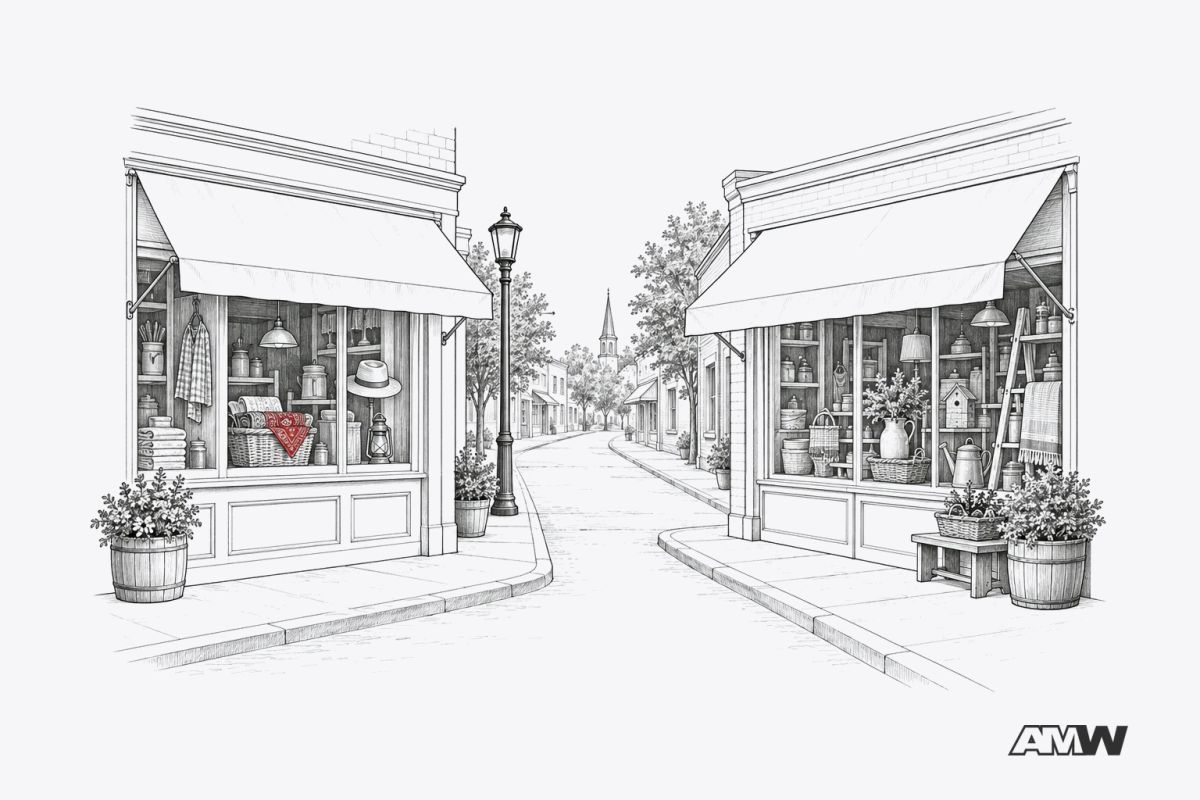
Walton's first business was a Ben Franklin variety store franchise in Newport, Arkansas, a small town in the Mississippi River delta5. He paid $25,000 for it, $5,000 of his own money and $20,000 borrowed from his father-in-law, and after two weeks of training in Arkadelphia he opened on September 1, 1945, at age 275.
He walked into a store with a clear number to beat.
Under its previous owner, the Newport store had done only half as much business as a competing variety store across the street that belonged to the Sterling chain2.
Walton welcomed that competition and came to admire how the Sterling store was run2. Having the local leader a few steps away meant he could check its prices, displays and stock whenever he liked, and measure his own progress against something real.
The prices he advertised in those early days show what he did with what he learned2:
- Clothespins at 9 cents a dozen
- Cannon bath towels at 49 cents each, 20 cents below the regular price
- Red and blue bandannas at 15 cents, down sharply from the usual 39 cents
- Fruit and oyster bowls at 5 cents each
Historians of the company point to this as an early sign of his willingness to use unorthodox sales techniques2. A cut as deep as the bandanna price makes sense when you know what the store across the street is charging and which items will bring a shopper through your door instead of theirs. In 1945 that information lived on shelf tags and in Walton's head, and he collected it on foot.
Walton Lost His First Store in 1950 and Took the Habit With Him
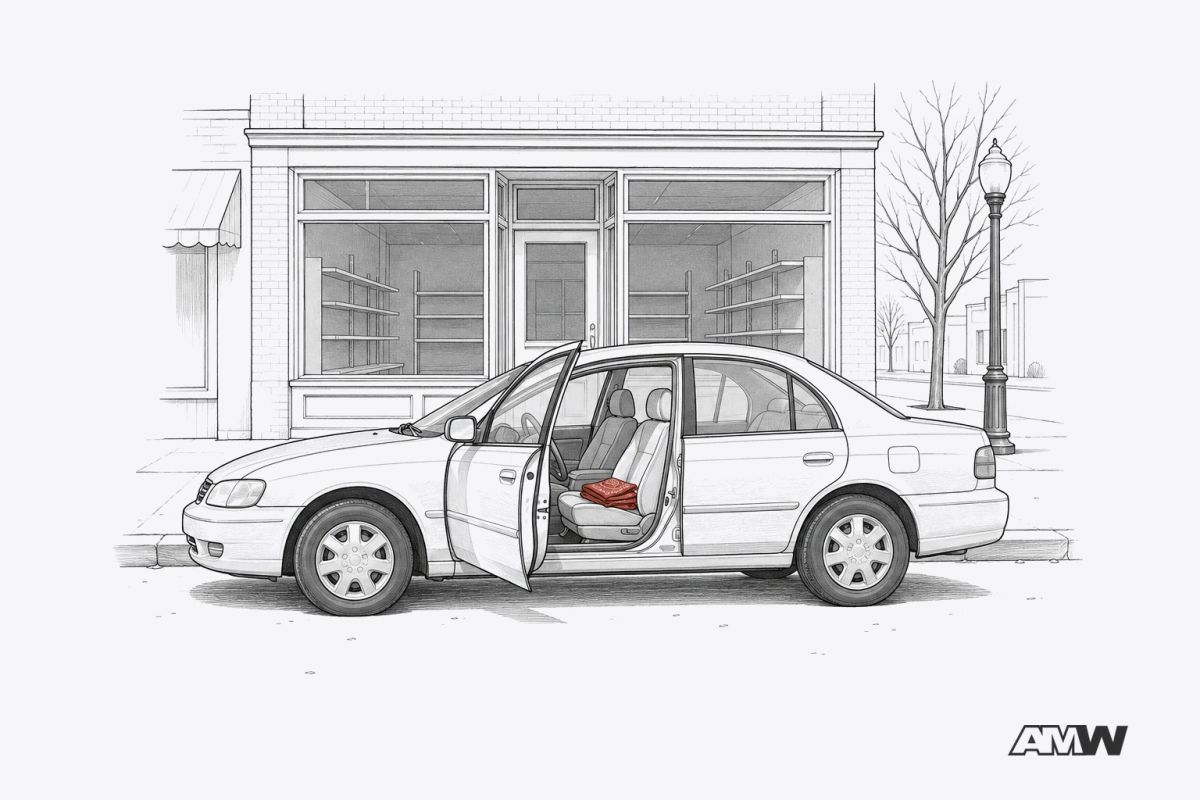
The Newport store did well enough that Walton lost it. As he tells it in his memoir, Made in America, the landlord declined to renew the lease in 1950, reportedly because he wanted the now-successful business for his own son. Walton had to sell and start over in Bentonville, Arkansas, a smaller town, where he opened Walton's 5&10.
The fixtures, the location and the local customers stayed behind in Newport. What came with him was the way he worked: walking other stores, comparing prices, keeping track of what sold and what sat on the shelf. Five years of that routine had taught him how to run a variety store well, and none of it was written into the lease.
This is the strongest support for the idea in this article's title. At the moment he lost everything physical, Walton's real advantage fit in the front seat of his car. Service firms go through their own version of losing the lease fairly often: a big account ends, a partner leaves and takes relationships along, a referral source dries up. The firms that rebuild quickly tend to be the ones where knowledge of the market lives in a shared routine and a shared record, so the next person can open it on Monday and see where things stand.
How Did Store Visits Lead Walton to Discounting?
Walton found discounting the same way he found most of his ideas, by visiting other retailers wherever he traveled and watching which concepts were catching on3. By the start of the 1960s, the discount store was the hottest idea in American retail3. It had begun in the late 1940s in New England with a store called Ann & Hope and spread across the Northeast from there3.
The formula, as one history of the period describes it, was to lease a cheap building, add very cheap display fixtures, buy from the cheapest suppliers, and "pile them high and sell them low," with no service and no frills3. Because these stores needed so little money to open, many fly-by-night operators jumped in3.
That second detail is easy to skip, and it explains why watching closely paid off. A boom full of thinly funded copycats is a boom with plenty of failures in it. Someone touring those stores could see which ones looked busy and which looked shaky, and learn from both before putting his own money on the line. The first Wal-Mart opened in 1962, seventeen years after the Newport store5. Walton was adopting a model others had already tested in the market, which is the Des Moines lunch-hour habit applied to a much bigger decision.
Other retailers grew from very different starting points. Whole Foods, for instance, owed its early survival to neighbors and creditors more than to price-watching, a story told in How Whole Foods Market Continues to Lead in Natural Foods Retail .
Where the Walton Story Gets Oversold
The data habit explains a good deal of Walton's rise, and it leaves plenty out. In the 1940s and 1950s many small-town merchants kept an eye on the store across the street, and most of them stayed small. By most accounts, Walton also stood out for how hard he pushed on prices, how willing he was to borrow, and how he later built the buying and distribution strength that only a large chain can afford. A habit of looking doesn't produce any of that on its own.
The word "data" also carries a lot of weight in the modern retelling. For most of his early career, Walton's information was what he saw in other people's aisles and what his own registers rang up. The store-level reports he read in 1992 came decades later, once the company was big enough to collect them.
There's a question of size here too. For a firm with ten clients and one person selling, a formal weekly report often adds work without telling the owner much they don't already hear from those clients directly. The routine starts to pay off once there are more conversations, deals and campaigns going on than one person can hold in their head, which for many service firms arrives around the second or third salesperson.
What Walton's Habit Looks Like in a Service Business in 2026
In a service business, the equivalent of Walton's store visits is a regular look at where new inquiries came from, which deals have stalled, which clients have gone quiet and what competitors are offering. The big change in 2026 is that gathering most of this no longer takes anyone's lunch hour.
| What Walton watched | How he gathered it | Service-firm equivalent | Where it tends to live today |
|---|---|---|---|
| Rival stores' prices and displays | Lunch-hour walks through Sears and Younker Brothers | Competitors' service pages, packages and posted prices | Bookmarks, a shared doc, or nowhere |
| Which items pulled shoppers in | Watching his own counters after a price cut | Which campaign or referral source brought in clients who paid | Ad dashboards, a CRM, a spreadsheet |
| The gap to the store across the street | Ongoing comparison with the Sterling store | Win rate against the rival you meet most often | Salespeople's memory |
| New formats spreading in other regions | Visiting stores on every trip | New service models and AI-driven offers in your market | Newsletters and conversations |
| Sales by store | Company reports, read right up to 1992 | Pipeline, client activity and revenue by source | Split across several tools |
AI tools and connected software have pushed the cost of the gathering column close to zero. A system can read every new inquiry overnight, sort it, and flag the proposal nobody has opened in a week. What hasn't gotten cheaper is the judgment Walton brought to each walk: seeing that a price cut on one item could pull shoppers in for everything else, or that a format spreading through New England could work in rural Arkansas. When collecting information costs less, deciding what it means is worth more.
Where firms most often lose the habit is in the right-hand column. If the inquiry lands in one inbox, the proposal goes out as a PDF from another, and client notes sit in a salesperson's notebook, the weekly look takes an afternoon of exporting, and before long it stops happening. Retail went through this shift years earlier; on Amazon's marketplace, independent sellers compete for the same shopper on the same product page, as covered in Inside the World of Amazon Third Party Sellers and Their Impact on Retail .
Putting that information in a single CRM is the most direct way to keep the habit alive. AMW CRM keeps each client's history in one record, and its AI agents read through new activity so the Monday review can begin with what changed: the lead that came in over the weekend, the deal that went silent, the support issue a good client raised twice. For the question behind Walton's bandanna price, which offer brought in the customers who spent money, AMW Attribution follows each paying client back to the campaign or channel that first brought them in. Neither tool decides what to do next, and that decision is still where the owner's experience counts.
Five Questions Owners Borrow From the Walton Playbook
A weekly review built on Walton's habit tends to come down to a handful of questions, and owners who keep the list short find they answer it more often. These five follow his career in order:
- What did your closest competitor change since last week? A new package, a revised pricing page, a new hire announced on their site. This is the Des Moines lunch hour.
- Which offer brought people in, and did they buy anything else? A price like Walton's 15-cent bandannas makes the most sense when the shoppers it attracts pick up other things too.
- Where are you behind a specific rival, and by roughly how much? In Newport the gap had a number attached, and a vague sense of being behind is much harder to work on.
- What new approach is spreading in your market, and who is doing it badly? The discount boom was full of weak operators, and their mistakes were lessons anyone could watch.
- What moved in your own numbers since last week? Inquiries, stalled deals, quiet clients, revenue by source. This is the report Walton was still reading at the end.
When one of these takes more than a few minutes to answer, the cause is usually information spread across too many places, and the weekly pipeline review slowly drifts into a monthly one.
A good next step is to write these five questions down and note where the answer to each one lives today. If most of the answers sit in different tools, it may be worth seeing how AMW CRM brings a client's whole history into one place before your next Monday review.
Sources
- 1
- 2
- 3
- 4
- 5

Halima Kiani writes for AMW on technology, business, marketing and AI: the tools, trends and decisions shaping how companies work and grow.
Frequently Asked Questions
Did Sam Walton really review sales data on his deathbed?
According to his oldest son, as recounted in Charles Fishman's 2006 book The Wal-Mart Effect, Walton was reviewing store-level sales data from his hospital bed days before he died in 19924.
How did Sam Walton pay for his first store?
He bought a Ben Franklin variety store franchise in Newport, Arkansas, for $25,000, using $5,000 of his own money and $20,000 borrowed from his father-in-law. He opened it on September 1, 1945, at age 275.
Where did Sam Walton first study his competitors?
In Des Moines, Iowa, while working at a J.C. Penney store. He spent every lunch hour in the Sears store and the Younker Brothers department store, which stood at the same downtown intersection1.
Did Sam Walton invent the discount store?
Why did Walton welcome competition in Newport?
Is a weekly data review worth it for a very small service business?
Often not in a formal sense. With around ten clients and one person selling, an owner usually hears most of what a report would show directly from clients. A routine tends to pay off once there are more conversations and deals than one person can keep track of, which for many firms comes with the second or third salesperson.
What is the service-business version of walking a competitor's store?
Checking competitors' service pages, packages and posted prices, tracking which campaigns bring in clients who pay, and noting win rates against the rival you meet most often. AI tools now make the gathering cheap; deciding what the numbers mean still takes an experienced person.
Related Resources
Case Studies
Related Articles
Howard Schultz and the Starbucks Third Place Strategy
Howard Schultz built Starbucks around a room people wanted to stay in. Seventy percent of orders now skip that room. What changed, and what it means for service firms.
How Phil Knight Sold Shoes From a Car Trunk to Build Nike
In 1964 Phil Knight sold Onitsuka Tigers from his car at Pacific Northwest track meets. Here is what that trunk did for Nike, and which parts still apply now that outreach is cheap.
TechCrunch Disrupt 2026: A Plan If You're Not Raising
Going to TechCrunch Disrupt 2026 without a pitch deck? Use this working plan to turn one week in San Francisco into customers, partners, hires and market intel.