

How Whole Foods Market Continues to Lead in Natural Foods Retail

On Memorial Day in 1981, the worst flood Austin had seen in 70 years swept through a grocery store that was less than a year old. Whole Foods Market had opened the previous September with a staff of 19, and the water wiped out its inventory and damaged most of its equipment. The losses came to about $400,000, and the company had no insurance1.

Quick Summary
Whole Foods Market began in 1980 as a single natural foods supermarket in Austin, Texas. It reopened after a flood in its first year with help from customers and neighbors, then grew by opening stores and buying regional natural foods chains1. It went public in 1992 and reported sales of $15.7 billion in fiscal 2016, but comparable store sales fell that year4. After an activist investor pushed for change in 2017, the board agreed to sell to Amazon for $42 a share, about $13.7 billion17,18. By February 2025 it had more than 535 stores in the U.S., Canada and the U.K.2, and Amazon's annual report does not break out Whole Foods sales22. The chain sets itself apart with published quality standards, including more than 300 ingredients banned from food23, and uses Amazon Prime as its loyalty program34. Its history also includes an FTC order to sell 32 stores after the Wild Oats merger12 and a $500,000 settlement over mislabeled packages in New York City37.
What happened next is the part the company still tells. Customers and neighbors turned up on their own to help the staff clean and repair the store. Creditors, vendors and investors gave it room to get back on its feet, and it reopened 28 days after the flood1.
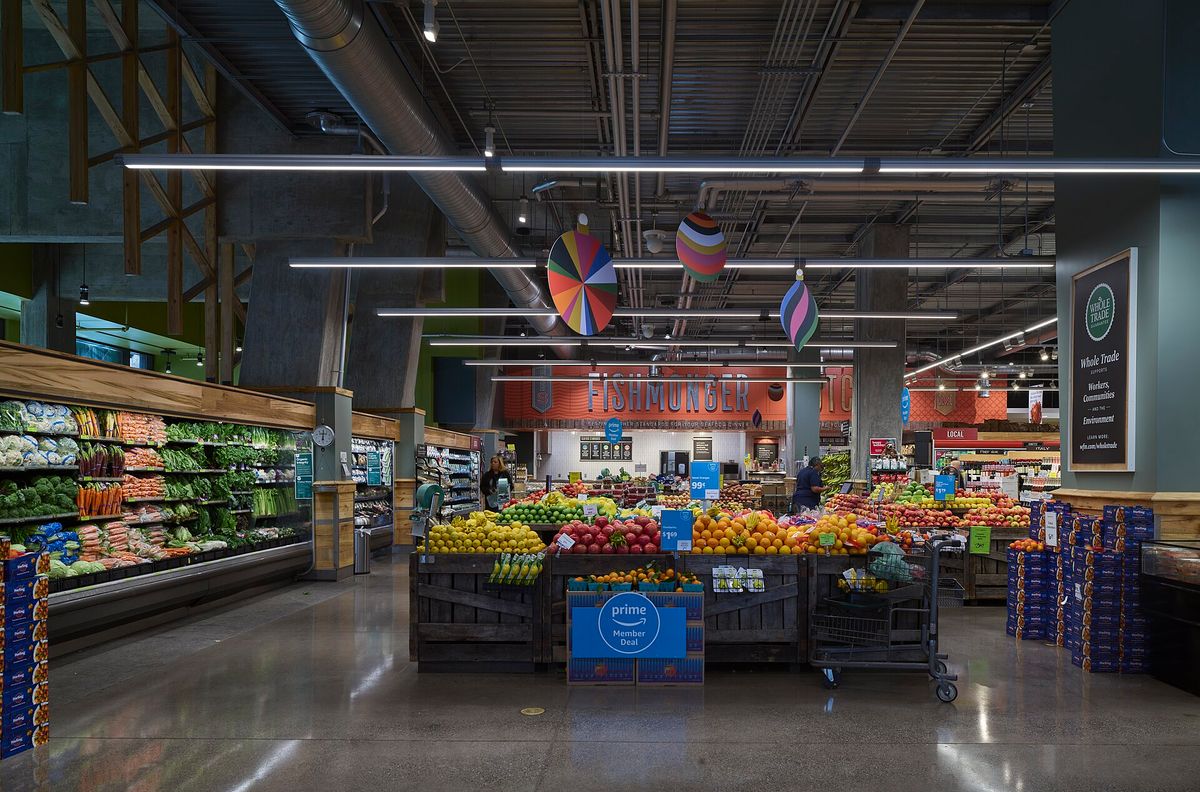
That single store in Austin grew into a chain of more than 535 stores in the United States, Canada and the United Kingdom2, and since 2017 it has belonged to Amazon3. This article follows how it got there, using the company's own history, the annual reports it filed as a public company, court and regulator records, and dated press. It covers the founding and the acquisitions, how the business makes money, what the stores sell and refuse to sell, where the stores are, how prices and marketing changed under Amazon, and the moments when regulators, investors, shoppers and employees pushed back.
What Is Whole Foods Market
Whole Foods Market is a supermarket chain built around natural and organic food. It is based in Austin, Texas, and it became an indirect wholly owned subsidiary of Amazon.com on August 28, 20173. In its final annual report, for the fiscal year that ended September 24, 2017, the company said it had one operating segment, natural and organic foods supermarkets, and described itself as the first national "Certified Organic" grocer3.
The year before, in its last annual report as an independent company, Whole Foods gave a fuller picture of its size. It said it was the largest natural and organic foods supermarket in the U.S., the 5th largest public food retailer and the 10th largest food retailer overall, citing Progressive Grocer's rankings of 2015 sales. Its 456 stores averaged over eight million customer visits a week4.
On its own website in August 2025, the company described its purpose this way: it seeks out "the finest natural and organic foods available," maintains "the strictest quality standards in the industry," and has "an unshakeable commitment to sustainable agriculture"5. In practice those claims rest on published lists of ingredients and farming practices the stores will not accept, covered in detail below.
Core business philosophy and standards
In its annual reports, Whole Foods repeatedly called itself a mission-driven company6. Its motto was "Whole Foods, Whole People, Whole Planet," and it said its success was measured by customer satisfaction, team member happiness and excellence, return on invested capital, environmental stewardship, community service and "win-win supplier partnerships"4.
Earlier reports explained the motto line by line. Under "Whole People," the 2006 report said: "We recruit the best people we can to become part of our team. We empower them to make many operational decisions." Under "Whole Planet," it said: "We believe companies, like individuals, must assume their share of responsibility for our planet," and pledged at least 5% of after-tax profits to nonprofit organizations6.
The 2016 annual report listed eight core values. The company said it sells the highest quality natural and organic products available; satisfies, delights and nourishes its customers; supports team member happiness and excellence; creates wealth through profits and growth; serves and supports local and global communities; practices and advances environmental stewardship; creates ongoing win-win partnerships with suppliers; and promotes the health of its stakeholders through healthy eating education4.
The same report stated the idea behind the list: "The purpose of our business is not only to generate profits but to create value for all of our major stakeholders, each of which is linked interdependently"4. Mackey carried that argument outside the company. The annual report notes that he co-authored "Conscious Capitalism: Liberating the Heroic Spirit of Business," a 2013 New York Times and Wall Street Journal best seller4.
Store format, sourcing and supply chain
In 2016 the stores averaged 39,000 square feet. They were supported by the Austin headquarters, regional offices, distribution centers, bakehouses, commissary kitchens, seafood-processing facilities, a produce procurement center and a specialty coffee and tea roasting operation4. An average store carried about 35,000 products, and some larger stores carried up to 55,0004.
Most buying happened at regional and national level, which the company said let it negotiate better discounts while store buyers focused on replenishment and local products. It ran 11 regional distribution centers focused mainly on perishables, three seafood processing and distribution facilities, three regional commissary kitchens and four bakehouses4. Dry grocery and frozen goods came mostly through United Natural Foods, which accounted for about 32% of total purchases in fiscal 2016 under an agreement that ran through 20254.
Technology and digital strategy
Before Amazon, the company was rebuilding its technology, and its own filings said so. In 2016 it described replacing "core legacy systems with scalable solutions." That year it launched digital coupons and a national digital sales flyer in its mobile app, finished rolling out a new labor scheduling tool to all U.S. customer service teams, completed a unified point-of-sale system in the U.S., expanded delivery through Instacart and began testing a cloud-based product platform with the software company Infor4.
Its online presence had started modestly. In 2008 the company said its corporate website averaged over 50,000 visitors a day and offered recipes and information on food safety, health and the environment7. Since 2017 most of the digital layer, from delivery and pickup to payments and loyalty discounts, has run through Amazon, as described in the shopping section below8.
Leadership
John Mackey was chief executive from 1978 to May 2010 and then co-CEO with Walter Robb, who joined the company in 1991 and had worked as a store team leader4. In November 2016 the board ended the co-CEO structure and named Mackey sole CEO, with Robb leaving the role on December 31, 20169. "Under Walter's leadership, Whole Foods Market has grown from 12 to 464 stores in three countries," board chairman John Elstrott said in the announcement9.
In September 2021, Mackey told employees he would retire on September 1, 2022, after 43 years at the company, and that chief operating officer Jason Buechel would succeed him as CEO10.
In the letter, published by CNBC, Mackey described his relationship with the company in family terms: "As a co-founder of Whole Foods, I've often explained my relationship to the company with a parent-child metaphor." He added: "All parents reach a time when they must let go and trust that the values imparted will live on within their children"10. Buechel had been the company's chief information officer in 20164. By early 2025 he held two titles: CEO of Whole Foods Market and vice president of Amazon's Worldwide Grocery Stores2.
History and Evolution of Whole Foods Market
In 1978, John Mackey, a 25-year-old college dropout, and Renee Lawson, who was 21, borrowed $45,000 from family and friends and opened a small natural foods store in Austin called SaferWay1. When they were evicted from their apartment for storing food products there, they moved into the store. It was zoned commercial and had no shower stall, so, according to the company's history, they bathed in the store's Hobart dishwasher, which had a water hose attached1.
Founding and early years
Two years later the couple teamed up with Craig Weller and Mark Skiles, owners of Clarksville Natural Grocery, and merged the two businesses. The first Whole Foods Market opened on September 20, 1980, in a 10,500-square-foot building, which was large for a health food store at the time1. The company says there were fewer than half a dozen natural food supermarkets in the United States when it opened, and that the store was an immediate success1. Eight months later came the flood.
Once it had recovered, the company began expanding beyond Austin in 1984, first to Houston and Dallas. In 1988 it bought the Whole Food Company in New Orleans, a store that had opened in 1974 and, by the company's account, was doing more than $1 million a year from 1,100 square feet by 1978. The Esplanade Avenue store in New Orleans became the sixth Whole Foods Market. In 1989 the company reached the West Coast with a store in Palo Alto, California1.
Whole Foods completed its initial public offering in January 1992, and its shares traded on Nasdaq under the symbol WFM4. The company later put its fiscal 1991 sales at about $92 million to $93 million, excluding the effect of mergers accounted for as poolings of interests7,4.
Major acquisitions and growth
The 1990s were the decade of acquisitions. Whole Foods kept opening new stores while buying regional natural foods chains that had built loyal followings of their own: Wellspring Grocery in North Carolina in 1991, Bread & Circus in Massachusetts and Rhode Island in 1992, Mrs. Gooch's in Los Angeles in 1993, Fresh Fields on the East Coast and in the Midwest in 1996, Bread of Life in Florida and Merchant of Vino in the Detroit area in 1997, and Nature's Heartland in Boston in 19991.
Some of these were significant businesses in their own right. Bread & Circus, which began in Brookline, Massachusetts, in 1975 selling natural foods and wooden toys, was the largest natural food retailer in the Northeast when Whole Foods bought it1. Fresh Fields opened its first store in Rockville, Maryland, in 1991, reached $100 million in annual sales by 1993, and had 22 stores in four market areas, from Washington and Baltimore to Chicago, when it merged with Whole Foods in 19961. Mrs. Gooch's had held its suppliers to strict rules: no artificial colors or flavorings, no harmful chemicals or preservatives, and no white flour or refined sugar1.
The company's history page gives each of these chains its own origin story. Wellspring Grocery opened in Durham, North Carolina, in 1981 as a completely vegetarian store and added fish, poultry and meat when it moved to a larger space in 1986. Sandy Gooch, a former grade school teacher, became interested in natural foods after severe allergic reactions to antibiotics and chemical additives, and opened the first Mrs. Gooch's in West Los Angeles in January 19771.
Bread of Life began when Julie and Richie Gerber, organic farmers from Maine, bought a 1,300-square-foot natural food store in Fort Lauderdale in 1980; by 1995 they had opened a 30,000-square-foot store in Plantation, Florida, and their merger with Whole Foods in 1997 created the company's Florida region. Merchant of Vino, founded in the Detroit area in 1974 as a wine retailer, had six stores when it joined in December 1997. Nature's Heartland, founded in 1996 in Bedford, Massachusetts, shared a founder, Leo Kahn, with Fresh Fields1.
The company also bought businesses that were not stores. Allegro Coffee, founded by brothers Jeff and Roger Cohn in Boulder, Colorado, had been supplying the stores with coffee and tea for years when it joined the company in December 19971. An early online venture was less durable: WholeFoods.com went live in March 1999, merged into a subsidiary called WholePeople.com, and was folded into Gaiam.com in June 20001.
The next decade opened with Food For Thought in Northern California in 2000 and three Harry's Farmers Market stores in Atlanta in 2001. Whole Foods moved into Manhattan in 2001, entered Canada in 2002, and entered the United Kingdom in 2004 by acquiring seven Fresh & Wild stores1.
Harry's was a different kind of store. Founder Harry Blazer opened his first megastore in Alpharetta, Georgia, in 1987, and two later locations were each more than 100,000 square feet. Whole Foods bought the three perishable megastores, a distribution center, a commissary kitchen and a bakehouse in October 2001, and kept them under the Harry's Farmers Market name1.
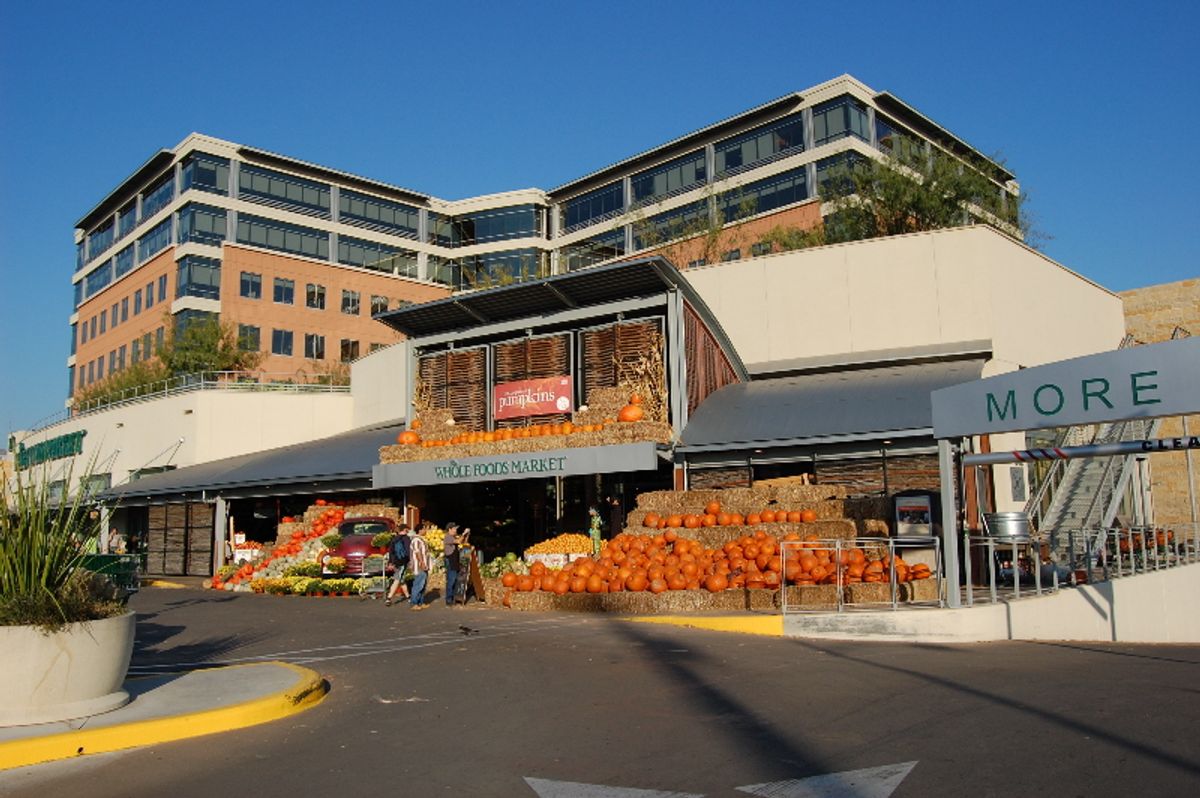
The numbers from those years show how fast the chain grew. By September 2002 it operated 135 stores in 25 states, the District of Columbia and Canada, and it put its sales at about $2.7 billion, up from about $120 million in fiscal 1992, a compound annual growth rate of about 36%11. Sales reached about $5.6 billion in fiscal 2006, when comparable store sales rose 11.0% and the company had 186 stores6.
Wild Oats and the fight with the FTC
The biggest deal before Amazon was Wild Oats Markets, founded in Boulder, Colorado, in 19871.
Wild Oats had its own story. Michael Gilliland and his wife, Elizabeth Cook, bought the Crystal Market vegetarian store in Boulder with no experience in the natural foods business, opened their first supermarket-sized store in Santa Fe, New Mexico, in 1991, and took the company public on Nasdaq in 1996. Its growth peaked in 1999, when it added 47 stores in a single year1. Whole Foods agreed to buy it in February 2007. According to the Federal Trade Commission, the total consideration was about $700 million, Whole Foods operated 194 stores at the time, and Wild Oats had 74 stores in 24 states12. The company's own count is 109 Wild Oats stores, a figure that includes 35 Henry's Farmers Markets and Sun Harvest stores that went to a separate food retailer1.
The FTC went to court to stop the merger. It argued that Whole Foods, which it called the largest premium natural and organic supermarket chain in the United States, was buying its closest competitor and longtime rival12.
The timeline was fast. The FTC filed for a temporary restraining order and preliminary injunction in federal court in Washington on June 6, 2007, and the court granted the restraining order the next day12. The appeals court record shows how central Mackey's own words were. The FTC, the court wrote, "relied on emails Whole Foods's CEO John Mackey sent to other Whole Foods executives and directors, suggesting the purpose of the merger was to eliminate a competitor"13.
The court quoted one of those emails, sent to the board on February 15, 2007: "[Wild Oats] is the only existing company that has the brand and number of stores to be a meaningful springboard for another player to get into this space. Eliminating them means eliminating this threat forever, or almost forever"13. The court also noted that the FTC had produced "pseudonymous blog postings in which Mr. Mackey touted Whole Foods and denigrated other supermarkets as unable to compete"13.
The FTC also pointed to a Whole Foods study called "Project Goldmine," which estimated what Wild Oats customers would do in cities where Whole Foods planned to close Wild Oats stores. According to the appeals court, the study found that "the average Whole Foods store would capture most of the revenue from the closed Wild Oats store, even though virtually every city contained multiple conventional retailers closer to the shuttered Wild Oats store"13.
A federal district court declined to block the deal in August 2007, finding that Whole Foods competed with all supermarkets. An appeals panel refused an emergency injunction on August 23, and the companies completed the merger on August 28, 200713. Whole Foods paid $18.50 a share in a cash tender offer, about $565 million plus about $148 million of Wild Oats debt, and on September 30, 2007, sold the 27 Henry's Farmers Market and eight Sun Harvest stores to a subsidiary of Smart & Final for about $165 million7.
On July 29, 2008, the U.S. Court of Appeals for the D.C. Circuit reversed the district court and sent the case back13. Judge Kavanaugh dissented. "As in many antitrust cases, the analysis comes down to one issue: market definition," he wrote, noting that Whole Foods and Wild Oats together operated "about 300 of the approximately 34,000 supermarkets in the United States"13.
The judges who formed the majority saw the market differently. Judge Brown, who wrote the opinion, said a group of committed shoppers could deserve antitrust protection: "In appropriate circumstances, core customers can be a proper subject of antitrust concern"13. Judge Tatel, concurring, said the district court had "overlooked or mistakenly rejected evidence supporting the FTC's view that Whole Foods and Wild Oats occupy a separate market of 'premium natural and organic supermarkets'"13.
In March 2009 Whole Foods settled. It agreed to sell 32 stores, 13 of them still operating and 19 already closed, along with the rights to the Wild Oats brand, to restore competition in 17 markets12. "As a result of this settlement, American consumers will see more choices and lower prices for organic foods," FTC Chairman Jon Leibowitz said at the time12.
Inside the company, the integration had moved on regardless. In fiscal 2008 Whole Foods closed 13 Wild Oats stores, relocated six, moved all Wild Oats team members onto its own payroll and benefits, eliminated the corporate positions at the Wild Oats home office in Boulder, and put Whole Foods Market signs on 45 of the stores it kept7. It financed the purchase with a $700 million term loan, which it repaid in fiscal 2010 and 201114.
Recession, recovery and the co-CEO years
The deal closed just before the financial crisis. Comparable store sales, which had risen 14.9% in fiscal 2004 and 12.8% in fiscal 2005, slowed to 4.9% in fiscal 2008 and fell 3.1% in fiscal 20097,14. Average weekly sales per store dropped from $617,000 in fiscal 2007 to $549,000 in fiscal 20097,14.
The recovery was quick. Comparable store sales grew 7.1% in fiscal 2010, 8.5% in fiscal 2011 and 8.7% in fiscal 2012, and the chain reached 335 stores14. In May 2010 Walter Robb became co-CEO alongside Mackey4. By fiscal 2014 sales had reached $14.2 billion and net income $579 million4.
Price pressure, 2014 to 2017
Growth then stalled. Comparable store sales rose 7.0% in fiscal 2013, 4.4% in fiscal 2014 and 2.5% in fiscal 2015, and fell 2.5% in fiscal 20164. Net income slipped from $579 million in fiscal 2014 to $507 million in fiscal 2016, even as sales rose to $15.7 billion4. In its 2015 annual report the company said comparable store sales "have been particularly difficult to predict in this competitive landscape"15.
On September 28, 2015, Whole Foods said it would cut about 1,500 jobs, 1.6% of its workforce, "as part of its ongoing commitment to lower prices for its customers and invest in technology upgrades while improving its cost structure." "This is a very difficult decision, and we are committed to treating affected Team Members in a caring and respectful manner," Robb said16.
Activist investor and the sale to Amazon
The merger proxy that Whole Foods filed in July 2017 describes what happened next. On April 10, 2017, the investment firm JANA Partners disclosed that it had acquired about 8.8% of the company's stock and intended to push for changes. At a meeting at the Austin head office on April 26, JANA "demanded that the Company make certain changes to its board of directors and announce an exploration of strategic alternatives"17.
In the same weeks, according to the proxy, an outside consultant to the company called Amazon's Jay Carney on April 21 to ask whether Amazon would be interested in a meeting. The two companies' CEOs met in Seattle on April 30. On May 10, Whole Foods announced five new directors and five departures from its board17.
Amazon offered $41.00 a share on May 23. The Whole Foods board countered at $45.00. On June 1, Amazon's advisers said the company was willing to offer $42.00 and "stressed several times that this was Amazon.com's best and final offer," and the board authorized its adviser to proceed at that price17.
The proxy also sets out why the board said yes. It said the $42.00 price was a premium of about 27% to the share price on June 15, 2017, the day before the announcement, and about 41% to the closing price on March 31, 2017, before activism and deal speculation moved the stock. The board also weighed the risks of staying independent, including "aggressive new entrants," meal kits, meal delivery and food halls, and "deflationary price pressures"17.
The Amazon deal
On June 16, 2017, Amazon agreed to buy Whole Foods Market for $42 a share in cash, a deal valued at about $13.7 billion including the grocer's net debt18. "Millions of people love Whole Foods Market because they offer the best natural and organic foods, and they make it fun to eat healthy," Jeff Bezos, then Amazon's CEO, said in the announcement. Mackey stayed on as CEO, and the headquarters stayed in Austin18.
The deal closed on August 28, 2017. Amazon marked the day with lower prices on a selection of staples, including Whole Trade bananas, organic avocados, organic large brown eggs and responsibly farmed salmon, and said Prime would become the store's customer rewards program19. "Everybody should be able to eat Whole Foods Market quality – we will lower prices without compromising Whole Foods Market's long-held commitment to the highest standards," said Jeff Wilke, then CEO of Amazon Worldwide Consumer19.
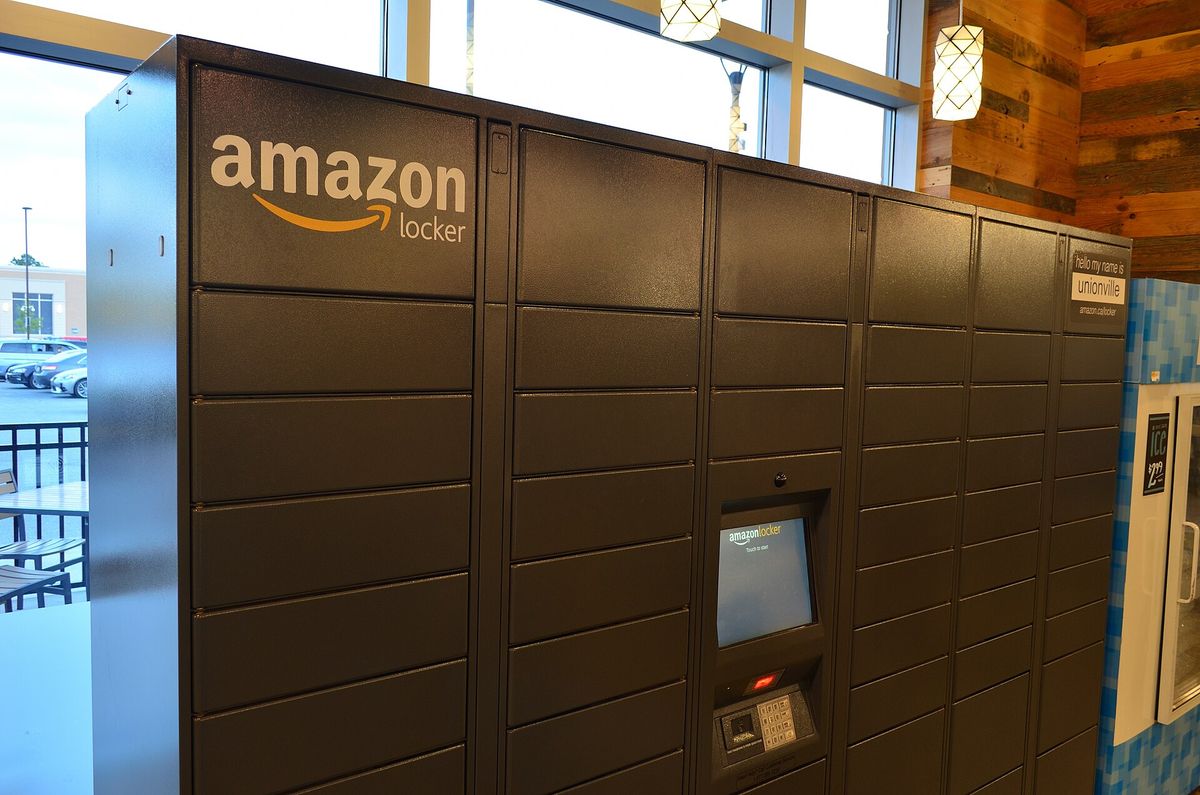
The closing announcement also promised that the company's private label products, including 365 Everyday Value, Whole Foods Market, Whole Paws and Whole Catch, would be sold through Amazon.com, AmazonFresh, Prime Pantry and Prime Now, and that Amazon Lockers would be available in select stores for pickups and returns19.
In February 2018 Amazon began two-hour delivery from Whole Foods through Prime Now in Austin, Cincinnati, Dallas and Virginia Beach, free for Prime members on orders over $3520. "Together, we have already lowered prices on many items, and this offering makes Prime customers' lives even easier," Mackey said20.
Whole Foods Market Business Model
Most of what Whole Foods sells is perishable. In fiscal 2016 and 2017, perishables were 67% of sales, and prepared foods and bakery alone accounted for 19%4,3. The stores reflect that mix, with produce sections, meat and seafood counters, bakeries and prepared foods.
Premium organic and natural products
Whole Foods built its business on a category it helped bring into the mainstream. Its 2016 annual report cited Natural Foods Merchandiser's estimate that natural product sales through retail channels reached about $107.9 billion in 2015, up 9% on the year, while the wider U.S. supermarket industry grew 2% to about $649.1 billion4. The company attributed the growth to factors including "heightened awareness of the role that healthy eating plays in long-term wellness" and "increasing consumer concern over where and how food is produced"4.
Organic products were a large part of that offer. The company said it carried more than 30,000 organic products company-wide in 2016, and that more than 30% of its sales outside prepared foods and bakery were organic that year4.
Private label brands
The company's own brands grew from a small line into a multibillion-dollar business. It introduced products under the "365" label in 1997, launched "365 Organic" in 2002, and in 2004 added a family of "Whole Brands" such as Whole Kitchen and Whole Catch6. In fiscal 2006 its private label lines had about 1,800 products and made up about 8% of retail sales6.
By fiscal 2016 the exclusive brands program had about 5,300 products and generated about $2.3 billion in sales, about 15% of retail sales. It was led by 365 Everyday Value and also included Allegro Coffee, Whole Paws and Engine 2 Plant-Strong4. About 55% of the exclusive brand food products were either certified organic or Non-GMO Project Verified4. The brand was still called 365 Everyday Value when Amazon took over19, and by 2024 the company was calling it 365 by Whole Foods Market21.
Store experience and customer service
The 2016 annual report described what the company wanted a visit to feel like: "We strive to transform food shopping from a chore into a dynamic experience," with "open kitchens, scratch bakeries, hand-stacked produce, bulk departments and extensive prepared foods stations"4. Many urban stores had sit-down wine bars and tap rooms, and the company said it saw its stores as "a third place, besides the home and office, where people can gather, interact and learn"4.
Site selection was data-driven. The company said it used an internal model that weighed education levels, interest in and awareness of natural and organic foods, population density and other demographic information within certain drive times. Each new store had to clear an internal Economic Value Added hurdle, which for new stores generally meant cumulative positive EVA within five years4. The company said its weighted average cost of capital was below 6%, but that for real estate decisions it kept using a more conservative internal rate of 8%4.
How the stores are staffed
Store operations were built around small teams. In 2016 each store employed between about 50 and 600 team members, organized into up to 10 self-managed teams4. Under a program called Gainsharing, each team received a labor budget expressed as a percentage of its sales. When a team came in under budget, part of the surplus was paid out to its members every four weeks, and part went into a savings pool paid out annually4.
The company also capped executive pay. In 2002 it limited cash compensation for any officer to 14 times the average salary of full-time team members, about $399,000 that year11. By 2016 the cap covered any team member at 19 times the average annual wage of full-time team members, and the company said it had raised the multiple only three times in about 30 years4. In 2007 Mackey cut his own salary to $1 and gave up future bonuses and equity awards4.
Whole Foods had about 87,000 team members in September 2016, about 69% of them in full-time positions. It said it had appeared on Fortune magazine's "100 Best Companies to Work For" list every year for 19 years, one of 11 companies to do so, and described all of its team members as non-union4. Full-time team members with at least 20,000 service hours, roughly 10 years of full-time work, received health coverage at no cost4.
What Whole Foods earns
Whole Foods reported its own sales until the Amazon deal. The annual reports show sales of about $7.95 billion in fiscal 2008, $11.7 billion in fiscal 2012, $14.2 billion in fiscal 2014, $15.4 billion in fiscal 2015, $15.7 billion in fiscal 2016 and $16.0 billion in fiscal 20177,4,3. In fiscal 2016 average weekly sales per store were $682,000, or about $915 per gross square foot, and net income was $507 million, 3.2% of sales4.
That productivity had risen over time. The company reported sales of $899 per gross square foot in fiscal 2006 and about $970 in fiscal 2015, before the dip to $915 in fiscal 20166,15,4. Sales followed a seasonal pattern: average weekly sales and gross margin were typically highest in the second and third fiscal quarters and lowest in the summer months of the fourth4.
Marketing was a small line in that budget. Whole Foods said it spent about 0.4% of sales on advertising and marketing in fiscal 2006, about 0.5% in fiscal 2008 and about 0.4% in fiscal 2012, relying instead on "word-of-mouth advocacy by our shoppers, which we believe is more valuable than traditional advertising"6,7,14.
Since the acquisition, Amazon has not reported Whole Foods sales on their own. Amazon's annual report has a "physical stores" line, which it defines as product sales where customers physically select items in a store. That line came to $21.2 billion in 202422. It covers all of Amazon's physical stores, which numbered 618 in North America and 27 elsewhere at the end of 2024, and it leaves out groceries ordered online for delivery or pickup, which Amazon counts as online store sales22. There is no public figure for Whole Foods revenue alone after 2017.
Product Categories and Offerings
For Whole Foods, the rules about what goes on the shelf are a large part of the product. On its quality standards page in August 2025, the company said it banned more than 550 ingredients across food and beverages, supplements, body care and household cleaning products23.
Those lists have grown over time. In its 2016 annual report the company said it banned more than 120 food ingredients and 75 body care ingredients4. By its February 2025 announcement of a new London store, the food standards prohibited more than 300 flavors, colors, sweeteners and other ingredients, and the body care standards more than 2402.
Fresh produce and organic foods
The food list is the best known. The company's standards prohibit more than 300 preservatives, flavors, colors, sweeteners and other ingredients from all the food it sells23, and its February 2025 store announcement named hydrogenated fats and high-fructose corn syrup among them2.
In June 2003, Whole Foods announced that it had become the first national grocer to have its retail operations certified organic by Quality Assurance International. To qualify, a retailer has to follow the standards of the U.S. Department of Agriculture's National Organic Program, submit documentation and open its facilities to on-site inspections24.
"Earning organic certification is further proof of Whole Foods Market's unwavering commitment to organics that began when our first store opened almost 23 years ago," said Margaret Wittenberg, the company's vice president of governmental and public affairs, who had served five years on the USDA's National Organic Standards Board24. By 2016 the certifier was California Certified Organic Farmers, and the company said its distribution centers, several bakehouses, its 365 Organic line and Allegro Coffee also held organic certification4. In 2025 the company said it was still the only certified organic national grocer and stocked 44,500 organic products across its stores23.
Produce sourcing had its own labels. In 2016 the company said it bought produce from more than 1,400 local U.S. farms, and it used a "Responsibly Grown" rating that scored farms on pest management, farm worker welfare, pollinator protection, water, soil health and other issues4. Products carrying its Whole Trade Guarantee came from developing countries and were third-party certified for wages, working conditions and environmental practices, and the company donated 1% of their sales to Whole Planet Foundation4.
The program grew quickly. About 250 products carried the Whole Trade Guarantee seal in 2012, and nearly 500 in 201414,25.
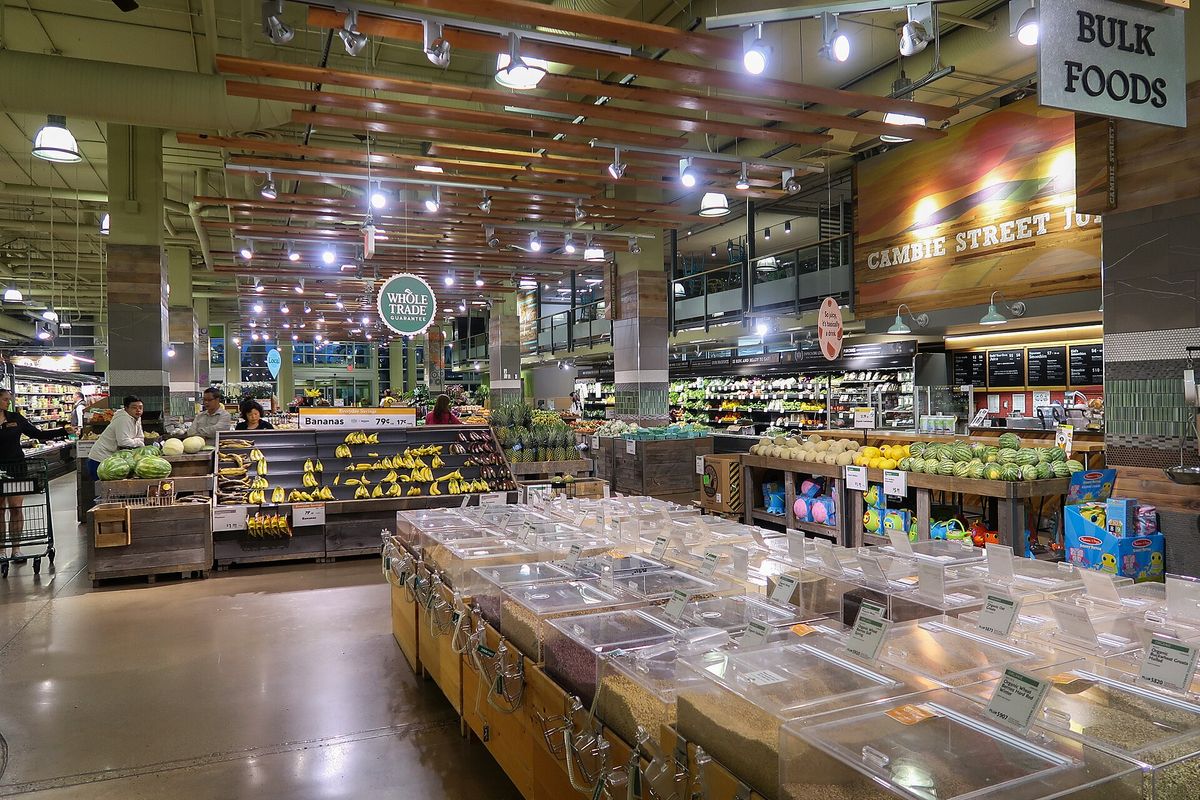
In March 2013 the company went further than any national chain had on genetically modified food. It said all products sold in its U.S. and Canadian stores containing GMOs would have to be labeled by 2018. "We are putting a stake in the ground on GMO labeling to support the consumer's right to know," Robb said26.
The policy moved suppliers. Megan Westgate, executive director of the Non-GMO Project, later wrote that after the announcement, "overnight we saw a doubling in the monthly number of products submitted to the Non-GMO Project Product Verification Program"27. By 2016 the company said it carried more than 13,500 Non-GMO Project Verified products4.
The deadline was never enforced. In May 2018, two weeks after the USDA published a draft national bioengineered food disclosure standard, Whole Foods told suppliers it was "pausing" the policy, according to Westgate. She called the pause "a perfectly logical response" given that the federal rule would set how GMO claims are made27.
Meat, seafood and prepared foods
Meat standards go back to the company's early years. By 2016 Whole Foods said its standards had prohibited hormones in animals raised for meat for 35 years, banned beta agonists, and since 2002 prohibited therapeutic antibiotics4. In June 2007 it piloted a five-tier meat labeling program at its Kensington store in London, and in 2008 development of that system moved to a new foundation, Global Animal Partnership7. By 2016 all beef, chicken, pork and turkey in its fresh meat cases had to meet at least 100 animal welfare standards for a Step 1 rating under that program4.
In August 2025 the company said its meat was traceable to the farm or ranch, with no antibiotics, ever, and no added growth hormones23. All eggs in its dairy cases had to meet its animal welfare standards, which the company describes as better than cage-free23.
Seafood has its own rules. In 2016 the company said all its wild-caught seafood came from fisheries certified by the Marine Stewardship Council or rated green or yellow by the Monterey Bay Aquarium and The Safina Center, that it sold no red-rated seafood, and that its farmed seafood standards prohibited antibiotics and parasiticides4. It had launched color-coded seafood sustainability ratings in September 2010, and said it had topped Greenpeace's "Carting Away the Oceans" seafood report three years in a row14,4. In August 2025 it said all seafood in its seafood departments was either sustainable wild-caught or third-party verified under its Responsibly Farmed standard23.
Prepared foods are a large business on their own. In fiscal 2015 the company said it had close to $3.0 billion in prepared foods and bakery sales15. Its "Health Starts Here" label marked prepared foods that met nutrition guidelines built on four principles, including eating "plant-strong"4.
Health and beauty products
Body care and supplements follow separate lists. In 2016 the company said it never sold body care products tested on animals and banned ingredients including phthalates, formaldehyde, microbeads, triclosan, BHT and BHA. Body care products making an organic claim had to be certified under the USDA National Organic Program or NSF International's 305 standard4.
By August 2025 the body care list covered more than 240 ingredients, including parabens, phthalates and oxybenzone. Separate lists covered more than 140 ingredients banned from household cleaners and more than 150 excluded from supplements23. Cleaning products were rated on the company's Eco-Scale system, which required every ingredient to be listed on the package4.
What is on the shelves
A new store shows what the departments look like. The King's Road store in London, which opened in March 2025, was announced with a full-service seafood counter, organic and conventional produce, a cheese counter run by trained cheesemongers, a full-service meat counter, more than 400 wines, a prepared foods department with hot and salad bars and a pizzeria, a coffee bar, a bakery and a wellness and beauty department2.
Beyond its own labels, the company said in 2016 that it regularly offered about 400 temporary exclusives, branded products unique to Whole Foods in flavor, size or other attributes4. Its stores also carried a wide range of non-GMO, vegan, gluten-free, dairy-free and other special diet foods4.
Whole Foods Market Locations and Expansion
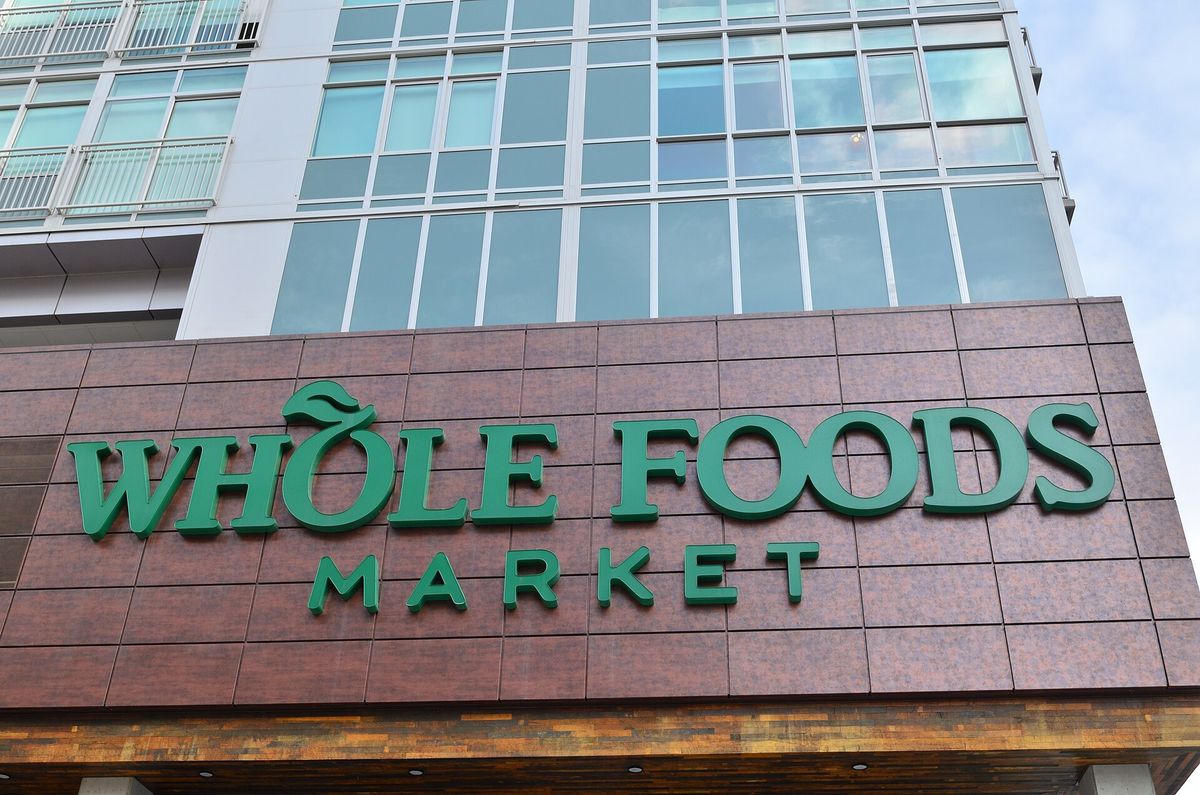
On September 24, 2017, a month after the Amazon deal closed, Whole Foods operated 470 stores: 448 in 42 U.S. states and the District of Columbia, 13 in Canada and 9 in the United Kingdom3. By March 2024 the company counted more than 530 stores and more than 75 in the pipeline21. In February 2025 it reported more than 535 stores and nearly 90 in the pipeline2. An average store is about 40,000 square feet21.
Geographic distribution and market concentration
The last state-by-state breakdown the company published, for September 2016, shows where the chain was strongest. California had 85 stores, far more than any other state. Massachusetts had 31, Texas 29, Florida and Illinois 26 each, Colorado 20, New York 17 and New Jersey 15. Several states had just one store, including Idaho, Iowa, Maine and Mississippi4.
In fiscal 2016, 97% of sales came from the United States, with Canada and the United Kingdom accounting for the remaining 3%4.
Historical growth through strategic acquisitions
The chain's store count shows the effect of acquisitions and new openings. It had 87 stores at the end of fiscal 1998, 135 in 2002, 186 in 2006 and 276 in 2007, the year of the Wild Oats deal11,6,7. It then grew to 335 stores in 2012 and 456 in 201614,4. By 2012 the company said about 17% of its existing square footage had been acquired rather than built14.
Stores also got bigger. The average store was 24,000 square feet in fiscal 1998, 31,000 in 2002, 34,000 in 2006, 38,000 in 2012 and 39,000 in 201611,6,14,4. In 2016 the company said new stores could be as small as 20,000 or as large as 75,000 square feet, with most between 30,000 and 45,0004.
Expansion strategy before and under Amazon
Before the sale, the company opened stores quickly. It opened 25 stores in fiscal 2012, 26 in 2013, 34 in 2014, a record 38 in 2015 and 28 in 2016, and in November 2016 it had 98 stores in development4,15. In 2016 it said its growth strategy was "to expand primarily through new store openings," and that any future acquisitions of smaller chains were not expected to significantly affect its store growth4.
That pace continued under Amazon. The chain went from 470 stores in September 2017 to more than 530 in March 2024 and more than 535 in February 2025, with nearly 90 more in development3,21,2. In 2023 it opened its 17th New York City store, at One Wall Street21.
Format innovation and market adaptation
In fiscal 2016 Whole Foods launched a second store brand, 365 by Whole Foods Market, which it called a value format with "a convenient, smaller footprint and curated product selection," centralized buying and automatic inventory replenishment4. Three of the chain's 31 openings in fiscal 2017 were 365 stores3. In January 2019 Mackey told employees the company would drop the format, which then had 12 stores, according to Grocery Dive28.
In March 2024 Whole Foods announced a new small format called Whole Foods Market Daily Shop. The stores range from 7,000 to 14,000 square feet, about a quarter to half the size of a regular store, and are meant for quick trips in dense city neighborhoods21. "At our new store formats, we're tailoring every square foot to the unique, fast-paced needs of urban lifestyles," said Christina Minardi, the company's executive vice president of growth and development21.
The first Daily Shop opened in September 2024 at 1175 Third Avenue on Manhattan's Upper East Side, in a space of just over 9,100 square feet. Grocery Dive reported that it was the first of five Daily Shops the company planned for New York City29.
Grocery Dive's tour of that store described how the format differs from a full Whole Foods. The Daily Shops are "clustered" near full-size stores, according to Stephanie Curley, the company's senior principal for growth and innovation. The first store had a single food vendor, Juice & Java, and no meat or seafood counters. Its grab-and-go food and bakery goods came from a new 10,000-square-foot micro-kitchen in Queens, and the aim was to carry 75% of what a traditional store stocks29.
Clear shelving and display cases were used to keep the small space from looking heavy. "The idea is to use every single inch, which a lot of stores in Manhattan do a really good job of," Minardi told Grocery Dive29.
Canada and the United Kingdom
Whole Foods entered Canada in 20021. The Wild Oats deal added Capers Community Markets in British Columbia7, and the chain had 11 Canadian stores in 2016 and 13 in 20174,3. In 2025 the company still described its stores as spread across the U.S., Canada and the U.K.5, and its Local Producer Loan Program lends to small producers in both the U.S. and Canada30.
The United Kingdom business began in 2004 with the purchase of Fresh & Wild. Hass Hassan founded that chain in late 1998, opened its first new store in Camden Town in February 1999, and by the time Whole Foods bought it had seven stores in London and Bristol, a central kitchen and a warehouse1.
Fresh & Wild had grown by combining established London health food shops with new openings. It started with the City Health Store, added a store in Notting Hill in April 1999, opened in Clapham Junction in 2000, Soho in 2000 and Stoke Newington in 2001, and opened its first store outside London, in the Clifton area of Bristol, in December 20031. The company had 5 U.K. stores in 2008 and 9 in 2016 and 20177,4,3.
On March 25, 2025, Whole Foods opened a 21,800-square-foot store at 120 King's Road in Chelsea, its first new U.K. location since 20142. "Whole Foods Market has roots deeply planted in the U.K., and we are thrilled to be bringing more natural and organic food to this market with the opening of our new King's Road store this March," Buechel said2.
"We know customers in the U.K. are seeking high quality natural and organic products. As we plan for the future, we are actively looking at this market and opportunities to bring Whole Foods Market to more customers there," said Christina Minardi2.
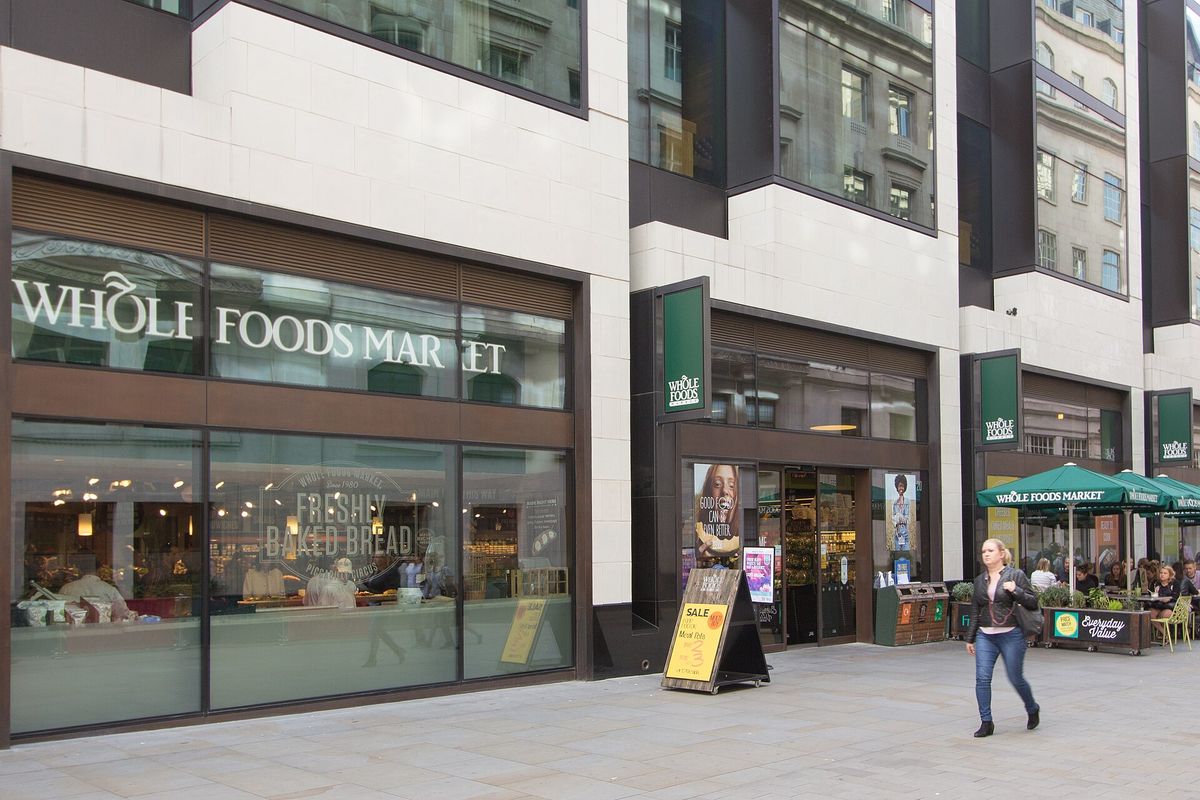
Grocery Gazette, reporting from the opening, counted seven Whole Foods stores in the U.K. out of more than 500 worldwide, and a company spokesperson said the company was "actively looking at multiple sites in the UK"31. The store hired 111 team members, 60 of them new to the company and hired locally31.
On opening day the company said it would donate food to The Felix Project, a London charity that redistributes surplus food, through its Nourishing Our Neighbourhoods program, and give funds to community groups in Chelsea including the Kensington & Chelsea Foundation2.
Pricing Strategy and Market Position
Whole Foods has long had to answer a question about price. Grocery Dive, writing in 2019, pointed to the "stubborn 'Whole Paycheck' title many shoppers still associate with the grocer"28. Its competitors had also caught up on selection. When the company launched its first national ad campaign in 2014, Grocery Dive noted that seemingly every grocer in the country now sold organic produce and natural products32.
Premium pricing model
The company's annual reports explained its position as quality first, with value programs alongside. In 2016 it said it offered "a range of choices at every price level" and pointed to its 365 Everyday Value products, thousands of competitively priced branded items and monthly promotions on thousands of products, including "the widest array of organic and non-GMO sale items available"4.
It also listed who it competed with, and the list was long: conventional and specialty supermarkets, natural foods stores, warehouse clubs, online retailers, farmers' markets, restaurants and meal delivery companies, each competing "on the basis of store ambiance and experience, product selection and quality, customer service, price, convenience or a combination of these factors"4.
Competition with traditional grocers
That competition showed up in the numbers. In fiscal 2015 gross margin fell to 35.2% of sales from 35.8% two years earlier, and the company told investors to expect a larger decline in fiscal 2016, "primarily reflecting its value efforts"15. The September 2015 job cuts were announced as part of the same push to lower prices16.
The 2015 annual report listed the other responses. That year the company opened a record 38 stores, ran its first national brand campaign, launched a new mobile app, piloted an affinity program, partnered with Instacart for grocery delivery and began rolling out a new point-of-sale system15.
The company also experimented with loyalty. In fiscal 2016 it tested a rewards program in Philadelphia, Dallas and Fort Worth and at its 365 stores, and launched digital coupons and a national digital sales flyer in its app4. The merger proxy later cited "intensifying competitive conditions, deflationary price pressures and technological changes" among the issues the board had been weighing before the sale17.
The 365 experiment
Before Amazon, Whole Foods also tried a lower-priced format. It launched Whole Foods Market 365, a smaller value format, in fiscal 2016, and three of its 31 store openings in fiscal 2017 were 365 stores3. In January 2019 Mackey told employees the company would drop the 365 format, which then had 12 stores. "As we have been consistently lowering prices in our core Whole Foods Market stores over the past year, the price distinction between the two brands has become less relevant," he wrote, according to Grocery Dive28.
Amazon's price cuts
The price cuts Mackey referred to began on the day the Amazon deal closed19. On April 1, 2019, Amazon and Whole Foods announced a third round, with lower prices on hundreds of items and an emphasis on produce, reductions averaging 20% on select items, and double the number of weekly Prime member deals33.
Examples in that announcement included large yellow mangoes at $1 each and organic bunched rainbow chard at $1.99 for all shoppers, and Prime member deals such as organic strawberries at $2.99 a pound and wild-caught halibut fillets at $16.99 a pound33.
"Whole Foods Market continues to maintain the high quality standards that we've championed for nearly 40 years and, with Amazon, we will lower more prices in the future, building on the positive momentum from previous price investments," Mackey said in that announcement33. The companies said customers had saved "hundreds of millions of dollars through lower prices and Prime member deals" since the merger33.
Prime becomes the loyalty program
In April 2018 Whole Foods retired its rewards pilot program and its digital coupons. In May 2018 it began offering Amazon Prime members an extra 10% off sale items plus weekly deep discounts on selected bestsellers, starting in Florida and expanding nationwide from that summer34.
"By offering greater discounts on sale items, and exclusive deals like $10 off a pound for sustainably-sourced, wild-caught halibut, launching savings for Prime members is an amazing opportunity to bring our industry-leading quality standards and delicious food to more customers at a better price," Mackey said at the launch34.
By August 2025 the offer worked the same way. Prime members scanned the Whole Foods Market or Amazon app at checkout for an extra 10% off storewide sales, excluding alcohol and gift cards, along with rotating Prime member deals8.
Delivery fees
Delivery pricing has moved in both directions. Amazon began free two-hour Whole Foods delivery for Prime members on orders over $35 in 201820. Starting October 25, 2021, Amazon added a $9.95 service fee to Whole Foods delivery orders, saying the fee covered operating costs. A Whole Foods spokesperson told GeekWire the company had delivered more than three times as many orders in 2020 as in 201935.
The fee did not apply to pickup orders at Whole Foods, which still required a $35 minimum for Prime members, or to Amazon Fresh delivery, GeekWire reported35.
In April 2024 Amazon introduced a grocery subscription for Prime members: $9.99 a month for unlimited delivery on orders over $35 from Whole Foods Market, Amazon Fresh and other grocers on Amazon.com36. The Whole Foods website was promoting that subscription in August 20258.
Overcharging in New York
In June 2015, New York City's Department of Consumer Affairs announced an investigation into mislabeled prepackaged foods at Whole Foods stores in the city. In December 2015 the department announced a settlement. Whole Foods agreed to pay $500,000, to audit at least 50 products from 10 departments every quarter at all of its New York City stores, to weigh every package individually and to train the employees who weigh and label products37.
"After discovering the troubling and repeated mislabeling of pre-packaged goods at Whole Foods last year, we are happy to have reached an agreement with Whole Foods that will help to ensure New Yorkers are better protected from overcharging," said DCA Commissioner Julie Menin37.
Sustainability and Corporate Responsibility
The company placed environmental work under a program it called Green Mission. In 2016 it said it had earned seven EPA Green Power awards and, as a partner in the Department of Energy's Better Buildings Challenge, had committed in 2014 to cut energy consumption 20% by 20204.
Environmental initiatives
Renewable power came first. The company said in 2014 that since 2004 it had bought over 4.3 billion kilowatt hours of wind-based renewable energy25. Its Berkeley, California, store was, in the company's words, "the nation's first major food retailer to introduce solar energy as its primary lighting source in 2002," and its Glastonbury, Connecticut, store used an on-site hydrogen fuel cell to generate half its electricity and heat7. By 2016 many stores and facilities used or hosted rooftop solar, wind turbines, combined heat and power systems or rooftop farms, and more than 75 U.S. stores had electric vehicle charging stations4.
The filings show that work building year by year. In 2012 the company reported 15 stores and a distribution center with rooftop solar, four stores with fuel cells, electric vehicle charging at over 30 stores and a pledge to cut energy use per square foot by 25% by 201514. By 2014 there were 17 solar stores, two with rooftop farms and charging stations at more than 45 stores25. In 2006 Business Ethics magazine ranked the company 47th on its "100 Best Corporate Citizens" list6.
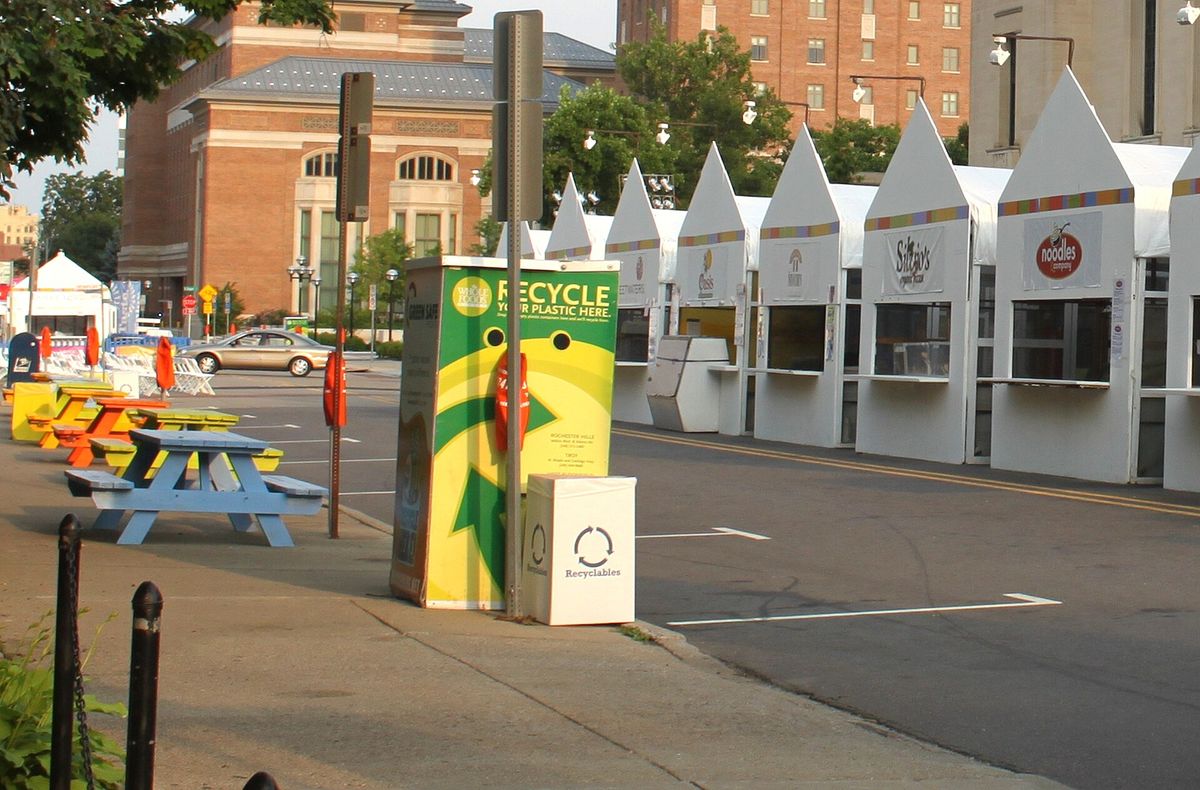
In January 2008 Whole Foods pledged to stop offering disposable plastic grocery bags at the checkouts of all 270 of its stores in the U.S., Canada and the U.K. by Earth Day, April 22, 2008. The company said it was the first U.S. supermarket to commit to eliminating them completely and estimated the change would keep 100 million new plastic bags out of the environment between Earth Day and the end of that year. It kept offering 100% recycled paper bags and refunds for shoppers who brought their own38.
"More and more cities and countries are beginning to place serious restrictions on single-use plastic shopping bags since they don't break down in our landfills, can harm nature by clogging waterways and endangering wildlife, and litter our roadsides," said A.C. Gallo, then co-president and chief operating officer. The company marked the pledge with a "Bring Your Own Bag Day" and said it would hand out over 50,000 reusable bags38. The company later said it was the first national retailer to offer Forest Stewardship Council certified paper bags made from 100% post-consumer recycled fiber4.
Buildings and waste followed. The company's Sarasota, Florida, store was, by its account, the first supermarket designed under the LEED green building rating system, and its Austin flagship was also LEED-certified7. By 2016 dozens of stores had LEED, Green Globes or EPA GreenChill certification, a Dublin, California, store had received the EPA's "Best of the Best" GreenChill award for its refrigeration, and 28 stores had been certified Zero Waste for diverting 90% of their waste from landfills4.
Community involvement programs
Giving was built into the budget. In 2016 the company said its goal was to contribute at least 5% of after-tax profits a year to nonprofit organizations, that each store kept its own budget for local donations, and that it covered the operating costs of its three foundations so that all public donations went to programs4.
The foundations began in 2005, when the company created Whole Planet Foundation and the Animal Compassion Foundation with over $1 million raised from two global "Five Percent Days," on which 5% of all customer purchases were donated6. Whole Planet funds microcredit in communities that supply the stores. By June 2016 it had partnered with 83 microfinance institutions on more than $70 million in grants in 69 countries, and more than 1.5 million borrower families, 88% of them women, had received loans4.
Whole Kids Foundation, founded in 2011, gives grants for school gardens and salad bars. By 2016 about 3,650 schools in the U.S. and Canada had received garden grants, and about 4,700 salad bars had been provided to schools with the Let's Move Salad Bars to Schools partnership4. Whole Cities Foundation, founded in 2014, invested in community food-access projects in places including Englewood in Chicago, New Orleans, Detroit and Jackson, Mississippi4.
At the start of 2024, the three programs, Whole Cities, Whole Kids and Whole Planet, combined into the Whole Foods Market Foundation. In its first year, the foundation said, it increased its commitments to partners by $14 million in 39 countries39. Its stated focus is children's nutrition, access to healthy food and financial inclusion39.
Its 2024 report highlighted a Community First Grant to Zenger Farm, a working urban farm, through Whole Cities, and a garden grant to Stratford Friends School, which serves students with language-based learning differences, through Whole Kids39.
Local Producer Loan Program
Founded in 2006, the Local Producer Loan Program lends money to small, local or emerging producers in the U.S. and Canada so they can grow. In September 2016 the company said it had disbursed about $21 million in loans to 260 producers4. By mid-2025 it said it had made more than 408 loans representing roughly $34 million in capital30.
The first recipient, in 2007, was Buzzn Bee Farm in Florida, which bought a freezer to make creamed honey. GoodPop, a frozen treat company that started at farmers markets around Austin, used its 2015 loan to buy equipment30. MOMO Dressing, founded in 2013 by Japanese immigrants Masaki and Yukimi Momose, received loans in 2016 to open a Brooklyn production facility and in 2021 to buy an automated sealing machine30.
Other examples on the program's page range across the country: Jenny Yang's Phoenix Bean tofu company in Chicago used its 2017 loan to expand production, FireFly Farms, a goat cheese maker in Accident, Maryland, bought a packaging line with its second loan in 2019, and Uncle's Ice Cream Sandwiches in Waialua, Hawaii, bought a packaging machine in 2021 for products sold only in the company's Hawaii stores30.
The company also runs a program called Sourced for Good, which it says supports workers, communities and environmental stewardship where its products are sourced23.
Shopping Experience and Customer Benefits
For shoppers, the visible parts of Whole Foods are the standards on the shelf, the people in the store, and, since 2017, the Amazon services layered on top.
Product quality and standards
The standards described above are what the company asks customers to trust. It guarantees "100% product satisfaction, or their money will be refunded in accordance with the terms of this policy," according to its company information page in August 20255. In 2016 it described the quality standards as the thing that let it "attract and maintain a broad base of loyal customers"4.
Store environment and staff expertise
The stores' self-managed teams and Gainsharing were designed to reward productivity that team members could control, and the company encouraged stock ownership through a broad option plan; about 94% of equity awards granted since 1992 had gone to team members who were not executive officers4. The company also offered team members extra store discounts of up to 35% for meeting health criteria under a voluntary program4.
Stock options reached well beyond the executive suite. In fiscal 2015, about 8,000 team members exercised about 2.2 million options for about $45 million in pre-tax gains, an average of about $5,700 each15. In fiscal 2016 full-time voluntary turnover was about 18%4.
Inside the stores, the 2016 annual report listed what the company meant by a lively atmosphere: "wood-burning pizza ovens; burrito stations and ethnic foods; juicing and handcrafted coffee stations; and greens, beans and grains cooking bars." It said many stores offered personal shopping, online ordering and home delivery, and that it weighed "the blend between full- and self-service options"4.
In January 2025, workers at the Whole Foods store in Philadelphia's Center City voted to join the United Food and Commercial Workers, forming the first union in the chain. The union said 130 workers voted in favor and 100 against. Whole Foods said it was "disappointed" by the result and "committed to maintaining a positive working environment in our Philly Center City store," CNN reported40.
The union said workers had faced anti-union pressure from Amazon before the vote. In a video shared by workers the day before the election, one employee, identified as Ben, pointed to the rising cost of living: "We need improvement to our actual material conditions"40.
Shopping convenience features
Amazon's services now reach into the stores. In July 2023 Amazon said all 500-plus U.S. Whole Foods stores would offer Amazon One palm payment by the end of that year, allowing Prime members to pay and get their discounts by hovering a palm over a reader; at the time it was in more than 200 stores41.
Amazon said the palm service was then used at over 400 locations across the U.S. and had passed 3 million uses, and that savings would apply automatically for Prime members who linked an Amazon One profile to their Amazon account41. By August 2025 the company's website said Amazon One was available in all Whole Foods Market stores8.
The same page promoted free Amazon pickups and returns at the stores, with no box required, and 5% back at Whole Foods and Amazon.com for holders of the Prime Visa card8. Online grocery orders for delivery or pickup were placed through amazon.com/wholefoods8. The small Daily Shop format adds convenience for city customers who want grab-and-go meals and quick top-up shopping21.
From rewards pilots to Prime
Before Amazon, the company's app carried digital coupons and a sales flyer, and it was testing a rewards program in a few cities4. Amazon replaced that with Prime. The rewards pilot and app coupons were retired in April 2018, and Prime membership became the store's loyalty program34.
Marketing strategy
For decades the company leaned on word of mouth. In 2002 it said it spent "less on advertising than conventional supermarkets, instead relying primarily on word-of-mouth recommendations from our customers"11. In 2012 it said it had marketers in every store dedicated to local events, community nonprofits and the in-store experience14.
In October 2014, 34 years after its first store opened, Whole Foods launched its first national ad campaign, "Values Matter," which celebrated the chain's animal welfare rating system and its sustainable seafood standards. Grocery Dive read it as an attempt to stand apart from the growing number of rivals selling natural and organic food, without starting a price war the chain would lose32.
Its reporter put the positioning bluntly: "Shopping at Whole Foods isn't cheap. And it probably never will be. But the retailer wants consumers to continue to believe that shopping there is important"32. The company's 2015 annual report listed "our first ever national brand campaign" among the year's strategic initiatives15.
Digital channels grew alongside. In 2016 the company said it had more than 13 million fans and followers across Facebook, Twitter and Instagram and was focusing on "lifecycle marketing" programs to build one-to-one connections with customers4.
The same focus on food runs through its newer marketing. Each year a Trends Council of more than 50 employees, including buyers and culinary staff, publishes predictions for the coming year's food trends. Its October 2024 forecast for 2025 picked international snacks, filled dumplings it called "pocket foods" and drinks built around hydration42. "Whole Foods Market has been keeping an eye on trends and spotlighting innovation in food and beverage from the beginning," said Cathy Strange, the company's ambassador of food culture and a member of the council42.
The 2025 list also named sourdough products, ocean ingredients such as sea moss and duckweed, lower-impact packaging and a continued focus on protein, according to Food Business News. It was the company's 10th year of trend forecasting. "Our 10th anniversary of trend forecasting marks an important milestone for us, reflecting a decade of sharing innovation and culinary exploration that crosses every aisle," said Sonya Gafsi Oblisk, chief merchandising and marketing officer42.
In the stores, local products carry much of the message. At the King's Road opening, small red signs marked locally sourced products, and the spokesperson told Grocery Gazette, "We're really focused on the theatre of retail"31. The store opened with products from more than 80 local brands and several items made only for that location2.
Conclusion: What the Whole Foods Story Shows
Whole Foods grew from a store where the founders slept to a chain of more than 535 stores, and its history offers a few clear lessons for anyone building a brand.
Standards can be the brand. Whole Foods sells many of the same categories as any supermarket. What sets it apart is a published list of what it will not sell23, and in 2014 it made those standards the subject of its first national campaign32.
Buying loyal local chains built a national one. The company says it fueled rapid growth in the 1990s by acquiring regional natural foods chains, such as Bread & Circus and Fresh Fields, that had built followings of their own1.
Word of mouth can carry a brand for a long time. For most of its public life the company spent well under 1% of sales on advertising and relied on shoppers to spread the word6,14.
Price perception is hard to shake. Whole Foods tried a lower-priced format, and Amazon cut prices and added Prime discounts, yet in 2019 Grocery Dive still called the "Whole Paycheck" nickname stubborn28.
Size brings scrutiny. The FTC made Whole Foods sell 32 stores after the Wild Oats deal12, and a court record preserved the CEO's email about eliminating a competitor13. The company also paid $500,000 to settle New York City's investigation into mislabeled packages37.
Slowing growth invites new owners. When comparable store sales turned negative in fiscal 20164, an activist investor arrived within months, and the board sold the company to Amazon17.
Customers defend what they value. In 1981, with no insurance and a flooded store, Whole Foods Market reopened in 28 days because customers and neighbors showed up to help clean it and its creditors and suppliers gave it time1. More than four decades later, the business still depends on shoppers who think the store is worth the trip.
Sources
- 1
- 2
- 3
- 4
- 5
- 6
- 7
- 8
- 9
- 10
- 11
- 12
- 13
- 14
- 15
- 16
- 17
- 18
- 19
- 20
- 21
- 22
- 23
- 24
- 25
- 26
- 27
- 28
- 29
- 30
- 31
- 32
- 33
- 34
- 35
- 36
- 37
- 38
- 39
- 40
- 41
- 42

Cristina Arcega-Punzalan is a content writer at AMW®, covering topics in marketing, entertainment, and brand strategy.
Frequently Asked Questions
How many stores does Whole Foods Market have?
What is Whole Foods Market's annual revenue?
Amazon does not report Whole Foods sales separately. The last figure Whole Foods published on its own was about $16.0 billion for the fiscal year ended September 24, 20173. Amazon reports a "physical stores" line of $21.2 billion for 2024, but that covers all of its physical stores and excludes online grocery orders, so it is not a Whole Foods figure22.
What ingredients does Whole Foods ban?
Its food standards prohibit more than 300 preservatives, flavors, colors, sweeteners and other ingredients23, including hydrogenated fats and high-fructose corn syrup2. Across food, supplements, body care and household cleaning products, the company said in 2025 that it banned more than 550 ingredients23.
What do Amazon Prime members get at Whole Foods?
Prime members who scan the Whole Foods Market or Amazon app at checkout get an extra 10% off storewide sales, excluding alcohol and gift cards, plus rotating Prime member deals8. Prime members can also pay $9.99 a month for unlimited delivery on orders over $35 from Whole Foods Market and Amazon Fresh36.
Who founded Whole Foods Market?
John Mackey and Renee Lawson, who ran the SaferWay natural foods store, merged it with Clarksville Natural Grocery, owned by Craig Weller and Mark Skiles. The four opened the first Whole Foods Market in Austin on September 20, 19801.
When did Amazon buy Whole Foods Market, and for how much?
Related Articles
How Starbucks Market Dominance Strategy Conquered the Global Coffee Industry
Starbucks has transformed from a single Seattle coffee shop into a global powerhouse with over 38,000 locations worldwide. The company's remarkable expansion strategy combines aggressive market penetr
Restoration Hardware Luxury Lifestyle Brand Builds a $3.8 Billion Empire
Restoration Hardware began in 1979 with one man restoring a Victorian house in Eureka, California. Under Gary Friedman it became RH, a luxury home brand whose revenue reached $3.8 billion in fiscal 2021.

Building a Great Brand Identity With Digital Marketing
In digital commerce, imagine two startups launching simultaneously within the same industry, each targeting a similar audience with comparable products. One startup differentiates itself by crafting e