

What to Automate First When AI Agents Join Your Team


Gartner forecasts that task-specific AI agents will be built into 40% of enterprise applications by the end of this year, up from less than 5%3. For a founder or sales lead, that means agents are showing up inside the CRM , the helpdesk and the inbox whether or not anyone went shopping for one. So the practical question has moved on from whether to try an agent to which piece of work to hand it first.

Quick Summary
When deciding what to automate first when AI agents join your team, the safest starting point is read-only information gathering, such as call prep briefs and pipeline summaries, where mistakes get caught inside the team. Next come drafts a person approves before sending. Work that spends money, changes terms or depends on reading a client relationship stays with people, so a team can build trust in its agents one step at a time.
That first choice carries more weight than it looks. The job an agent starts with shapes how much your team trusts it three months later. A bad first pick, like letting it email customers on day one, can set adoption back further than any missing feature. A slower start usually gets further, because each step gives the team a reason to trust the next one.
Agents Are Moving From Chat Windows Into Everyday Business Software
The shift this year is about where agents live. Until recently, most people met AI in a chat window they opened on purpose. Now agents are being built into the tools a team already works in, and they take actions there. The Next Web described it as the point at which software stopped waiting to be told what to do3.
That changes who makes the small decisions. Industrial Equipment News argued on September 16 that decision-making is already moving closer to the people doing the work, because AI inside everyday software hands them forecasts, recommendations and automated workflows without a wait on layers of management1.
It's worth keeping the forecast in proportion. An agent being present in 40% of enterprise apps tells you little about how many teams use one well, and a feature a vendor switches on is a long way from a job a team has handed over. BBN Times, looking at this year's agent startups, pointed out that every extra agent is another place for something to fail. It listed the hard problems as context, reliability, permissions, cost, monitoring and evaluation2. Those are ordinary operating problems, and they're the reason the order you automate in matters so much.
Start With the Research Your Team Does Before Every Call
The best first job for an agent is gathering and summarizing information that a person then uses to make a decision. The agent only reads, and the only person who sees its work is the colleague who asked for it. BBN Times picked out sales as a promising area for agents because so much of it is repetitive information gathering, such as identifying target accounts and pulling details together before outreach2.
Most service businesses have plenty of this work:
- Preparing for a discovery call: what the prospect wrote on the inquiry form, earlier emails, any open support tickets, and which campaign brought them in.
- A weekly summary of the pipeline: which deals moved, which went quiet, and which have no next step.
- Tagging each new inquiry with where it came from and which service it's asking about.
- Pulling a client's history together before a renewal conversation.
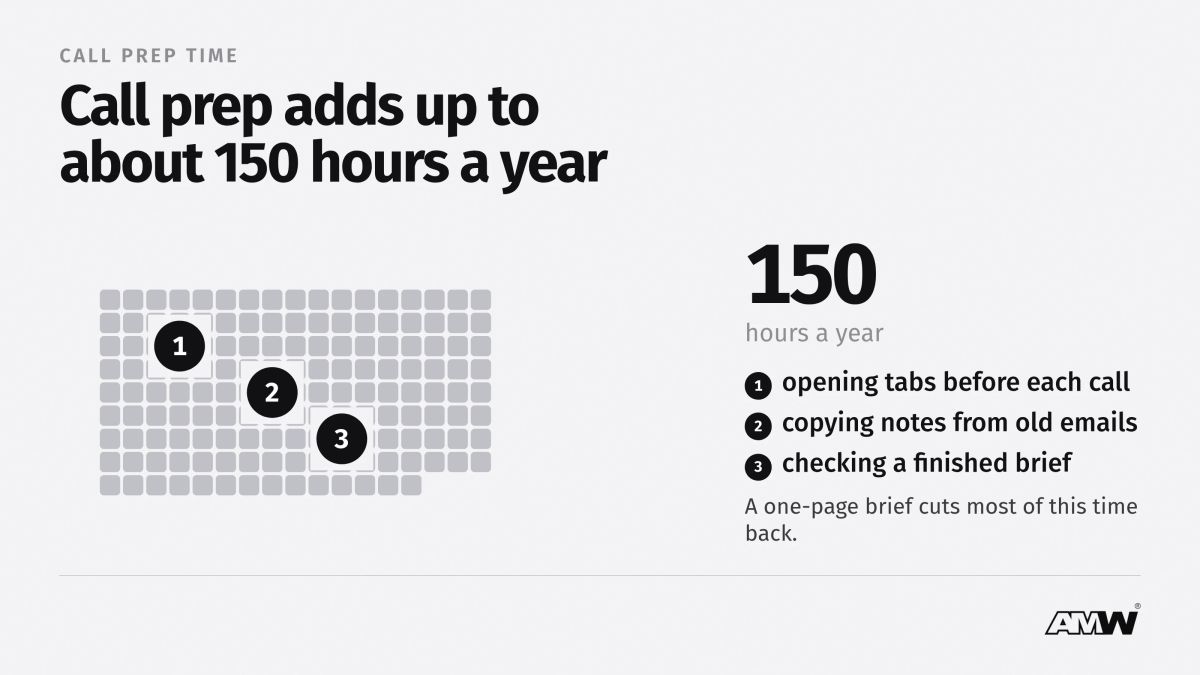
Picture a sales lead running twelve discovery calls a week and spending fifteen minutes preparing for each one. That's three hours a week of opening tabs and copying notes, or about 150 hours over a year. If an agent assembles a one-page brief and the lead spends three minutes checking it, most of that time comes back, and the calls start better informed.
The low cost of a mistake is what makes this a good place to begin. If the brief gets a detail wrong, the lead spots it while reading, fixes it, and no customer ever knows. Meanwhile the team learns how the agent behaves, where it's reliable and where it guesses.
A useful check before handing over any task: if the agent gets it wrong, who finds out first? When the answer is someone on your team, the task is a good early candidate. When the answer is a customer, it usually belongs later.
Drafts a Person Approves Come Second
Once the team trusts the agent's reading, the next step is letting it write first drafts that a person edits and sends. Follow-up emails after a call, answers to common support questions and meeting recaps all work well here, because they happen often and the person sending them still has the final say.
This matches the approach Chandoor described to The Next Web in August: use agentic automation for analysis and workflows, and add verification where the impact reaches critical decisions and actions. "Trust, but verify," she said5. A draft queue builds that verification into the daily routine, so checking the agent's work becomes part of sending an email.
It's also how AMW AI Agents are set up. Jenna drafts sales follow-ups and Sheri drafts support replies in the business's own voice, and nothing goes out until someone on the team approves it. The agent handles the blank page, and the person decides what the customer reads.
What to watch in the first month
- How much gets changed before sending. Light edits mean the agent has the voice and the facts right. Heavy rewrites usually mean it's missing context, often because the information it needs lives somewhere it can't reach.
- Which drafts get thrown away entirely, and what they have in common.
- Whether customers hear back sooner. Faster replies are the clearest sign the step is paying off.
Plenty of teams stay at this stage for a long time, and that's a sensible place to settle, because some messages are worth a human glance for good.
How Do You Decide Which Task an Agent Takes Next?

Four questions sort most tasks: how often it happens, whether the agent only reads or also changes something, whether a mistake is easy to undo, and whether a customer sees the result before anyone on your team does. Frequent, read-only, reversible and internal work goes first. Rare, action-taking, hard-to-undo and customer-facing work goes last, if it goes at all.
| Task | How often | Reads or acts? | Easy to undo? | Customer sees it first? | Where it usually fits |
|---|---|---|---|---|---|
| Call prep brief | Daily | Reads | Yes | No | First |
| Weekly pipeline summary | Weekly | Reads | Yes | No | First |
| Tagging lead source and service | Every inquiry | Updates a record | Yes | No | First or second |
| Follow-up email draft | Daily | Writes, person sends | Yes, before sending | No | Second |
| Support reply draft | Daily | Writes, person sends | Yes, before sending | No | Second |
| Routine appointment reminders | Daily | Sends | Mostly | Yes | Later, once drafts prove out |
| Offering a discount or changing terms | Occasional | Commits the business | Hard | Yes | Stays with a person |
| Replying to an upset client | Occasional | Sends | Hard | Yes | Stays with a person |
The table is a starting point, and tasks can move. A reminder email that a person has approved without edits for a month is a fair candidate to send on its own. Frequency counts as well: a task that comes up twice a quarter rarely repays the setup, however safe it is. Teams running regular pipeline reviews often find the best candidates by noticing which prep work gets repeated every single week.
Work That Spends Money or Reads a Relationship Stays With People
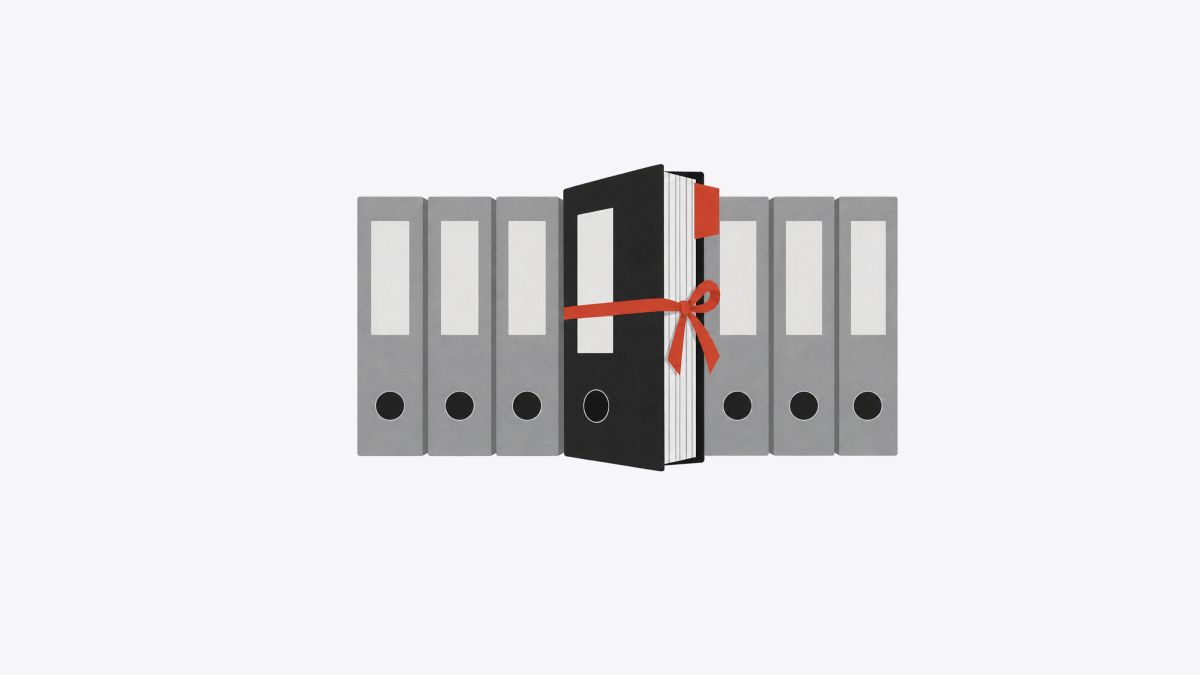
Anything that commits the business, spends money or depends on reading how a particular client feels is best kept with a person for now. That covers pricing and discounts, contract changes, replies to a frustrated client, and any message where the history of the relationship changes what the right answer is.
Part of the reason is control. Permissions and cost were two of the six infrastructure problems BBN Times listed for anyone running several agents2, and both get harder once an agent can act on its own.
The bigger reason is judgment. An agent can pull together everything a client has said in the past year in a few seconds. Knowing that a long-standing client's unusually short email means they're thinking of leaving, or that a stakeholder will take a price change badly this quarter, still takes someone who knows them. As the gathering and drafting get cheaper, that kind of call becomes the most valuable thing a team does with its time.
Industrial Equipment News made a related point about managers. It expects organizations to keep their oversight, with leadership shifting toward helping employees make better decisions in line with business priorities and customer needs1.
Give each agent a named owner
Chandoor told The Next Web that clear accountability ownership across the organization is what turns guardrails into something that works day to day5. For a service business, that can be as plain as one person per agent who decides what it may touch, reviews what it gets wrong and can pause it, so that everyone knows who to ask when something odd happens.
When the First Step Is Fixing Your Records
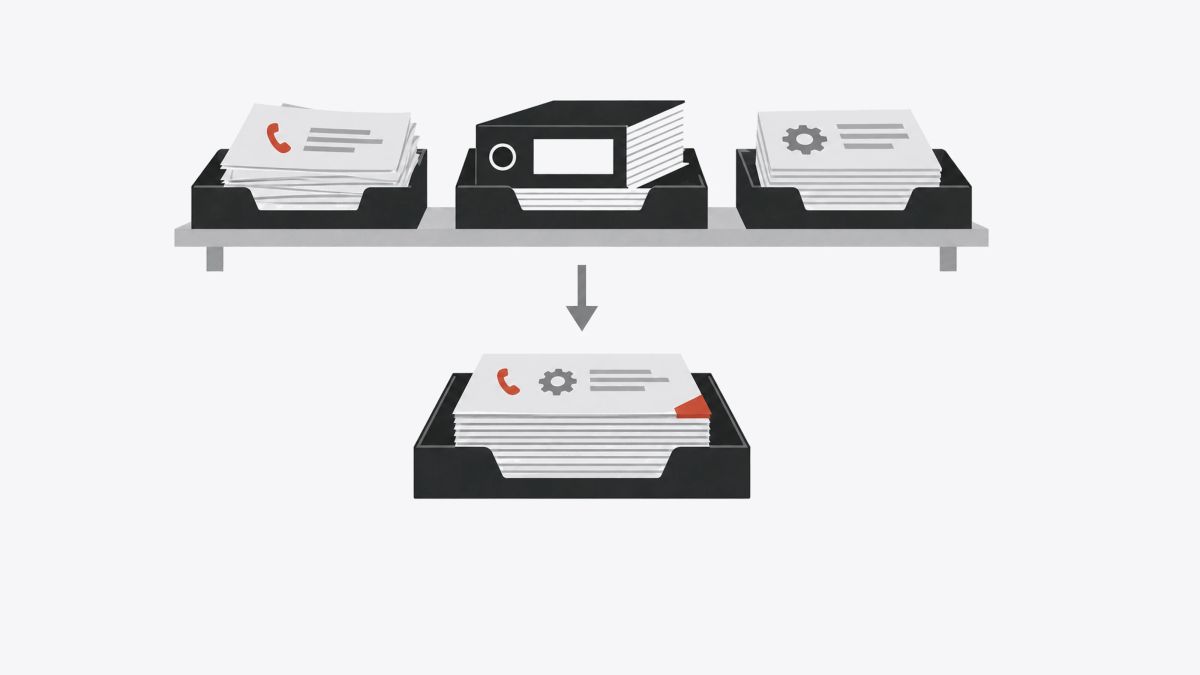
Agents work from whatever records they can reach, so for some teams the first thing to fix is scattered information, and it may be too early to automate anything. If call notes live in one person's inbox, deals in a spreadsheet and support history in a separate helpdesk, a call-prep agent will produce a confident brief that's missing half the story. The time spent checking it can eat most of what it saved.
Size matters too. A three-person firm with a handful of calls a week may get more from a shared note-taking habit than from any agent, because setup and checking outweigh the few minutes saved. The case for automation gets stronger once the same reading and drafting work repeats many times a week across several people.
For teams that are ready, keeping contacts, deals and support history together in AMW CRM means the agents working inside it build their briefs and drafts from the same record the team sees. A note added after one call shows up in the next brief anyone pulls.
A good next step is to list the tasks your team repeats every week, run them through the four questions above, and give the top one to an agent as read-only work for a month. If you'd like to see how approval-first drafting looks in practice, the AMW AI Agents overview walks through each agent.
Sources
- 1
- 2
- 3
- 4
- 5

Halima Kiani writes for AMW on technology, business, marketing and AI: the tools, trends and decisions shaping how companies work and grow.
Frequently Asked Questions
How long should an AI agent stay on read-only work before it starts drafting?
Many teams give it a few weeks to a month. A useful signal is how often people correct its call briefs and summaries: once checking takes a couple of minutes and the fixes are rare, the team has enough of a feel for its behavior to try drafts.
How can you tell when agent drafts are ready to send without review?
Watch how much people change before sending. If a routine, reversible message such as an appointment reminder has gone out unedited for about a month, it's a fair candidate to send on its own. Messages involving pricing, terms or an unhappy client usually stay with a person regardless of edit rates.
Does adding more AI agents make a team faster?
Not automatically. BBN Times noted that every additional agent creates another potential failure point, and that coordinating them raises problems with context, reliability, permissions, cost, monitoring and evaluation2. Starting with one agent on one well-understood task keeps those problems small while the team learns.
Who should be responsible for an AI agent in a small company?
One named person per agent works well. Security leader Chandoor told The Next Web that clear accountability ownership across the organization is essential to making AI guardrails work5. That owner decides what the agent can touch, reviews its mistakes and can pause it.
Does the Gartner forecast mean every team needs agents this year?
The forecast that task-specific agents will be in 40% of enterprise apps by the end of 2026, up from under 5%3, describes what vendors are shipping. It says little about how well teams use them. A small firm with low call volume or scattered records may get more from organizing its information first.
Why do AI agents produce incomplete call briefs?
Usually because the information they need is spread across tools they can't reach, such as a personal inbox, a spreadsheet and a separate helpdesk. The brief still reads confidently, which makes the gaps easy to miss. Keeping contacts, deals and support history in one place fixes most of it.
Will AI agents mean a company needs fewer managers?
Industrial Equipment News argued that as AI moves decisions closer to employees, organizations will still need managers and oversight, with leadership shifting toward helping people make better decisions in line with business priorities1.
Related Articles
AI Answers Cite Your Press Before Your Founder Bio
AI models draw mostly on earned media, not brand-owned pages. Learn why press coverage shapes how your founder is described and how to write one press release line that carries over.
The Story of Polaroid: Edwin Land and the Instant Photo
A child's question in Santa Fe in 1943 became the SX-70, the Giant Polaroid and one of America's most admired brands. Then came Kodak, the phone and a factory set for demolition.

Nano Banana 2.1 Review: Spelling Right, Details Slip
We gave Google's Nano Banana 2.1 a bakery chalkboard sign and a candle product shot. It spelled every price correctly, then slipped on smaller details worth checking.