

IKEA US and the Redefinition of Affordable Design

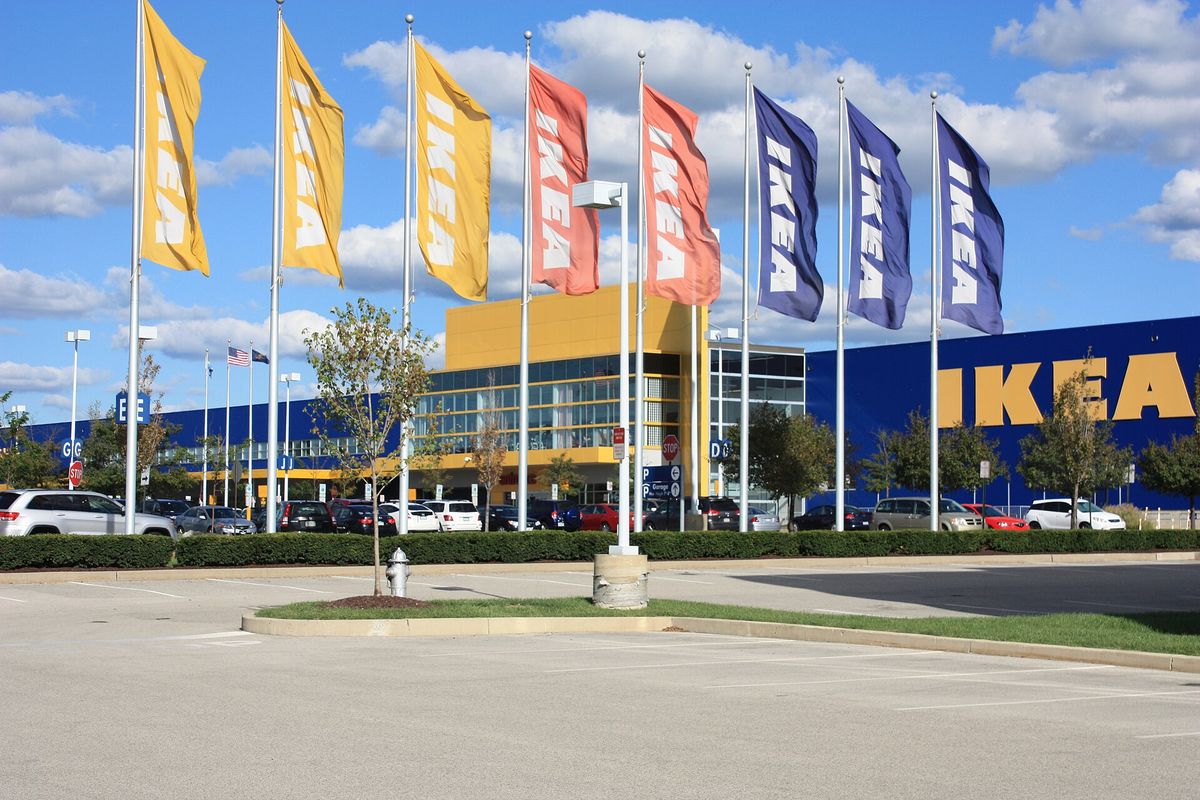
On June 12, 1985, a Swedish furniture company opened its first American store at the Plymouth Meeting Mall, outside Philadelphia1,2. The store drew about 150,000 shoppers a week in its early days, and some people waited in lines longer than half a mile1. Forty years later, IKEA's U.S. chief operating officer, Rob Olson, repeated what the first staff had told him: "They tell me it was amazing to see the lines, the excitement of the customers. Our supply chain was a little shocked."2

Quick Summary
IKEA is a Swedish-founded home furnishings company that opened its first U.S. store in Plymouth Meeting, Pennsylvania, on June 12, 19851. Its second U.S. store opened at Potomac Mills in Woodbridge, Virginia, in 19863. Growth was bumpy at first2, and IKEA had to resize products such as glasses, beds and kitchens for American homes13,6. In 2023 it committed more than $2.2 billion to U.S. growth51, and in fiscal 2024 IKEA U.S. reported $5.5 billion in total sales and 51 stores25. By mid-2025 it was adding small-format stores, Plan & order points and pickup points40,55.
The company behind the lines had been founded in Sweden by Ingvar Kamprad in 19433. When it arrived in Pennsylvania it had 69 stores worldwide and sales of just under $1 billion1. "Our product, for the price and quality, is almost unbeatable," Bjorn Bayley, then president of IKEA North America, told the trade paper Furniture Today that month. "From what we've seen of what's available in the marketplace, we're going to knock a lot of socks off."1
The confidence did not last. A former IKEA executive, Steen Kanter, later described those first American years to Fortune in one line: "We thought everything was going to be easy, and it was hell."4 The beds were measured in centimeters, the glasses were too small, and for much of the 1990s the company opened no new stores at all4,2.
This is the story of how that bet played out over four decades: how a retailer built on flat packs and low prices adapted to American homes, how its growth stalled and restarted, what it built behind the stores, and what it cost when a product failed. It draws on IKEA's own annual summaries and announcements, on regulators' records and on reporting by newspapers, broadcasters and trade magazines. It is also a story about what "affordable design" means in practice.
IKEA's Journey to the United States
Strategic Market Entry and Early Challenges
The first American catalog set the tone. ABC News republished pages from it for the 30th anniversary in 2015. The copy for the LACK side table read: "Lack tables come in all shapes, sizes and colours. But they all have one thing in common: An impossibly low price."5 Four products from that 1985 catalog were still on sale three decades later: the BILLY bookcase, the POÄNG chair, the LACK table and the KLIPPAN loveseat5. A BILLY bookcase cost $82 in 1985 and $59.99 in 2015, according to ABC's comparison5.
IKEA's own 40th anniversary timeline recalls one of its earliest American TV commercials, which carried the tagline "It's a big country. Someone's got to furnish it."6 The company served Swedish meatballs from the start. The timeline says they were first available in the U.S. in 19856.
Behind the marketing, the company made a basic mistake. Fortune's Beth Kowitt put it bluntly in a 2015 feature on IKEA's global expansion: "When the company first went into the U.S. market in 1985, it forgot it was a retailer. Instead it behaved like an exporter, taking beds and cabinets measured in centimeters and plopping them down in its first U.S. store near Philadelphia."4 Some products sold for the wrong reasons. Americans bought large numbers of IKEA vases and used them as water glasses, because the European glasses were too small for drinks with ice4.
The results were bad enough that the company thought about leaving. "In 1992 the board met to consider pulling out of the market," Fortune reported, citing The New York Times4. IKEA stayed, and instead began to study the American market closely, which Fortune described as something the company "had never really done"4.
The Philadelphia Inquirer summed up the same period in June 2025: IKEA "had a bumpy U.S. start, with inventory problems. It opened one U.S. store a year in the late 1980s, then slowed to none for much of the 1990s."2 Store openings did not take off until the early 2000s2.
Geographic Expansion Pattern and Store Development
The second store followed a year after Plymouth Meeting. IKEA opened at Potomac Mills, the mall in Woodbridge, Virginia, in 19863. In 2001 that store closed and was replaced by a free-standing IKEA nearby that is twice the size of the original3. The site of the first store, at the Plymouth Meeting Mall, is now a Whole Foods2. In late 2006 about 300 IKEA employees began moving into a new North America service center in Conshohocken, which replaced the corporate offices at the Plymouth Meeting Mall, the Inquirer reported in January 20077.
The first big step in the West came through a rival. On January 2, 1992, The Baltimore Sun reported that IKEA would buy Stor Furnishings International for $20 million and convert Stor's four outlets, in Houston and the Los Angeles area, into IKEA stores before the end of the year8. Stor had opened its first outlet in 1987 and was IKEA's largest Southern California rival in ready-to-assemble furniture, but it had not been profitable since it started8. "It means that now the bigger of the two gladiators is the only one left," said Lester Craft Jr., editor of Furniture/Today8. Stor had 550 employees, 450 of them in its Los Angeles-area stores, and the deal came as several Southern California furniture chains had filed for bankruptcy. "The weaker ones are falling by the wayside," said Art Sherman, chairman of the Home Furnishings Representatives Guild of Southern California8. The deal left IKEA with four West Coast stores and seven in the Northeast and Texas, the Sun reported8. At the time IKEA already had a 240,000-square-foot store in Burbank8.
Some of today's leaders arrived with those later stores. Rob Olson, now IKEA U.S. chief operating officer, told the Inquirer in 2025 that he had run a Walmart and a Sportsmart in Chicago and joined IKEA 27 years earlier, when it came to the Midwest in Schaumburg, Illinois2. He started as a business controller and later became a store manager2. Asked who IKEA is for, he gave an answer that explains much of its American strategy: "Our vision is to make a better life for the many. For everybody? No. For the many Americans, the many Swedish people, the many German people who go to Ikea stores. For most people."2
When growth resumed, it followed customers IKEA already had. In January 2003 the Daily Pennsylvanian reported that Philadelphia's City Council had approved rezoning for an IKEA on a 44-acre site at Columbus Boulevard and Snyder Avenue in South Philadelphia9. Patrick Smith, IKEA's real estate director for the northeastern U.S., called it part of a "concentration strategy" and said he chose the area because "that's where our best customers are."9 Today the Conshohocken and South Philadelphia stores each cover more than 300,000 square feet, and IKEA's U.S. headquarters sits next to the Conshohocken store2.
The pace picked up in the 2000s. In January 2007 IKEA had 29 U.S. stores and planned three to four more each year until 2011, according to its public relations director at the time7. IKEA opened in Emeryville, California, in April 2000 and in East Palo Alto in August 200310. When IKEA marked 30 years in the U.S. in June 2015, it had 40 American stores, and the U.S. accounted for 12 percent of the company's global business5.
The late 2010s brought a run of large new stores. In 2017 alone IKEA opened four U.S. stores, in Columbus, Ohio, Fishers, Indiana, Jacksonville, Florida, and Grand Prairie, Texas, plus a distribution and customer fulfilment center in Baytown, Texas11. By mid-2019 Ingka Group operated 50 IKEA stores in the U.S.12
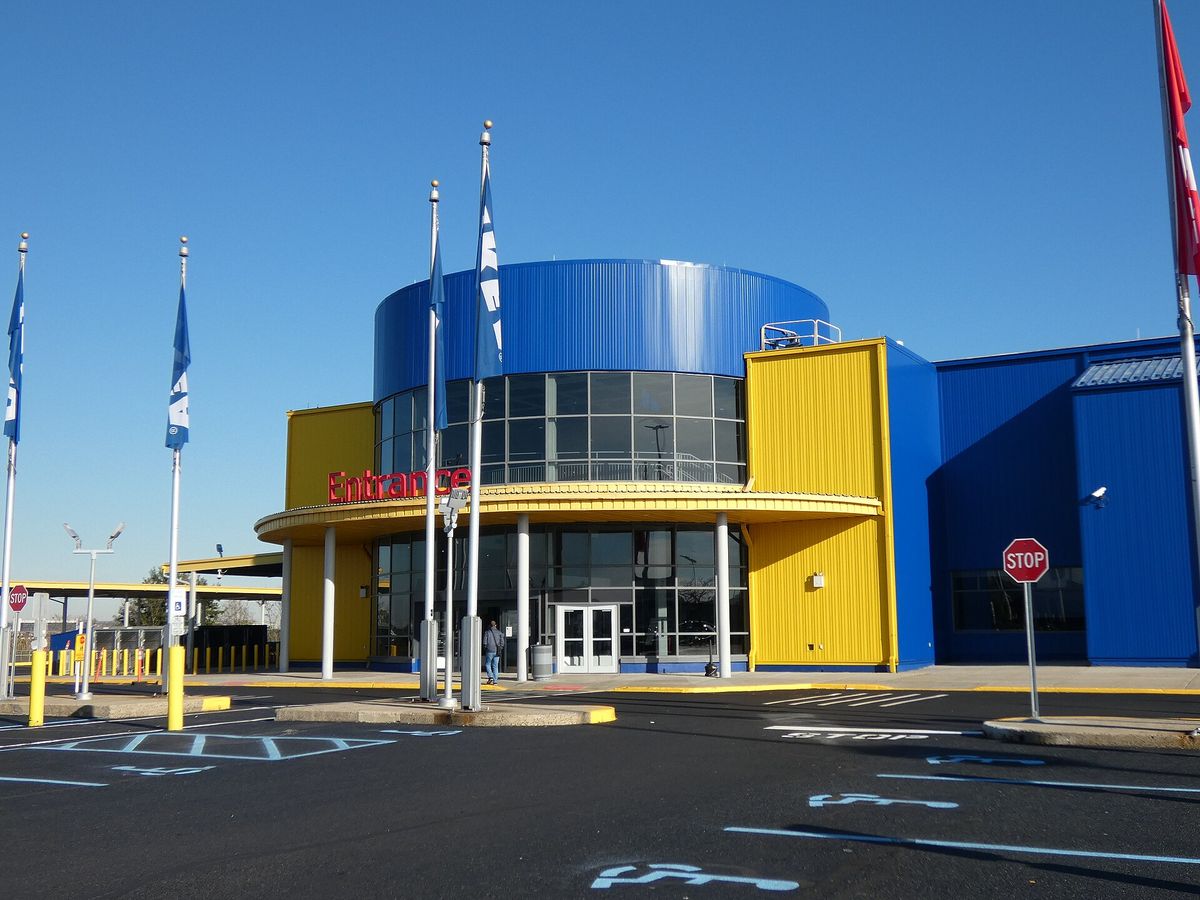
Product Adaptation for American Consumers
Part of the early trouble was the product itself. IKEA arrived with a range designed around European homes, and American customers used it in ways the company had not expected.
The best-known example is the drinking glass. As Richard Milne reported for the Financial Times, republished by CNBC in 2013, IKEA executives in the 1990s were puzzled by how many vases they were selling in the U.S. Workers slowly realized that Americans were drinking from them, because the European-style glasses IKEA stocked were too small for American tastes13. IKEA's own anniversary timeline tells the same story, saying many customers bought its flower vases to use as drinking cups6.
The glasses were not the only problem. Milne's report lists mattresses that were too hard and sized in centimeters instead of king and queen13. IKEA's timeline adds that its earliest U.S. kitchens were measured in the metric system, which made them confusing to American buyers until the company changed them6. These problems were fixed, the FT reported, but "many older Ikea managers remember the indigestion that followed previous expansion drives such as the one into the US."13
The fix was a mix of local sizing and a global formula. Most IKEA furniture stayed the same around the world, the FT reported in 2013, with a small number of country-specific products where they made sense. Store managers could also arrange the showroom bedrooms, kitchens and living rooms to suit local tastes13. Fortune found the same approach two years later. The aim of IKEA's research, it reported, was to show how the same product fits different homes, and in the U.S. the showroom beds are covered with pillows4. "The more far away we go from our culture, the more we need to understand, learn, and adapt," said Mikael Ydholm, who headed IKEA's research4.
Today the company describes that formula in its own terms. "At the heart of our business is what we call 'democratic design,' which balances function, form, quality, sustainability and low price," Olson told Furniture Today for IKEA's 40th anniversary1. In his Inquirer interview he described the research behind it: "We come to American houses and study how you live." IKEA staff also run surveys and interviews, he said2.
The newest stores are designed around local research from the start. IKEA said its San Marcos, Texas, store would showcase "local living" solutions tailored to the community14, and it described the planned IKEA Phoenix the same way, with room settings reflecting "the unique everyday needs of the Phoenix community."15 In New York, IKEA said its first Manhattan Planning Studio had been "co-created with New Yorkers" and focused on small spaces16.
Digital Transformation and E-commerce Evolution
American customers could browse IKEA's range online from 1997 and buy online from 2001, according to the company's anniversary timeline6. For years the printed catalog remained the bigger channel. It peaked in 2016, when 200 million copies were distributed in 69 versions and 32 languages, before Inter IKEA Systems announced in December 2020 that it would end both the print and digital catalog after 70 years17. "Turning the page with our beloved catalog is in fact a natural process since media consumption and customer behaviors have changed," said Konrad Grüss, managing director of Inter IKEA Systems17.
The phone became the new showroom. In September 2017 IKEA launched IKEA Place, one of the first apps built on Apple's ARKit, with 2,000 products that customers could place in photos of their own rooms18. Michael Valdsgaard, who led digital transformation at IKEA, told TechCrunch how the company had a head start: its catalog images were already 3D renders. "Most of the things you see in our catalog are not real," he said. "They are rendered and enhanced with light and shadows."18 He was blunt about the stakes: "We really think AR is going to change everything that we know today."18
IKEA U.S. turned its store companion app into a full shopping app in January 2021. IKEA said the app had first launched in eight other countries in July 2019 and had been downloaded by 4.9 million users before arriving in the U.S.19 In June 2022 Ingka Group launched IKEA Kreativ in the U.S. first, a design tool that scans a room, erases existing furniture and lets customers place IKEA products in a 3D copy of the space20. Its core technology came from Geomagical Labs, a Silicon Valley company Ingka bought in April 202020. Parag Parekh, IKEA's global chief technology officer, told TechCrunch that the tool had first been tested in April 2021 by one million customers21.
The sales numbers show how far the shift went. IKEA U.S. said e-commerce made up 21.8% of its sales in fiscal 202122. E-commerce grew 18.8% in fiscal 202223 and 3.3% in fiscal 202324, and IKEA U.S. reported $1.95 billion in e-commerce sales in fiscal 202425.
Supply Chain Localization and Distribution Networks
For most of its U.S. history IKEA has shipped products in from abroad. In 2008 it tried the opposite26. Swedwood, IKEA's manufacturing arm, opened a factory in Danville, Virginia, a former textile and tobacco town where state and local officials offered $12 million in incentives27. Swedwood said it chose Danville to cut shipping costs to its U.S. stores27.
Three years later the plant was in the news for the wrong reasons. In April 2011 the Los Angeles Times, in a story by Nathaniel Popper republished by The Seattle Times, reported racial-discrimination complaints, a union drive and high turnover27. Full-time workers started at $8 an hour with 12 vacation days, while Swedwood's workers in Sweden earned a minimum of about $19 an hour with five weeks of paid vacation27. The plant made Expedit bookshelves and Lack coffee tables27. "It's ironic that Ikea looks on the U.S. and Danville the way that most people in the U.S. look at Mexico," said Bill Street, who was organizing the workers for the Machinists union27. Per-Olaf Sjoo, head of the Swedish union at Swedwood's factories, said: "Ikea is a very strong brand and they lean on some kind of good Swedishness in their business profile. That becomes a complication when they act like they do in the United States."27 The Times also reported that six African-American employees had filed discrimination complaints with the Equal Employment Opportunity Commission, claiming Black workers were assigned to the lowest-paying departments and the least desirable night shift, and that Swedwood was trying to settle four of the complaints through mediation27. Workers described a points system for rule violations, under which nine points could lead to dismissal. "It's the most strict place I have ever worked," said Janis Wilborne, who worked there two years27. Swedwood spokeswoman Ingrid Steen said the pay gap with Europe was "related to the standard of living and general conditions in the different countries."27
NPR visited the plant that June. Plant manager Ken Brown denied most of the union's claims but told the network: "We had startup issues, for sure."28 He also said: "No one that I know of since I started here in 2007 has ever been terminated for their view on a union."28 NPR reported that IKEA had set up the factory to be closer to its American stores and to save on transportation costs28. The local community college had gone to unusual lengths for it. Jerry Franklin, who ran Danville Community College's manufacturing training program, told NPR: "When they first were coming, we actually sent two or three of our people over to Poland to work with them in their factory over there to learn their processes."28 The union's Bill Street told NPR that about a third of the workforce had been temporary workers, and plant manager Brown said he had hired some of them permanently after reviewing which jobs were really temporary28.
The factory did not last. In July 2019 IKEA announced it would end production there in December 2019. Retail Dive reported that the plant then employed 300 workers, mainly made KALLAX shelving and BESTÅ storage units, and was closing because costs were "significantly higher than other IKEA Industry units making the same products in Europe."26 "This was an extremely difficult decision to receive," said site manager Bert Eades26.
The Inquirer reported in June 2025 that IKEA furniture sold in the U.S. is made mostly in China, Poland, Italy, Germany and Sweden. Its direct imports from China fell to about $611 million in 2024 from $840 million five years earlier, according to data compiled by Trademo2. IKEA buys some cabinets and mattresses from U.S. makers and was looking for more American suppliers2.
What IKEA did build in the U.S. was distribution. In August 2018 it leased a 326,000-square-foot customer distribution center in Lakeland, Florida, operated by DHL Supply Chain, to fulfill online orders for the Southeast. At the time IKEA had nine regional distribution centers and nearly 1,000 suppliers in 50 countries29. "As we grow our e-commerce presence, we want to provide our customers with shorter lead times and a higher-quality experience when shopping at IKEA," said Lars Petersson, then president of IKEA U.S.29 In November 2018 IKEA opened a customer fulfilment center on Staten Island for the New York market16. IKEA U.S. listed 13 distribution units in fiscal 202223 and 11 in fiscal 202425.
Cultural Integration and Brand Positioning
IKEA has often used advertising to say something about who its customers are. In 1994, the agency Deutsch produced an IKEA TV commercial called "Dining Room"30. Looking back in The Drum in 2016, Val DiFebo, chief executive of Deutsch NY, described it as showing the first openly gay couple buying furniture, and called it "so simple, yet so controversial and groundbreaking."30 She wrote that it stirred passionate reactions from both detractors and supporters30.
Eight years later IKEA's American work won the top prize in advertising. "Lamp," made by Crispin Porter + Bogusky in Miami and directed by Spike Jonze, won the film Grand Prix at the 50th Cannes International Advertising Festival in June 200331. In the spot, a man with a Swedish accent tells viewers who feel sorry for a discarded lamp that they are crazy, and the ad ends with the tag "unböring"31. Jury president Dan Wieden said the ad "also solves a really great business problem because part of the reason that this category is not growing faster is because people have these attachments."31
IKEA's positioning in the U.S. has also been political at times. After the killing of George Floyd in 2020, IKEA Retail U.S. president Javier Quiñones wrote to customers: "We know many of you view IKEA as 'a Swedish company,' but we've been in the U.S. for 35 years now and have 18,000 co-workers about whom we care deeply."32 In 2019 IKEA U.S. sold a limited-edition rainbow version of its blue shopping bag, with the profits going to the Human Rights Campaign Foundation, and said its co-workers would raise the Pride flag at all IKEA locations on June 133.
More recently the brand has focused on reaching Hispanic customers. IKEA U.S. launched a Spanish-language e-commerce site in July 2024, with Spanish-speaking support on its phone line34.
Innovation and Technology Integration
Many of IKEA's recent U.S. changes came through acquisitions of small companies. Ingka bought Geomagical Labs in 2020 for the technology behind IKEA Kreativ20, and in 2019 it made a minority investment in Optoro, whose software IKEA used to handle returns at 10 distribution centers, 50 stores and its customer support center in the U.S.35
Payments changed too. IKEA U.S. introduced its first buy now, pay later option with Afterpay in September 2023, letting customers pay in four installments over six weeks36. In May 2025 it added points to its free IKEA Family loyalty program, which members can spend on discounts, delivery savings and free meals in the restaurant37.
Regional Market Performance and Growth Metrics
IKEA U.S. publishes an annual summary each year, and together they give the clearest picture of the business in the 2020s. The company's fiscal year runs from September to August.
In fiscal 2020 the pandemic forced IKEA to close all U.S. stores in March. It converted 50 stores to fill online orders through curbside Click & Collect and Click & Deliver, and it gave $3 million in grants to co-workers facing hardship38. The next year was one of its best. IKEA U.S. reported nearly $5.89 billion in total sales of goods and services in fiscal 2021, a 25% increase22. The same fiscal 2020 summary said IKEA Retail U.S. had created a Digital Hub in the U.S. to build e-commerce capabilities, and credited its 18,000 co-workers for keeping the business going38.
The fiscal 2022 summary put total sales, including food and services, at $5,925,780,769, compared with $5,895,946,918 in fiscal 202123. It counted 69.4 million store visitors, 494.3 million online visits, 5.0 million orders delivered and 143,230 TaskRabbit assembly projects, and it listed workspaces, beds and mattresses, and living room seating as the top product categories23. IKEA U.S. had 52 retail locations and 16,631 co-workers that year23.
Fiscal 2023 was a record. Total sales of goods and services reached $6,315,628,180, up 6.6%24,39. The company counted 65.4 million store visitors, 525.5 million online visits and 5.6 million orders delivered, and its top categories shifted to bedroom furniture, storage and children's items24. It paid a total of $54.5 million in performance bonuses to two thirds of its U.S. co-workers39.
Fiscal 2024 was harder. IKEA U.S. reported $5,546,503,929 in total sales of goods, food and services, 63.0 million store visitors and 440.1 million online visitors25. Its summary said higher interest rates and food prices had cut disposable income for many Americans, and that it lowered prices on nearly 1,500 products25. It ended the year with 51 stores, 10 Plan and order points, 39 pick-up locations and 15,622 co-workers25. Its IKEA Family loyalty program had grown to 21.9 million members in fiscal 2023, from 19 million the year before24,23. IKEA also said its U.S. market share had grown 13.6% over five years40, and that voluntary co-worker turnover in stores and warehouses fell to 22%25. The Inquirer noted that U.S. sales of $5.5 billion in 2024 were a little more than 10% of IKEA's world total2.
The two most recent summaries describe the total slightly differently, so the drop from fiscal 2023 to 2024 should be read with that in mind. What the numbers do show is the direction: fewer store visitors, more money spent online, and a company cutting prices to hold on to customers.
IKEA PR Strategy and Community Engagement
Some of IKEA's most effective public relations in the U.S. has come from how it pays people. In 2014 IKEA U.S. announced that from January 2015 it would set its lowest wages using the MIT Living Wage Calculator, raising its average minimum hourly wage to $10.76, an increase of 17 percent, Marketplace reported41. The rate depended on local living costs: $13.22 an hour in an expensive suburb of Washington, D.C., and $8.29 in Pittsburgh41. "We truly do see this as the right thing to do for taking care of our co-workers," said Rob Olson, then acting president of IKEA U.S.41 The calculator's creator, MIT professor Amy Glasmeier, told Marketplace she emailed IKEA to thank it and to warn that an update would produce higher figures. IKEA said it would keep the older, lower calculations for now but reevaluate annually41.
In November 2021 IKEA U.S. said it would raise starting wages to $16 an hour from January 2022, with some locations starting at $17 or $18 and an average hourly wage of $20. It also added a minimum of five weeks of paid time away for all co-workers and paid a $76 million performance bonus after fiscal 202122.
IKEA U.S. has also taken public positions on social issues. In June 2020 it committed $3 million over 12 months to organizations supporting social justice, economic empowerment and education for Black communities, plus $900,000 in product donations to Black and minority-owned small businesses42.
Its community giving tends to follow disasters and housing needs. In January 2025 it donated $300,000 in relief products after the Los Angeles wildfires and handed out more than 3,000 FRAKTA bags to evacuees43. In May 2024 IKEA opened a model supportive housing unit built with trauma-informed design principles inside IKEA Live Oak in Texas44. IKEA U.S. reported $2.5 million in in-kind and financial donations to 280 nonprofits in fiscal 202339 and more than $1.5 million to 220 nonprofits in fiscal 202440.
Competition Response and Market Positioning
IKEA's answer to competition has usually been price. Fortune described its model in 2015 as volume: selling the same products in huge quantities to get low prices from suppliers and pass them on. "One Billy bookcase, an Ikea classic, is sold every 10 seconds," the magazine reported4. IKEA also keeps a set of very cheap products it calls "breath-taking items," which Fortune said create "a price halo for the whole store."4
When inflation squeezed American households, IKEA leaned on the same tool. In November 2023 IKEA U.S. re-introduced its New Lower Price program on hundreds of products, with some items, including the BILLY bookcase, marked down by 20% or more45. In fiscal 2024 it lowered prices on nearly 1,500 products25. Across all its markets, Ingka Group said it lowered prices on thousands of products by an average of 9% in fiscal 2024, investing EUR 2.1 billion46. The same report admitted a problem that price cuts could not solve: challenges with product availability, "particularly in Europe and North America, due to a combination of internal and external factors."46
Service became the other battleground. When IKEA bought TaskRabbit in 2017, CNBC reported that the deal was driven by the need to strengthen its digital customer service to compete with rivals such as Amazon, which had expanded its home goods and installation offers47. And when IKEA opened its first Manhattan planning studio in 2019, CNBC noted that many retailers were experimenting with smaller urban stores at the same time48.
In July 2025 IKEA U.S. and Best Buy announced a pilot that will put 1,000-square-foot IKEA kitchen and laundry planning areas inside 10 Best Buy stores in Florida and Texas from the fall. IKEA said it would be the first time its products and services were available through another U.S. retailer49. "This partnership between IKEA and Best Buy is about making great design and functionality more accessible for the many," said Olson49.
Future Growth Strategies and Market Evolution
In April 2023 IKEA announced its largest investment in almost four decades in the U.S.: more than $2.2 billion over three years50. The first phase was to include eight new stores, nine Plan & order points, over 2,000 jobs and 900 new pick-up locations50. "The U.S. is one of our most important markets, and we see endless opportunities to grow there and get closer to the many Americans with affordable products and services," said Tolga Öncü, head of IKEA Retail at Ingka Group50. The plan also called for modernizing existing stores so they could ship more parcel deliveries directly50. Quiñones told CNBC that most of the new pickup locations would be tied to IKEA stores, some stores would have several, and where no store was nearby, orders would come from a distribution center51. "It's also an indication of how important the U.S. market is for Ikea," Quiñones told CNBC. "We started here in the U.S. almost 40 years ago, and this is the biggest [investment] we've ever done."51 CNBC reported that Plan & Order points stock no items for purchase: customers plan with IKEA staff and have their orders shipped51.
By mid-2025 the plan had turned into a list of openings. USA Today reported in May 2025 that IKEA had opened five U.S. locations so far that year and planned six more before the end of 2025, with at least two more expected in 202652. "As we expand across the U.S., our goal is simple: to be there for our customers, wherever they are and however they choose to shop," Olson said in a statement to the paper52.
Several of those stores are a new size for IKEA in the U.S. In April 2025 IKEA announced IKEA Rio Grande Valley, a 44,000-square-foot small-format store in Pharr, Texas, about eleven miles north of the border with Mexico, planned for fall 2025 with 1,600 items to take home53. In May 2025 it announced IKEA Phoenix, a roughly 75,000-square-foot small-format store planned for early 202615. IKEA Rockwall, near Dallas, was announced in November 2024 for December 2025, with a design that includes solar power, LEED certified construction, EV chargers, onsite recycling and native plants to reduce water use54. IKEA's fiscal 2024 summary later gave its opening as 202625.
The first of the Texas small stores opened that summer. On July 16, 2025, IKEA opened a small-format store in San Marcos, between Austin and San Antonio55. KUT, Austin's NPR station, reported that more than a hundred people lined up at the San Mar Plaza shopping center for the opening. One of the first in line, Juan Lerma, told the station: "I've been here since literally last night at 11 p.m."55 Page Michel, president of the San Marcos Area Chamber of Commerce, told the crowd: "You're bringing jobs, economic momentum and one more reason for people to come discover San Marcos and fall in love with this city."55 The store is about 35,000 square feet, compared with 306,000 square feet for the Round Rock IKEA north of Austin and 289,000 for the Live Oak store near San Antonio55. IKEA said San Marcos would show more than 2,500 products and stock 2,000 items to take home, with the full range available online for store pickup or delivery14. "The opening of IKEA San Marcos exemplifies our strategy of developing smaller, more accessible store formats," Quiñones said in the announcement14. At the opening, IKEA staff acknowledged the recent floods in Central Texas and announced a $75,000 donation to local flood relief55.
The largest announcement was in Manhattan. In July 2024 Ingka Investments said it would invest in 570 Fifth Avenue, a tower being developed by Extell, where a new IKEA location of 80,000 square feet will occupy two cellar levels with a corner entrance on Fifth Avenue56. The building is scheduled for tenant delivery in 202856.
Store Locations and Expansion Across America
Major Metropolitan Areas
New York shows how IKEA's store strategy has changed. For years the company served the city from the suburbs and the edges: stores in Elizabeth and Paramus in New Jersey, on Long Island and in Brooklyn16.
Brooklyn was a local news story in its own right. IKEA picked the site of the former New York Shipyard, a 22-acre stretch of the Red Hook waterfront, in 200457. A group of residents fought the store, warning that shoppers would bring traffic gridlock, and preservationists rallied to save a historic dry dock and five historic buildings on the site57. IKEA filled in the dry dock to make room for its parking lot, which a Red Hook Civic Alliance co-chair later called a "billion-dollar boondoggle."57 The 346,000-square-foot store was built between the end of 2007 and the spring of 200857.
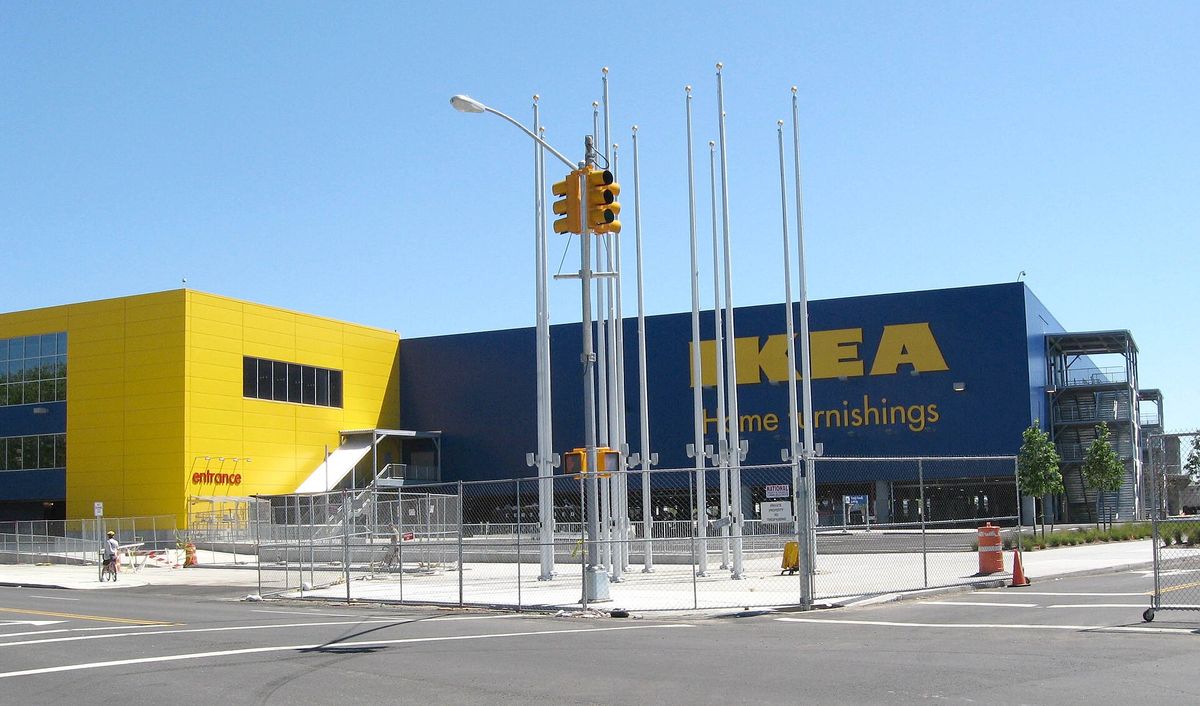
IKEA had also promised a water taxi and shuttle bus service, and by August 2008 some residents were using the shuttle for their commutes57.
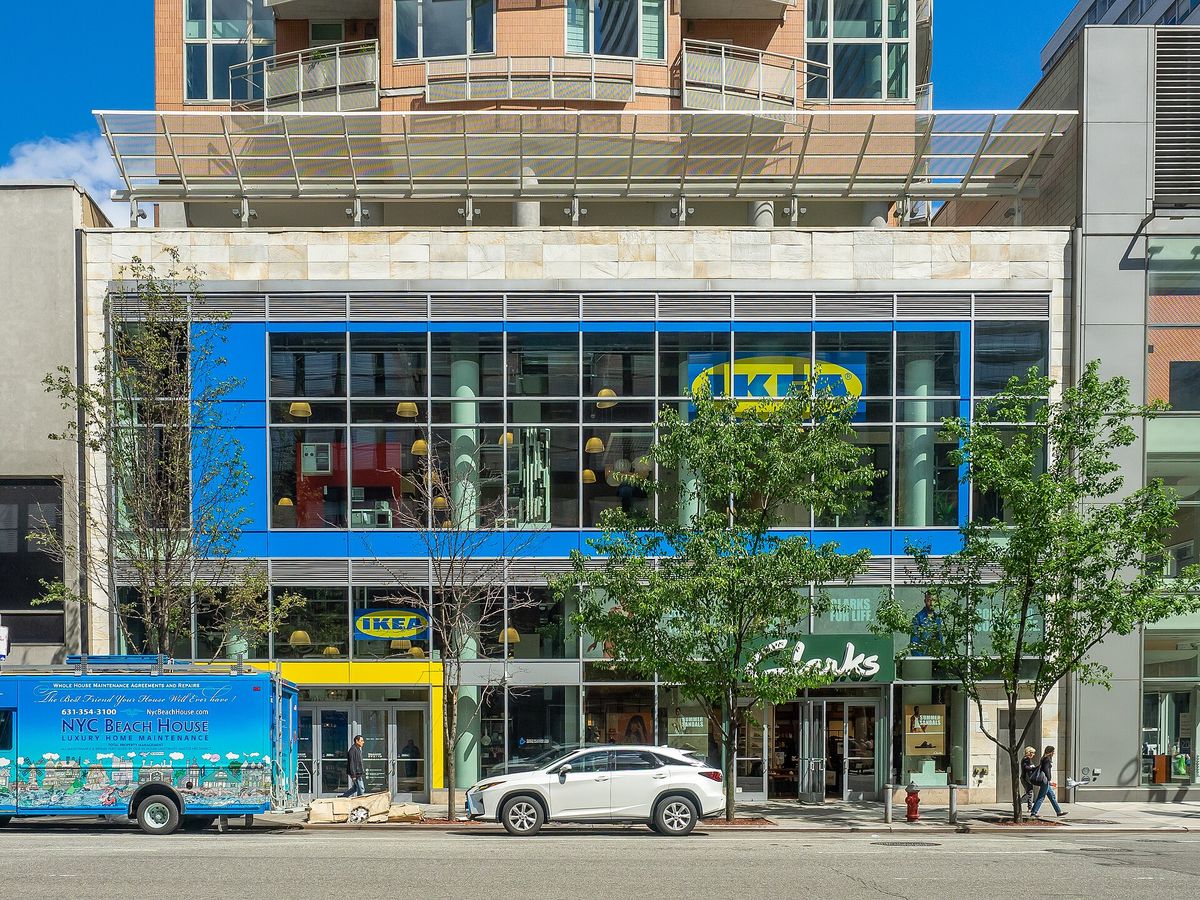
Inside Manhattan, IKEA has tried and retried. Its first U.S. city center location, the IKEA Planning Studio at 999 Third Avenue on the Upper East Side, opened on April 15, 201916. CNBC described a three-story, 17,000-square-foot space with private rooms for design appointments and prototype apartments, including one of 333 square feet48. "This is devoted to people who live in Manhattan and New York," said Leontyne Green Sykes, then chief operating officer of IKEA's U.S. retail operations48. IKEA told CNBC it planned at least 30 such city center locations in coming years and was looking at San Francisco, Los Angeles, Washington and Chicago48. In December 2021 IKEA said it would close the studio in January 2022. "We had to reevaluate our Upper East Side location due to the high rent and the lower-than-expected foot traffic," said Linda Santing, an area vice president at IKEA U.S.58
IKEA Queens followed a similar path. The company announced in September 2019 that it would open a 115,000-square-foot store in the Rego Center, the first U.S. store with a new layout for city customers59. "We know that more than half of Queens' residents travel via public transportation, and we selected Rego Park for this new store concept to meet the unique needs of this customer," said Sykes59. It opened on January 11, 202138, and IKEA said in October 2022 that it would close the Queens location on December 3, 202260.
Los Angeles went the other way, toward more and smaller locations. Burbank's 456,000-square-foot store opened in February 2017 with a 600-seat restaurant, and customers were invited to line up from 6 a.m. on opening day61. Since then IKEA has added smaller formats around the region. After recent openings in Laguna Hills and Arcadia, in February 2025 it opened a pick-up point in Santa Monica and a Plan & order point in Ontario and announced one for Thousand Oaks, bringing its Los Angeles metro locations to nine62.
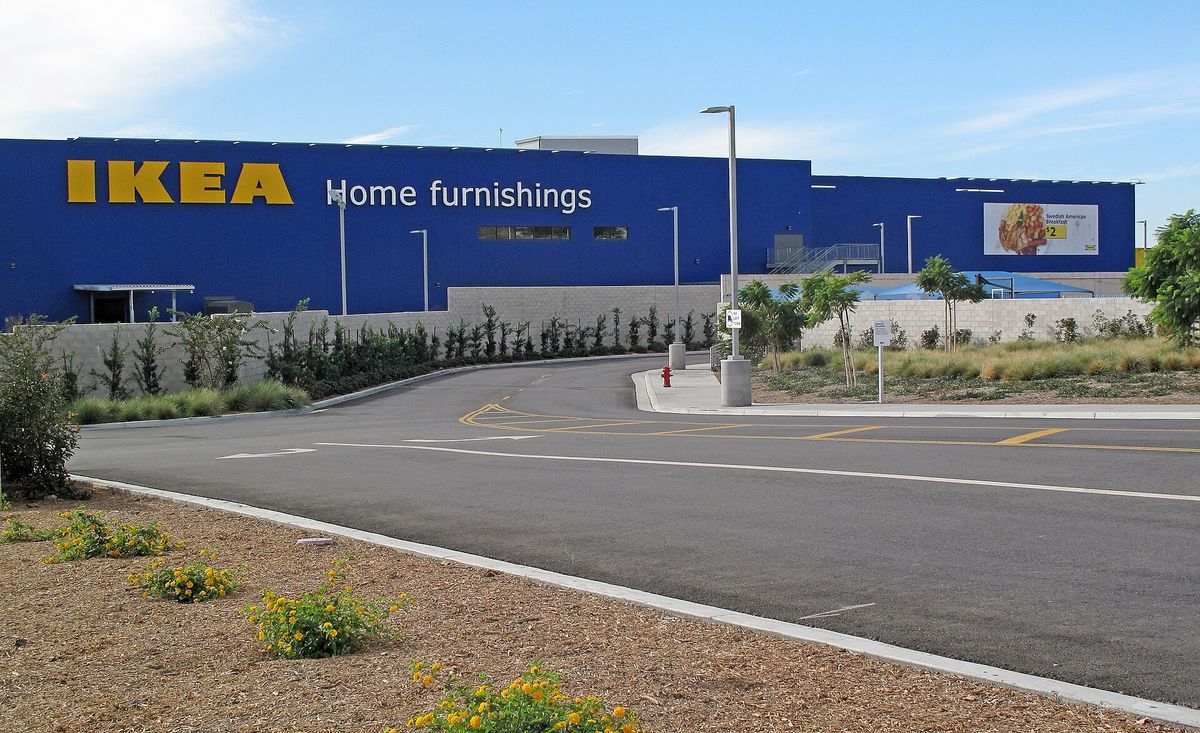
The San Francisco Bay Area followed a similar pattern. IKEA opened in Emeryville in April 2000 and East Palo Alto in August 2003, then opened a city store at 945 Market Street in downtown San Francisco on August 23, 2023, with 52,000 square feet over three levels, 27 room settings and 2,500 items to take home10. In March 2025 it opened a Plan & order point with pick-up in Colma, its fourth Bay Area location. IKEA noted that customers would still need to visit San Francisco or Emeryville for meatballs63.
Around Washington, IKEA had operated large stores in Woodbridge, Virginia, and College Park, Maryland, for more than 35 years before opening its first Plan and order point in the area, a 5,012-square-foot space in Arlington's Pentagon Centre, in August 202364. "The all-new IKEA Arlington Plan and order point will allow customers to meet with professional consultants who can help them optimize their living and working spaces," said Raquel Ely, a market manager at IKEA U.S.64
Philadelphia, where the story began, got its third IKEA location in June 2025, a Plan & order point with pick-up in Cherry Hill, New Jersey65. "We can't wait to bring our expertise in room planning and the ease of order pick-up to the residents of South Jersey – without ever having to cross a bridge!" said Michael Hill, deputy market manager of IKEA South Philadelphia65. Another 2025 opening was a Plan & order point in Scottsdale, Arizona, in May15.
Texas has become one of IKEA's busiest markets. In April 2025 IKEA said the state had five full-sized IKEA stores and three Plan & Order points, with several smaller stores on the way53. The large stores include Round Rock, north of Austin, and Live Oak, near San Antonio55.
Regional Distribution Strategy
Behind the stores sits a network that has changed as much as the storefronts. In 2017 IKEA opened a distribution and customer fulfilment center in Baytown, Texas11. It added the Lakeland, Florida, center and the Staten Island fulfilment center in 201829,16. In 2019 Ingka Group said it operated 10 distribution and customer fulfilment centers in the U.S.12
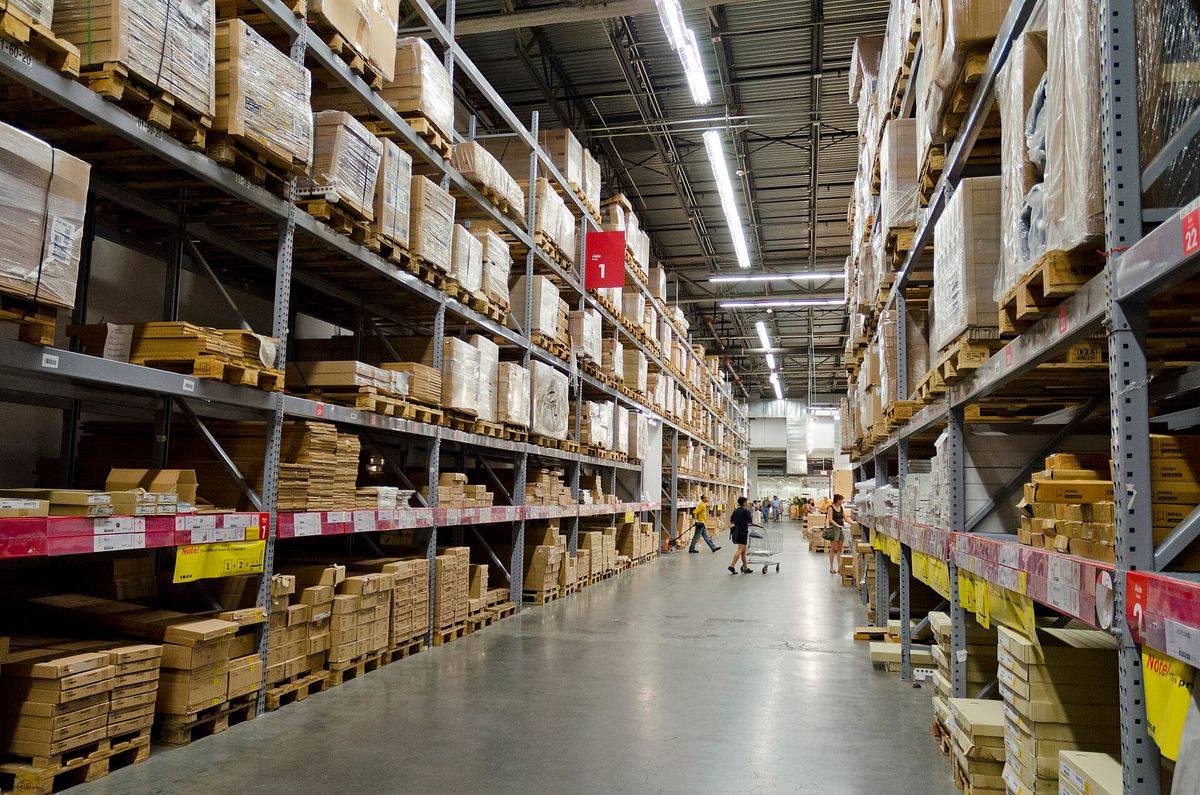
The network now reaches beyond IKEA's own buildings. In 2017 IKEA U.S. offered Click & Collect in 31 of its 47 stores, charging $5 and giving a $5 gift card at pickup66. In fiscal 2022 it opened its first Pick-Up Point in Nashville, Tennessee, a partner location where customers collect online orders23. By the end of fiscal 2024 it had 39 pick-up points and 21,000 FedEx collection points40. The 2023 investment plan also turned stores into shipping hubs, with a "dual role" of inspiring customers and handling parcel deliveries directly from the store50.
Shopping Experience at IKEA US Stores
Store Layout and Design Philosophy
The big stores follow a layout that Olson described to the Inquirer as central to the brand: "Ikea is a concept company. The layout of the store, the way we work with inspiration and the room sets, showing [the] customer solutions to their needs, was really unique."2 The Inquirer's interviewer put it more simply: IKEA "walks visitors down a carefully ordered path."2
A typical large store opened in the late 2010s gives a sense of the scale. IKEA Fishers, which opened in 2017, was announced as a 289,000-square-foot store with about 1,000 parking spaces, nearly 10,000 items, 50 room settings, three model home interiors, a supervised children's play area and a 325-seat restaurant67.
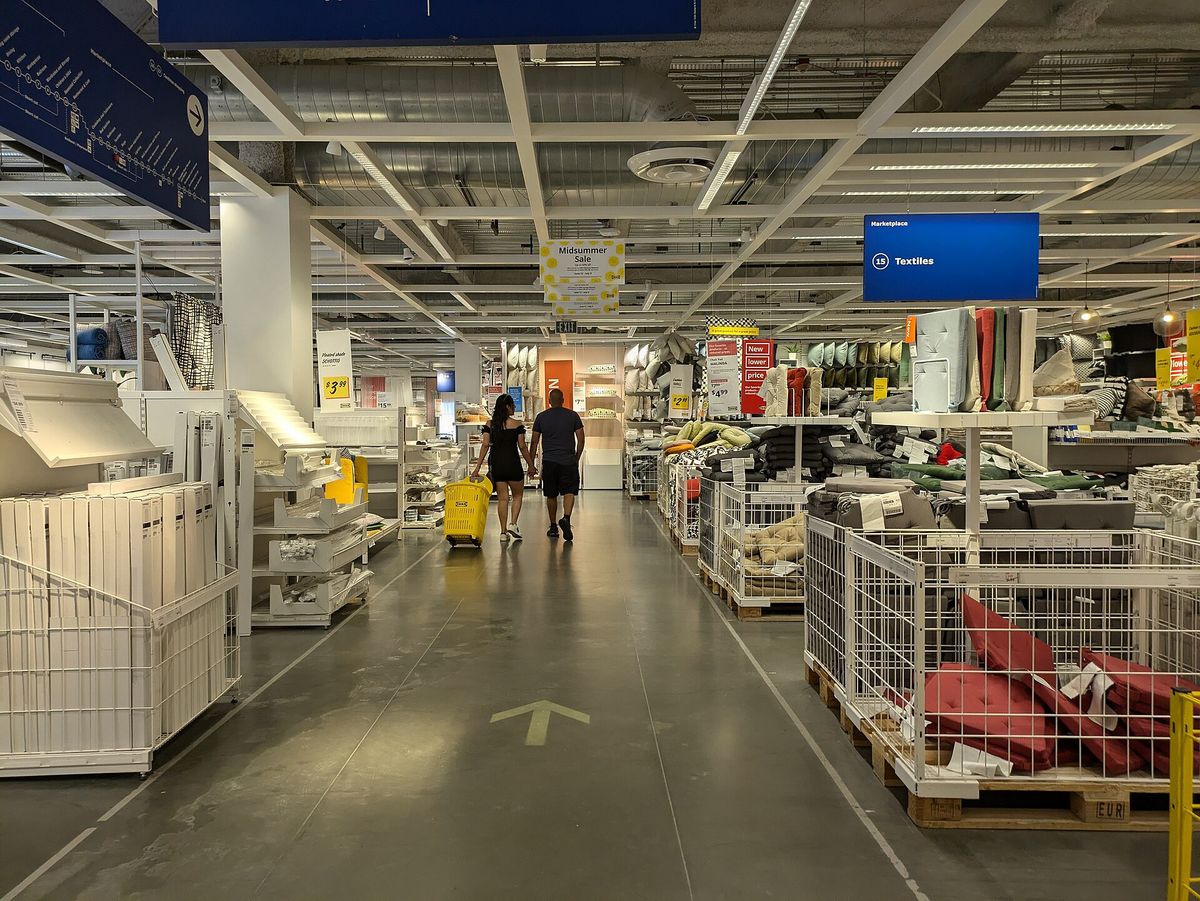
The room sets do more work than they appear to. Fortune wrote in 2015 that the full-size sample rooms "play an essential, if secret role, showing consumers how to fit Ikea pieces into their lives."4 The same magazine traced flat packing back to 1956, when a designer took the legs off a LÖVET table to fit it in his car4. "The more air in our products, the better," design manager Marcus Engman said of IKEA's approach to design, while its packaging manager, Allan Dickner, said of shipping: "I hate air."4 Fortune reported that IKEA used 800 million square meters of cardboard a year, and that its instruction team produced some 1,400 assembly instructions a year featuring a gender-neutral cartoon character called the "assembly figure."4 New employees who are not yet used to Allen wrenches are brought in to test assembly, Fortune reported, so that a small, inexpensive item does not take three hours to put together4.
The newest stores shrink the same idea. IKEA San Francisco fits 27 furnished room settings into three floors10. The planned Phoenix small-format store will include multiple furnished room settings, an As-is department and a Swedish Deli, with about 3,000 items to take home and larger items ordered for delivery or pickup15.
Restaurant and Food Market
Food has been part of the American store since the first day. Meatballs, salmon from the Swedish Food Market and cinnamon buns all feature in the anniversary story IKEA tells about itself6. "I mean, who can turn down a Swedish meatball?" Olson said in 20251.
The numbers are large. IKEA U.S. reported selling 40,856,716 meatballs in its restaurants in fiscal 202223 and 54,598,704 in fiscal 202324. In fiscal 2024 it counted 62,074,265 meatballs, plant balls and veggie balls combined25. Globally, Fortune reported in 2015 that IKEA's food business was worth €1.67 billion a year, that IKEA bought 25% of Sweden's annual lingonberry supply and that it served 600 million guests a year in its restaurants, food markets and bistros68.
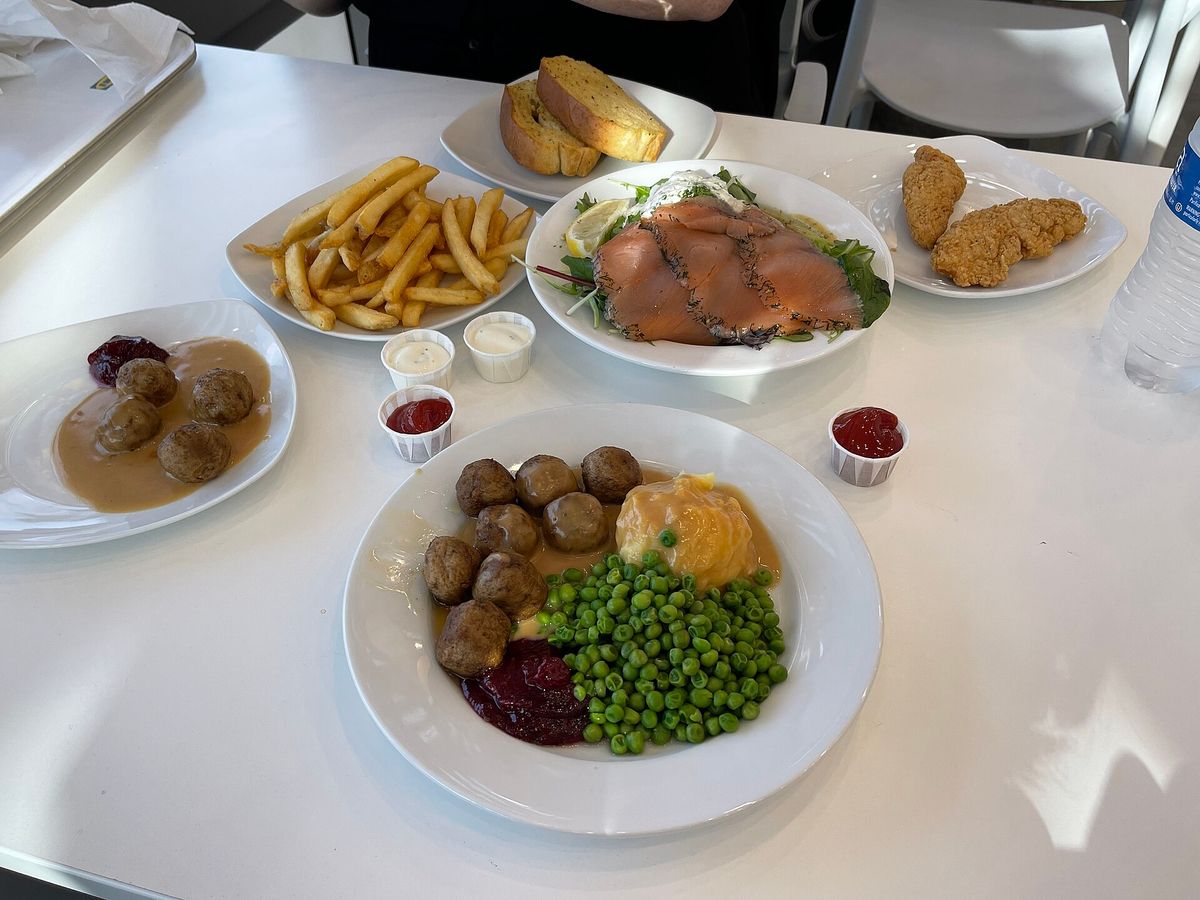
The menu has changed with American tastes. In April 2015 IKEA added veggie balls, with chicken balls to follow, and Gerd Diewald, then head of IKEA food in the U.S., told Fortune at a tasting in Brooklyn: "People want to know what's in their food."68 The plant ball, made from yellow pea protein, oats, potatoes, onion and apple, went on sale in U.S. stores on September 28, 2020, at the same $5.99 adult plate price as the meatballs69. "At IKEA, we sell more than one billion meatballs every year," said Sharla Halvorson, health and sustainability manager for IKEA's global food business. IKEA said that converting about 20% of meatball sales to plant balls would cut the climate footprint of its food business by around 8%69, and its fiscal 2022 U.S. summary described plant balls as having 4% of the climate footprint of meatballs23. In fiscal 2024 IKEA U.S. added a plant-based hot dog and sold nearly 185,000 of them40. Olson said the plant dog "has the same snap and taste as our iconic hot dog but comes at a lower price than the meat-based option."1
The smaller stores have their own food formats. IKEA said the Rockwall store would have a Swedish Deli cafe and a Swedish Bistro for takeaway54, and that the Rio Grande Valley store would use a Swedish Bite concept for quick hot and cold food53. For the 40th anniversary, IKEA announced that from September 24 to October 28, 2025, U.S. stores will sell a throwback 1985 meatball plate for $2.9970. It also said it would donate 40% of sales from its NYTILLVERKAD collection between September 3 and September 27 to Family Promise, a nonprofit that supports families facing homelessness70.
Popular Product Categories in the US Market
Furniture Collections
A handful of products have carried IKEA through four decades in the U.S. The BILLY bookcase, POÄNG chair, LACK table and KLIPPAN loveseat were all in the first American catalog in 1985 and were still on sale in 20155. KLIPPAN has a family story behind it: Fortune reported that the father of IKEA design manager Marcus Engman, an IKEA product developer, came up with the round, informal sofa after seeing how his children wore out furniture4. BILLY remains the price signal. When IKEA U.S. cut prices in late 2023, it singled out the BILLY bookcase as one of the products marked down by 20% or more45.
The range behind those icons is large and centrally designed. In 2015 Fortune counted about 9,500 products in IKEA's range, with some 2,000 new products and redesigns coming from Engman's team every year. It reported that about two thirds of IKEA's goods were made in Europe, that IKEA's own factories made 12% of production and its 1,002 suppliers the rest, and that IKEA sold only its own brand, apart from some food4. IKEA's timeline dates its idea of "Democratic Design" to the IKEA PS collection, launched at the Milan Furniture Fair in 1995 and sold in the U.S. soon after6.
What Americans buy has shifted with how they live. In fiscal 2022, after two years of working from home, IKEA U.S. named workspaces, beds and mattresses, and living room seating as its top product categories, saying customers "turned to IKEA to create multifunctional homes."23 A year later the top categories were bedroom furniture, storage and children's items24.
Kitchens are one of the few categories where IKEA competes on a long-term purchase. In October 2019 J.D. Power ranked IKEA's SEKTION cabinets highest in customer satisfaction among nine kitchen cabinet brands, with a score of 857 out of 1,000, the fifth time in eight years that SEKTION ranked in the top two71. "We understand kitchen cabinets are a long-term investment for the home," said Kathleen Wilber, a senior sales leader for kitchens at IKEA U.S. "Our goal is to make them affordable, beautiful and high-quality, backed by a 25-year limited warranty."71 IKEA's Plan & order points exist largely to sell these projects: they are designed for purchases that "require a bit more help," such as kitchen, bathroom and closet storage systems63.
IKEA has also started telling Americans what to buy by style. Its first IKEA U.S. Style Guide, released in January 2024, named four interior design movements: Warm Minimalism, Swedish Roots, Modern Playfulness and Scandinavian Folklore72. "We believe that home is the most important place in the world, and everyone deserves to feel comfortable in their space," said Seana Strawn, the company's country home furnishing and retail design manager72.
Home Organization Solutions
Storage is where IKEA's research on American homes shows up most clearly. The company's best-known shelving has even been made in the U.S.: Danville made Expedit bookshelves in 201127 and, by the time it closed, mainly KALLAX shelving and BESTÅ storage units for the U.S. and Canadian markets26.
Much of IKEA's product development starts with studies of daily routines. Fortune described a study of 8,292 people in eight cities that looked at how people get ready in the morning. It found New Yorkers and Stockholmers were the most likely to work in their bathrooms, at 16%, and the research led to the KNAPPER, a freestanding mirror with a rack on the back for laying out clothes the night before4. IKEA U.S. published its first Life at Home Report, a large survey of how Americans live at home, in 2016, according to the company's anniversary timeline6. When IKEA launched Kreativ in 2022, it cited a later Life at Home report that found over 60% of customers had significantly changed how their home functions since the pandemic20.
Small homes have become a design brief of their own. The Manhattan Planning Studio was built around small-space solutions, and CNBC described walls filled with organizational pieces "encouraging shoppers to think outside the box about using that space."48 IKEA planned its Queens store the same way, with thousands of products to take home and larger furniture on display for delivery59.
Planning services turn storage into a project. IKEA's Plan & order points offer appointments for closets and storage systems as well as kitchens63. "We've increased our ability for customers to shop from their home, added services like remote planning where customers can connect virtually with our teams to plan a kitchen or closet, and increased our delivery and assembly options," Olson told Furniture Today in 20251.
IKEA US Online Shopping and Delivery Options
Website Features and Digital Tools
By the mid-2020s IKEA's American website and app were doing jobs the store used to do alone. IKEA Kreativ lets customers browse more than 50 3D showrooms, scan their own room with the IKEA app, erase existing furniture and add IKEA products, then save or share the design20. TechCrunch reported that in testing it took about two minutes to scan a room and another five minutes to process it, and that the IKEA catalog then had more than 12,000 items21.
Some of the most useful features are about second-hand goods and money. In April 2023 IKEA U.S. launched As-is online, which lets IKEA Family members browse and reserve used and discontinued products online and then pick them up and pay in the store73. Afterpay's four-installment option arrived in September 202336. In July 2024 IKEA U.S. launched a complete Spanish-language shopping site34. "At IKEA, we are committed to creating an inclusive and accessible shopping experience for all our customers," said Jessica Santiago Byrd, multicultural marketing communications manager for IKEA U.S.34
The IKEA Family loyalty program became a points program in May 2025. Members earn points for actions such as logging in, saving a kitchen drawing, booking a planning appointment or creating a gift registry, and can redeem 65 points for free food in the restaurant or bistro, 175 points for $5 off a purchase and 350 points for $10 off delivery37.
Shipping and Assembly Services
Delivery pricing has been a long-running weak spot for a retailer built on customers carrying their own boxes. In January 2018 IKEA U.S. began offering delivery starting at $29, charged the same regardless of the weight and size of an order, along with a flat $9 rate for small parcels66. In fiscal 2023 it launched a delivery service starting at $1924, and in fiscal 2024 it added discounted shipping and delivery options for IKEA Family members25. Delivery prices, return windows and service hours change often, so this article does not rely on them. The current details are on IKEA's U.S. customer service page .
Assembly is the other part of the experience people talk about, and IKEA bought a company to help with it. In September 2017 IKEA bought TaskRabbit, the San Francisco marketplace for freelance odd jobs, as CNBC reported at the time47. TaskRabbit became an independent subsidiary, and its chief executive, Stacy Brown-Philpot, stayed on47. TaskRabbit, founded in 2008 by Leah Busque as Run My Errand, had about 60 employees and had raised about $50 million, but scores of independent workers used its platform47. In March 2018 IKEA U.S. began offering TaskRabbit assembly online in select markets and in six stores in the New York and San Francisco areas, starting at $3666. "We are always looking at ways we can innovate and help make our customers lives at home easier," said Jackie DeChamps, then IKEA U.S. chief operating officer66.
The service grew into a routine part of the business. IKEA U.S. counted 143,230 TaskRabbit assembly projects in fiscal 202223, 146,720 in fiscal 202324 and 124,790 in fiscal 202425. In March 2024 IKEA and TaskRabbit introduced standardized pricing for product assembly on taskrabbit.com, and IKEA said it had fully integrated TaskRabbit assembly services into its online experience25. Some workers have complained. In 2025 the Inquirer put to Olson that TaskRabbit workers said they earned less on IKEA jobs because IKEA set piece rates. Olson answered: "I don't know about the assemblers."2
IKEA has also been changing how the trucks run. In March 2021 IKEA U.S. said it was on track to have 40 electric delivery trucks serving all five boroughs of New York City by May 2021, and planned 50 for the Los Angeles market74. "IKEA is committed to becoming climate positive by 2030, and ensuring zero emissions for home deliveries is an important step in that journey," said Jennifer Keesson, then country sustainability manager74. IKEA U.S. counted 37,974 zero-emission deliveries in fiscal 202223 and 317,933 in fiscal 2024, when it used electric delivery vehicles in 48 locations25.
Sustainability Initiatives and Corporate Responsibility
Climate Action Through Energy Innovation
IKEA's sustainability claims in the U.S. rest on a large set of energy assets, and the company reports them itself. Fortune's Beth Kowitt put the tension plainly in 2015: IKEA used about 1% of the world's commercially logged wood, and its chief sustainability officer, Steve Howard, told her: "We are potentially at peak stuff in the west."75 Kowitt also pointed out that IKEA had once marketed the opposite of long-lasting furniture, with tag lines like "Chuck out the Chintz" and the 2002 "Lamp" ad that told viewers they were crazy for feeling bad about a lamp left on the sidewalk75. By 2015, she reported, IKEA stores recycled soft plastic packaging film into its SKRUTT desk pads75.
On energy, the numbers are specific. Ingka Group owns two U.S. wind farms bought from Apex Clean Energy: the 98 MW Hoopeston Wind in Illinois and the 165 MW Cameron Wind in Texas, a 55-turbine project operating since 201576. In September 2019 Ingka invested in its first U.S. solar parks, with 636,000 panels in Utah and 823,000 in Texas77, a total capacity of 403 megawatts78. At the time IKEA had solar panels at 90% of its U.S. locations, geothermal projects at two stores and fuel cell systems77. In September 2023 Ingka announced its first battery storage project, the 16.4 MW Cameron Storage, next to the Texas wind farm76.
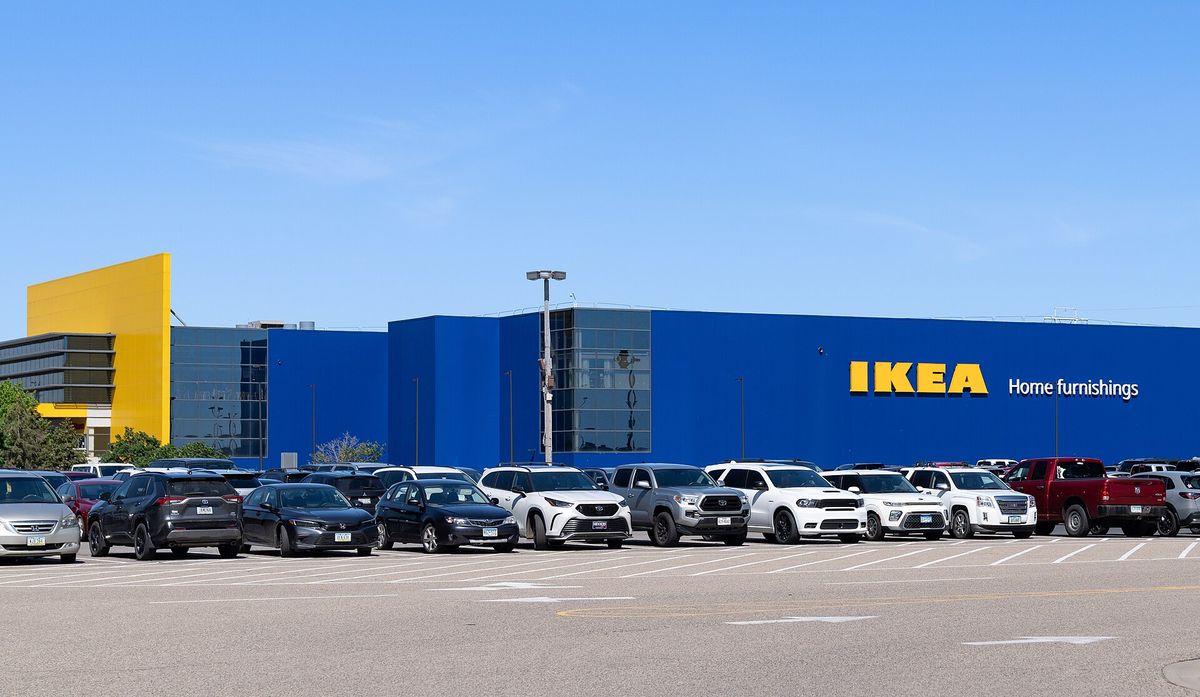
Store roofs and parking lots became power plants. In February 2021 IKEA U.S. completed its first solar car park at IKEA Baltimore and said the store had needed 84% less purchased energy between September and December 202079. In September 2023 it announced a second phase adding solar car parks, rooftop panels and batteries at seven more sites, including a long-span carpark at IKEA Paramus that covers the entire parking deck roof80. "We are taking bold steps to reduce our climate footprint in the United States and become a climate positive business by 2030," said Mardi Ditze, country sustainability manager80. The same announcement described a renewable heating and cooling project starting at five stores, aimed at cutting fossil fuel use in IKEA's operations by 80% by 203080.
IKEA's fiscal 2024 summary said its U.S. entities generated about 770 million kWh of renewable energy that year, more than its locations consumed, from 198,381 solar panels, 104 wind turbines, seven fuel cell arrays and two geothermal systems25. It had 374 EV charging stations across 56 properties25, after a partnership with Electrify America brought ultra-fast charging to 25 locations in fiscal 202223. The same year IKEA U.S. teamed up with SunPower to sell home solar systems to IKEA Family members in select California markets, starting in fall 202281. When the United States formally requested withdrawal from the Paris Agreement in November 2019, IKEA's U.S. president wrote to co-workers: "I want you to know that IKEA remains committed to the Paris Agreement, and we must play a part in reversing the direction of climate change."78 The letter said IKEA had 124 electric vehicle charging stations at 37 U.S. stores at the time and had planted over 2.6 million trees through a partnership with American Forests78.
Circular Economy and Product Lifecycle Management
IKEA's most visible circular program in the U.S. started small. After a pilot at IKEA Conshohocken in 2021, IKEA U.S. launched Buy Back & Resell nationally that November, offering IKEA Family members store credit for used IKEA furniture that it then resold in the As-is section82. "We are excited to share that the Buy Back & Resell pilot in Conshohocken had positive results – 100% of product brought in was resold versus recycled," said Jennifer Keesson, then country sustainability manager, as the service expanded to 33 stores82.
The program kept growing. IKEA U.S. offered it at 37 stores in 202281, added As-is online in 202373, and by the end of fiscal 2024 offered Buy back & resell at 49 of its 51 stores, with more than 2,700 products eligible25.
Packaging and lighting are the other long-running efforts. In November 2021 IKEA said it would phase plastic out of consumer packaging, starting with new products by 2025 and the existing range by 2028. At the time less than 10% of the packaging material it used each year was plastic, out of about 920,000 tons of packaging83. Home Textiles Today reported that IKEA was the first major retailer to announce it would sell only LED lights, in 20161. IKEA U.S. counted more than 2 million packs of LED bulbs sold in fiscal 202425.
Forests and Responsible Materials
IKEA's parent has also become a large American forest owner. In January 2018 it bought its first U.S. forest, about 25,000 acres in Lowndes County, Alabama11. In January 2021 Ingka Investments bought 10,840 acres in southeast Georgia near the Altamaha River from The Conservation Fund, taking on obligations to restore longleaf pine forest and protect gopher tortoise habitat84. "Well-managed forests provide essential benefits, including clean water and important wildlife habitat, as well as mitigating climate change," said Larry Selzer, president of The Conservation Fund84. With that purchase Ingka said it owned about 136,000 acres in five states: Georgia, South Carolina, Alabama, Texas and Oklahoma84.
In January 2022 Ingka Investments bought 3,264 acres in Florida, in an area damaged by Hurricane Michael, and said it would plant at least 650,000 trees in the first rotation, mostly longleaf pine85. IKEA's fiscal 2024 U.S. summary listed 183,577 acres of responsibly managed forests25. Ingka says its forest management is audited by the Forest Stewardship Council84.
Customer Service and Return Policy
Return Policy Framework and Procedures
IKEA's return policy is generous by furniture retail standards. As of September 2025, IKEA's U.S. return policy page said: "IKEA offers a 365-day return policy for unopened products. You may also return open products within 180 days, with your proof of purchase, for a full refund."86 It also said returns were not accepted at IKEA Planning Studio or IKEA Pick Up Point locations, and that exchanges required the merchandise, a photo ID, the receipt or online order confirmation and the card used for the purchase86.
Returns are expensive for any retailer, and IKEA has invested in handling them. In December 2019 IKEA Retail U.S. partnered with Optoro, a returns software company, to process returns at 10 distribution centers, 50 stores and its U.S. customer support center, with the aim of reselling more returned goods and sending less to waste35. "Optoro's solution will enable us to eliminate much of the waste created in the reverse supply chain, from minimizing the carbon emissions released in return shipping to finding the best next homes for returned items," said Quiñones35. For Afterpay orders, IKEA said returns are processed like any card return and refunds can take up to 10 business days to show36.
Support Channels and Service Enhancement
The pandemic tested IKEA's service model. In March 2020 IKEA closed all U.S. stores38. In May 2020 it told co-workers it would bring back all furloughed IKEA Retail U.S. staff to work in areas including online order fulfillment and remote customer service, and select stores began reopening on June 387. Reopened stores used physical distancing, capacity limits and temperature checks for co-workers, and kept the restaurant and the Småland play area closed87.
Since then IKEA has added service in more languages and more places. Spanish-speaking customers can get help from Spanish-speaking co-workers by phone before, during and after a purchase34. IKEA U.S. said its fiscal 2024 work produced its highest customer satisfaction score to date25.
Warranty Support and Product Defect Management
IKEA's warranties vary by product. Its SEKTION kitchen cabinets carry a 25-year limited warranty, according to IKEA U.S.71 When a product fails, IKEA sometimes issues a safety announcement without a formal recall. In May 2019 it offered free longer shelf support pins for HEMNES bookcases and glass cabinets sold in the U.S. between April 2010 and April 2017, after 29 reports worldwide of shelves falling because of wood shrinkage, 17 of them in the U.S. with minor cuts or bruises88.
The largest product failure in IKEA's U.S. history, however, needed far more than new pins.
The Dresser Recall
The darkest chapter in this story involves one of IKEA's best-known products. In July 2015 IKEA and the U.S. Consumer Product Safety Commission announced a free wall-anchoring repair program for MALM and other chests and dressers89, after two toddlers died in tip-over accidents involving MALM dressers in 201490. In February 2016 a third child, a 22-month-old boy in Minnesota, died after a MALM chest fell on him, NPR reported90.
On June 28, 2016, IKEA and the CPSC announced a recall of about 29 million chests and dressers in the U.S., including about 8 million MALM units89. The CPSC said the recalled furniture was unstable if not anchored to a wall, "posing a serious tip-over and entrapment hazard that can result in death or injuries to children."89 By then it listed four child deaths involving MALM chests and dressers, plus 41 other MALM tip-over incidents that injured 17 children89. It also listed three deaths linked to other IKEA chest models, going back to 198989. Customers could choose a refund or a free wall-anchoring kit89. "If you have or think you have one of these products, act immediately," CPSC chairman Elliot Kaye said90.
In December 2016, lawyers for the families of Curren Collas, Camden Ellis and Ted McGee said IKEA had agreed to a $50 million settlement, which IKEA described as "tentative."91 NPR quoted the families' lawyers as saying IKEA "had consistently refused to meet voluntary national safety standards."91 According to the lawyers, the settlement also required IKEA to meet voluntary safety standards for dressers, donate $150,000 to children's hospitals and $100,000 to a children's safety organization, and spend more on its "Secure It" awareness program91.
The recall did not reach every family. In May 2017, two-year-old Jozef Dudek died in California when a MALM dresser his family had bought in 2008 fell on him92. His family had never received notice that the dresser was recalled, according to their lawyer92. In a statement to NPR in 2017, IKEA said it had gone to "great lengths to get the word out" about the recall93. On November 21, 2017, IKEA and the CPSC re-announced the recall. The CPSC revised the U.S. unit count to about 17.3 million and reported eight child deaths with the recalled chests and dressers94. By then IKEA had received 186 reports of tip-overs involving MALM chests and dressers, including 91 reports of injuries to children, and 113 reports involving other recalled IKEA models, including 53 injuries94. The CPSC said the recalled non-MALM chests and dressers had been sold from about 198594.
In January 2020, IKEA agreed to pay $46 million to settle the Dudek family's lawsuit92. Jozef's parents said they were "telling our story because we do not want this to happen to another family."92 The family had filed the lawsuit in a Philadelphia court in 2018, and said it would donate $1 million of the settlement to groups that work to protect children from unsafe products92. Their lawyer, Daniel Mann, said IKEA's redesigned MALM dresser was "marginally better" than the old one92. An IKEA spokesperson told NPR: "We remain committed to working proactively and collaboratively to address this very important home safety issue."92
IKEA's defense of the recall rested on how hard old furniture is to find. In June 2019 it said it had provided the recall remedy for 1.42 million dressers and estimated that its outreach had produced 7 billion impressions. "The full impact of the recall cannot be measured by dressers returned or wall attachment kits distributed alone," the company said95. It argued that the recall covered chests sold as early as 1985 and that "it's very likely that many of the products are no longer in use."95 In January 2021 IKEA Retail U.S. began requiring customers to acknowledge the need to anchor chests of drawers, and to give their name and email address, before it would complete a sale96.
The long-term fix came through law and design. IKEA supported the STURDY Act, which requires the CPSC to set a mandatory stability standard for clothing storage furniture, and Congress passed it on December 23, 202297. From April 2024, IKEA said, all chests and dressers it sold in the U.S. met the new federal standard. Among its designs is a patented Anchor and Unlock feature, used in the VIHALS dressers, which requires the dresser to be anchored before more than one drawer can open; IKEA shared the patent with other manufacturers through a patent pledge98.
For any brand, the case is a lesson in crisis management. The CPSC's list of fatal tip-overs involving IKEA chests went back to 198989, and the Dudek case showed that a recall only protects the families who hear about it92.
How IKEA US Compares to Other Furniture Retailers
Market Share and Revenue Growth
IKEA is big in the U.S. without being the biggest home retailer. IKEA U.S. reported a record $6.3 billion in total sales of goods and services in fiscal 202339. Wayfair, which sells mostly online, reported $12.0 billion in net revenue for 202399. Home Textiles Today ranked IKEA No. 10 on its list of the top 50 home textiles retailers, with an estimated $788 million in home textiles sales in 20231. IKEA says its U.S. market share grew 13.6% over the five years to fiscal 202440.
The competitive field has changed completely since IKEA's early years. When IKEA bought Stor in 1992, the Baltimore Sun reported that Stor had been the nation's 34th largest furniture retailer, with sales of $72.2 million in 19908.
Pricing Structure Differences
IKEA's pricing works differently from most furniture sellers because it controls the whole chain, from design to flat pack to store. "It traumatized furniture retailing," Martin Toogood, who had run several companies competing with IKEA, told Fortune in 20154. The magazine described how IKEA kept prices down by skipping details customers never see and by pushing work such as transport and assembly onto customers4. Engman, IKEA's design manager, pointed out that a price designed for poorer markets travels well: "what's a good price in India is an even better price in the U.S."4
Omnichannel Strategy Implementation
IKEA and its online-first rivals have been moving toward each other. IKEA spent the 2020s building pick-up points, planning studios and small stores25. Wayfair, a digitally native retailer, went the other way and opened its first large-format store, a 150,000-square-foot, two-story building in Wilmette, Illinois, in May 2024, with an in-store restaurant called The Porch99. The two companies now both sell home furnishings through stores, websites and apps, and both serve food.
Technology Integration and Digital Innovation
IKEA was early to augmented reality in furniture shopping with IKEA Place in 201718. By 2022 TechCrunch noted that Amazon, Wayfair, Target, The Home Depot, Overstock, Houzz and others had their own AR tools for placing products in a room21. IKEA's answer was IKEA Kreativ, which scans a whole room and lets customers redesign it20.
Customer Experience and Service Models
Service has been where IKEA has most visibly borrowed from outside its own model. Buying TaskRabbit gave it an assembly network, and CNBC reported that the deal was aimed at competing with Amazon's home services47. The Best Buy pilot announced in 2025 will put IKEA planning in another retailer's stores for the first time49. And in independent rankings, IKEA's kitchens have held their own: J.D. Power ranked SEKTION first in customer satisfaction among nine cabinet brands in 201971.
Conclusion
The lines at Plymouth Meeting in 1985 showed that Americans wanted low-priced, well-designed furniture. The following years showed how much work it took to sell it to them. IKEA had to learn American glass sizes, bed sizes and kitchen measurements, consider pulling out in 1992, and buy a rival to grow in the West4,8. It then grew into one of the most familiar retailers in the country, with $5.5 billion in total sales and 51 stores in fiscal 202425.
A few lessons come straight out of the record.
Local fit matters as much as the formula. IKEA kept its global range and store layout, and changed the details that clashed with American homes, from drinking glasses to mattress sizes6,13.
Growth can outrun the operation. The opening crowds shocked the supply chain, and the company's own managers later remembered the "indigestion" of the U.S. expansion2,13.
Making things closer to the customer is harder than it looks. The Danville factory was meant to cut shipping costs and closed after 11 years because its costs were higher than IKEA's European plants27,26.
Convenience keeps changing shape. Online browsing in 1997, online shopping in 2001, TaskRabbit assembly in 2018, and small stores and pickup points in the 2020s all had the same goal: getting the product into the home with less effort from the customer6,25.
Safety is part of affordability. The MALM recall showed that a low price means little if a product can hurt a child, and that a recall notice has to reach the people who own the product89,92.
Forty years after the first American store, IKEA is still telling the story it started with. Its own designers describe the company's method with unusual honesty. "We are world champions in making mistakes," design manager Marcus Engman told Fortune. "But we're really good at correcting them."4 The anniversary meatball plate announced for late September is a nod to 198570, and the small stores opening in Texas rest on the same claim Bjorn Bayley made to Furniture Today that June: a product that, for the price and quality, is hard to beat1.
Sources
- 1
- 2
- 3
- 4
- 5
- 6
- 7
- 8
- 9
- 10
- 11
- 12
- 13
- 14
- 15
- 16
- 17
- 18
- 19
- 20
- 21
- 22
- 23
- 24
- 25
- 26
- 27
- 28
- 29
- 30
- 31
- 32
- 33
- 34
- 35
- 36
- 37
- 38
- 39
- 40
- 41
- 42
- 43
- 44
- 45
- 46
- 47
- 48
- 49
- 50
- 51
- 52
- 53
- 54
- 55
- 56
- 57
- 58
- 59
- 60
- 61
- 62
- 63
- 64
- 65
- 66
- 67
- 68
- 69
- 70
- 71
- 72
- 73
- 74
- 75
- 76
- 77
- 78
- 79
- 80
- 81
- 82
- 83
- 84
- 85
- 86
- 87
- 88
- 89
- 90
- 91
- 92
- 93
- 94
- 95
- 96
- 97
- 98
- 99
-
Header image

Cristina Arcega-Punzalan is a content writer at AMW®, covering topics in marketing, entertainment, and brand strategy.
Frequently Asked Questions
Is IKEA an American company?
Where was the first IKEA in the United States?
How many IKEA stores are in the U.S.?
When did IKEA start selling online in the U.S.?
What is IKEA's U.S. return policy?
As of September 2025, IKEA's U.S. return policy page said unopened products could be returned within 365 days, and opened products within 180 days with proof of purchase86. Policies change, so check IKEA's customer service page before returning anything.
Why did IKEA recall the MALM dresser?
Related Resources
Related Articles

Corporate Branding Strategies That Transform Companies Into Market Leaders
Corporate branding shapes how consumers perceive and connect with businesses across every industry. It's the strategic process that transforms companies from mere service providers into recognizable e

From BBQ Stand to Global Empire: The Remarkable Story of McDonald's
McDonald's evolved from a single barbecue restaurant in 1940 to a global fast-food empire, driven by Ray Kroc's innovation and the McDonald brothers' efficient system. Key strategies included the...

Brand Myth: Building Authentic Connections with Consumers
While traditional marketing approaches often focus on product features and competitive advantages, some successful companies are beginning to explore storytelling as a means to build lasting relations