How Celebrity Branding Transforms Ordinary Products Into Billion-Dollar Empires


Celebrity branding is the practice of attaching a product or company to a famous person's name, face or reputation. It takes three main forms: the celebrity is paid to endorse someone else's product, works with a company on a shared product, or owns the brand outright. The last form has produced the largest outcomes, including tequila, gin, beauty and phone brands sold for hundreds of millions of dollars or more.
The practice is also one of the better-documented parts of marketing. Public companies have disclosed what they paid for celebrity names and what they feared losing, regulators have written rules and brought cases, and academic researchers have measured the effect of endorsements on sales and share prices. This guide draws on those records. It explains how celebrity branding works, how it developed, the main strategies, the benefits and risks, the best-known cases, how companies measure results, and where the practice is heading.
What Is Celebrity Branding and How Does It Work
A brand borrows attention and trust from a person the public already knows. The person gets a fee, a share of sales, equity or some mix of the three. The arrangement works when the audience believes the connection, and it breaks when the person's reputation changes or when the connection turns out to be hidden.
That second point is a legal matter in the United States. The Federal Trade Commission's Endorsement Guides say an endorsement "must reflect the honest opinion of the endorser," and that a connection between an endorser and a marketer that consumers would not expect should be disclosed clearly and conspicuously1. The Guides were revised in 2023, the first revision since 20092.
The Foundation of Celebrity Brand Power
The raw material of celebrity branding is an audience. When Coty agreed in November 2019 to buy a majority of Kylie Jenner's beauty business, it described her as having "over 270 million followers across her personal and brand social media channels"3. When it bought a stake in Kim Kardashian West's beauty business seven months later, it cited 300 million followers across her personal and brand channels4. Those audiences were part of what Coty was paying for.
Investors have long treated celebrity deals as valuable. In a study published in the Journal of Marketing in 1995, Jagdish Agrawal and Wagner Kamakura analyzed the stock market reaction to announcements of 110 celebrity endorsement contracts. They found that, on average, the announcements had a positive effect on the company's stock returns, which suggested that "celebrity endorsement contracts are generally viewed as a worthwhile investment in advertising"5. Their method assumed that market analysts treat a widely publicized endorsement announcement as information about the company's future profits, so the share price reaction works as an estimate of the deal's expected value5.
Core Components of Celebrity Brand Architecture
A celebrity deal is a bundle of rights and duties, and filings show what goes into the bundle.
The first component is the right to use the name and image. When Salton, the appliance maker behind the George Foreman grill, bought out its arrangement with the boxer in December 1999, it acquired "the right to use in perpetuity and worldwide the name George Foreman, including pictures and the likeness of George Foreman," for food preparation and drink appliances6.
The second is control over how that likeness is used. The Honest Company told investors in its 2021 IPO prospectus that it had a "Likeness Agreement" with its founder Jessica Alba that licensed her likeness, that she could terminate the agreement at any time with prior written notice, and that if she objected to a proposed use, the company could be prevented from carrying out its business plan on time or at all7.
The third is a division of work. In Coty's Kylie deal, Jenner and her team would "continue to lead all creative efforts in terms of product and communications initiatives," while Coty took responsibility for research and development, manufacturing, distribution and go-to-market work, and acted as licensee for skincare, fragrance and nail products3.
The Psychology Behind Celebrity Brand Influence
Why would a famous face change what people buy? Field research gives a partial answer.
In a nationwide Twitter experiment in Indonesia, published as an NBER working paper in 2019, economists worked with 46 high-profile celebrities and organizations with a combined 7.8 million followers, who allowed researchers to tweet or retweet messages promoting immunization from their accounts. The design separated the effect of reach from the effect of the celebrity's endorsement. The researchers' conclusion was direct: "Endorsements matter." Tweets that users could identify as coming from a celebrity were far more likely to be liked or retweeted than similar tweets without the celebrity's name attached. The researchers also found that "explicitly citing sources in the tweets actually reduces diffusion"8. By randomizing which celebrities tweeted when, they also found suggestive evidence that exposure to the campaign may have influenced beliefs about vaccination8.
Celebrity influence can also move demand from one product to another without growing a category. Craig Garthwaite's study of Oprah Winfrey's Book Club found that the endorsements were "a business stealing form of advertising that raises title level sales without increasing the market size." Endorsed titles sold more, aggregate adult fiction sales fell, and non-endorsed books by endorsed authors also sold more9.
Strategic Implementation Methods
Companies put celebrities to work in several ways, and the largest deals combine them.
Beyoncé's 2012 agreement with Pepsi, reported by The New York Times and Rolling Stone at $50 million, is a good example of a package. It included a new TV ad, her face on limited-edition cans, sponsorship of her tour and a fund for her creative projects, even projects with no obvious connection to Pepsi. The general manager of her company, Parkwood Entertainment, said those projects could include live events, videos or "a cool photo shoot"10.
Nespresso's 2015 launch of George Clooney as its U.S. ambassador ran across television, print, digital advertising, a partnership web film, social media and a dedicated microsite, and the company said it was the first branded television campaign in North America to feature Clooney11.
Other methods are covered in detail later in this guide: putting the celebrity's name on the product, giving the celebrity equity and a board seat, and joining a celebrity-led brand to a sports league.
Revenue Generation Models
The money flows in four basic ways.
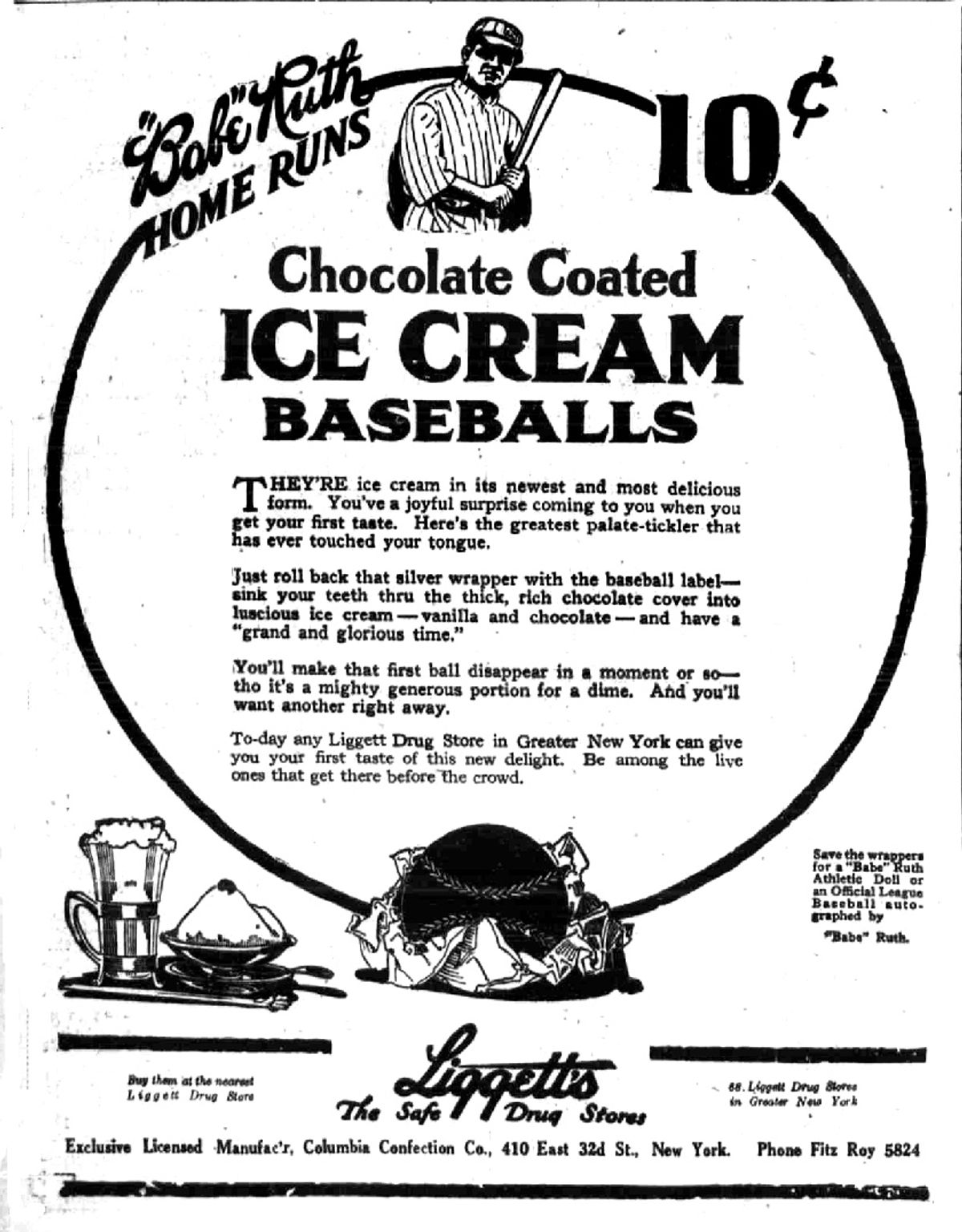
Licensing. A 1922 advertisement for "Babe Ruth Home Runs," a 10-cent chocolate-coated ice cream sold at Liggett's drug stores in New York, named the Columbia Confection Company as the "Exclusive Licensed" manufacturer12. Ruth's name was licensed to a maker, which sold through a retailer.
Fees with conditions. Nike paid Michael Jordan $500,000 a year for five years under his first deal, according to NBA.com, with a clause that let Nike void the contract if his shoes did not sell $4 million by the third year13.
Royalties, then a buyout. Salton had paid royalties on George Foreman products. Its December 1999 purchase of the Foreman name ended those royalty obligations as of July 1, 1999. The price was $113.75 million in cash, payable in five annual installments of $22.75 million, plus 779,191 shares of Salton stock6.
Equity. When Oprah Winfrey partnered with Weight Watchers in October 2015, she agreed to buy newly issued shares representing 10% of the company and received options on another 5% of the fully diluted shares14. Equity lets the celebrity share in the value they help create, which is why the largest outcomes described in this guide come from ownership.
Digital Platform Integration
Social media turned celebrity audiences into something a company can reach directly and measure.
In June 2017 Instagram introduced a "Paid partnership with" label for posts and stories when a commercial relationship existed between a creator and a business. Instagram said "a healthy community should be open and consistent about paid partnerships," and that when the tool was used, both the creator and the business would see Insights data for the post15. Instagram said it was starting with a small number of creators and businesses and would make the tools widely available in the following months, along with an official policy and enforcement guidelines15.
Companies built on celebrity audiences now say so in their filings. The Honest Company told investors: "We depend on Ms. Alba's social media reach and influence to connect with consumers and provide insight on current trends"7. It put her audience at approximately 39 million followers across all her social channels7.
Platform tools have limits. The FTC's 2023 update to its Endorsement Guides added a definition of "clear and conspicuous" and said a platform's built-in disclosure tool might not be an adequate disclosure on its own2.
Market Impact and Consumer Response
Markets react quickly when a celebrity moves.
On the day Winfrey's Weight Watchers deal was announced, Reuters reported via CNBC that the company's shares rose almost 90% and "nearly doubled in early trading." More than 35 million shares changed hands, the busiest day in the company's history16.
It works in reverse as well. In February 2018 Kylie Jenner tweeted that she no longer used Snapchat after its redesign. CNBC reported that Snap shares fell as much as 8% that day, in a story headlined "Kylie Jenner just wiped $1.7 billion off Snap's market cap." The same report noted that Citigroup had downgraded the stock earlier that week over the redesign backlash, so the tweet landed on a stock already under pressure17. Snap had been defending the redesign for weeks, most recently in a response to a Change.org petition titled "Remove the new Snapchat Update," and CNBC noted its shares were still up more than 18% for the year17.
Consumers respond at the counter too. Rihanna's Fenty Beauty reportedly made $100 million in sales within 40 days of its September 2017 launch, and according to The Fashion Law's summary of Vogue's reporting, "The wait lists at certain makeup counters continued for months"18.
Industry Visibility and Press Coverage
A celebrity can make a brand part of a news story. Michael Jordan's rookie appearance at the 1985 NBA dunk contest in Indianapolis is the classic case. According to NBA.com, he wore sneakers the league had banned and a Nike warm-up suit instead of a team-issued one. The outfit caused a stir, fed stories of a "freeze-out" by veteran All-Stars in the next day's game, and, in the words of NBA.com's Shaun Powell, was "the kind of marketing Nike couldn't buy"13.
Modern deals write the visibility into the contract. Skims' 2023 partnership with the NBA included media exposure across league platforms, "including through on-court virtual signage during NBA and WNBA national broadcasts," along with appearances at marquee events such as NBA All-Star19.
Celebrity-made content can travel on its own. When Ryan Reynolds, the creative director of Aviation American Gin, hired the actress from a widely criticized Peloton commercial to appear in a tongue-in-cheek Aviation ad, the video drew more than 5 million views on its first day, CNBC reported20.
Authenticity and Brand Credibility
Audiences look for evidence that the celebrity actually cares about the product. The strongest deals put that evidence in the announcement.
Winfrey joined the Weight Watchers program as a member, took a board seat and invested. "I believe in the program so much I decided to invest in the company and partner in its evolution," she said14. Clooney, announcing his U.S. role with Nespresso after years with the brand overseas, said: "I've been working with Nespresso internationally for nine years and I really love and respect the brand, what they do, and how they do it." Nespresso noted that he also sat on its Sustainability Advisory Board11.
Credibility has a legal floor. The FTC's guidance says an endorsement "can't be used to make a claim the marketer of the product couldn't legally make"1. A celebrity's enthusiasm does not substitute for evidence behind the product claim.
The FTC's case against Warner Bros. shows the opposite of credible endorsement. The agency alleged that the company required the influencers it paid to promote a video game in a positive way and not to disclose any bugs or glitches they found, and that their videos were subject to pre-approval. The FTC said the campaign misled consumers by suggesting the videos reflected the influencers' independent or objective views21.
Challenges and Risk Management
Every deal carries the risk that the person, the product or the disclosure goes wrong. Companies manage that risk mostly through contracts. Nike's right to void Jordan's first deal if sales fell short is an early example13. After Subway ended its relationship with spokesman Jared Fogle in 2015, University of Notre Dame management professor James O'Rourke told the Los Angeles Times, as quoted by Marketing Dive: "Every one of these spokesmen comes with a liability clause"22.
Regulators can also impose controls. When the FTC settled with the tea marketer Teami in 2020 over influencer posts that hid paid relationships, the order required clear disclosures and imposed "endorser monitoring requirements" on the company23. The Risks section below covers reputation, cost, dependence and disclosure in detail.
Future Evolution and Trends
The newest issue is technology that can copy a celebrity's face or voice without the celebrity. In March 2024 Tennessee Governor Bill Lee signed the ELVIS Act (Ensuring Likeness Voice and Image Security), which added "voice" to the state's existing protections for name, image and likeness. The governor's office called it "first-of-its-kind legislation" aimed at the misuse of artificial intelligence. "As the technology landscape evolves with artificial intelligence, I thank the General Assembly for its partnership in creating legal protection for our best-in-class artists and songwriters," Lee said24. The Future Trends section returns to this and to the rise of social media creators.
The Evolution of Celebrity Branding in Modern Marketing
The idea is old. In 1765 Josiah Wedgwood received an order from St James's Palace for a creamware tea set for Queen Charlotte. Wedgwood sent a crate of samples with the order, which led to further orders. According to the Victoria and Albert Museum, in 1766 the Queen gave the ware "her name and patronage, commanding it to be called Queensware, and honouring the inventor by appointing him Her Majesty's Potter"25. Wedgwood added the title "Potter to Her Majesty" to his invoices and orders25.
He built a wider marketing system around that royal connection. The V&A says he began stamping his wares as a mark of authenticity and quality at a time when Staffordshire pots were not usually marked, offered free delivery from his factory to London and free replacement of items broken in transit, and opened showrooms in London and shops in Bath and Dublin25. A famous name had become part of the product, and the product was sold with a promise of quality to match.
Sports stars followed. The 1922 "Babe Ruth Home Runs" advertisement in New York's Evening World showed Ruth swinging a bat above the words "Chocolate Coated Ice Cream Baseballs" and invited buyers to "Save the wrappers" for a Babe Ruth Athletic Doll or an Official League Baseball autographed by Ruth. It said the product was available at 88 Liggett drug stores in Greater New York12.
The modern template arrived with basketball. After starring for the 1984 U.S. Olympic team, Michael Jordan was in demand with shoe companies, and he did not want to sign with Nike. He played in college at North Carolina, then a Converse school, and he loved adidas. "Converse was the pre-eminent shoe brand," Nike executive Howard White told NBA.com. "He didn't want Nike," recalled Jordan's agent, David Falk. "He didn't even want to get on the plane to meet with Nike." His parents persuaded him to go, and Falk said Nike "did an amazing job in their presentation"13.
The contract paid him $500,000 a year for five years, which NBA.com reports was five times more than any NBA player earned in shoe endorsements. Nike sold $70 million worth of Air Jordans in the first three months they were in stores. "In the first year they sold $126 million worth," Falk said13. Looking back, he added: "Nobody had a clue he'd make the kind of impact he made in marketing. Nobody"13.
In the decades since, more celebrities have moved from being paid to promote a product to owning part of the business, and social media has let them reach buyers without a company's advertising budget. The sections below trace those shifts.
Digital Transformation and Direct Engagement
Kylie Jenner's beauty business is a clear example of a brand built on social media. The investor presentation Coty filed with its 2019 deal described Jenner as "a megabrand with 270M+ followers," the seventh most followed person on Instagram, with 75% of her audience aged 18 to 34. On Instagram, it said, Kylie Beauty had the second-highest number of followers, was gaining 7,000 followers a day and had the highest engagement of all beauty brands26.
The same presentation put the business's estimated trailing twelve-month revenue at about $177 million, with a channel mix of roughly 50% direct-to-consumer and 50% retail26. A brand that sells half its product directly can talk to buyers and sell to them on the same screen.
Authenticity as the Foundation
The celebrity brands that buyers paid most for were presented as personal projects before they were businesses.
Diageo's announcement of its Casamigos deal described the brand's essence as "made by friends for friends," reflected in the name, which means "house of friends"27. Co-founder Rande Gerber said: "What started from a friendship and an idea to create the best tasting, smoothest tequila as our own house tequila to drink and share with friends, has quickly turned into the fastest growing super-premium tequila"27.
Jessica Alba opened The Honest Company's IPO prospectus with a founder letter that began: "I founded The Honest Company because I had to"7. The prospectus described her as "a globally recognized business leader, entrepreneur, advocate, actress, and New York Times bestselling author"7. For investors, the story of why she started the company was part of what they were being asked to buy.
Strategic Implementation and Content Creation
Some celebrities now produce the marketing themselves. Ryan Reynolds is the most visible example. When T-Mobile agreed to buy Mint Mobile in March 2023, Reynolds announced it with a video made by his Maximum Effort advertising and production company, featuring T-Mobile CEO Mike Sievert. "Nice to have a new dad!" Reynolds says at the end, after hugging Sievert. His written statement took the same tone: "We are so happy T-Mobile beat out an aggressive last-minute bid from my mom, Tammy Reynolds"28.
The older model hands the creative work to an agency and puts the celebrity in front of the camera. Nespresso's 2015 U.S. television ads cast Clooney in a war general's costume in a movie studio commissary, where he meets Danny DeVito dressed as Napoleon and introduces him to Nespresso11. The campaign line, "Experience a cup above," was the brand's message; Clooney was the delivery11. The print ads took a quieter approach, showing Clooney in a grey suit on a lounge chair in a high-rise apartment, savoring a Nespresso and taking in the view11.
The approach of building a campaign around the athlete's personality goes back to Air Jordan. NBA.com's account says Falk demanded constant marketing of Jordan, and that some of his commercials were made by Spike Lee, whose character Mars Blackmon yelled "Gotta be the shoes!"13.
Industry Visibility and Strategic Positioning
Large companies use celebrity brands to enter segments they want to grow in. When Diageo agreed to buy Casamigos in 2017, chief executive Ivan Menezes said: "It supports our strategy to focus on the high growth super-premium and above segments of the category." Diageo said it expected Casamigos to play a complementary role alongside its Don Julio tequila27.
Diageo followed the same approach with gin. Announcing its 2020 deal for Aviation American Gin, it said Aviation was the second-largest super-premium gin brand in the United States, that its volumes grew more than 100% in 2019 and that it contributed 40% of super-premium gin category growth in the country, citing the industry tracker IWSR20. CNBC noted that Diageo had also teamed up with Sean "Diddy" Combs to sell Ciroc vodka in 200720.
Revenue Models and Commercial Structures
The biggest change in celebrity branding over the past two decades is the exit. Celebrities who hold equity can sell it, and public companies have paid large sums for brands whose main asset is a famous founder.
In May 2014 Apple agreed to acquire Beats Music and Beats Electronics, the headphone company co-founded by Dr. Dre and Jimmy Iovine in 2008, for a total of $3 billion, including about $400 million that would vest over time. Both founders joined Apple29. "I've always known in my heart that Beats belonged with Apple," Iovine said29.
Coty paid $600 million for 51% of Kylie Jenner's beauty business in 20193 and $200 million for 20% of Kim Kardashian West's in 20204. In May 2025 e.l.f. Beauty agreed to buy rhode, the skincare brand founded by Hailey Bieber, for $800 million at closing plus up to $200 million more based on growth over three years. The closing price was about 3.8 times rhode's net sales of $212 million for the twelve months to March 31, 202530.
Global Expansion and Cultural Adaptation
Celebrity brands often start in one market and expand with a partner's help.
Clooney appeared in Nespresso campaigns in Europe and other international markets from 2006 before becoming its U.S. ambassador in 2015, and the U.S. campaign also ran in Canada11. Diageo said it expected to take Casamigos "to markets beyond the US"27. Coty said its Kardashian West deal would focus on "entering new beauty categories and global expansion beyond her existing product lines"4. Kardashian West gave the celebrity's side of the bargain: "Partnering with an established organization like Coty will be instrumental in the advancement of my brands as their global reach allows for faster expansion so people around the world are able to experience new launches first hand"4. Skims opened its first European pop-up shop with Selfridges in June 202331, and rhode said it planned its first physical retail partnership, with Sephora in North America and the U.K., before the end of 202530.
Crossing borders brings other countries' rules into play. The FTC says a London video blogger paid to endorse products sold in the United States needs a disclosure if it is "reasonably foreseeable" that the videos will be seen by and affect U.S. consumers, and adds that "the U.K. and many other countries have similar laws and policies relating to endorsements"1.
Technology Integration and Innovation
Some celebrity brands are technology products. Apple described Beats Electronics as having "brought the energy, emotion and excitement of playback in the recording studio back to the listening experience" and credited Iovine and Dr. Dre as "sound pioneers, artists and entrepreneurs"29. Mint Mobile was an online-first wireless carrier; T-Mobile's chief executive said Mint had "built an incredibly successful digital direct-to-consumer business"28.
Technology has also changed who counts as an endorser. In its June 2023 revision of the Endorsement Guides, the FTC changed the definition of "endorsements" to clarify how far it covers fake reviews, "virtual influencers" and tags in social media2.
Risk Management and Crisis Response
How a company responds when a celebrity campaign goes wrong can limit the damage.
In April 2017 Pepsi pulled an ad starring Kendall Jenner. Its statement was brief: "Pepsi was trying to project a global message of unity, peace and understanding. Clearly we missed the mark, and we apologize. We did not intend to make light of any serious issue. We are removing the content and halting any further rollout. We also apologize for putting Kendall Jenner in this position"32.
When adidas ended its partnership with Ye in October 2022, its announcement included a sentence that mattered for the future of the business: "adidas is the sole owner of all design rights to existing products as well as previous and new colorways under the partnership"33. Owning the designs meant the company kept the products even after it lost the celebrity.
Subway moved quickly in 2015. It suspended its 15-year partnership with Jared Fogle in July, when reports of an FBI investigation surfaced, and in August posted: "We no longer have a relationship with Jared and have no further comment." The next day it added: "Jared Fogle's actions are inexcusable and do not represent our brand's values"22.
Crisis specialists disagreed about the lasting effect. Patrick Hillman, a vice president at the crisis PR firm Levick Communications, told Marketing Dive that Subway would have to deal with the situation "in one way or another" for years. Marketing consultant Denise Lee Yohn told Ad Age she did not think the scandal would "materially impact Subway" because it had already cut ties with Fogle22.
Performance Measurement and Analytics
Deals increasingly tie the celebrity's payout to measured performance. The void clause in Jordan's first Nike contract was an early version13. Diageo's Casamigos price included up to $300 million as "a performance linked earn-out over 10 years"27. T-Mobile said the final price for Mint would depend on the business's performance before and after closing28. e.l.f.'s rhode deal set aside up to $200 million "based on the future growth of the brand over a three-year timeframe"30.
A performance clause turns a marketing judgment into a number both sides agree on in advance. The Measuring section below covers the metrics companies use.
Future Directions and Emerging Trends
Regulators are widening their attention from celebrities to all paid voices online. In November 2023 FTC staff sent warning letters to two trade associations, the American Beverage Association and The Canadian Sugar Institute, and to 12 registered dietitians and other health influencers over Instagram and TikTok posts promoting the safety of aspartame or the consumption of sugar. The letters warned recipients they could face civil penalties of up to $50,120 per violation for future failures to disclose. "It's irresponsible for any trade group to hire influencers to tout its members' products and fail to ensure that the influencers come clean about that relationship," said Samuel Levine, director of the FTC's Bureau of Consumer Protection34.
In the United Kingdom, the Competition and Markets Authority said in 2019 that its further work would "look at the role and responsibilities of social media platforms" in how endorsements are labeled35.
Types of Celebrity Branding Strategies
Celebrity Endorsements
In an endorsement, the celebrity promotes a product the company owns. George Clooney has appeared in Nespresso campaigns in Europe and other international markets since 2006, and in 2015 Nespresso named him its brand ambassador in the United States11. The deal is a long-running example of an endorser who became closely identified with a brand he does not own.
Endorsements are also a large standing cost for the companies that rely on them most. Nike reported that as of May 31, 2024, it had endorsement contract obligations of $10.6 billion, with $1.7 billion payable within 12 months. The figure covered base compensation and minimum guaranteed royalty fees owed to "athlete, public figure, sport team and league endorsers," and Nike noted that actual payments could be higher because many contracts pay bonuses for athletic achievements or royalties on sales36. Separately, Nike listed $3.5 billion of other purchase obligations, which included marketing commitments associated with endorsement contracts along with technology, construction and service commitments36.
Nike groups endorsement contracts with advertising in what it calls demand creation expense, which also includes complimentary product, television, digital and print advertising, brand events and retail presentation. That expense was $4.285 billion in fiscal 202436.
Endorsements are the most exposed form of celebrity branding. The company carries the cost and the reputational risk, while the celebrity keeps no stake in the long-term value of the brand. That trade-off pushed many celebrities and companies toward the next two models.
Celebrity-Owned Brands
Here the celebrity holds equity and usually a creative role.
Rihanna launched Fenty Beauty in September 2017 with Kendo, LVMH's incubator for new makeup brands18. George Clooney co-founded Casamigos tequila in 2013 with Rande Gerber and Mike Meldman27. Kim Kardashian co-founded Skims with Jens Grede in 201919, and the apparel brand was valued at $4 billion after a $270 million funding round in July 2023. Retail Dive reported that Skims expected net sales of $750 million in 2023, up from nearly $500 million the year before, and had raised $670 million across all its funding rounds31.
Jessica Alba's Honest Company, launched in 2012, grew revenue from $235.6 million in 2019 to $300.5 million in 2020, according to its IPO prospectus7. Hailey Bieber's rhode had net sales of $212 million in the twelve months to March 31, 2025, and e.l.f. said it had more than doubled its consumer base in the prior year30.
A celebrity-owned brand can still rely on a larger company for the hard parts. Kylie Cosmetics' deal with Coty kept creative work with Jenner's team and moved research, manufacturing and distribution to Coty3. Fenty Beauty launched with LVMH's incubator18. The celebrity supplies the audience and the taste; the partner supplies the factories and the stores.
Celebrity Partnerships and Collaborations
A partnership joins a celebrity or a celebrity-led brand with an established company, with roles on both sides.
In October 2023 the NBA and Skims announced a multiyear deal making Skims the official underwear partner of the NBA, the WNBA and USA Basketball19. Kardashian said the partnership was "a reflection of SKIMS growing influence on culture." NBA Commissioner Adam Silver said: "SKIMS has quickly become one of our most culturally-influential brands"19. Skims launched its men's line the same month with a campaign starring NBA All-Star Shai Gilgeous-Alexander19. At the time, Skims sold through its own website and select retailers including Nordstrom, Saks Fifth Avenue, Selfridges, SSENSE and Net-a-Porter19.
Oprah Winfrey's 2015 agreement with Weight Watchers spelled out three roles. As a member, she joined the program and would "candidly share her experiences." As a board member and adviser, she would bring "insight and strategy to program development and execution." As an owner, she bought 10% of the shares14. "Weight Watchers has given me the tools to begin to make the lasting shift that I and so many of us who are struggling with weight have longed for," Winfrey said14. Weight Watchers chief executive Jim Chambers said: "We believe that her remarkable ability to connect and inspire people to realize their full potential is uniquely complementary to our powerful community, extraordinary coaches and proven approach"14.
Rihanna used a partnership model for lingerie as well as makeup. Her Savage X Fenty lingerie line was set to launch in May 2018 as a direct-to-consumer brand in partnership with the online retailer TechStyle18. Air Jordan is an older version of the same idea: a signature line Nike built around one athlete13.
Benefits of Celebrity Branding for Companies
The clearest evidence of the benefit is what buyers have paid for celebrity-built brands and what they said they were buying. When T-Mobile agreed to buy Mint Mobile, it said it would "leverage Mint's industry-leading digital [direct-to-consumer] marketing expertise"28. When Diageo agreed to buy Casamigos, it said the founders "will continue to promote the brand"27. In both cases the buyer wanted the celebrity's continued involvement as part of the deal.
Increased Brand Awareness and Recognition
The most direct benefit is attention. A celebrity with a large following can put a product in front of more people in one post than many brands reach in a campaign. Coty cited 270 million followers for Jenner3 and 300 million for Kardashian West4 when it bought into their businesses.
Awareness is still something a celebrity brand has to build. The Honest Company told investors in 2021 that its unaided brand awareness was 25% among diaper buyers, according to its own consumer research, and described that as "whitespace opportunity for growth"7. A famous founder does not guarantee that shoppers remember the brand's name when they are standing in the aisle.
For broader background on how companies build and measure recognition, see AMW's glossary entry on brand awareness.
Enhanced Credibility and Trust
A familiar person can lend credibility to a new product. The Indonesian vaccination experiment found that tweets people could identify as coming from a celebrity were far more likely to be liked or retweeted than similar tweets without the celebrity's name8. The UK Competition and Markets Authority put the commercial side plainly in 2019: "Online endorsements from celebrities and influencers can help brands boost sales, as millions of fans follow their social media channels to see where they go on holiday, what they wear, which products they use and more"35.
That trust is exactly why the rules exist. The CMA's chief executive, Andrea Coscelli, said: "Influencers can have a huge impact on what their fans decide to buy. People could, quite rightly, feel misled if what they thought was a recommendation from someone they admired turns out to be a marketing ploy"35. A celebrity's credibility is a benefit only while the audience believes the recommendation is honest.
Access to Target Demographics
Celebrities come with audiences of a particular age, culture or interest, and companies choose them accordingly.
Coty said its Kylie partnership combined "Kylie's strong brand equity and unparalleled social media reach, particularly amongst Gen Z" with its own manufacturing and distribution26. The Honest Company described Alba as "an influential Mexican-American" and "a driver of the New Mainstream Economy of Latinx business and cultural leaders today"7. Skims chief executive Jens Grede said the NBA partnership was a chance to work on "what it means to engage the next-generation of fans through basketball"19.
Martha Stewart's company shows how closely a celebrity brand can map to one audience. Its 2003 annual report said its flagship magazine, Martha Stewart Living, "appeals primarily to the college-educated woman between the ages of 25 and 54 who owns her principal residence"37.
Risks and Challenges of Celebrity Branding
Reputation Management Issues
A brand tied to one person carries that person's risk. Subway suspended its 15-year partnership with spokesman Jared Fogle in July 2015, when reports of an FBI investigation surfaced, and in August 2015 said it no longer had a relationship with him22.
The largest recent example is Yeezy. On October 25, 2022, adidas ended its partnership with Ye (Kanye West), saying his "recent comments and actions have been unacceptable, hateful and dangerous." It stopped production of Yeezy products and payments to Ye and his companies, and warned of a short-term hit of up to €250 million to 2022 net income33.
A scandal can also hurt other companies that use celebrities. Christopher Knittel and Victor Stango studied the stock market effects of the Tiger Woods scandal on his sponsors and their competitors. In the 10 to 15 trading days after it started, the full portfolio of Woods' sponsors lost more than 2% of market value, with losses concentrated among Electronic Arts, Nike and PepsiCo, which owned Gatorade. Some of the sponsors' losses were competitors' gains, which the authors said suggested "endorsement deals are partially a business-stealing strategy." Competitors that relied heavily on celebrity endorsements fared worse than those that did not, and the authors concluded the scandal "sent a negative marketwide signal about the reputation risk associated with celebrity endorsements"38.
When the celebrity is the company, the damage reaches every part of it. In June 2003 a federal grand jury indicted Martha Stewart, then chairman and chief executive of Martha Stewart Living Omnimedia, over her personal sale of another company's stock, and she resigned those posts. On March 5, 2004, she was found guilty of conspiracy, obstruction of an agency proceeding and making false statements to federal investigators37. The company's annual report, filed ten days later, said its syndicated television program was then broadcast in about 50% of U.S. television households, down from about 90%. It also reported that sales of Martha Stewart Everyday products at Kmart had increased compared with the prior year, and warned that the improvement might not last37. In the same report, the company said it believed the uncertainty and publicity surrounding Stewart's legal matters "contributed substantially to some of the adverse trends our business has experienced since June 2002." Advertising pages in Martha Stewart Living fell from 1,887 in 2002 to 1,234 in 2003, according to Publisher's Information Bureau figures cited in the report, and starting with the January 2004 issue the company cut the minimum circulation it guaranteed advertisers from 2.3 million to 1.8 million, which it said was meant to focus on its core demographics37. The same public profile that sold products also made the scandal national news.
High Costs and ROI Concerns
Celebrity deals can be expensive before they earn anything back.
Nike's $10.6 billion in endorsement obligations36 and Pepsi's reported $50 million agreement with Beyoncé10 show the scale at the top. Buyouts can be costly too. Salton's purchase of the George Foreman name committed it to $113.75 million in cash plus stock6. It later issued Foreman and his partners 621,161 shares to cover one $22.75 million installment, guaranteed the value of those shares under certain conditions, and in July 2001 took back most of Foreman's shares and paid him $18 million, which ended its guarantee to him and satisfied the third installment6.
Measuring the return is hard, and when researchers have done it carefully, the answers are mixed. Kevin Chung, Timothy Derdenger and Kannan Srinivasan studied Tiger Woods' effect on sales of Nike golf balls. They estimated that from 2000 to 2010, Nike's golf ball division earned an additional $103 million in profit from Woods' endorsement, and that his endorsement supported a price premium of roughly 2.5%. By their estimate, that recovered about 57% of Nike's investment in Woods' $181 million endorsement deal from U.S. golf ball sales alone39. The study covered golf balls only, so it does not measure Woods' effect on the other Nike products he promoted.
Disclosure failures add cost. Kim Kardashian agreed to pay $1.26 million to settle SEC charges over a crypto promotion40, and the boxer Floyd Mayweather Jr. agreed to pay $300,000 in disgorgement, a $300,000 penalty and $14,775 in interest in a 2018 settlement over undisclosed paid promotions of coin offerings41. Those settlements were paid by the celebrities. A brand that hires celebrities also has its own exposure, as the FTC's cases against Warner Bros., Lord & Taylor and Teami show below.
Over-Dependence on Celebrity Image
A company that depends on one person has to tell investors so, and the risk factors are revealing.
The Honest Company wrote in 2021: "We believe that the success of our brand depends in part on our ongoing affiliation with Jessica Alba." It warned that "The loss of the services of Ms. Alba, or the loss of our ability to use Ms. Alba's likeness, could have an adverse effect on our business." It added that "Consumers may be drawn to our products because of her involvement with us," and that "If Ms. Alba's image, reputation or popularity is materially and adversely affected, this could negatively affect the marketability and sales of our products"7.
Martha Stewart Living Omnimedia's 2004 filing listed among its risks "further adverse reaction to the prolonged and continued negative publicity relating to Martha Stewart by consumers, advertisers and business partners," as well as "a loss of the services of Ms. Stewart." It said the company might consider "the rebranding of certain assets" and the "development of new expert personalities"37.
These disclosures describe the core trade-off. The closer a brand is to one person, the more it gains from their fame and the more it stands to lose if that person leaves, changes or falls from favor.
Disclosure and Legal Rules
Paid promotion that is not disclosed can bring penalties.
In October 2022 the Securities and Exchange Commission charged Kim Kardashian with promoting EthereumMax's EMAX tokens on Instagram without disclosing that she was paid $250,000 for the post. Without admitting or denying the findings, she agreed to pay $1.26 million and not to promote crypto asset securities for three years40. "The federal securities laws are clear that any celebrity or other individual who promotes a crypto asset security must disclose the nature, source, and amount of compensation they received in exchange for the promotion," said Gurbir Grewal, director of the SEC's Division of Enforcement40. SEC Chair Gary Gensler said the case was "a reminder to celebrities and others that the law requires them to disclose to the public when and how much they are paid to promote investing in securities"40. It was not the SEC's first such case. In November 2018 it settled charges against Mayweather and the music producer DJ Khaled over paid promotions of initial coin offerings, its first touting cases involving ICOs41. The SEC said Mayweather had told his Twitter followers that one offering "starts in a few hours. Get yours before they sell out, I got mine…" and had posted: "You can call me Floyd Crypto Mayweather from now on"41. "With no disclosure about the payments, Mayweather and Khaled's ICO promotions may have appeared to be unbiased, rather than paid endorsements," said Enforcement Division Co-Director Stephanie Avakian41.
For consumer products, the FTC sets the rules and enforces them against brands. In 2016 Warner Bros. settled charges that it paid online influencers, including the YouTube star PewDiePie, from hundreds to tens of thousands of dollars to post positive gameplay videos for Middle Earth: Shadow of Mordor, and told them to put sponsorship disclosures in the description box, where most appeared only after a viewer clicked "Show More." PewDiePie's video alone was viewed more than 3.7 million times21. "Consumers have the right to know if reviewers are providing their own opinions or paid sales pitches," said Jessica Rich, then director of the FTC's Bureau of Consumer Protection21. The settlement set minimum steps for Warner Bros.' future influencer campaigns, including educating influencers about sponsorship disclosures and monitoring sponsored videos for compliance21.
In 2020 Teami settled FTC charges that it made unsupported health claims and used Instagram posts by well-known influencers, including Cardi B and Jordin Sparks, without adequate disclosure that they were paid. The order imposed a $15.2 million judgment, suspended on payment of $1 million because of the defendants' inability to pay, and FTC staff sent warning letters to the ten influencers named in the complaint23. According to the complaint, Teami kept using inadequate influencer disclosures even after FTC staff sent it a warning letter in April 2018 saying that disclosures on Instagram needed to be visible without clicking a "more" link23.
The FTC has also published plain-language rules for endorsers. Its guide Disclosures 101 for Social Media Influencers, dated November 2019, says to disclose any financial, employment, personal or family relationship with a brand, and notes that "Financial relationships aren't limited to money." Disclosures belong with the endorsement message itself. The guide says they are likely to be missed if they appear only on a profile page, at the end of posts or videos, or behind a "more" link, and it tells influencers not to mix a disclosure into a group of hashtags or links. In a video, the disclosure should be in the video itself, and in a live stream it should be repeated periodically42.
The guide is specific about wording. Simple explanations like "Thanks to Acme brand for the free product" are often enough if they are hard to miss, as are terms like "advertisement," "ad" and "sponsored." It warns against vague terms like "sp," "spon," or "collab." It also limits what a paid endorser can say: "You can't talk about your experience with a product you haven't tried," and "If you're paid to talk about a product and thought it was terrible, you can't say it's terrific"42.
Successful Celebrity Branding Case Studies
The cases below are documented by the companies involved, their filings or major press. Figures are those reported at the time.
Fashion and Beauty Industries
Fenty Beauty (Rihanna). Launched in September 2017 with Kendo, LVMH's incubator for new makeup brands, Fenty Beauty reportedly made $100 million in sales within 40 days, and waiting lists at some counters lasted for months18.
Kylie Cosmetics (Kylie Jenner). In November 2019 Coty agreed to pay $600 million for a 51% stake in Jenner's beauty business, which included Kylie Cosmetics and Kylie Skin. Coty said Kylie Cosmetics had estimated net revenue of $177 million over the previous twelve months and expected the deal to add more than 1% a year to the revenue growth of its core portfolio over three years3. Its investor presentation put the business's EBITDA margin above 25% and its growth compared with calendar 2018 above 40%26. "This partnership will allow me and my team to stay focused on the creation and development of each product while building the brand into an international beauty powerhouse," Jenner said3.
KKW Beauty (Kim Kardashian West). In June 2020 Coty agreed to pay $200 million for 20% of Kardashian West's beauty business. Coty chairman and chief executive Peter Harf said she "through social media has an unparalleled ability to connect with people around the world"4.
Skims (Kim Kardashian and Jens Grede). Founded in 2019, Skims was valued at $4 billion in July 2023 after a $270 million round led by Wellington Management, and planned to use the money for product innovation, category expansion and physical retail. It also planned to open a flagship store in Los Angeles31. Its earlier rounds included $154 million in 2020 and $240 million in 2022, and in 2023 it opened a dedicated space inside Saks Fifth Avenue's New York flagship and a pop-up at Rockefeller Center31. Its NBA partnership followed three months later19.
rhode (Hailey Bieber). e.l.f. Beauty agreed in May 2025 to buy rhode in a deal worth up to $1 billion. e.l.f. said Bieber's influence, together with the brand's marketing team, made rhode the No. 1 skin care brand in earned media value in 2024, with 367% year-over-year growth in that measure. Bieber would stay on as founder and take on the roles of chief creative officer and head of innovation. "From day one, my vision for rhode has been to make essential skin care and hybrid makeup you can use every day," she said. Bieber built the brand around a skincare philosophy of "one of everything really good," and e.l.f. chief executive Tarang Amin said "rhode is a beautiful brand that we believe is ready for rocketship growth"30. Bieber said she would lead the brand's next chapter alongside co-founders Michael D. Ratner and Lauren Ratner, and e.l.f. said the founders and chief executive Nick Vlahos would continue to run rhode from its Los Angeles office30.
The Honest Company (Jessica Alba). Launched in 2012, Honest grew revenue 27.6% to $300.5 million in 2020, according to the prospectus it filed for its 2021 IPO. In 2020, Target, Amazon and Costco accounted for about 23%, 22% and 8% of its revenue7. It launched partnerships with Costco, Target and Amazon in 2013, 2014 and 2017, and generated 55% of its 2020 revenue through digital channels, including its own site, Honest.com7. The prospectus noted that it referred to its founder, legally Jessica Warren, as Jessica Alba7.
Food and Beverage Sector
Casamigos (George Clooney, Rande Gerber, Mike Meldman). Founded in 2013, Casamigos reached 120,000 cases in 2016, mostly in the United States, with compound annual growth of 54% over the previous two years, and was on track for more than 170,000 cases in 2017. Diageo agreed to pay $700 million up front and up to $300 million more over ten years27. Clooney told CNBC: "If you asked us four years ago if we had a billion dollar company, I don't think we would have said yes." He added: "But we're not going anywhere. We'll still be very much a part of Casamigos"43. Diageo said it expected the transaction to close in the second half of 201727.
Aviation American Gin (Ryan Reynolds). Reynolds bought an undisclosed minority stake in 2018. In August 2020 Diageo agreed to pay up to $610 million for Aviation Gin LLC and Davos Brands LLC, whose portfolio also included Astral Tequila, Sombra Mezcal and TYKU Sake, and said Reynolds would keep his interest in Aviation20. CNBC put the deal in market context: according to the Distilled Spirits Council, U.S. distillers sold nearly 10 million nine-liter cases of gin in 2019, generating $918 million in revenue, with most of the growth in the super-premium category, where bottles cost $25 and up. Aviation retailed for $27 per 750 milliliters20.
Nespresso (George Clooney). Clooney has fronted Nespresso campaigns internationally since 2006 and became its U.S. ambassador in 2015, He also sits on Nespresso's Sustainability Advisory Board, and in 2015 he cited their shared work "most recently helping to rebuild coffee farms in South Sudan"11.
Pepsi (Beyoncé). Pepsi sponsored Beyoncé's Super Bowl XLVII halftime show in February 2013, and her reported $50 million agreement included a TV ad, limited-edition cans, tour sponsorship and a creative fund10.
Weight Watchers (Oprah Winfrey). Winfrey's 2015 investment and board seat came with plans to feature her in the company's marketing, chief executive Jim Chambers told Reuters, and the stock nearly doubled on the news16.
Technology and Lifestyle Brands
Beats (Dr. Dre and Jimmy Iovine). Established in 2008, Beats combined the Beats by Dr. Dre line of headphones, earphones and speakers with Beats Audio software and the Beats Music streaming service. Apple agreed to acquire both Beats companies in May 2014 for a total of $3 billion29. Apple chief executive Tim Cook tied the deal to the company's music strategy: "That's why we have kept investing in music and are bringing together these extraordinary teams so we can continue to create the most innovative music products and services in the world"29.
Mint Mobile (Ryan Reynolds). In March 2023 T-Mobile agreed to buy Ka'ena Corporation, the parent of Mint Mobile, Ultra Mobile and the wholesaler Plum, for up to $1.35 billion in a mix of 39% cash and 61% stock. Variety reported, citing Bloomberg, that Reynolds owned roughly 25% of Mint and would continue in his creative role as spokesman. T-Mobile said it would keep Mint's plans, which started at $15 a month28. Mint's founders, David Glickman and Rizwan Kassim, were to stay at T-Mobile to manage the brands, which would "generally" operate as a separate business unit28.
George Foreman grills (George Foreman and Salton). Foreman's name became a line of appliances. By fiscal 2001 Salton's product list included George Foreman portable outdoor gas grills, indoor grills with dual cooking sections, rotisserie ovens and translucent colored indoor grills, which it advertised with a 30-second commercial during Super Bowl XXXV on January 28, 20016. Salton said its George Foreman Lean Mean Fat Reducing Grilling Machine had been selected by consumer organizations and magazines as top rated or a best buy6. Salton also sold Foreman grills through infomercials and its website, which it said helped build brand and product awareness6.
Air Jordan and Jordan Brand (Michael Jordan and Nike). The line that started with Jordan's $500,000-a-year first contract13 became a business of its own. Nike's Jordan Brand designs, distributes and licenses footwear, apparel and accessories using the Jumpman trademark36, and in fiscal 2024 it had wholesale equivalent revenues of $6.988 billion, up from $6.589 billion the year before36.
Measuring the Effectiveness of Celebrity Branding Campaigns
The companies in these deals measured celebrity value the way any buyer would: by tying money to results. Researchers have added more precise tools. The sections below describe the main approaches, with examples of how each has been used.
Brand Awareness and Recognition Metrics
Awareness measures whether people know a brand exists. The most demanding version is unaided awareness: the share of people who name the brand without being prompted. The Honest Company reported its unaided brand awareness among diaper buyers at 25%, based on its own consumer research as of January 20217, and it set a goal to "Grow Brand Awareness and Encourage Trial"7.
For a celebrity campaign, the useful comparison is before and after: measure awareness in the target group before the partnership starts, then again after the campaign has run, and compare it with a group the campaign did not reach.
Consumer Engagement and Interaction Analysis
Engagement shows whether the audience responded, beyond merely seeing the post. The FTC's complaint against Lord & Taylor gives an unusually detailed set of numbers for one influencer campaign. Over a weekend in March 2015, the retailer gave 50 fashion influencers a paisley dress from its Design Lab collection and paid them between $1,000 and $4,000 each to post a photo wearing it. The posts reached 11.4 million individual Instagram users over two days, led to 328,000 brand engagements with Lord & Taylor's own Instagram account, and the dress quickly sold out44.
The same campaign became an FTC case because none of the posts disclosed the payments44. "Consumers have the right to know when they're looking at paid advertising," said Jessica Rich of the FTC44. Engagement numbers only count as a success if the campaign was run within the rules. The settlement barred Lord & Taylor from misrepresenting that an endorser is an independent or ordinary consumer and established a monitoring and review program for its endorsement campaigns44.
Sales Performance and Revenue Attribution
Sales are the result most companies care about, and the hardest to attribute to a single person. Nike's first Jordan contract used a simple threshold: $4 million in shoe sales by the third year13.
Researchers have built more careful methods. Chung, Derdenger and Srinivasan used monthly golf ball sales and professional golfer rankings, and relied on the randomness of Woods' performance over time to identify the celebrity's causal effect on Nike's sales39.
Brand Perception and Sentiment Monitoring
Perception tracking shows how people feel about the celebrity and the brand, which can change faster than sales.
Knittel and Stango found that the Tiger Woods sponsors' day-by-day stock losses correlated strongly with Google search intensity about the scandal's effect on his endorsements, and with qualitative indicators of "endorsement-related news"38. Search behavior worked as a real-time sentiment gauge.
Companies do the same with direct feedback. Martha Stewart Living Omnimedia told investors in 2004 that it was "carefully evaluating the responses of customers, advertisers, and business partners to the outcome of Ms. Stewart's trial" before deciding on changes to its business37.
Audience Demographics and Reach Analysis
Reach is the number of people a campaign can touch, and demographics describe who they are. Coty's Kylie presentation paired both figures: more than 270 million followers across personal and brand channels, and 75% of the audience aged 18 to 3426. Because that figure combines several accounts and platforms, a person who follows more than one of them can be counted more than once.
Reach analysis also shapes disclosure. The FTC says that even when many followers know a celebrity charges advertisers for posts, "if a significant minority of readers don't know it was paid, a disclosure may be needed"1.
Return on Investment Calculation
Return on investment compares what the partnership earned with what it cost.
The Chung study is a worked example: an estimated $103 million in extra profit from golf balls against a $181 million deal, or about 57% recovered in one product category39. The event study by Agrawal and Kamakura measured return differently, using the stock market's reaction to contract announcements as an estimate of expected profit5.
Acquirers publish their own return targets. Diageo said the Casamigos deal would be neutral to earnings per share for the first three years, accretive after that, and "economic profit positive in the fourth full fiscal year post-completion"27. Coty said the return on invested capital from its Kylie deal would exceed its cost of capital by fiscal 20233. e.l.f.'s closing price for rhode was about 3.8 times the brand's trailing twelve-month net sales30. Each is a public statement of when the celebrity brand was expected to pay for itself.
Digital Analytics and Social Media Metrics
Social platforms now supply much of the data. Instagram's 2017 paid partnership tool gave both the creator and the business access to Insights for tagged posts, "making it easier to share how followers are engaging with these posts"15.
Some companies also report earned media value, an industry measure of the publicity a brand receives without paying for it. Coty's 2019 presentation said Kylie Cosmetics ranked 15th for the calendar year to date with an earned media value of more than $121 million, up 6% year over year26. e.l.f. cited rhode's No. 1 ranking among skin care brands by earned media value in 202430.
Market Research and Consumer Surveys
Surveys and industry trackers give context a company's own sales data cannot. The Honest Company used consumer research to report a net promoter score of 78 among consumers who primarily shop Honest diapers, along with its unaided awareness figure7. Diageo relied on the industry tracker IWSR for its statements about Aviation Gin's share of super-premium gin growth20.
For a celebrity campaign, the survey questions that matter most are whether people noticed the celebrity, whether they connected the celebrity to the right brand, and whether their opinion of the brand changed.
Attribution Modeling and Data Integration
Attribution models try to separate what the celebrity did from everything else. The research literature shows why this matters.
Chung and his co-authors used a structural model to find that Woods' endorsement both pulled buyers from rival golf ball brands and created new demand39. Garthwaite found the opposite pattern in books: Oprah's endorsements raised sales of chosen titles while overall adult fiction sales fell, and spilled over to other titles by the same authors9. The Indonesian Twitter study used the structure of retweet chains to separate the effect of reach from the effect of a celebrity's endorsement8.
A company measuring its own campaign should ask the same questions: did the celebrity grow the category, take share from competitors, or lift the brand's other products?
Long-term Brand Impact Assessment
Some celebrity brands outlast the original campaign by decades. Nike's Jordan Brand reported $6.988 billion in wholesale equivalent revenues in fiscal 2024, decades after his first contract13,36. Clooney's relationship with Nespresso had run for nine years before the brand expanded it to the United States11.
Long horizons are built into some deal terms. Diageo's Casamigos earn-out ran over ten years27, and e.l.f.'s rhode earn-out over three30. Long-term assessment also means tracking what happens after a celebrity leaves: adidas kept the design rights to Yeezy products when it ended its partnership33.
Future Trends in Celebrity Branding
The line between celebrities and online creators is fading. Goldman Sachs Research estimated in April 2023 that the creator economy could roughly double from $250 billion to $480 billion by 2027. It counted about 50 million creators worldwide, said brand deals were the main source of creator revenue at about 70%, and estimated that only about 4% of creators were professionals earning more than $100,000 a year45. The report said the platforms best placed to benefit would offer several ways for creators to earn money, and listed enablers including scale, access to capital, AI-powered recommendation engines, monetization tools, data and analytics, and built-in shopping. Analyst Eric Sheridan wrote that the team expected creators to favor "platforms with stability, scale and monetization potential"45.
Social Media Influencers vs Traditional Celebrities
Regulators treat both groups the same way. In April 2017 FTC staff sent more than 90 letters to influencers and marketers, including celebrities and athletes, reminding them to disclose brand relationships clearly. The letters marked "the first time that FTC staff has reached out directly to educate social media influencers themselves." They told recipients to place disclosures above the "more" button on Instagram and warned that many consumers would not understand tags like "#sp," "Thanks [Brand]," or "#partner"46.
In September 2017 the FTC brought what it called its first complaint against individual social media influencers. Two YouTube gamers, Trevor "TmarTn" Martin and Thomas "Syndicate" Cassell, had promoted the gambling site CSGO Lotto without disclosing that they owned it, and allegedly paid other influencers between $2,500 and $55,000 to promote it. "This action, the FTC's first against individual influencers, should send a message that such connections must be clearly disclosed so consumers can make informed purchasing decisions," said Acting FTC Chairman Maureen Ohlhausen47.
In the United Kingdom, the CMA secured formal commitments in January 2019 from 16 celebrities, including Ellie Goulding, Rita Ora, Alexa Chung and Rosie Huntington-Whiteley, to state clearly when they had been paid or given products they endorse. The CMA defined "influencer" to include "bloggers, vloggers, celebrities and social media personalities"35. The investigation had begun in August 2018. The CMA said it considers payment to be any form of reward, including money, gifts of services or products, or the loan of a product. It published a quick guide for influencers, marketing companies, agents and brands, alongside "An Influencer's Guide to making clear that ads are ads," issued with the Committee of Advertising Practice in September 2018. The CMA also noted that it had made no finding on whether the influencers had broken consumer law, and that giving undertakings was not an admission of a breach35.
The economics differ more than the rules. Lord & Taylor paid each of its 50 fashion influencers between $1,000 and $4,00044, while Pepsi's reported package for Beyoncé was $50 million10.
Authenticity and Brand Alignment
The deals that have held up best put the celebrity's real involvement at the center: Winfrey as a paying member and owner of Weight Watchers14, Clooney on Nespresso's sustainability board11, and founders who stayed on after selling, such as the Casamigos team27 and Hailey Bieber at rhode30. The failures show the opposite. adidas ended the Yeezy partnership because it said Ye's conduct violated "the company's values of diversity and inclusion, mutual respect and fairness"33, and Pepsi said its Jenner ad had "missed the mark"32.
Regulation is pushing in the same direction. The FTC's 2023 Guides warn that a platform's built-in disclosure tool may not be enough2. The same revision addressed incentivized reviews, reviews by employees and fake negative reviews of competitors, explained the potential liability of advertisers, endorsers and intermediaries, and highlighted child-directed advertising as a special concern2. Its guidance leaves the exact wording to the endorser and says that starting a post with "Ad:" or "#ad" would likely be effective1. Tennessee's ELVIS Act shows lawmakers moving to protect a performer's voice and likeness from AI imitation24. The governor's office said Tennessee's music industry supports more than 61,617 jobs in the state and contributes $5.8 billion to its GDP, and Mitch Glazier, chairman and chief executive of the RIAA, said the industry looked forward to "additional states and the US Congress moving quickly to protect the unique humanity and individuality of all Americans"24. As AI makes a celebrity's face and voice easier to copy, laws like this give performers more control over who can use them.
Conclusion
Celebrity branding is as old as Wedgwood's royal patronage and as current as a skincare brand sold for up to $1 billion. The record shows what tends to work. The strongest deals involve a real product, a celebrity who stays involved, payment tied to results and clear disclosure. Air Jordan, Casamigos, Mint Mobile and rhode share most of those traits.
The record also shows what goes wrong. A single person's conduct can become the brand's problem, as Subway, adidas and Martha Stewart's company found. A hidden payment can bring regulators, as Kim Kardashian, Warner Bros. and Teami learned. And even a successful endorsement can cost more than it returns in any single product line, as the research on Tiger Woods and Nike golf balls suggests.
For a brand considering a celebrity or creator partnership, the lessons are practical. Know what the audience is and whether it matches your buyers. Put the celebrity's involvement and the disclosure rules in writing. Tie at least part of the payment to results you can measure. Plan for the day the partnership ends.
If you are planning a partnership with a public figure, AMW's entertainment marketing and public relations teams can help you structure and announce it.
Sources
- 1
- 2
- 3
- 4
- 5
- 6
- 7
- 8
- 9
- 10
- 11
- 12
- 13
- 14
- 15
- 16
- 17
- 18
- 19
- 20
- 21
- 22
- 23
- 24
- 25
- 26
- 27
- 28
- 29
- 30
- 31
- 32
- 33
- 34
- 35
- 36
- 37
- 38
- 39
- 40
- 41
- 42
- 43
- 44
- 45
- 46
- 47

Cristina Arcega-Punzalan is a content writer at AMW®, covering topics in marketing, entertainment, and brand strategy.
Frequently Asked Questions
What is celebrity branding?
Celebrity branding links a product or company to a famous person. It can be an endorsement, where the celebrity is paid to promote another company's product, such as George Clooney's work for Nespresso since 2006; a partnership, such as Skims becoming the NBA's official underwear partner in 2023; or a celebrity-owned brand, such as Rihanna's Fenty Beauty.
How is a celebrity-owned brand different from an endorsement?
In an endorsement the company owns the product and pays the celebrity. In a celebrity-owned brand the celebrity holds equity, so they share in the value if the brand is sold. George Clooney co-founded Casamigos, which Diageo agreed to buy in 2017 for up to $1 billion.
What are some examples of successful celebrity brands?
Documented examples include Air Jordan, which sold $126 million in its first year according to Jordan's agent; Fenty Beauty, which reportedly made $100 million in its first 40 days; Casamigos, valued at up to $1 billion by Diageo in 2017; Mint Mobile, which T-Mobile agreed to buy for up to $1.35 billion in 2023; Skims, valued at $4 billion in July 2023; and rhode, which e.l.f. Beauty agreed to buy for up to $1 billion in 2025.
Why do brands use celebrities?
A celebrity brings an audience that already knows and trusts them. Research on a Twitter campaign in Indonesia found that tweets people could identify as coming from a celebrity were far more likely to be liked or retweeted than similar tweets without the celebrity's name. Buyers of celebrity-built brands have also said so directly: T-Mobile cited Mint Mobile's marketing expertise, and Diageo said the Casamigos founders would continue to promote the brand.
What are the risks of celebrity branding?
The main risk is that the celebrity's reputation becomes the brand's problem. Subway ended its partnership with Jared Fogle in 2015, and adidas ended its Yeezy partnership with Ye in October 2022, warning of a hit of up to €250 million to that year's net income. A 2014 study found that Tiger Woods' sponsors lost more than 2% of market value in the weeks after his scandal began. Companies that depend on a founder, such as The Honest Company, list the loss of that person as a risk factor.
Do celebrities have to disclose paid endorsements?
In the United States, the FTC's Endorsement Guides say a connection between an endorser and a brand that consumers would not expect should be disclosed clearly and conspicuously, and endorsements must reflect the endorser's honest opinion. The FTC says starting a post with "Ad:" or "#ad" would likely be effective. Promoting securities without disclosing payment can also break federal securities law, as the SEC's cases against Kim Kardashian, Floyd Mayweather Jr. and DJ Khaled show.
How do companies measure whether a celebrity partnership worked?
Common measures include brand awareness, engagement, sales, sentiment, reach and return on investment. Deals often tie payment to performance: Nike could void Michael Jordan's first contract if his shoes did not sell $4 million by the third year, and Diageo's Casamigos deal included up to $300 million in performance-linked payments over ten years.
Are social media influencers treated differently from traditional celebrities?
Under U.S. and UK rules, both must disclose paid relationships. The FTC sent letters to more than 90 influencers and marketers in 2017 and brought its first case against individual influencers the same year, and the UK Competition and Markets Authority secured disclosure commitments from 16 celebrities in 2019.