

Why the Heinz Marketing Strategy Continues to Set Industry Standards

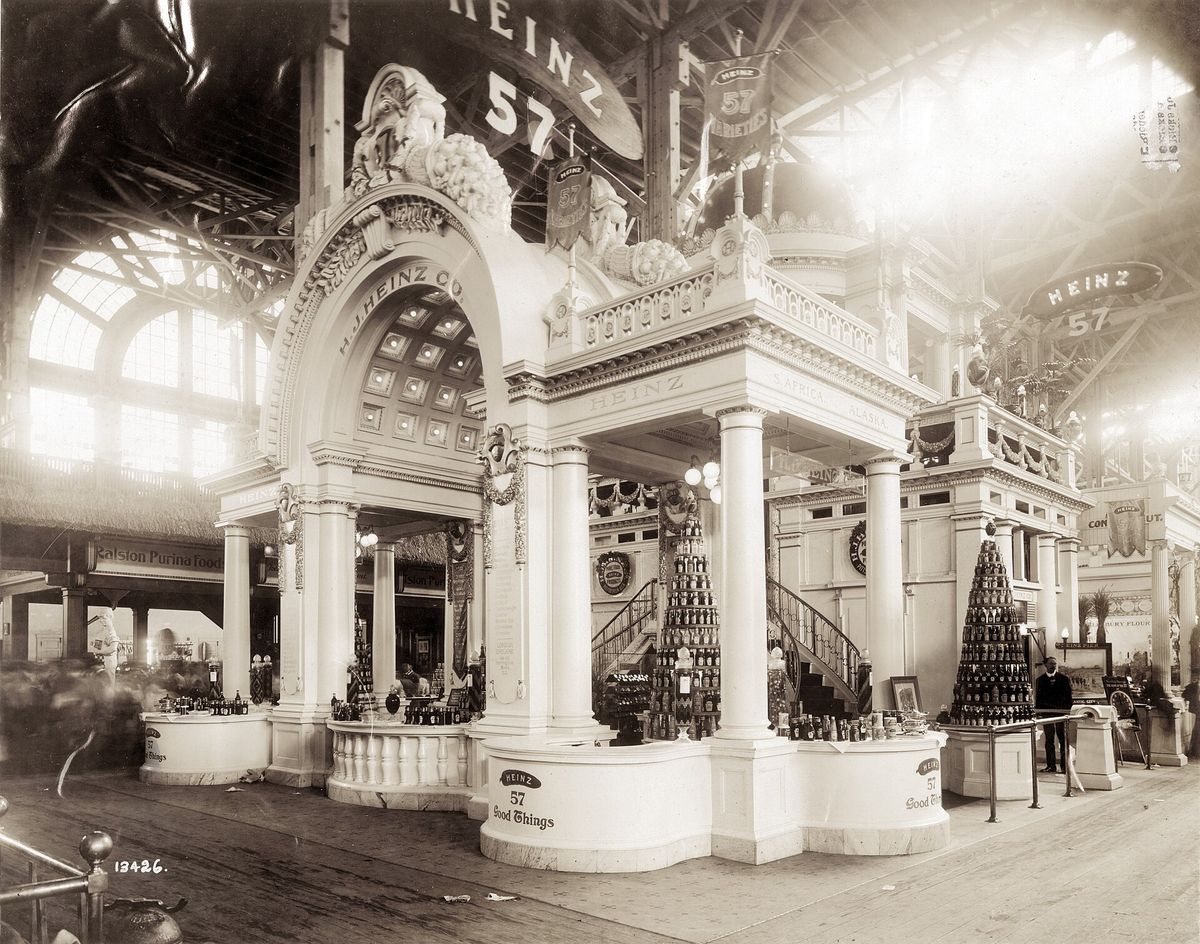
In the summer of 1893, Henry J. Heinz had a staircase problem. His company had a display at the World's Columbian Exposition in Chicago, and the space it got was on the second floor of the Agricultural Building, a flight of stairs above the foreign and imported foods1,2. Crowds moved through the ground floor. Very few of them climbed the staircase.

Quick Summary
Henry J. Heinz went into the food business in 1869, went bankrupt in 1875 and restarted in 1876 with a family company that sold tomato ketchup2. His marketing rested on a few durable ideas: one memorable symbol (57 Varieties)7, packaging and giveaways that customers could see and carry (clear glass jars, the 1893 pickle charm)6,1, and proof of quality, from public factory tours to preservative-free ketchup sold on its purity4. Modern campaigns such as Draw Ketchup, A.I. Ketchup and Ketchup and Seemingly Ranch follow the same pattern under the It Has to Be Heinz platform launched globally in 202314, which won the Creative Effectiveness Grand Prix at Cannes Lions in 202411. The 2019 Kraft Heinz write-down and the 2025 plan to split the company show the other side: brand equity needs steady investment64,63.
Heinz headed to the nearest print shop. He had small "baggage checks" printed on brass-colored cardboard, promising a free souvenir to anyone who presented one at the Heinz exhibit, and had workers hand them out and boys scatter them across the grounds3. Each tag promised "a novel watch charm"1. The charm was a small green pickle made of gutta-percha, an early plastic, stamped with the Heinz name and made to hang from a pocket watch chain or a brooch1. Thousands of people went looking for the stairs, so many that police officers were called in to control the crowds and support beams were added to the floor below1,3. By the end of the fair Heinz had given away a million charms. The foreign food exhibitors downstairs, watching customers rush past them, filed a complaint3, and The New York Times reported that "the gallery floor of the Agricultural Building has sagged where the pickle display of H.J. Heinz Company stood"2.
That little pickle is a good place to start with the Heinz marketing strategy, because most of what the company has done well since is already in it: one memorable symbol, a product people could judge for themselves, and customers who carried the brand home and advertised it for free. This article looks at that strategy from every side the original version of this post promised, with the facts that can be traced to a source: how Heinz positioned itself, who it sold to, how it managed product, price, place and promotion, its signature campaigns, the approaches behind them, how it adapted when markets turned against it, and how its owners measure whether any of it works.
Understanding Heinz's Brand Positioning
Heinz has changed owners, products and agencies many times, but its position has stayed recognizable for more than a century: Heinz is the trustworthy, original version of a common food, and the brand works to prove it. That position was built in stages, and each stage left something the company still uses.
Horseradish in clear glass
Henry John Heinz was born in 1844, the oldest of eight children of German immigrant parents4, and grew up in Sharpsburg, a borough of Pittsburgh2. In 1852, at the age of eight, he began peddling produce from the family garden, and his specialty became horseradish5. As a teenager he was delivering produce to grocers by horse cart and selling prepared horseradish in small glass jars4.
Those jars were his first positioning decision. Many commercial horseradish makers used colored glass, sometimes for decoration and sometimes because it hid what was inside4. Heinz used clear glass to show he had "the whitest, purest roots," as the Heinz History Center puts it5. The product itself solved a real problem for its buyers. Preparing horseradish at home meant long, tedious grating, and Heinz believed women would gladly skip that job if they could buy a packaged product they trusted. His hunch proved correct, and the product sold well6.
In 1869 Heinz and a partner, L. C. Noble, went into food processing together. The business grew into Heinz, Noble & Company and added celery sauce, pickles and vinegar to the horseradish2. It did well until the financial Panic of 1873, and in 1875 the company went bankrupt2. The History Center adds a detail most brand histories leave out: Heinz himself was arrested on fraud charges filed by creditors5.
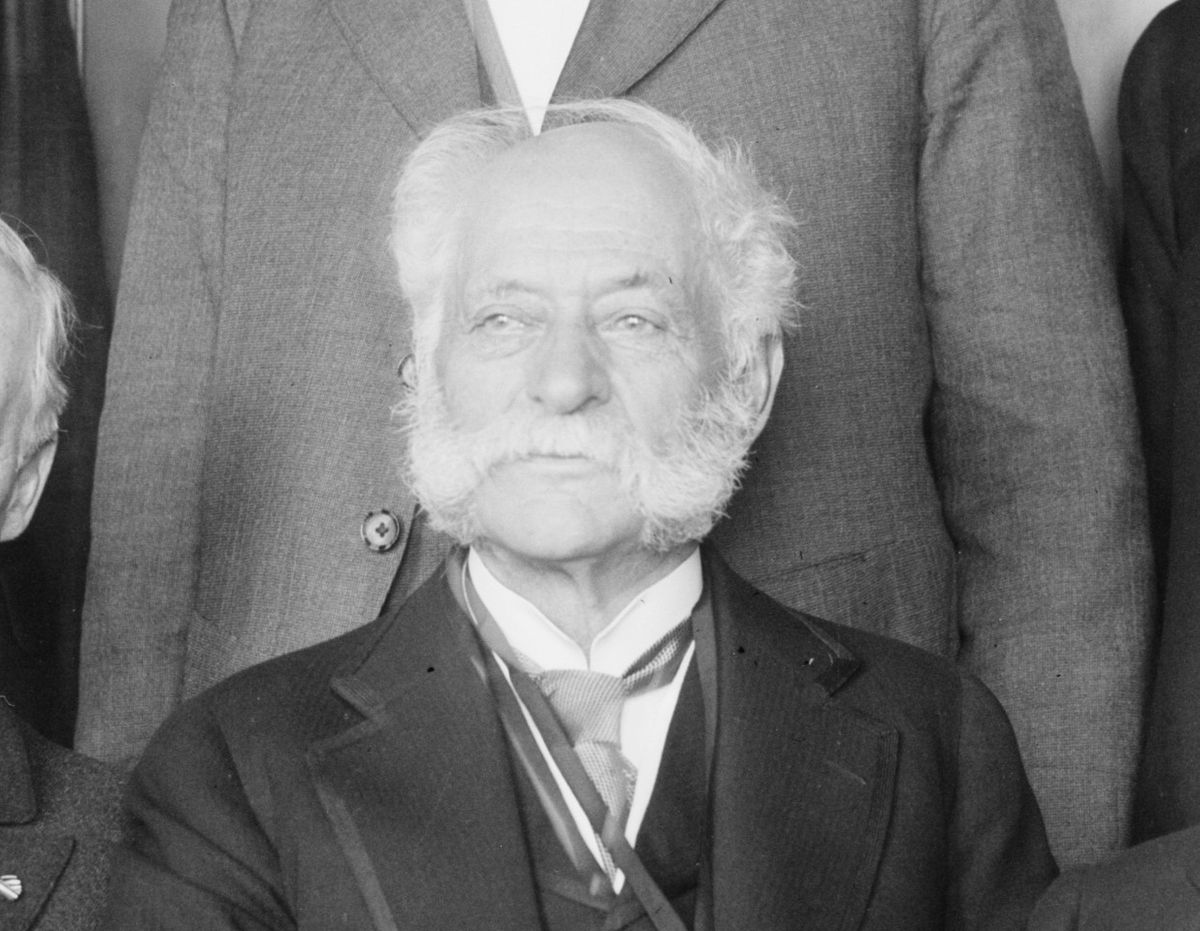
What happened next shaped the brand's reputation for honesty. At a family meeting on New Year's Day, 1876, Henry explained his debts and proposed a way back: if family members formed a new company, he would run it on a salary. With support from his brother John, his cousin Frederick and his wife Sarah, the F. & J. Heinz Company opened that year, and one of its new products was tomato ketchup2. "Still, the Heinz name meant good food products," the History Center notes5. In 1888 the firm became the H.J. Heinz Company5.
Heinz also collected mottoes, a habit he credited to his mother. He put them on his office walls, in the factory's stained glass windows and on company exhibits, and the one that lasted longest became a company principle: "To do a common thing uncommonly well brings success."7
The package as the promise
Heinz understood early that the container made the first impression. He carefully designed the bottles and containers for his products, patented some of them, and put great thought into label design. His labels emphasized the fresh, natural ingredients inside, especially on containers whose contents could not be seen, and illustrated labels told customers who could not read what was inside8. By making Heinz products stand out on the shelf, the company built a memorable brand image for repeat purchases, which mattered more as packaged foods and competitors multiplied in the 20th century8.
The same thinking reached the grocer. Heinz regulated the size of the pickles in its barrels and jars, and its salesmen, called travelers, carried pickle sizers that showed the grocer exactly how many pickles were in each container, so they could calculate the profit in advance. Competitors packed in bulk, and grocers did not know what they had until they opened the container3. Consistency was part of the brand promise to the trade as well as to shoppers.
57 Varieties, a number chosen for its sound
The most often-told story of the slogan, as the Heinz History Center tells it, puts Heinz on an elevated train in New York City in 1896. He saw an advertisement for "21 Styles of Shoes" and decided to advertise his own products the same way. The company already made more than 57 products. Heinz counted anyway, and stopped at 57 because he liked the way it sounded7. Another History Center article dates the phrase to 18925, so the exact year depends on which account you follow.
Heinz's own account, as quoted by the Pennsylvania Center for the Book, shows how fast he moved: "The idea gripped me at once and I jumped off the train at the 28th Street station and began the work of laying out my advertising plans. Within a week the sign of the green pickle with the '57 Varieties' was appearing in newspapers, on billboards, signboards, and everywhere else I could find a place to stick it."2
He meant everywhere. The 57 and the Heinz name went on delivery wagons, on the sides of buildings, inside trolleys, beside roads and along rail lines7. A photograph from around 1915 in the History Center's collection shows a "57" on a hillside7. The trademarked number dominated Heinz labels and advertising until 1969, and it still appears on packaging7.
The number did something that no single jar of pickles could. In Heinz's day, according to business historian Richard Tedlow as cited by the Pennsylvania Center for the Book, most manufacturers "were unknown to the people who bought their products."2 Heinz advertised one standard label heavily across the whole product line2. The result was brand awareness for the company itself: a shopper who liked the ketchup had a reason to try the mustard.
Selling purity before the law required it
Nineteenth-century ketchup had a bad reputation, and it had earned it. Food advocates complained that commercial ketchup was often made from tomato scraps thickened with pumpkin rinds, apple pomace or cornstarch and dyed red, and one French cookbook author called the ketchup sold in markets "filthy, decomposed and putrid"4. Early ketchup made from fermenting skins and cores could even burst its containers, the National Archives notes, which is why makers added benzoate of soda as a preservative9. Heinz used chemical preservatives too, first salicylic acid and later sodium benzoate4.
When the federal chemist Harvey Washington Wiley and other scientists began questioning the safety of those preservatives, Heinz paid attention. He asked his general manager, his cousin Sebastian Mueller, to develop condiments that needed no chemical additives4. Mueller worried about the cost, and about spoiled bottles coming back under the company's money-back guarantee. He solved it with a thicker ketchup made from high-quality, pulp-rich tomatoes and enough vinegar to keep bacteria down, and that tomato-heavy recipe became the model for the ketchup sold today4.
The journalist Deborah Blum, writing in National Geographic, is frank that the motive was partly commercial. Heinz had come to suspect that consumer distrust of the food supply would cost manufacturers far more than improving the food would4. So his company ran advertisements about the purity of its products, and privately he made sure that politicians, including President Theodore Roosevelt, knew his views. When food safety advocates met Roosevelt in 1905 to urge legislation, Heinz representatives joined them4. In June 1906 the Pure Food and Drug Act became law, and Heinz's preservative-free ketchup was ready to go. Its advertising said the ketchup was "recognized as the standard by Government pure food authorities"4. Heinz even gave its ketchup a bottle with an eight-sided base so customers could study the sauce from many angles4.
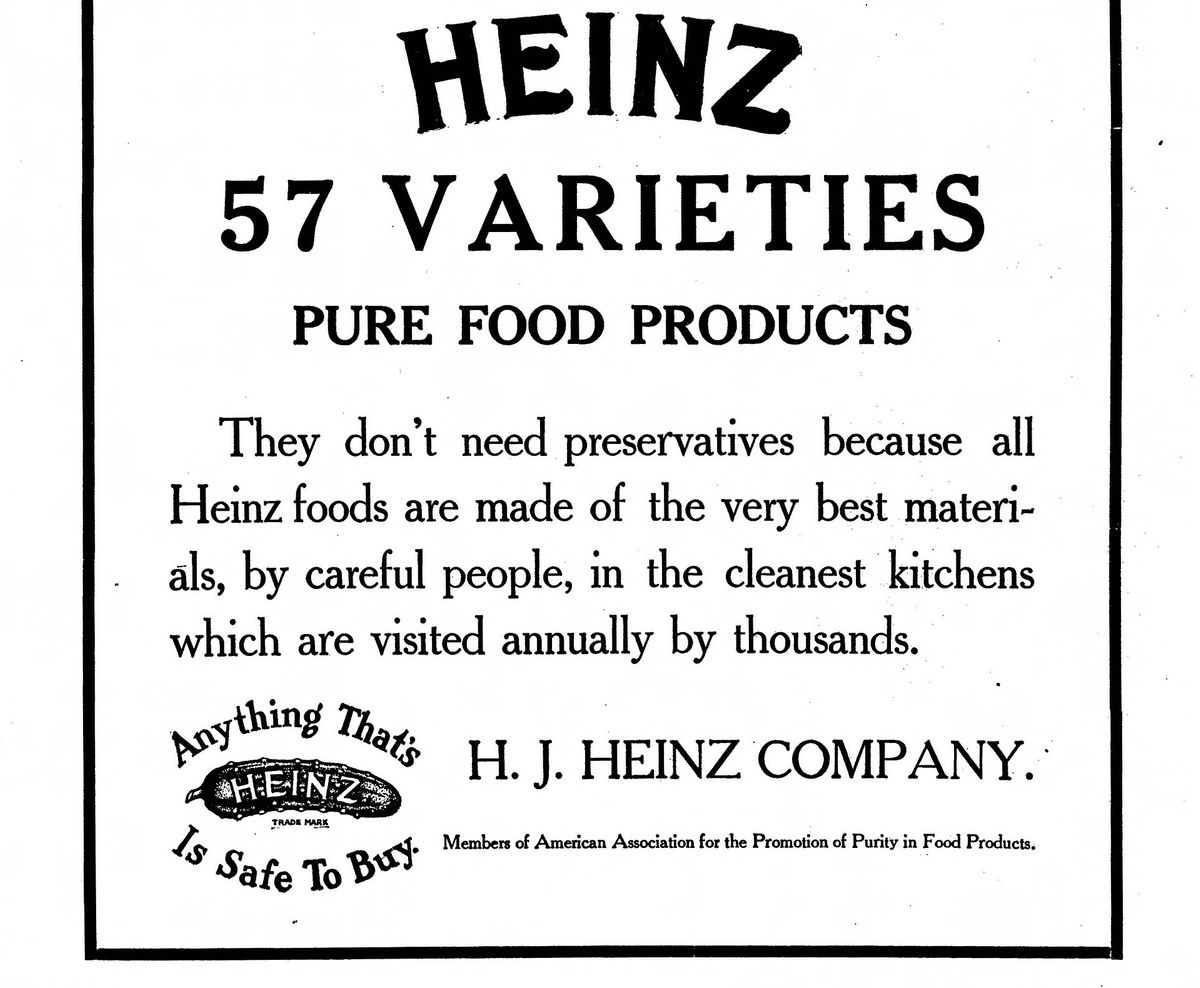
The 1909 advertisement above shows the positioning at full strength. The full page opens by naming benzoate of soda and citing the medical profession and the law, then makes the factory tours part of the pitch: Heinz foods, it says, are made "in the cleanest kitchens which are visited annually by thousands." The pickle logo in the corner carries the whole argument: "Anything That's Heinz Is Safe To Buy."
Purity positioning continued long after Henry Heinz. In 1927 the H.J. Heinz Company became the first national brand with products approved by the Orthodox Union, and it was the first company to put the now common OU kosher symbol on many of its labels. The symbol's design came from a collaboration between the Orthodox Union and the Heinz art department10. For a company that had fought for the 1906 food law, the History Center observes, kosher certification "offered another way for Heinz to set the standard for food purity"10.
An icon that has to keep proving it
The modern version of the position is simpler to say and harder to maintain: Heinz is the ketchup. Rethink's chief creative officer, Mike Dubrick, described the challenge to Contagious in June 2023: "If you don't act like an icon, then that status slowly erodes over time."11 Agency entries for Heinz campaigns in this period state the problem plainly. One says the brand risked being seen as old and nostalgic while new competitors took share, and that "for the first time ever, people were questioning whether Heinz was for them."12 Another says Heinz Ketchup saw its affinity score drop "for the first time in years"13.
The answer, since 2023, has been a single global platform. Heinz launched It Has to Be Heinz in June 2023 as the first global brand platform in its 150-year history, developed with Wieden+Kennedy and backed by Kraft Heinz's biggest media investment to date14. Diana Frost, Kraft Heinz's chief growth officer for North America, said research found consumers "all shared one thing: the irrational lengths they go to for Heinz products."14 The line had been used in North American work before that; Marketing Dive described "It Has To Be Heinz" as the brand's "long-standing brand identity" in March 202315. By 2023, according to Contagious, Heinz was one of only 4% of brands to achieve Kantar's "Icon" status11.
Target Market and Consumer Demographics
Heinz has always sold to several audiences at once. Its history is a sequence of audiences added to the core: homemakers, children, observant Jewish families, parents of babies, British households, restaurants, Hispanic consumers and, most recently, a younger generation that did not grow up with Heinz advertising. Each group got a different kind of message built on the same promise of trustworthy food.
Homemakers first
The first Heinz customer was the person doing the cooking. Bottled horseradish, the History Center notes, "saved homemakers from a thankless but necessary task"6. Robert C. Alberts, Heinz's biographer, listed the eight ideas that guided him, and the first reads: "Housewives are willing to pay someone else to take over a share of their more tedious kitchen work."2 Convenience sold at a price, with trust as the reason to pay it.
That audience shaped the brand's advertising for decades. When Young & Rubicam wrote Beanz Meanz Heinz for the British market in 1967, Maurice Drake's jingle began: "A million housewives every day, open a can of beans and say Beanz Meanz Heinz"16. By 2017 the same UK brand was talking to a different household, with Heinz Beanz marketing lead Lucy Clark describing a campaign "all about reinforcing relevance in our customers' modern lives" and focused on beans as a healthy option17.
Children on the trade cards, and in the bottle
Children were part of Heinz marketing long before they were customers. In the late 1800s Heinz distributed brightly colored trade cards, and the fronts often showed "adorable, healthy children to convey the idea that Heinz foods promoted health and well-being"8. Collecting trade cards became a craze among young women in the late 1800s, which gave the cards a life beyond the grocery counter3.
A century later Heinz targeted children directly. The company's 2001 annual report, as quoted by The Takeout, described EZ Squirt as having "an easy-grip squeezable bottle designed for smaller hands and a thin nozzle that enables children to draw and write on their foods."18 That audience is covered in more detail in the section on adapting to market changes below.
Kosher shoppers and the Passover ads
One of the most unusual audience strategies in the company's history was aimed at observant Jewish consumers. After Orthodox Union certification in 1927, the number of Heinz items available to them grew from 26 in 1927 to 47 in 1937 and over 50 by 194210. Heinz's Jewish-targeted advertising used informal Yiddish descriptors such as meichel ("delicacy") and mechaya (roughly, "a delight"), and showed an understanding of kosher rules on separating dairy and meat dishes10.
Every spring, the company ran something stranger: advertisements in the Jewish press warning customers away from its own products. A 1954 ad in the Jewish Criterion shouted "CHOMETZ! CHOMETZ!", using the Hebrew word for foods forbidden at Passover10. Scouring all grain from Heinz's premises for one week of kosher-for-Passover production was impractical, so Heinz told customers the truth instead. "It is not often that a corporation purchases an ad urging customers not to buy its product," wrote David Schlitt, former director of the History Center's Rauh Jewish History Program & Archives10. The History Center describes the ads as an expression of and investment in the company's relationship with the American Jewish community10.
Parents and babies
In 1931, during the Great Depression, Howard Heinz launched baby food with four varieties packaged in enamel-lined tins: strained peas, carrots, mixed vegetables and spinach19. Heinz brought its baby food to Britain in 1935, paused the range there during Second World War rationing and brought it back in 1946 as the post-war baby boom began19. By 1952, according to a Heinz for Baby history published for the brand's 90th anniversary, three in every four baby foods sold in the UK were made by Heinz19.
The marketing to parents leaned on expertise. The same history records Heinz working with doctors, health visitors and nutritionists from 1949, publishing its first "Handbook of Nutrition" for parents in 1959, and introducing a home health visitor program in the 1980s to support new mothers with weaning questions19. In 1954, Heinz for Baby in the USA became the first to sell baby food in glass jars instead of cans19, the clear-glass idea again.
Restaurants and retailers
Heinz has always had two sets of customers: the people who eat the food and the businesses that sell or serve it. In February 2010 the company unveiled Dip & Squeeze, a ketchup packet shaped like a shallow cup that could be peeled open for dipping or torn for squeezing, holding three times as much ketchup as a traditional packet20. "The packet has long been the bane of our consumers," said Dave Ciesinski, vice president of Heinz Ketchup20. Heinz had introduced the small foil packet at fast food restaurants in 1968, and, as Ciesinski told Marketplace, "The complaints started in 1969."21 Heinz struggled for years to develop a container that let diners dip or squeeze at a cost acceptable to its restaurant customers, and two years before launch it bought a used minivan so the design team could road-test ideas where many people actually use ketchup packets20.
Restaurants are also a battleground for the brand itself. A Heinz entry for The One Show's 2024 awards explains that as the cost of living rose, "restaurants often look to cheaper alternatives"22. Ketchup Fraud and Tip for Heinz, covered below, were built for that audience.
The retail side is concentrated. Kraft Heinz's 2024 annual report says its largest customer, Walmart, represented about 21% of net sales in 2024, 2023 and 2022, and that the five largest customers in North America accounted for about 46% of that segment's net sales23. Any Heinz campaign ultimately has to move product through a handful of very large retailers.
Hispanic consumers and a younger generation
Kraft Heinz has had senior marketers dedicated to Hispanic markets. George Buneder, described in January 2024 as CMO for Hispanic markets at The Kraft Heinz Company, spoke for the global campaign The Wait24, which was created by the Chilean agency 1984 and ran in the US, Canada, the UK, Chile, France, Brazil and the UAE24. Before the Kraft merger, in March 2015, Portada reported that Heinz's multicultural agency was LatinWorks, and quoted media executive Xavier Mantilla describing Kraft and Heinz as "pioneers and leaders" in reaching Hispanic consumers25.
The newest target audience is younger. In January 2020 Marketing Dive described Heinz experimenting with new condiments "to spice up classic offerings and appeal to more adventurous eaters like millennials"26. The A.I. Ketchup entry for Strategy's 2023 Agency of the Year awards says that as a 153-year-old brand Heinz found it "challenging to stay top-of-mind and relevant to new, younger generations"13. The Ketchup and Seemingly Ranch case study is even more specific: Rethink "needed to reach a new audience of Gen Zs," and it noted that 56% of Taylor Swift fans are millennials or Gen Z27. The Pickle Ketchup launch in 2024 used creator content on TikTok and Instagram and paid social across Snapchat, Spotify, TikTok and YouTube28.
The Marketing Mix Framework
The four Ps are a textbook tool, but the Heinz record fills each one with specific decisions, some good and some expensive.
Product: a portfolio built around a few heroes
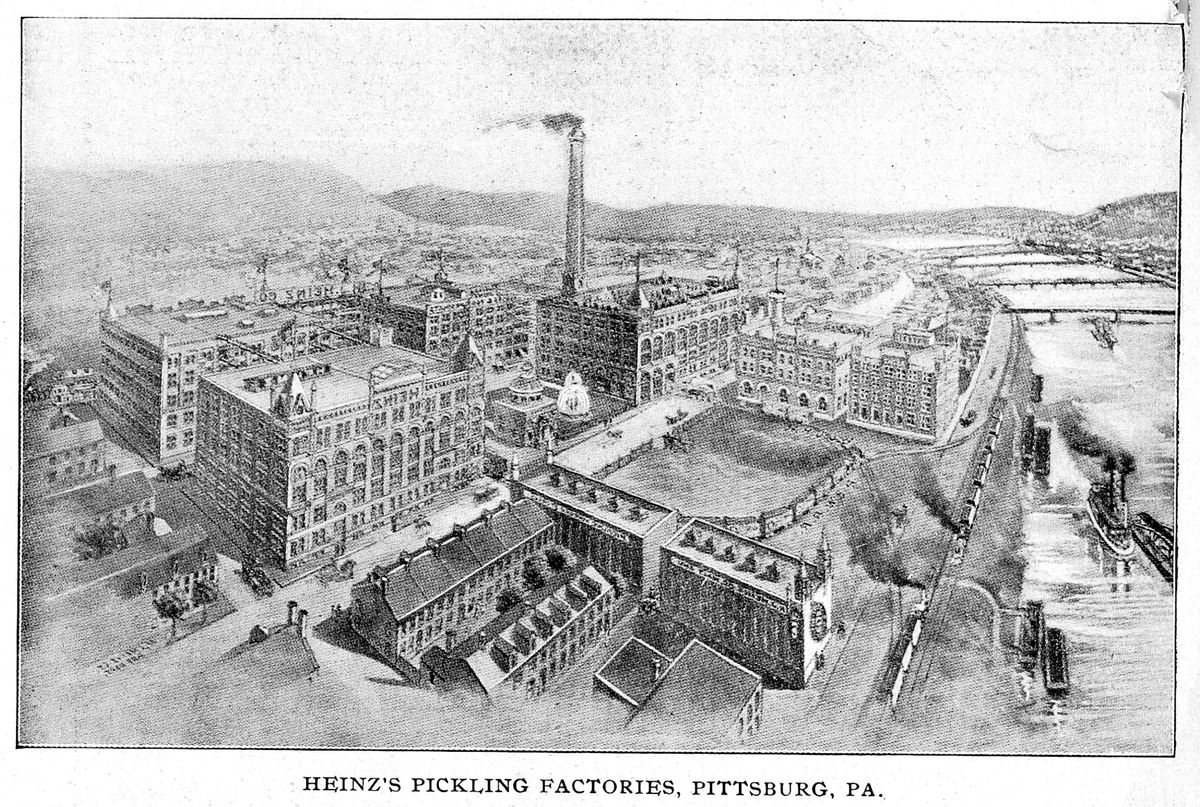
Heinz grew fast from its restart. By 1896 it made some 60 products, a number that rose to about 200 by the turn of the century4. In the years before Henry Heinz's death, the company became the largest manufacturer of pickles, ketchup, vinegar, sauerkraut and horseradish5. By 1898 its Pittsburgh factory had become the largest food processing facility in the world, with stained glass windows, one of the first electric ventilation systems in the city, and continuous-flow and assembly-line techniques that drew engineers from around the world6.
Product innovation has often been packaging innovation. The eight-sided ketchup bottle base4, the glass baby food jar of 195419, the upside-down squeeze bottle that Heinz introduced with a parody of its own "Anticipation" commercial2, and Dip & Squeeze in 201020 all changed how people used a familiar food. In 2023 Kraft Heinz in the Middle East showed a concept called the Heinz Ketch-Up & Down bottle, with a lid at each end. "At Heinz, we are consumer obsessed and we rely on insights like this one to fuel innovation and bring consumers more of what they want," said Passant El Ghannam, head of marketing at Kraft Heinz MEA29.
The sauce range has widened around the ketchup. Mayochup, a mayonnaise and ketchup blend, came to the US in 2018 after a Twitter vote30. Kranch, a ketchup and ranch sauce, launched in 201927. HoneyRacha debuted with a Super Bowl ad in 202026. Pickle Ketchup, which combines the two products Heinz is best known for, launched in the UK and then rolled out in the US in 202428. Marketing Week noted in 2023 that Heinz had also launched bean burgers and frozen products and entered the pasta sauce category14.
The raw material is part of the product story too. Heinz's own sustainability page describes its seed research center in Stockton, California, where researchers develop tomato seed varieties for its ketchup and adapt them to different soils and climates31. In 2021 the company used those proprietary seeds in its Marz Edition project, covered below32.
Price: premium, and under pressure
Heinz sells a branded product in categories where cheaper copies are easy to make, and its pricing history reflects that. Maurice Drake explained the problem behind Beanz Meanz Heinz in 1967: a famous product "would be copied by the big supermarkets and sold cheaper than your product as they had less overheads"16. In the 1990s, under chief executive Tony O'Reilly, supermarket private labels grew and a recession hit, and Heinz cut back on advertising and shifted that money into discounts on popular products2.
Inflation brought the issue back in 2022. That June and July, Kraft Heinz temporarily stopped supplying Tesco with products including baked beans, ketchup and tomato soup, in a dispute over price increases33,34. A Tesco spokesperson said: "we will not pass on unjustifiable price increases to our customers."33 Kraft Heinz said commodity and production costs were rising and that it was "confident of a positive resolution with Tesco"33. Heart reported at the time that a single can of Heinz baked beans at Asda had risen from 90p to £1.2033. By July 8, 2022, the two companies had struck a deal to return Heinz products to Tesco shelves35.
Kraft Heinz's 2024 annual report shows how much of its recent growth came from price. Organic net sales rose 3.4% in 2023, driven by 8.9 percentage points of higher pricing that more than offset a 5.5 point decline in volume and mix. In 2024 organic net sales fell 2.1%, as a 3.5 point decline in volume and mix more than offset 1.4 points of higher pricing23. The same report lists the company's ability "to leverage our brand value to compete against private label products" among its risk factors23.
Place: from horses to Walmart and Heinz to Home
Heinz's distribution was once a form of promotion. The company kept two hundred jet black draft horses to deliver its products, and parades in Pittsburgh and southwestern Pennsylvania were said to be incomplete without a Heinz horse pulling a white wagon with green trim2. By Henry Heinz's death in 1919 the company had 6,500 employees, 25 factories, its own freight cars, a branch company in London and agencies around the world5. It opened its first factory outside the United States in England in 19052.
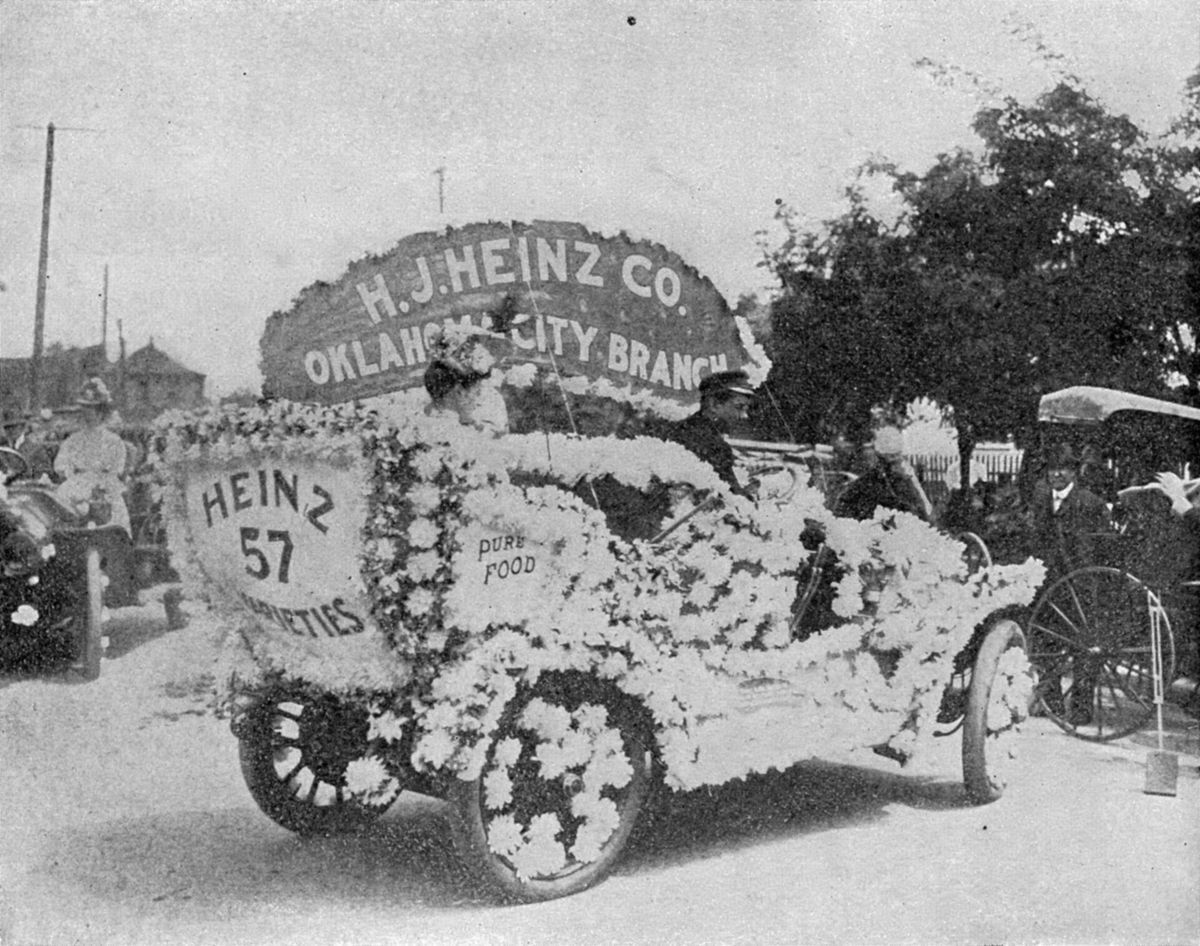
Today the channels are concentrated in large retailers, restaurants and online sellers. The 2024 annual report says Kraft Heinz products are sold to grocery chains, wholesalers, convenience, value and club stores, pharmacies, mass merchants and foodservice distributors, to institutions including hotels, restaurants and hospitals, and online through e-commerce platforms, with Walmart accounting for about 21% of net sales23.
The most interesting recent change came during the pandemic. In April 2020 Kraft Heinz launched Heinz to Home in the UK for shoppers who were avoiding stores or struggling to get supermarket delivery slots, starting with bundles of products such as baked beans and tomato soup and later adding ketchup, salad cream, mayonnaise and barbecue sauce36. Jean-Philippe Nier, head of e-commerce for Kraft Heinz UK and Ireland, said the idea came from social media, where the company saw people struggling to get its products36. The site went live in three to four weeks with a partner handling delivery37. Nier was candid about the limits: "there's never a good reason for customers to come and buy a bottle of ketchup from our website," so the service moved toward products shoppers could buy only from Heinz, starting with personalized bottles for Father's Day37.
Promotion: from trade cards to naming rights
Heinz used almost every promotional tool of its era. Trade cards, fairs, electric signs, a pier and factory tours are covered in the next section. The company also bought one of the largest pieces of real estate in American sports marketing. In June 2001 H.J. Heinz Co. and the Pittsburgh Steelers agreed to a 20-year, $57 million contract to name the team's new stadium Heinz Field, a figure that echoed the famous number. Heinz would pay $2.85 million a year for naming rights, stadium signs, marketing and advertising opportunities and a suite on the 50-yard line, with exclusive rights to sell its products at Steelers games38. "This is something (company founder) H.J. Heinz would have done in a New York minute," said chairman and chief executive William Johnson. "It's a natural extension of our marketing endeavors."38 Johnson also noted Heinz had recently signed former Boston Celtics star Larry Bird for its Boston Market frozen meals and had a marketing agreement with skateboarder Tony Hawk38.
The naming deal ended in 2022, when the Steelers signed Acrisure to a 15-year agreement reported at more than $10 million a year. "While we worked diligently with the Steelers for several months around a new naming rights deal, they found a new partner willing to pay significantly more than we could justify," Kraft Heinz said, adding that Heinz would remain a significant, long-term sponsor of the team39.
Modern promotion spends real money. Kraft Heinz recorded advertising expenses of $945 million in 2022, $1,071 million in 2023 and $1,031 million in 2024, a definition that includes production costs, in-store advertising, agency fees, brand promotions and events, sponsorships and paid media across television, radio, print, digital and social channels23. Those figures cover all Kraft Heinz brands combined.
Signature Marketing Campaigns and Initiatives
Heinz's best-known campaigns span 130 years, but they share a structure. Each gives people something to do, carry or talk about, and each points back to the same bottle or can.
A pickle on every watch chain
The pickle charm from Chicago became the company's longest-running giveaway. Many fairgoers wore their charms home, and the Heinz History Center sums up the thinking: Heinz "let the public do the advertising for him."1 Vendors who benefited from the traffic he drew to an otherwise deserted part of the fair threw him a party1. Other companies copied the idea and began giving away their own branded souvenirs, which in time became a standard promotional tactic1. Heinz advertised his charm with a pun: "A man who found himself in a pickle was saved by one."1
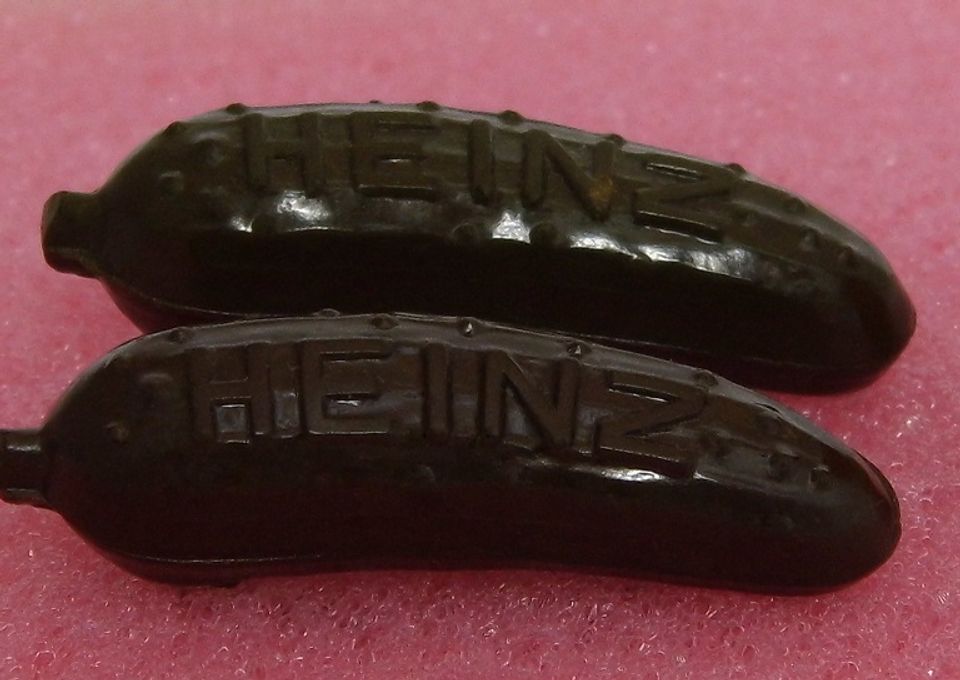
The pin changed only modestly over the following century, moving through different colors, styles, materials and shapes1. The Pennsylvania Center for the Book puts the total handed out at trade shows and factory tours at more than 100 million2. Heinz made commemorative pickle pins for its 150th anniversary1. Alberts's list of Heinz's guiding ideas includes the principle behind it: "Let the public assist you in advertising your products and promoting your name."2
A pier, a sign and a factory open to visitors
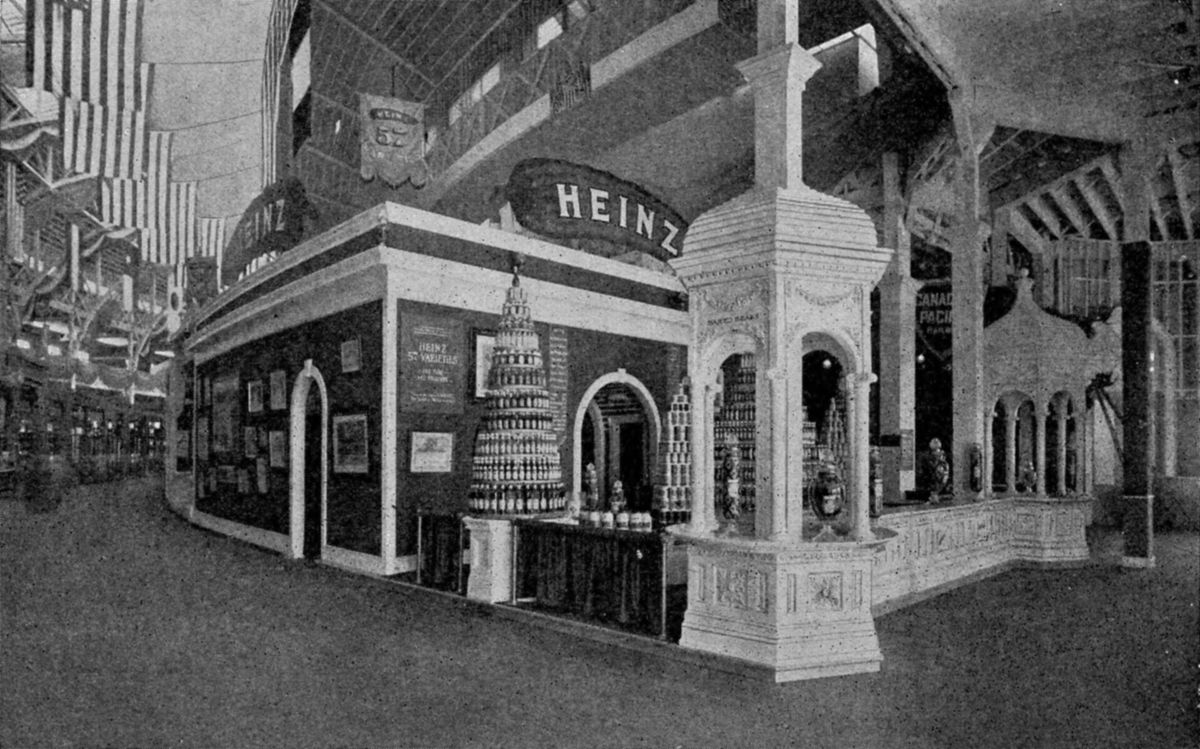
Heinz loved fairs. His pickles won a gold medal at the 1889 Paris Exposition, the first time an American pickle manufacturer had won such an award in Europe, and Heinz booths and buildings kept drawing large crowds at fairs long after his death40. In 1900 he returned to Paris for the Exposition Universelle and came home with two gold medals, one for product quality and one for factory conditions2.
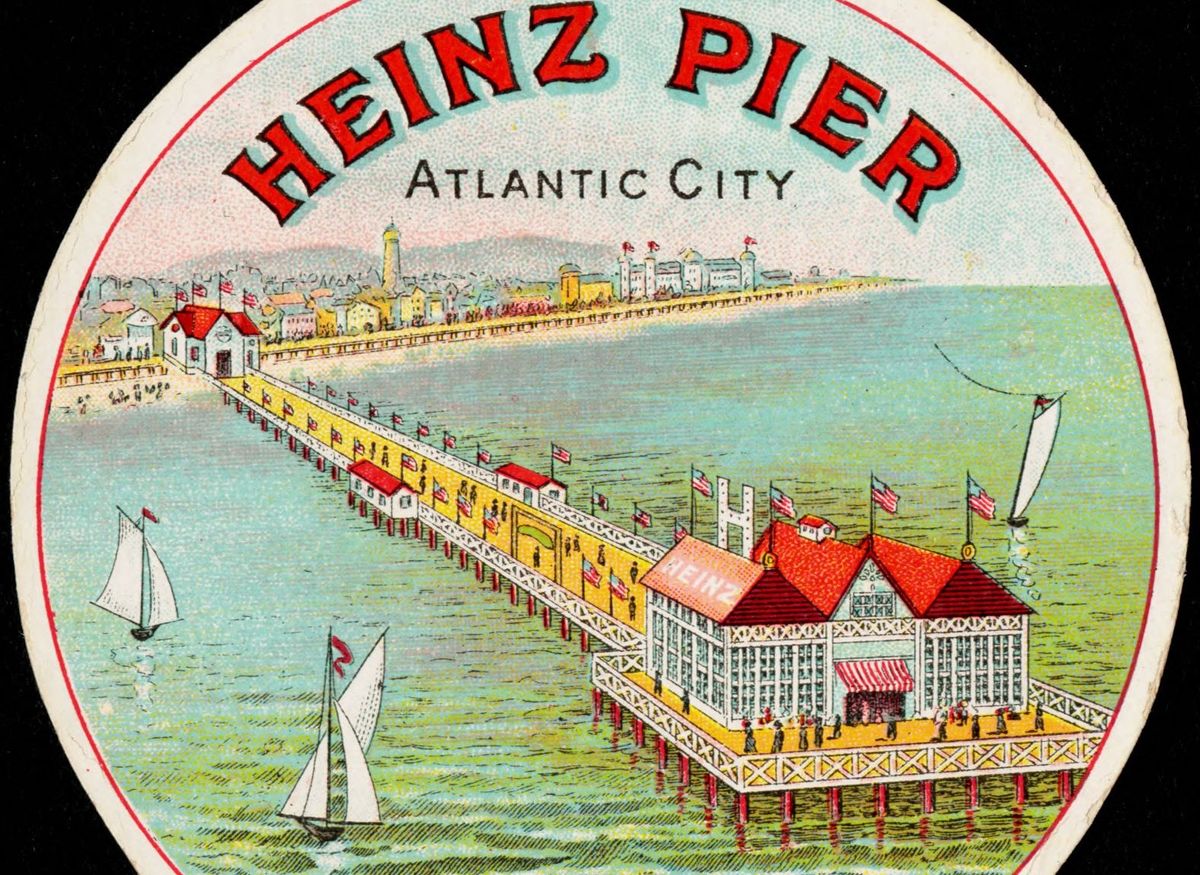
A fair lasted a season, though. When Heinz first visited Atlantic City, the eight piers that ran out from the boardwalk gave him a bigger idea, and in 1898 the company leased one of them40. Admission was free. A glass pavilion held oil paintings, statuary, a large painting of the Heinz factory, portraits of the company's salesmen and elaborate product displays. Visitors could sample Heinz foods, hear presentations about the business and write to friends on free souvenir postcards, and in later years watch cooking demonstrations in the Heinz kitchen40. The pier reached 900 feet into the ocean, and by one estimate about 50 million people visited it over the years, each offered a pickle pin2. A hurricane destroyed it in 1944, and it was never rebuilt40.
The pier had a billboard to match. On the corner of Fifth Avenue and 23rd Street in New York, a six-story electric sign lit up a 40-foot green pickle with the Heinz name and the words "57 Varieties Exhibited at Heinz Pier, Atlantic City."2 Back in Pittsburgh, Heinz invited the public to tour its plant, a practice almost unheard of in the food industry, and by the turn of the century more than 20,000 visitors a year were walking through2. The plant included a restaurant, dressing rooms, a hospital, a gymnasium, a rooftop garden and self-improvement classes for employees5. Deborah Blum explains the reasoning: Heinz believed that for promotion to succeed, "the product itself had to be good, the manufacturer trustworthy," and the tours let people see the plant's cleanliness and its well-treated workers for themselves4.
Beanz Meanz Heinz
In Britain, the defining line came from an agency in a pub. In 1967 Maurice Drake, head of copy at Young & Rubicam17, took his team to The Victoria pub in Mornington Crescent after about a month of trying ideas for Heinz baked beans. "I had my layout pad with me and, fiddling with it, came up with 'Beanz Meanz Heinz'," Drake told Creative Review16. The brief was to remind shoppers that Heinz was the original as supermarkets sold cheaper copies. "We knew we had a breakthrough when we were able to produce a poster that didn't mention the brand," Drake said16.
The slogan kept returning. Heinz changed its packaging in 2004 simply to say Heinz Beanz, and in February 2009 its agency at the time, AMV BBDO, brought the line back in a TV spot16. It was voted the UK's favourite slogan in a 2012 Creative Review poll41. For its 50th anniversary in 2017, Heinz opened a pop-up café in Selfridges, sold limited edition cans with 50 variations of the slogan and gave proceeds to the charity Ideas Foundation; Drake signed 50 collectible cans41. The same year a £4.1 million campaign revived the slogan to promote beans as high in protein and fibre and low in fat, after the brand lost £3.9 million in value in 2016 on volumes down 3.7%, according to Nielsen data reported by The Grocer17.
Anticipation
In the United States, Heinz turned its ketchup's slowest trait into a selling point. The thick recipe poured slowly out of a glass bottle. In the 1970s a television campaign set a close-up of ketchup oozing from the bottle to Carly Simon's song "Anticipation" and closed with the line "The taste that's worth the wait."2,42 Rob Weinberg, writing in The Coast News, calls it "a classic example of harmonizing product marketing and popular culture."42
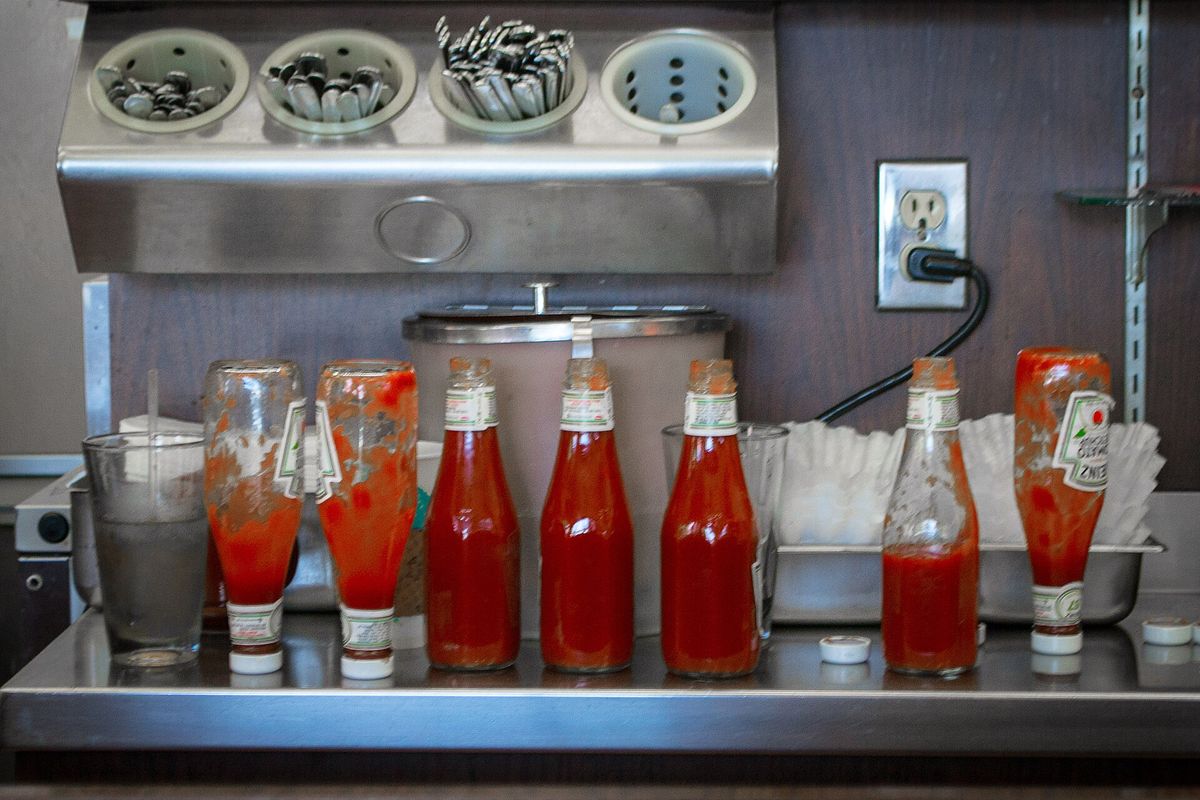
Heinz later turned the joke on itself. When it introduced its upside-down squeeze bottle, it made a parody of its own commercial: a woman waits for ketchup to pour from a glass bottle while "Anticipation" plays, the sound of a squeeze bottle cuts the song off, and the camera turns to her chuckling spouse. The closing line read: "No Wait. No Mess. No Anticipation."2 Decades later the idea returned as The Wait, discussed below.
Get Well Soup
In October 2011 Heinz UK let Facebook fans buy a personalized can of Heinz soup for a friend who was feeling ill. Fans chose Cream of Chicken or Cream of Tomato, typed in a friend's name and paid £1.99, and the can arrived with a "Get Well Soon" message within days43,44. "Social media provides a platform for our fans to engage with the brand and with each other, and gives us a valuable source of insight and engagement," said Nigel Dickie, director of corporate and government affairs for Heinz UK and Ireland44. When it returned in January 2012, fans voted to add a third variety, Potato and Leek, and more than 1,000 cans had been bought early in the run45.
Meet the Ketchups and Mayochup
For Super Bowl 50 in 2016, Heinz ran a 30-second ad in which dachshunds dressed as hot dogs stampede toward a family dressed as Heinz condiment bottles. It introduced the tagline "Meet the Ketchups" and the brand's organic ketchup, yellow mustard, sriracha and barbecue sauce46. "The stampede was a highly visual way for us to remind people of the irresistible taste of Heinz," said Michelle St. Jacques, Kraft Heinz's vice president of marketing for condiments and sauces46.
In April 2018 Heinz asked Americans on Twitter: "Want #mayochup in stores? 500,000 votes for 'yes' and we'll release it to you saucy Americans."30 Nearly a million votes came in, with 55% in favor30. The stunt promoted Heinz's new Real Mayonnaise, and Marketing Dive noted that Heinz had "experienced seven straight quarters of decline in U.S. sales as of Q4 2017"47. According to Twitter data cited by Marketing Dive, the poll generated 1 billion impressions in 48 hours and a 28% lift in awareness for the mayonnaise26.
Pass the Heinz
In a season six episode of AMC's Mad Men, the fictional ad man Don Draper pitched Heinz executives a campaign that never showed the ketchup: close-up photographs of fries, a cheeseburger and a steak, each with the tagline "Pass the Heinz." The fictional clients were unconvinced48,49. In March 2017 the real Heinz ran the ads almost exactly as Draper had pitched them, in print and on billboards in New York City, credited to its agency David Miami and to Draper's fictional firm, Sterling Cooper Draper Pryce48. Nicole Kulwicki, head of the Heinz brand, explained the appeal: "What we loved about the campaign is that it doesn't require paragraphs of copy to explain it."49
Ed Sheeran and the 150th anniversary
In 2019, the company's 150th anniversary year, Heinz signed up a fan who was already advertising the brand on his own arm. Ed Sheeran has a tattoo of the Heinz logo50. On June 5, 2019, National Ketchup Day, he and Heinz unveiled an ad campaign and a special-edition bottle called "EdChup." Heinz said one-third of its Instagram activity, including mentions and tags, was related to Sheeran51. That August Heinz released 150 limited-edition bottles with designs nodding to Sheeran's tattoos, a number chosen for the anniversary. It gave away 104 signed bottles in a free prize draw and sent three to a Christie's charity auction in London for East Anglia's Children's Hospices and Rise Against Hunger50.
Draw Ketchup
In January 2021 Heinz Canada and Rethink launched "Draw Ketchup." It began with an experiment in which Heinz anonymously asked dozens of people aged 8 to 80 across five continents to sketch ketchup. Most drew something recognizably Heinz, from the bottle shape to the label, and some wrote the brand name on their drawings without being asked52. The drawings became billboards and a video, and Canadians were invited to submit their own by January 31, with 250 winners receiving a bottle labeled with their drawing52. Daniel Gotlib of Kraft Heinz Canada said the goal was to show that "instinctual association" between ketchup and Heinz52. Strategy's 2021 Agency of the Year write-up says 97% of participants drew Heinz and that Heinz extended the campaign to other countries including the UK, Ireland, Greece, Germany and Brazil12.
A.I. Ketchup
In summer 2022, as text-to-image AI spread online, Rethink asked DALL-E 2 what "ketchup" looked like. According to the agency's awards entry, the images looked like Heinz, and kept looking like Heinz as the prompts got stranger, from "Renaissance Ketchup Bottle" to "Ketchup Tarot Card"13. Fans on social media suggested prompts such as "Basquiat ketchup" and "Ketchup in space," and the results ran unedited in social posts, full-page newspaper ads, out-of-home placements, special edition bottles and an in-person exhibition13. Latana, a brand tracking firm writing in August 2022, added a sensible caution: "As outsiders, we have no idea if the creative team behind the 'Heinz A.I. Ketchup' ad really only got Heinz-related A.I. artwork when plugging in their search terms"53.
Ketchup Fraud and Tip for Heinz
In March 2023 Heinz and Rethink launched "Ketchup Fraud," inspired by a Snapchat post of a restaurant worker refilling a Heinz bottle with a generic brand. It asked people to tag restaurants caught doing the same on Heinz's Instagram page, with out-of-home ads in New York and Chicago15. "It shows just how much weight the Heinz brand carries and how much even just the bottle speaks to quality," said Mike Dubrick15. The previous November, a "Tip for Heinz" promotion had encouraged diners at restaurants without Heinz to leave an extra $1 tip, with a free year's supply of ketchup for the first 10 restaurants that switched15.
Ketchup and Seemingly Ranch
In September 2023 a fan account posted a photo of Taylor Swift at a Kansas City Chiefs game with the caption "Taylor Swift was eating a piece of chicken with ketchup and seemingly ranch!"27 Within 24 hours, Heinz re-released its Kranch sauce under a new label, "Ketchup and Seemingly Ranch"27. CNN reported that Heinz was producing 100 bottles to give away through Instagram, and noted that Heinz is the official condiment supplier of Arrowhead Stadium in Kansas City54. The Drum Awards case study says Kranch had become one of the worst-performing sauces in the Heinz portfolio, and that Walmart later ordered Ketchup and Seemingly Ranch as a permanent product27.
Pickle Ketchup
For the 2024 US launch of Pickle Ketchup, Heinz and Rethink ran "You Can Already Taste It," with street interviews asking New Yorkers what they expected the sauce to taste like before trying it, billboards near Coney Island, Times Square, Yankee Stadium and Wrigley Field, and a two-phase creator campaign on Instagram and TikTok28. Marketing Dive noted that Henry J. Heinz was once known as the "Pickle King" because he owned the largest pickle company in the United States28.
Strategic Marketing Approaches
Behind the individual campaigns sit a handful of repeatable approaches. Other brands use them too, but Heinz has used them consistently for a very long time.
Emotional storytelling: irrational love
The It Has to Be Heinz platform is built on a single emotional insight. Its five launch ads in 2023 told real stories of fans going to great lengths for the brand, from Heinz tattoos to smuggling cans of beans through airport security, gathered from social media, news articles and word of mouth14. Cristina Kenz, Kraft Heinz's international chief growth officer, said the "irrational love" consumers have for the brand is reciprocated by the business14.
The Wait, in January 2024, applied the same idea to a small moment. It drew on a Toluna survey of 2,706 consumers in which more than two-thirds of diners said they would wait to eat until ketchup arrived, and 55% said they would wait even longer for Heinz24. The spots show diners holding off until the ketchup comes, and the bottle itself stays off screen. "Ironically, the absence of a Heinz Tomato Ketchup Bottle is what makes the ad stand out, making Heinz the absent hero of our own story," said George Buneder24. Felipe Manalich, founder of the agency 1984, told The Drum: "We've become impatient consumers and in an era where we want everything fast, waiting is actually an act of love."55
Humor and self-awareness
Heinz is willing to laugh at itself. It parodied its own Anticipation ad2, sent dachshunds in hot dog costumes into a Super Bowl46 and made an ad campaign about restaurants faking its product15. On social media the tone is similar. When fans asked again in 2020 for purple ketchup to come back, the Heinz account replied, "It was a phase, Jenna..."18
Letting the public lead
The oldest Heinz principle, letting the public do the advertising, now runs through social listening and co-creation. Heinz to Home began from what Nier's team "saw and heard on social media"36. Ketchup Fraud began with a Snapchat post15. Mayochup was put to a public vote30. A.I. Ketchup used prompts suggested by fans13, and Draw Ketchup put consumers' drawings on bottles52. Mike Dubrick described the test Rethink applies before joining a cultural moment: "Does Heinz have the authority or authenticity to say this?" If so, he said, "that's where the brand truth and the cultural tension come together"11.
Science as spectacle
In November 2021 Heinz unveiled Heinz Tomato Ketchup Marz Edition, made with tomatoes grown from its proprietary seeds in soil, temperature and water conditions designed to simulate Mars. The project involved a 14-person astrobiology team working for nine months at the Aldrin Space Institute at Florida Tech32. The bottles were not for sale32, but the company used the stunt to talk about long-term food production and its goal of using 100% sustainably sourced Heinz Ketchup tomatoes by 202532. "Achieving a crop that is of a quality to become Heinz Tomato Ketchup was the dream result and we achieved it," said Andrew Palmer, who led the team56.
Community engagement and cause marketing
Heinz's community marketing began in Pittsburgh and in its own factory. The plant's amenities for employees, from a gymnasium to carriage rides through the park on work time, were part of what visitors saw on tours5. The Passover ads were, in the History Center's words, an investment in the company's relationship with the American Jewish community10.
The modern company's largest cause partnership is with Rise Against Hunger. In April 2024 The Kraft Heinz Company Foundation announced a $15 million, three-year commitment that would fund 36 million Kraft Heinz micronutrient sachets for 207 million meals, building on a partnership that had already run for a decade57. "At Kraft Heinz, we aim to provide 1.5 billion meals to people in need by 2025," said Andrea Budelli, president of the foundation57. Campaigns have been tied to charity as well: the Sheeran bottle auction raised money for East Anglia's Children's Hospices and Rise Against Hunger50, and proceeds from the Beanz Meanz Heinz 50th anniversary cans went to the Ideas Foundation41. When Heinz gave up the stadium naming rights in 2022, it said: "Pittsburgh is the city where H.J. Heinz was born and where he launched what is now an iconic, global brand."39
Adapting to Market Changes and Challenges
The Heinz story is often told as a straight line from the pickle pin to global fame. The record is bumpier, and the setbacks explain a lot about the strategy.
Bankruptcy and a restart
The first crisis came before the brand existed in its modern form. The Panic of 1873 sank Heinz, Noble & Company in 18752, and Heinz was arrested on fraud charges filed by creditors5. The family restart of 1876, with Henry working on a salary, gave the business a second chance and the product that would define it, tomato ketchup2.
Depression and war
In the Great Depression, Howard Heinz steered the company by adding ready-to-eat soups and baby food in 19312,19. During the Second World War, rationing forced Heinz to stop selling its baby food range in the UK19. In Pittsburgh, the company turned a cluster of buildings at its Northside plant over to making wooden parts for military aircraft in 1942, most prominently wings for the Waco CG-4 glider, working with the Gardner Display Company, which had built the Heinz pavilion for the 1939 World's Fair58. Much of the workforce was women. General news stories at the time featured the company's shift from "pickles to planes"58. The Atlantic City pier, the company's great promotional venue, was destroyed by a hurricane in 1944 and never rebuilt40.
Private labels and the 1990s
As supermarket private labels grew and a recession hit, Tony O'Reilly reorganized the company, closing or selling more than a dozen US plants, and Heinz cut advertising in favor of discounts on popular products2. The same pressure that inspired Beanz Meanz Heinz in 196716 would keep returning.
Green ketchup and the limits of novelty
On July 10, 2000, Heinz released EZ Squirt Blastin' Green ketchup as a promotion for the first "Shrek" movie59. It came in a squeezable bottle with a kid-friendly twisty nozzle, and children embraced it so enthusiastically that Heinz scrambled to meet demand59. Before launch, Heinz's global ketchup managing director, Casey Kelley, said: "We're on track to ship in the first 90 days what we thought we would sell in the first year."60
More colors followed. Funky Purple arrived in 2001, and Awesome Orange, Totally Teal, Stellar Blue and Passion Pink joined the line, along with a Mystery Color bottle that hid which color was inside59. Making them meant stripping out ketchup's red color and adding food coloring. The adjusted recipe could no longer be labeled "tomato ketchup," so Heinz fortified the line with vitamin C to reassure parents59. Heinz sold about 25 million units60, and The Takeout, citing contemporary reports, says Heinz's ketchup market share reached a record 60% in 200318.
Then the novelty wore off. Marketing expert Calvin L. Hodock, quoted by Mental Floss, explained it this way: "Kids tired of it, being the fickle little devils that they are. And moms got tired of seeing two or three half-finished ketchup bottles lying around in the fridge."60 Heinz discontinued the line in 200660, and a bottle of Funky Purple is now an exhibit in the Museum of Failure61.
New owners and a hard lesson in brand equity
In February 2013 Heinz agreed to be acquired by Berkshire Hathaway and 3G Capital for $72.50 a share, in a deal valued at $28 billion including debt that the companies described as the largest ever in the food industry62. Chairman and chief executive William R. Johnson said that "Heinz is being acquired from a position of strength."62 Two years later the same investors engineered a $46 billion merger of Heinz and Kraft, which closed in 2015 and created The Kraft Heinz Company63. At the time, the combined company said it would have eight brands each worth more than $1 billion, and its backers promised synergies that "will result in increased investments in marketing and innovation"25.
3G Capital was known for cutting costs, and after the merger the combined company "relentlessly slashed costs," CNBC reported. Some worried, CNBC noted, that the cutting came at the expense of investments the company needed to compete64. By early 2018, Marketing Dive reported that Heinz had seen seven straight quarters of declining US sales and was refocusing its marketing on natural ingredients to win back consumers who had moved to less processed alternatives47.
The worry became a number in February 2019. Kraft Heinz took a $15.4 billion write-down on the value of its Kraft and Oscar Mayer brands, reported a fourth-quarter net loss of $12.61 billion, disclosed an SEC subpoena related to its procurement accounting and controls, and saw its shares fall 27 percent in a single morning of trading64. It also cut its dividend by 36%63. Piper Jaffray analyst Michael Lavery wrote that the impairments "validate fears that [Kraft] may have been more focused on costs than building brand equity." J.P. Morgan's Ken Goldman put it more sharply: "Investors for years have asked if 3G's extreme belt-tightening model ultimately would result in brand equity erosion."64
The write-down fell on sister brands, but the lesson applied to the whole portfolio. Brand equity built over a century can be spent down quickly when the investment behind it stops. Kraft Heinz responded partly with marketing. Miguel Patricio, the former global CMO of AB InBev, became chief executive in 2019 and made a point of putting older brands like Heinz back in the spotlight26. Heinz's first work with its new agency, Wieden+Kennedy New York, ran during the 2020 Super Bowl, the brand's first Super Bowl ad in three years26. Contagious later wrote that "after five years of decline Heinz had to rethink its advertising approach"11.
A pandemic and a jigsaw puzzle
Covid-19 lockdowns in 2020 changed where people shopped and what brands could say. Beyond Heinz to Home36, Heinz leaned into life at home: in May 2020 it released 57 copies of a 570-piece jigsaw puzzle printed entirely in Heinz ketchup red as a social media promotion52. The puzzle later became part of the body of work that won at Cannes11.
Inflation, a supermarket standoff and a stadium
The inflation of 2022 tested the premium position directly, first in the Tesco dispute33,35 and then in Kraft Heinz's results, where higher prices drove growth in 2023 while volume fell, and volume kept falling in 202423. The One Show entry for Ketchup Fraud describes the same pressure from the restaurant side: "In tough times, restaurants often look to cheaper alternatives of lesser quality and taste than Heinz."22 In 2022 Heinz also let the Heinz Field naming rights go, saying the Steelers had found a partner willing to pay "significantly more than we could justify"39.
In July 2025, with net sales falling, Kraft Heinz said it would increase media spending in North America by 20% in the second half of the year and expected to allocate 4.8% of sales to marketing for the rest of 202565.
The 2025 split
On September 2, 2025, Kraft Heinz announced it would split into two companies. Heinz will go into the one built around shelf-stable meals, alongside Philadelphia and Kraft mac and cheese; the company said that business would have had $15.4 billion in 2024 net sales, about 75% of it from sauces, spreads and seasonings. Oscar Mayer, Kraft Singles and Lunchables will go to a separate company focused on North American grocery staples63. "Kraft Heinz's brands are iconic and beloved, but the complexity of our current structure makes it challenging to allocate capital effectively, prioritize initiatives and drive scale in our most promising areas," said executive chair Miguel Patricio63. By then the shares had fallen roughly 60% since the merger closed, and the separation is expected to close in the second half of 202663.
Measuring Success and Campaign Performance
How do you know if a 150-year-old brand's marketing is working? Kraft Heinz publishes some of the answer in its filings, its agencies publish more in awards entries, and independent juries add a verdict. Each source measures something different, and they are worth reading with that in mind.
What the filings show
Kraft Heinz reports by platform and segment, so the closest view of Heinz in its 2024 annual report is the platform that contains it. The company manages its portfolio through eight platforms, and Taste Elevation, which includes condiments, sauces, dressings and spreads, accounted for 44% of net sales in 2024 and 2023, up from 41% in 202223. Kraft Heinz classifies Taste Elevation as an "Accelerate" platform, its priority for growth23. At the CAGNY conference in February 2025, chief executive Carlos Abrams-Rivera said that "within the US, we have household penetration of 96%, with eight brands representing approximately 60% of our business globally"66.
The filings also show the limits of spending. Advertising expenses rose from $945 million in 2022 to $1,071 million in 2023 and were $1,031 million in 202423, while organic net sales fell 2.1% in 2024 on weaker volume23. In July 2025 Adweek reported that Kraft Heinz was using a "Brand Growth System," its global method to measure, monitor and drive brand growth, which Abrams-Rivera said was "gaining momentum" in North America65.
What the agencies report
Most published campaign numbers come from agency award entries. They are useful, but they are written to win awards, so they are best read as the agency's claims.
- Draw Ketchup (2021): Strategy's Agency of the Year write-up reports publicity worth 127 times the initial investment, a 10% sales increase and social engagement 1,495% above average12.
- A.I. Ketchup (2022): the entry reports more than 1.15 billion earned impressions, worth over 2,500% more than the media investment, and an engagement rate 38% higher than past campaigns13.
- Ketchup Fraud (2023): the One Show entry reports over 502 million impressions, 33 new restaurant accounts in under a month worth over $250,000 in gross sales volume, an 8% sales increase and a 0.6 point market share gain on the previous year22.
- Ketchup and Seemingly Ranch (2023): the Drum Awards case study reports $80,000 in production and $40,000 in media generating over 6.1 billion earned impressions, and a 320% sales increase after Walmart added the product permanently27.
- Mayochup (2018): Twitter's data, as cited by Marketing Dive, showed 1 billion impressions in 48 hours and a 28% awareness lift for Heinz Real Mayonnaise26.
Earned impressions measure attention. The sales and share figures matter more, and they come from the same entries, which is why independent judgments are useful.
What the juries decided
In June 2024 Heinz won the Grand Prix in Creative Effectiveness at Cannes Lions for five years of work under the It Has to Be Heinz platform, created by Rethink in Toronto11. According to Contagious, the platform helped Heinz achieve 12% global ketchup sales growth year on year since 2019 and win back 3.2 share points from competitors11. Jury president Harjot Singh of McCann said the work was able "to prove that actually, it has a real commercial impact on the business"11. At the same festival, Ketchup and Seemingly Ranch won Gold in Social & Influencer and Gold in Direct, and Ketchup Fraud won Gold in PR67. Heinz was also invited to present on stage, with Diana Frost speaking about how to revamp a legacy brand for a modern audience67.
Earlier recognition followed a similar pattern. Ad Age named Get Well Soup one of the best social media campaigns of 2011, according to its agency, We Are Social45, and Beanz Meanz Heinz was voted the UK's favourite slogan in Creative Review's 2012 poll41.
Reading the numbers carefully
Three cautions apply to anyone using Heinz as a benchmark. First, Kraft Heinz's company-wide figures mix Heinz with brands that have struggled, such as Kraft and Oscar Mayer64. Second, award entries report the best results of successful campaigns, and failures like Kranch before its relaunch appear only when they become part of a comeback story27. Third, attention is easy to buy in bursts. EZ Squirt sold millions of bottles and still disappeared within six years60. The more durable measures in the Heinz record are the ones that take years to build: a slogan still printed on packaging after more than a century7 and a brand people draw without being asked52.
Conclusion
The Heinz marketing strategy has lasted because a few ideas kept working, and because the company paid a price when it forgot them. These are the lessons the record supports.
Give customers something to carry. A pickle charm on a watch chain in 1893, a personalized soup can for a sick friend, a tattoo on a pop star's arm, a drawing on a custom label. Heinz's best-remembered promotions put the brand in the customer's hands and let them show it to other people.
Make the product the proof. Clear glass jars, factory tours for 20,000 visitors a year and a preservative-free recipe came first. The purity advertising made claims that visitors to the factory could check for themselves, and kosher certification extended the same promise to a new audience.
Pick one symbol and keep it. The number 57 led Heinz labels and advertising for decades and is still on the bottle. When Heinz asked people to draw ketchup, the symbols it had repeated for a century were what they drew.
Turn the flaw into the feature. A slow pour became "Anticipation," and decades later a long wait for ketchup became a global campaign.
Novelty sells once. EZ Squirt sold about 25 million units and was gone within six years. Kranch struggled until a cultural moment gave it a new name. The campaigns that last go back to the product people already know.
Brand equity needs upkeep. The 2019 write-down and the analysts' verdict on cost-cutting at Kraft Heinz are the clearest warning in this story. Keeping a famous name famous takes steady investment, and the Cannes jury's verdict in 2024 came after five years of rebuilding.
Watch what fans already do. Heinz to Home started from social media complaints, Ketchup Fraud from a Snapchat post, Mayochup from a public vote, and It Has to Be Heinz from stories fans told on their own. The 1893 principle runs through all of them: let the public do the advertising.
More than 130 years after crowds climbed the stairs in Chicago for a free pickle, Heinz was still making pickle pins for its 150th anniversary1, and it is still asking customers to carry its name for it.
Sources
- 1
- 2
- 3
- 4
- 5
- 6
- 7
- 8
- 9
- 10
- 11
- 12
- 13
- 14
- 15
- 16
- 17
- 18
- 19
- 20
- 21
- 22
- 23
- 24
- 25
- 26
- 27
- 28
- 29
- 30
- 31
- 32
- 33
- 34
- 35
- 36
- 37
- 38
- 39
- 40
- 41
- 42
- 43
- 44
- 45
- 46
- 47
- 48
- 49
- 50
- 51
- 52
- 53
- 54
- 55
- 56
- 57
- 58
- 59
- 60
- 61
- 62
- 63
- 64
- 65
- 66
- 67

Cristina Arcega-Punzalan is a content writer at AMW®, covering topics in marketing, entertainment, and brand strategy.
Frequently Asked Questions
What is the Heinz marketing strategy?
Since the 1890s Heinz has relied on a recognizable symbol (the number 57), promotions that turn customers into advertisers (the pickle pin, Draw Ketchup) and messages that make the product itself the proof of quality, such as clear glass jars, factory tours and preservative-free ketchup7,1,4. Since 2023 its campaigns have run under one global platform, It Has to Be Heinz14.
Why does Heinz use the number 57?
According to the Heinz History Center, Henry J. Heinz saw an advertisement for "21 Styles of Shoes" on a New York elevated train and decided to advertise his products with a number. The company already made more than 57 products, but he chose 57 because he liked how it sounded. The number dominated Heinz labels and advertising until 1969 and still appears on packaging7.
Who does Heinz market to?
Its first products were sold to homemakers who wanted to skip tedious kitchen work6. Over time Heinz also targeted parents (baby food from 1931)19, kosher-observant Jewish shoppers (Orthodox Union certification from 1927)10, children (EZ Squirt)18, restaurants (Dip & Squeeze, Ketchup Fraud)20,22 and, in recent campaigns, younger consumers and Gen Z13,27.
What was the Heinz pickle pin?
A small green pickle-shaped charm made of gutta-percha and printed with the Heinz name. Heinz introduced it at the 1893 World's Columbian Exposition in Chicago to draw visitors up to his second-floor exhibit, and gave away one million by the end of the fair1.
How did Heinz use food safety in its marketing?
Around the turn of the 20th century Heinz developed a thick ketchup that kept without chemical preservatives, supported federal food safety legislation and advertised the purity of its products. After the Pure Food and Drug Act passed in 1906, its ads called the ketchup "recognized as the standard by Government pure food authorities"4.
What was the Heinz Draw Ketchup campaign?
A 2021 campaign by Rethink for Heinz in Canada. Heinz asked people across five continents to draw ketchup and most drew something recognizably Heinz. The drawings appeared in ads, and 250 Canadian entrants received bottles with their own drawings as labels52. The campaign was later extended to other countries12.
How much does Kraft Heinz spend on advertising?
Related Resources
Related Articles
Inside the Oreo Marketing Strategy That Keeps the Brand Relevant Across Generations
From a 30-cents-a-pound biscuit in 1912 to the blackout tweet of 2013 and the celebrity cookies of 2025, how Oreo picks its target market, runs its marketing mix and keeps a century-old cookie in the conversation, told from the record.
Marketing Strategy Behind Colgate Toothpaste’s Global Success
Colgate-Palmolive has dominated the oral care industry for over 200 years through strategic marketing campaigns that transformed toothpaste from a luxury item into a daily necessity. The company's mar
How Starbucks Market Dominance Strategy Conquered the Global Coffee Industry
Starbucks has transformed from a single Seattle coffee shop into a global powerhouse with over 38,000 locations worldwide. The company's remarkable expansion strategy combines aggressive market penetr