

How David Ogilvy Grew an Agency on One Unfashionable Idea


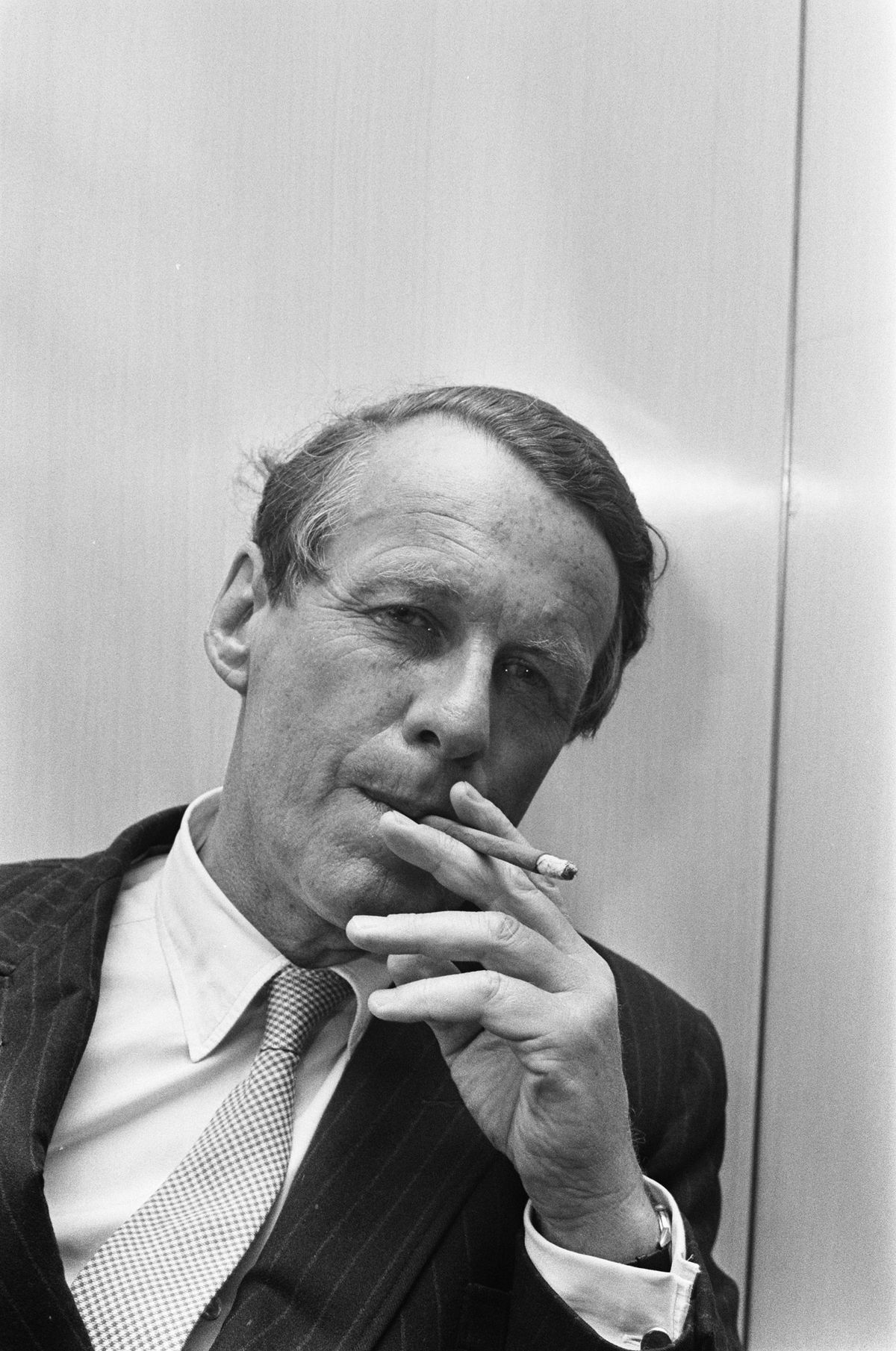
In September 1948, David Ogilvy opened a New York advertising agency on Madison Avenue under the name Hewitt, Ogilvy, Benson & Mather1,2. Two London firms, Mather & Crowther and S.H. Benson, backed it and sent it four starter accounts that together spent only $250,000 a year on advertising: Wedgwood China, British South African Airways, Guinness, and Bovril1. Ogilvy had left Oxford without a degree, worked in the kitchen of the Hotel Majestic in Paris, sold AGA cooking stoves door to door, worked for George Gallup's Audience Research Institute, served with the Intelligence Service at the British Embassy in Washington, and farmed in Lancaster County, Pennsylvania3. By his own later account, he had never written any copy4.

Quick Summary
David Ogilvy built his agency on one unfashionable idea: advertising exists to sell, and the surest way to sell is to give buyers useful information in plain language3. He opened in September 1948 with four small accounts1,2, with, by his own account, no copywriting experience4, and by 1984 the agency ranked third in the world by advertising income6. The lesson for operators: make results traceable first, then argue about creative.
What he had instead was one idea much of the advertising business found dull: the function of advertising is to sell, and successful advertising is built on information about the consumer3. Plain facts, written clearly, for a reader assumed to be intelligent5. By 1984 the agency built on that idea ranked third in the world by advertising income, with $363.2 million in revenue6. This is how an unfashionable premise beat fashionable ones, and why it keeps coming back.
Four Small Accounts and No Copywriting Track Record
Ogilvy's founding constraint shaped his method as much as his taste did. Four low-budget clients and no track record left no room for advertising that only impressed other advertising people.
One of Ogilvy's first targets was Wedgwood China and its $40,000 budget, and he persuaded Hensleigh Wedgwood to let the new agency buy the company's magazine space so it could earn the commission2. The British sponsors each put in $40,000 and held control; Ogilvy put in $6,000 and his American partner, Anderson Hewitt, mortgaged his home to put in $14,0001. Mather & Crowther, where Ogilvy's older brother Francis worked, had given him his first advertising job5.
That starting position matters more than the mythology. An agency with a blue-chip launch client can afford to be admired. An agency with four obscure brands and borrowed backing has to be effective, and has to prove it fast enough to win the next account. Ogilvy's insistence that copy carry facts was partly philosophy and partly arithmetic.
Thirty-three years later he sent a partner a memo headed "Will Any Agency Hire This Man?", describing himself at the founding: 38, unemployed, a college dropout who had been a cook, a salesman, a diplomatist and a farmer, who knew nothing about marketing and had never written any copy4.
Takeaway to repeat at work: constraints produce discipline faster than ambition does. A team that cannot buy reach has to earn response.
"The Consumer Is Not a Moron" Was a Working Principle
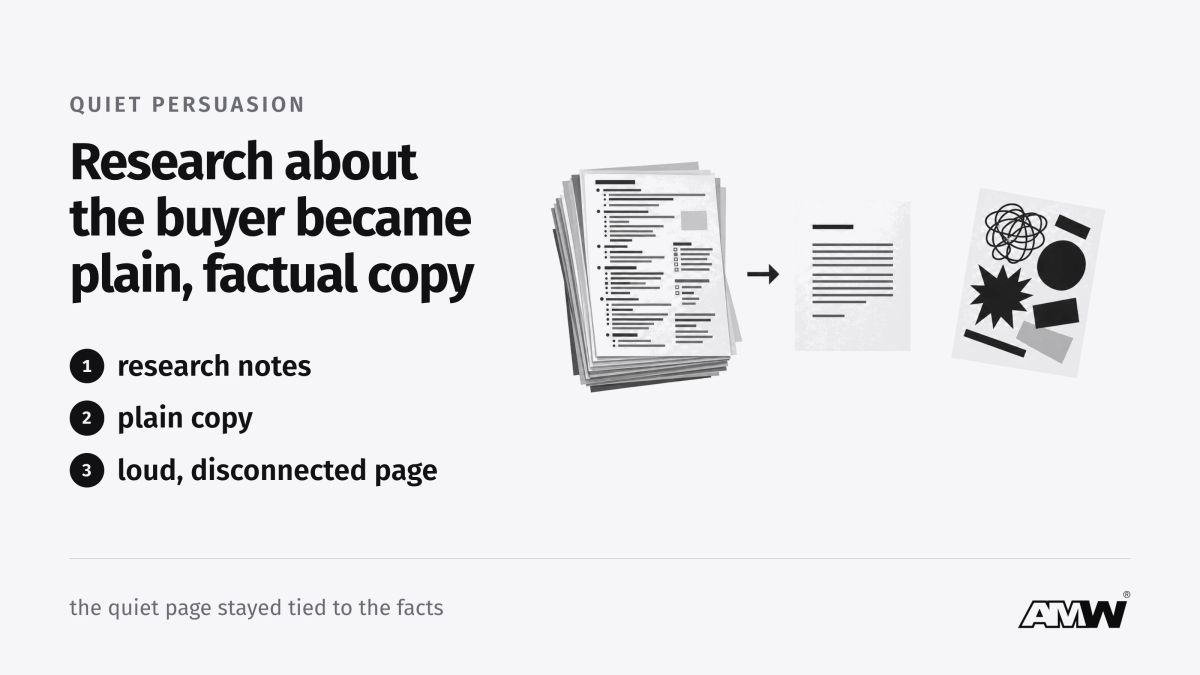
Ogilvy's most widely quoted line is "The consumer is not a moron. She is your wife. Don't insult her intelligence"2. He is credited, along with William Bernbach, with the then novel idea that consumers could be considered as intelligent as advertising people and approached with a soft sell, and his ads stood in marked contrast to the droning, repetitious style of those they supplanted5.
Applied as a review rule, the line changes the question a team asks of every draft. "Is this striking?" gives way to "does this tell the buyer something they did not know, in words they would use themselves?"
What the principle asks for
- Research before copy. Information about the consumer is the input to the advertising3.
- A soft sell. A droning, repetitious voice counts as a defect5.
- Facts as the creative material. The product's specifics do the persuading.
The rule is easy to endorse and hard to follow. Plenty of B2B landing pages still open with an adjective. A page that says "industry-leading platform" tells a buyer nothing; a page that names the integration, the setup time and the price tells them whether to keep reading. Ogilvy's test, applied to a 2026 product page, would cut a good share of its sentences.
The Guinness Guide to Oysters Sold Beer by Teaching People About Oysters
"The Guinness Guide to Oysters" was the first advertisement David Ogilvy did, according to his agency7. He had the idea on the train home to Connecticut one evening in 1950, and the ad was a guide to nine varieties of oysters, with text by copywriter Peter Geer1. Guides to game birds, cheeses and other foods that go well with Guinness followed1.
Picture the mechanics. A reader flipping past a magazine page is rarely looking for a beer ad. Occasionally they are looking for help ordering dinner. The guide earned its place on the page by informing, and attached the product to the moment of use.
That is content marketing , executed in print decades before the term had a budget line. Useful information buys attention that volume can only rent.
Why the format still works
The modern equivalent is the comparison table a buyer screenshots, the pricing calculator, the checklist a procurement lead forwards to a colleague. A software firm running a webinar signup push will usually draw more qualified registrations with a teardown of five real onboarding workflows than with a page of benefit adjectives, for the same reason the oyster guide beat a picture of a glass.
Rule of thumb: if the asset would still be useful with the logo removed, it will sell with the logo on it. Related: The Ultimate Guide to Content Marketing for SEO: Drive Organic Traffic That Converts .
Every Job Ogilvy Held Before Advertising Had a Scoreboard
Ogilvy came to advertising from work where outcomes were counted, and he kept counting.
He left Oxford without a degree in 1931 and spent a year as an apprentice chef in a Parisian hotel8, the Hotel Majestic3. He then sold AGA cookers door to door, and did it so well that his employer asked him to prepare an instructional manual for his fellow salesmen8. The manual, The Theory and Practice of Selling the AGA Cooker6, dates from 1935, and Fortune magazine later called it "probably the best sales manual ever written"3. After moving to the United States in 1938 he went to work for George Gallup's Audience Research Institute in New Jersey, and he cited Gallup as one of the major influences on his thinking, emphasizing meticulous research methods and adherence to reality3.
A door-to-door salesman knows his close rate by lunchtime. A research institute measures what people actually do. Both teach the same lesson from opposite ends: the buyer's behaviour is the only reliable evidence.
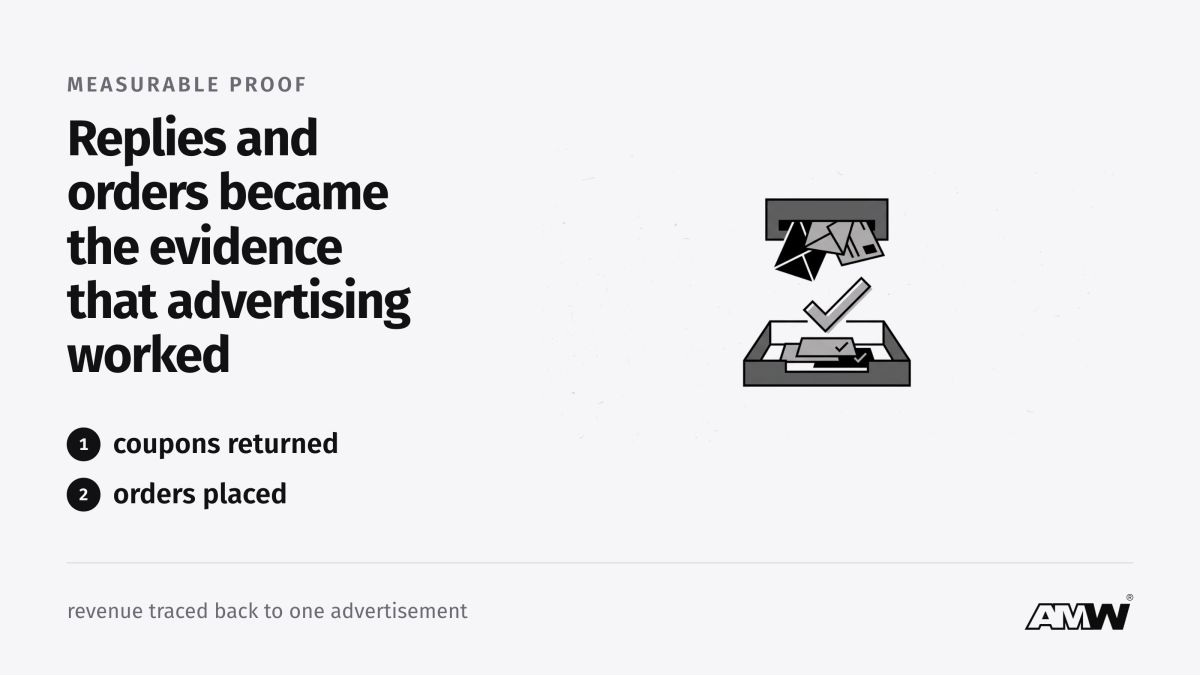
That background explains a detail that surprises people who know Ogilvy only for brand campaigns. Direct mail, with its counting of coupons to verify results, became his "first love", and he credited personalized mailings to new business prospects with helping his agency take off in its early days1. Direct response is advertising that reports its own results: coupons returned, orders placed, replies counted. When revenue traces to a specific advertisement, the argument about whether it is any good ends in a number instead of a meeting.
Takeaway: the fastest way to improve creative quality is to make results visible. Teams that cannot see which campaign produced which deal will argue about taste indefinitely, because taste is the only evidence they have.
In 1982 He Told His Whole Agency That Writing Decided Promotions
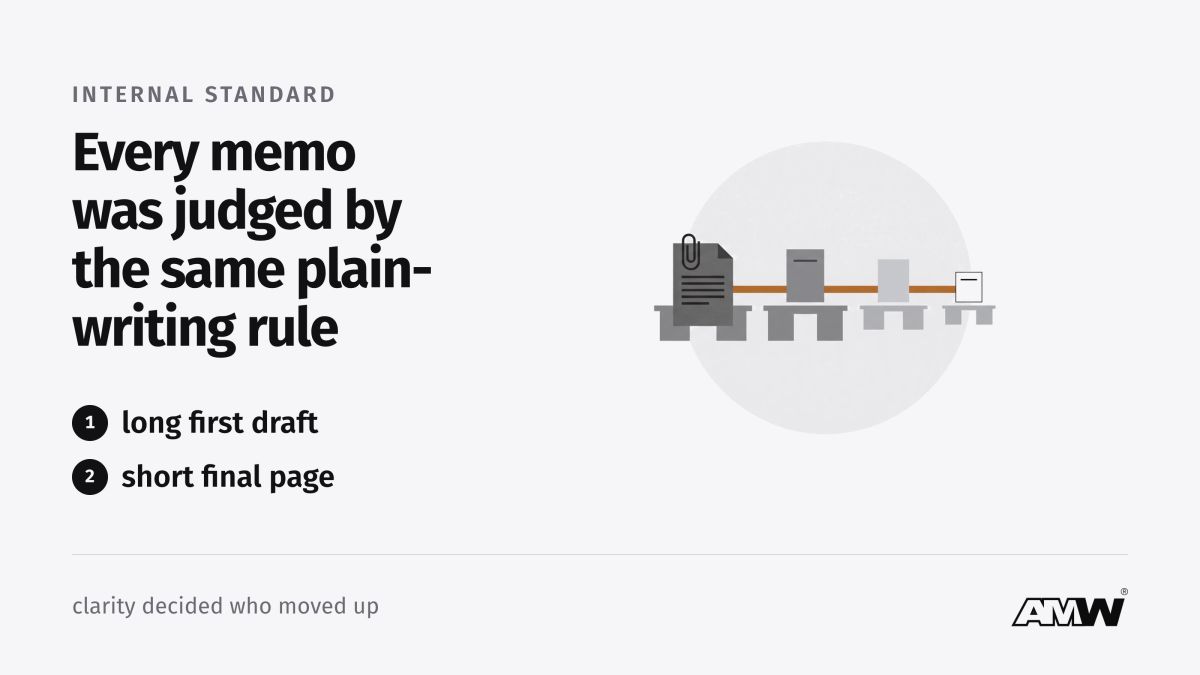
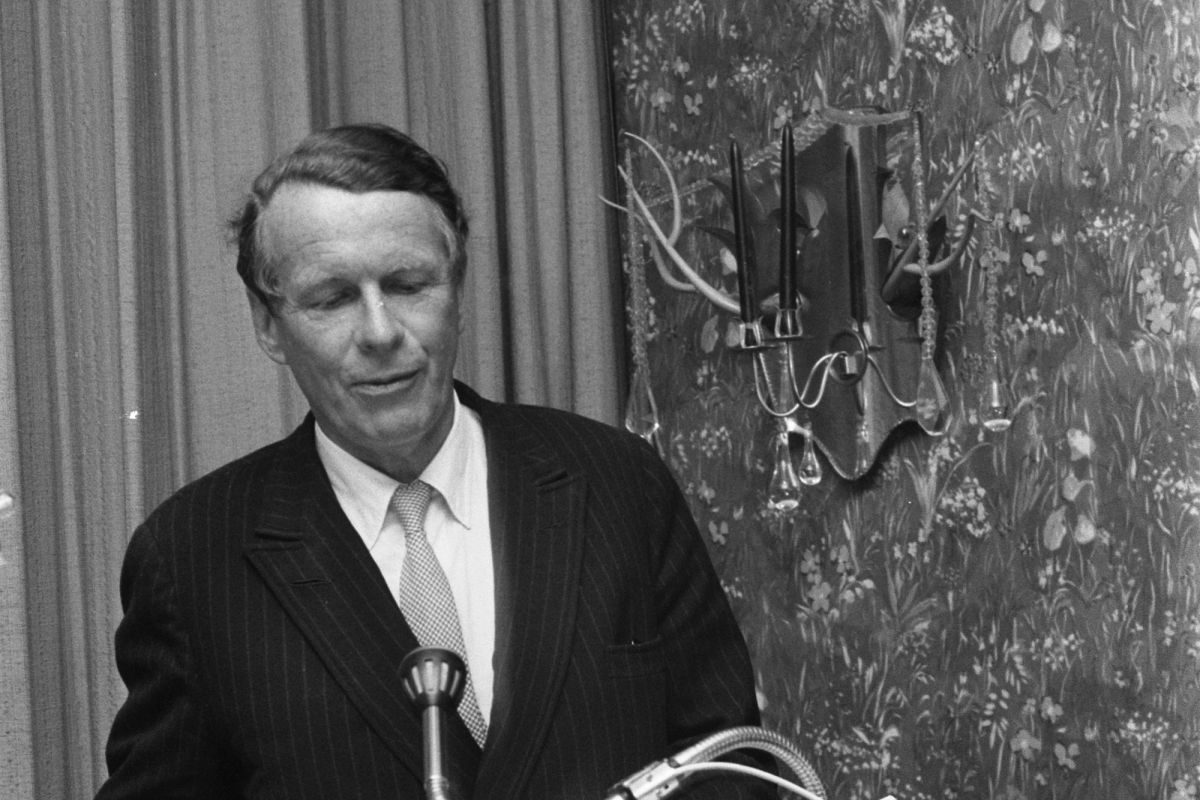
On September 7, 1982, Ogilvy sent an internal memo titled "How to Write" to everyone employed at Ogilvy & Mather9. "The better you write, the higher you go in Ogilvy & Mather," he wrote. "People who think well, write well"9.
Read that as a personnel policy. He tied career advancement to the clarity of internal documents, so the standard covered memos nobody outside the building would ever see. The memo listed ten rules. The first three: read the Roman-Raphaelson book on writing three times; write the way you talk, naturally; and use short words, short sentences and short paragraphs9.
| Ogilvy's 1982 rule9 | What it forces | 2026 application |
|---|---|---|
| "Read the Roman-Raphaelson book on writing. Read it three times." | Craft treated as trainable | Put one writing text in onboarding and check it in reviews |
| "Write the way you talk. Naturally." | Plain language over institutional fog | Read every landing page and sales email aloud before it ships |
| "Use short words, short sentences and short paragraphs." | Comprehension on first read | Cap paragraphs at three lines in proposals and follow-ups |
The commercial logic is direct. An agency sells persuasion. If its internal writing is vague, the work it ships to clients will be vague too, so the memo worked as a quality-control point.
The same test applies to any company that sells through written words, which in 2026 is nearly all of them. Sales sequences, proposals, onboarding emails and help-desk replies are the product experience. A woolly proposal loses a deal as surely as a woolly advertisement loses a sale.
By 1984 the Agency Ranked Third in the World
According to a 1984 Advertising Age survey, Ogilvy & Mather was operating in 41 countries, ranked third in world advertising income with $363.2 million in revenue, and had passed $2.4 billion in billings6.
By 1984 the agency Ogilvy founded ranked third in the world by advertising income, and its billings had passed $2.4 billion6.
The client list shows the compounding. The agency started with British clients, then drew the attention of American businesses including General Foods and American Express10. Small foreign brands first, then household American names.
Ogilvy is also credited with pioneering the concept of branding, which links a product with a name and aims to build customer loyalty10. That sits oddly beside his reputation as the fact-and-coupon man, and the tension is instructive. He treated brand-building and selling as the same job done over different timescales. The brand was the accumulated memory of many advertisements that had each told the truth about the product, and each advertisement still had to earn its keep.
The Rolls-Royce work is the clearest demonstration. Rolls-Royce gave the agency its account in December 1957, and Ogilvy wrote the headline in 195811. He spent three weeks talking with engineers and reading everything about the car1. The headline read "At 60 miles an hour the loudest noise in this new Rolls-Royce comes from the electric clock", a line he lifted, with credit, from an article in a British auto magazine11. The copy below it set out 19 numbered facts about the car, the first crediting the clock line to the Technical Editor of The Motor12. Verifiable facts did the persuading.
Takeaway: brand equity is a by-product of consistently useful advertising. Treat any plan that trades away measurable response "to build brand" with suspicion until a quarter of results backs it up.
The Idea Went Stale Inside His Own Agency, Then Recovered
Ogilvy's premise has a failure mode, and his own agency hit it. As Ogilvy & Mather grew and more of its shares passed into public ownership, it produced conservative campaigns for large companies and stagnated creatively6. One former writer at the firm said it was "working like a bank. It was a financial institution that was doing dull, predictable advertising"6.
The fix was creative talent. In 1979 Norman Berry came over from England to become creative director in New York, with a reputation for original ideas, a brief to move direction of the work from account management back to the people making it, and a promise to clients that he would stand up for his staff on creative issues6. In 1982 the agency won its first Kelly award, for a Paco Rabanne cologne campaign, and Advertising Age named it agency of the year for 19826.
The pattern
- Fact-based work drifts into formula when nobody guards the craft.
- Creativity drifts into self-indulgence when nobody checks the sales.
- The durable position holds both: research and facts as the raw material, real craft in the execution, and results as the judge.
The same pull shows up in every marketing era. Cheap digital reach made it easy to report impressions, engagement and video views in place of revenue. Any team now asked for a payback period is being asked the question Ogilvy asked in 1948: did it sell?
Ogilvy was anti-unaccountable, and his agency's recovery came from hiring for creativity. Conflating accountability with dullness is how marketers talk themselves out of measuring anything.
Takeaway: when a marketing idea is fashionable, ask what it makes unmeasurable. That is often why it is fashionable.
What the Ogilvy Standard Looks Like Inside a 2026 Pipeline
Applying Ogilvy's standard today comes down to one operational requirement: every campaign is traceable to revenue before anyone debates whether it was good. He held that the function of advertising is to sell3, which is only enforceable if the selling is visible.
A scene familiar to any operator: a marketing lead, a founder and a finance director sit with five dashboards open, and none of them agree on which channel produced last quarter's three largest deals. The meeting ends in opinion, and the loudest person wins the budget.
The modern version of Ogilvy's counted coupon is honest attribution. AMW Attribution shows which ads, channels and campaigns actually make money, which turns the creative argument into a revenue comparison. AMW CRM keeps the record of every contact, deal and ticket, with AI agents reading that history so a buyer going quiet or a stalled deal surfaces before the quarter closes. AMW Funnels runs multi-step lead capture that feeds straight into AMW CRM, so a webinar signup push or a high-ticket service inquiry lands in the same pipeline the revenue is measured against.
The writing still does the persuading. Measurement settles the arguments the writing causes, and lets a copywriter defend long, factual copy with a number, the position Ogilvy engineered for himself with four small accounts and no reputation to spend1.
Takeaway: decide what counts as a result before the campaign launches, and log it in one system.
A Four-Week Test to Run on Your Own Marketing
The Ogilvy method can be tested on any marketing function in about a month, without new budget.
Week 1: Read it aloud. Take your three highest-traffic pages and your top sales email sequence. Read every sentence aloud and cut anything you would not say to a customer across a table, following Ogilvy's rule to write the way you talk9.
Week 2: Count the facts. Mark every verifiable claim in the same assets: a number, a timeframe, a named integration, a price. A page with fewer than five is decoration. Ogilvy built on information about the consumer3.
Week 3: Trace the revenue. Pick last quarter's five largest closed deals and trace each back to first touch. If you cannot do it for three of five, the measurement problem is larger than the creative problem.
Week 4: Publish one useful asset. Build your category's Guinness Guide to Oysters: the comparison table, the teardown, the calculator a buyer would keep even if they never bought from you.
Ogilvy's career is strong evidence that the unfashionable option compounds. A former kitchen hand and stove salesman built an agency that ranked third in the world by advertising income6, by insisting that advertising sell and proving when it did.
Start with the week-three exercise. If your team cannot name the source of its last five deals, book a working session on attribution before the next campaign brief is written. Everything else in Ogilvy's method depends on being able to keep score.
Sources
- 1
- 2
- 3
- 4
- 5
- 6
- 7
- 8
- 9
- 10
- 11
- 12

Frequently Asked Questions
What was David Ogilvy's one unfashionable idea?
That the function of advertising is to sell, and that successful advertising for any product is based on information about its consumer3. His most widely quoted line is "The consumer is not a moron. She is your wife. Don't insult her intelligence"2, and he is credited, along with William Bernbach, with the then novel idea that consumers could be considered intelligent and approached with a soft sell5. Plain, factual copy for an intelligent reader looked dull beside louder advertising.
Which clients did Ogilvy start with in 1948?
Mather & Crowther and S.H. Benson sent the new agency four starter accounts that together spent only $250,000 a year on advertising: Wedgwood China, British South African Airways, Guinness, and Bovril1. One of Ogilvy's first moves was persuading Wedgwood to let the agency buy its magazine space so it could earn the commission2. The agency later drew American businesses including General Foods and American Express10.
Had David Ogilvy written advertising before founding his agency?
By his own account, no. In a later memo he described himself at the founding as a man who knew nothing about marketing and had never written any copy4. One company history notes he occasionally wrote advertising copy while working as a salesman in England6. Before 1948 he worked in the kitchen of the Hotel Majestic in Paris, sold AGA cooking stoves door to door, worked for George Gallup's Audience Research Institute, served with the Intelligence Service at the British Embassy in Washington, and farmed in Lancaster County, Pennsylvania3.
What did Ogilvy's 1982 writing memo actually say?
He sent "How to Write" on September 7, 1982, to everyone employed at Ogilvy & Mather, and wrote: "The better you write, the higher you go in Ogilvy & Mather. People who think well, write well"9. The memo listed ten rules, including reading the Roman-Raphaelson book on writing three times, writing the way you talk, and using short words, short sentences and short paragraphs9.
Why is "The Guinness Guide to Oysters" considered significant?
It was the first advertisement David Ogilvy did, according to his agency7. Ogilvy had the idea in 1950, and the ad was a guide to nine varieties of oysters, followed by guides to game birds, cheeses and other foods that go well with Guinness1. It sold beer by giving readers useful reference information and attaching the product to the moment of use, long before content marketing had a name.
How large did Ogilvy's agency become?
According to a 1984 Advertising Age survey, Ogilvy & Mather was operating in 41 countries, ranked third in world advertising income with $363.2 million in revenue, and had more than $2.4 billion in billings6. It grew from small British accounts to American businesses including General Foods and American Express10, and Ogilvy is credited with pioneering the concept of branding10.
Was Ogilvy against creative advertising?
He was against unaccountable advertising. His standard was that the work must sell and be grounded in information about the consumer3. For Rolls-Royce he spent three weeks talking with engineers and reading everything about the car1, and the resulting headline, "At 60 miles an hour the loudest noise in this new Rolls-Royce comes from the electric clock," was creative and built on a single fact11. When the agency's work later turned dull, it brought in Norman Berry as creative director in 19796.
How do modern teams apply the sell-first standard?
By making revenue traceable before debating creative quality. That means deciding what counts as a result before launch, logging every touch in one system, and comparing campaigns on revenue. AMW Attribution shows which ads, channels and campaigns make money, AMW CRM holds the record of every contact, deal and ticket, and AMW Funnels feeds captured leads straight into AMW CRM so the pipeline and the measurement share one source.
Related Articles
AI Answers Cite Your Press Before Your Founder Bio
AI models draw mostly on earned media, not brand-owned pages. Learn why press coverage shapes how your founder is described and how to write one press release line that carries over.
The Story of Polaroid: Edwin Land and the Instant Photo
A child's question in Santa Fe in 1943 became the SX-70, the Giant Polaroid and one of America's most admired brands. Then came Kodak, the phone and a factory set for demolition.

Nano Banana 2.1 Review: Spelling Right, Details Slip
We gave Google's Nano Banana 2.1 a bakery chalkboard sign and a candle product shot. It spelled every price correctly, then slipped on smaller details worth checking.