

TechCrunch Disrupt 2026: A Plan If You're Not Raising


TechCrunch Disrupt 2026 packs a few days of sessions, networking lounges and innovation exhibits into one venue in downtown San Francisco2, and the official program around it runs a full week, October 10-164. TechCrunch's own advice to people who missed the Side Event deadline is direct about who the week is for: get a ticket and use it to source customers and partners, meet investors, find talent and see what's coming next1. Three of those four have nothing to do with raising money. They're also the ones most non-founders arrive without a plan for, and that plan is usually what decides whether the trip turns into pipeline a few months later.
Quick Summary
TechCrunch Disrupt 2026 pays for companies that aren't fundraising when they arrive with one commercial objective — customers, partners, hires or competitive intelligence — and a named owner for follow-up. The conference is three days in downtown San Francisco, but the official Side Event window stretches October 10-164, and regular ticket pricing closed September 261. Pick the objective first, then decide whether a ticket, a table or a hosted event buys it.
What follows is a working plan for the operator, marketer or revenue lead who's going without a deck.
Disrupt week runs October 10-16, and the conference is three of those days
The conference itself is a three-day program in downtown San Francisco2. The wider "Disrupt week" TechCrunch promotes around it runs October 10-16, and that's the window approved Side Events sit in4. That gap matters for planning. You have roughly twice as many usable hours as the conference program lists, and the extra time is when the smaller, invite-based rooms tend to happen.
It helps to think of the calendar in two layers. The first is the main floor, with its sessions, exhibit area and lounges. The second is everything hosts have opened to the community that week: meetups, happy hours, panels and workshops other companies have built and published4. One roundup of US startup events puts Disrupt attendance above ten thousand founders, investors and tech leaders across the three days5. In a hall that size, the people you want to meet are there but hard to find. A 40-person hosted room can hold eight of them.
Because of that, many people who go regularly find that two evenings of hosted events matched to their buyer do more for them than a third day of walking the floor with no meetings booked.
Deciding what the trip is for, before you buy anything
If you're not raising, there are usually four objectives to choose from. Each one asks something different of you on the ground. Recruiting engineers and running partner discovery in the same eight hours tends to leave both half done, so most teams do better settling on one before booking travel.
| Objective | What success looks like | Where the week goes |
|---|---|---|
| New customers | 8-12 qualified conversations with named accounts, each with an agreed next step | Exhibit area, hosted Side Events matched to your buyer's job title |
| Partners and integrations | 3-5 conversations with product or BD owners at complementary companies | Startup Battlefield 200 exhibits, sessions in your category |
| Hiring | 5-10 candidates you would interview, plus two referral sources | Side Events, volunteer crews, after-hours meetups |
| Competitive and market intel | A written teardown of what shipped, what got funded and what language the market now uses | Sessions, expo floor, the Battlefield roster |
The middle column is the one people tend to skip. "Meet interesting people" is hard to work with as a goal because there's no result that would count as falling short, which leaves nothing to review once you're home. Eight qualified conversations with an agreed next step gives your finance lead a number to hold up against the cost of the flights.
A qualifying question you can ask in 20 seconds
For a customer objective, this is one sentence that tells you, within 20 seconds of meeting someone, whether they own the problem you solve. For hiring, it's the role and the level. Teams that arrive without one often come home with a stack of badges and end up doing their lead qualification from memory on the flight, and most of the useful detail is gone by then.
Who gets less out of Disrupt
Some buyers are rarely at Disrupt in any number. If yours sit in hospital procurement, a city government, a bank's risk committee or a manufacturing plant, the vertical conference they already attend will usually put more of them in front of you per hour than a week of senior time in San Francisco would.
Deal size matters too. If your average deal is a few hundred dollars and closes self-serve, the cost of sending three people for a week is hard to recover at that contract value inside a year.
A useful gut check is to list the companies you expect to be there and why each would say yes to a meeting. People who can name half a dozen before they go tend to come back with conversations that lead somewhere, because those meetings were planned. If the list is short, that's worth knowing before the flights are booked.
Startup Battlefield 200 doubles as a market map
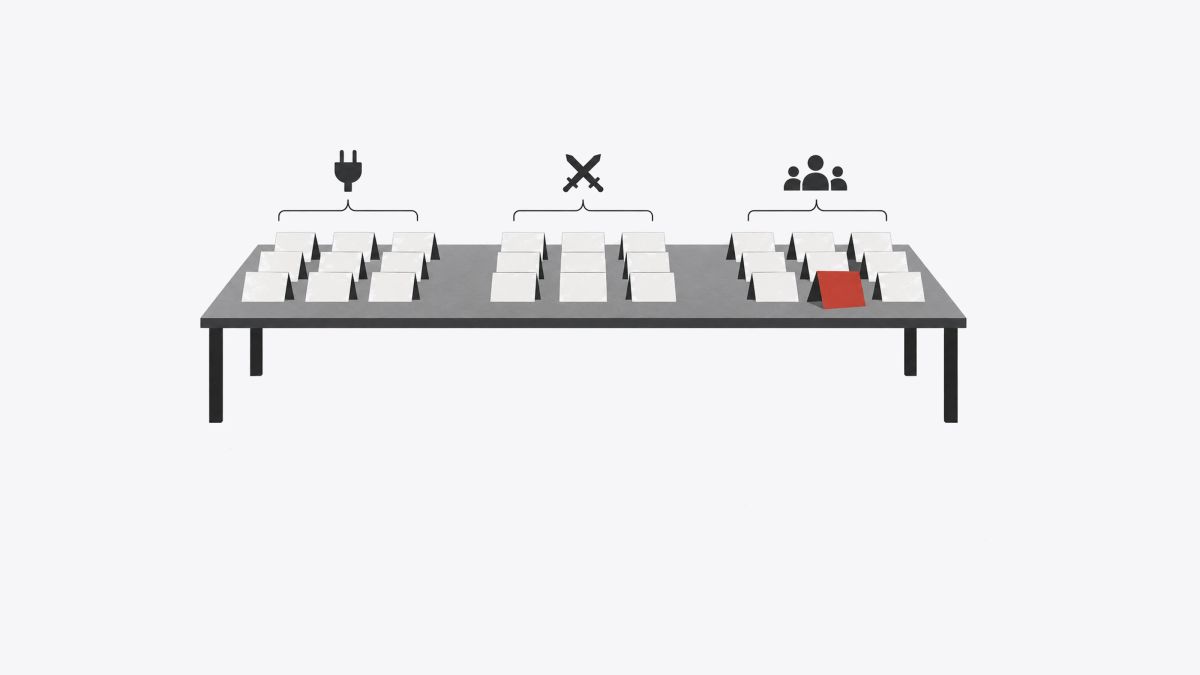
Startup Battlefield is the competition at the center of the event: 200 early-stage startups compete, 20 advance to a final round, and the winner takes $100,000 along with a large volume of press attention5. Even if you're not competing, the roster may be the most useful thing to come out of the week, since it's 200 companies a selection committee judged worth putting on a stage this year.
There are really three lists tucked inside it. Some of those companies are building something that plugs into what you sell, which makes them partner candidates. Others are going after a slice of your market with a narrower product, and their messaging tells you which language buyers are responding to right now. And a handful are hiring the exact profile you've struggled to hire, at a table you can walk straight up to.
Going through the list the week before you fly makes a big difference. Scanning 200 companies on a phone in a crowded exhibit hall is hard to do well. Done at a desk, it usually leaves you with a shortlist of around 15 tables and a reason to visit each one.
What an exhibit table buys a company that isn't pitching
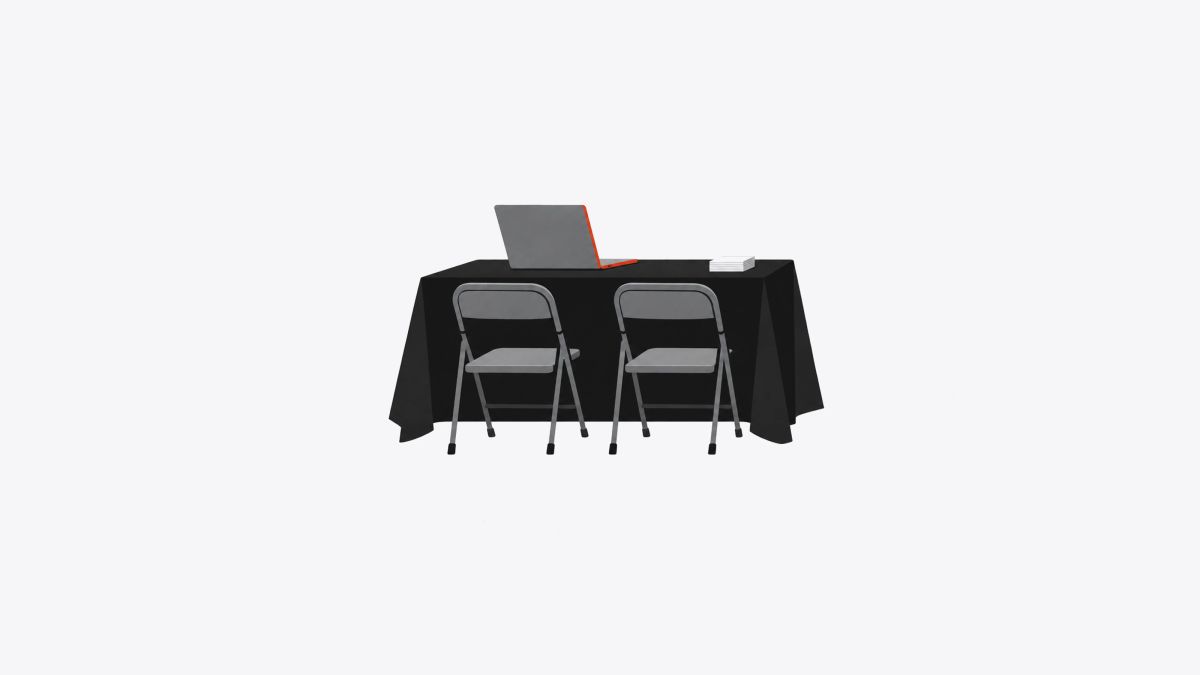
An exhibit table puts you in a fixed, findable spot in front of the mix TechCrunch describes as investors sourcing deals, operators evaluating tools and founders scouting partners3. If you're not raising, the second and third groups are the ones you're there for. Tables were limited, and the 2026 offer closed when the last one sold or at 11:59 p.m. PT on September 25, whichever came first3, so this section is mostly useful for next year's planning.
A table brings inbound conversations that arrive already filtered, since someone who crosses a hall to talk to you is showing more interest than someone you stopped in a corridor. The cost is two people anchored to about 40 square feet for three days, missing every session.
Tables tend to work well for products an operator can size up in 90 seconds: a tool, an interface, a demo that ends on a number. They're a harder fit for a long, consultative sale where the first meaningful conversation takes around 45 minutes, because with people waiting behind them you rarely get that long.
Side Events: the distribution channel most attendees never apply for
For a company that isn't on the main stage, hosting an approved Side Event is often the most useful thing it can do at Disrupt. For 2026 the window has closed, with the final deadline on September 111, so this is about next year.
What an approved host gets is distribution. TechCrunch lists approved Side Events on the official Side Events page, in the agenda, in the mobile app, in attendee emails, in a TechCrunch article and across social4. Hosts choose the format (a meetup, a happy hour, a panel, a workshop)4, and they can pass a 25% discount on Disrupt tickets to their own community, which gives an invitation some real value.
Set against a crowd of more than ten thousand people5, a mention in the attendee email plus a listing in the app everyone uses to find their way around is a lot of visibility for the price of an application and two hours of hosting.
The listing is the easier half. Hosting ties up a person for most of the week on venue, catering, invites and running the room, so whoever hosts is mostly not working the floor. Your listing also sits next to every other approved host that week, and the guests who matter most usually come from a list you already have. If there's no one on your team who could teach a session and no community to share the 25% discount with, an exhibit table or a well-researched week in other people's rooms may be a better use of the money.
Formats that work for a company that isn't raising
- A workshop on a problem your buyers have, taught by one of your people who does that work every day.
- A roundtable for one specific job title, capped at 20 people, where the guest list is what people come for.
- A happy hour co-hosted with two non-competing companies that sell to the same buyer, which triples the invite list and splits the cost three ways.
The audience you invite is the whole asset. A half-full room of the right job titles usually does more for you than a packed room of the wrong ones.
Getting in when the travel budget is already spent
Volunteering costs time and keeps money in your pocket. TechCrunch recruits volunteers to run Disrupt and describes the role as supporting founders as they pitch, making connections and building community among the people changing tech6. Volunteers work the event from the inside, so you're in the rooms and hallways, on a schedule.
It's real work, though: long days staffing, directing and fixing things, and you'll miss sessions you hoped to see. For a junior marketer or a solo operator whose main constraint is cash, that trade often makes sense. For someone whose time is worth more per hour than the ticket, it usually doesn't.
The other low-cost route is the week's second layer. Many Side Events during October 10-16 are open to whoever the host invites, and some are free4. Someone without a badge but with a well-researched list of hosted events can still come away from the week with a handful of useful conversations.
Whether the trip paid off gets decided after you fly home
By the end of the week you'll have a list of names, and those go stale quickly. The conversations that turn into something are usually the ones that get a written next step within 72 hours, while the other person still remembers which of forty booths you were at. The way it tends to fall apart is familiar: badges scanned into an export, the export emailed around, nobody assigned, and by November no one remembers what was said.
Having the follow-up set up before you leave helps a lot. Each conversation gets one owner, one next step and one date, entered the same evening. That takes a few minutes in the hotel, and piecing it together the following Monday takes far longer. If those contacts go into AMW CRM tagged with the event, the activity timeline shows when each person last heard from you, and the agent nudges flag anyone who's gone quiet since October before they drift into an untouched pipeline.
Measurement is the second half, and it's what decides whether you go again. With every contact and deal from that week tagged to Disrupt, AMW Attribution can show at the end of the quarter how much revenue traced back to the event. The cost side (tickets, flights, hotels, and the days your team spent away) lives in your own expense records, so the comparison is a short conversation with finance, with the revenue figure in hand. Without the tag, next year's budget discussion tends to come down to impressions, which is hard to defend next to a paid channel that can show its returns.
One caveat: event pipeline moves slowly. A conversation in October that closes in March looks like a miss in November. It's worth agreeing on a measurement window with your finance lead before you spend, and judging the week on qualified pipeline created, since closed revenue in the first 60 days will undercount it.
Where to start this week
If you're heading to Disrupt 2026 without a raise to run, settling on one objective and a short list of target companies this week gives you something to work backwards from when deciding what to buy. And if you're reading this after the deadlines have passed, a calendar note for August 2027 is a simple way to make sure you apply for a Side Event next time. The application takes an afternoon, and an approved event gets a place in the agenda, the app and the attendee emails for the whole conference4.
Sources
- 1
- 2
- 3
- 4
- 5
- 6

Halima Kiani writes for AMW on technology, business, marketing and AI: the tools, trends and decisions shaping how companies work and grow.
Frequently Asked Questions
Is a TechCrunch Disrupt ticket worth it if I have no plans to fundraise?
It can be, if you arrive with one commercial objective and a target list. TechCrunch positions the week for sourcing customers and partners, finding talent and seeing what's next, alongside meeting investors1. Three of those four are non-fundraising outcomes. The test before booking is whether you can name six companies you expect to be there and a reason each would take a meeting.
When is Disrupt week 2026 and how long is the actual conference?
The conference is a three-day program at a venue in downtown San Francisco2. The wider Disrupt week, the window in which approved Side Events run, is October 10-16, 20264. Plan your travel around the full week rather than the three badge days, because the hosted evening events are usually where the smaller, better-targeted rooms are.
Can I still host a Side Event at Disrupt 2026?
No. The final deadline for Disrupt 2026 Side Event applications passed on September 11, 20261. Approved hosts get placement on the official Side Events page, in the agenda, the mobile app, attendee emails, a TechCrunch article and on social4, which makes it worth applying early in the 2027 cycle rather than treating it as a late-stage option.
What does the Startup Battlefield 200 roster give me if I'm not competing?
A curated market map. The competition involves 200 early-stage startups, of which 20 advance to a final round and one takes $100,000 and significant press coverage5. Read the 200 as partner candidates, narrower competitors and companies hiring the profile you need. Review it before you travel so you arrive with a shortlist of tables to visit and a reason for each.
Should a non-fundraising company book an exhibit table?
Only if your product can be evaluated visually in about 90 seconds. A table puts you in front of investors sourcing deals, operators evaluating tools and founders scouting partners3, and inbound conversations arrive pre-qualified because the person crossed a hall to reach you. The cost is two staff anchored to the booth for three days, which rules out session attendance and suits long consultative sales poorly.
How do I prove the event was worth the money?
Tag every contact and deal created during the week with the event as its source, then measure qualified pipeline created rather than closed revenue in the first 60 days. Event-sourced deals are slow, so agree the measurement window with finance before you spend. Without source tagging, the following year's budget decision comes down to opinion.
Is volunteering a realistic alternative to buying a ticket?
It is, for people whose constraint is cash rather than time. TechCrunch recruits volunteers to run the event and describes the role as supporting founders as they pitch and enabling connections across the ecosystem6. Expect long working days and missed sessions. For a senior leader whose hourly cost exceeds the ticket price, the trade does not hold up.
Related Articles
AI Answers Cite Your Press Before Your Founder Bio
AI models draw mostly on earned media, not brand-owned pages. Learn why press coverage shapes how your founder is described and how to write one press release line that carries over.

The Story of Polaroid: Edwin Land and the Instant Photo
A child's question in Santa Fe in 1943 became the SX-70, the Giant Polaroid and one of America's most admired brands. Then came Kodak, the phone and a factory set for demolition.

Nano Banana 2.1 Review: Spelling Right, Details Slip
We gave Google's Nano Banana 2.1 a bakery chalkboard sign and a candle product shot. It spelled every price correctly, then slipped on smaller details worth checking.