

The Press Release Turns 120 in 2026: Ivy Lee, a Train Wreck and the Birth of Modern PR

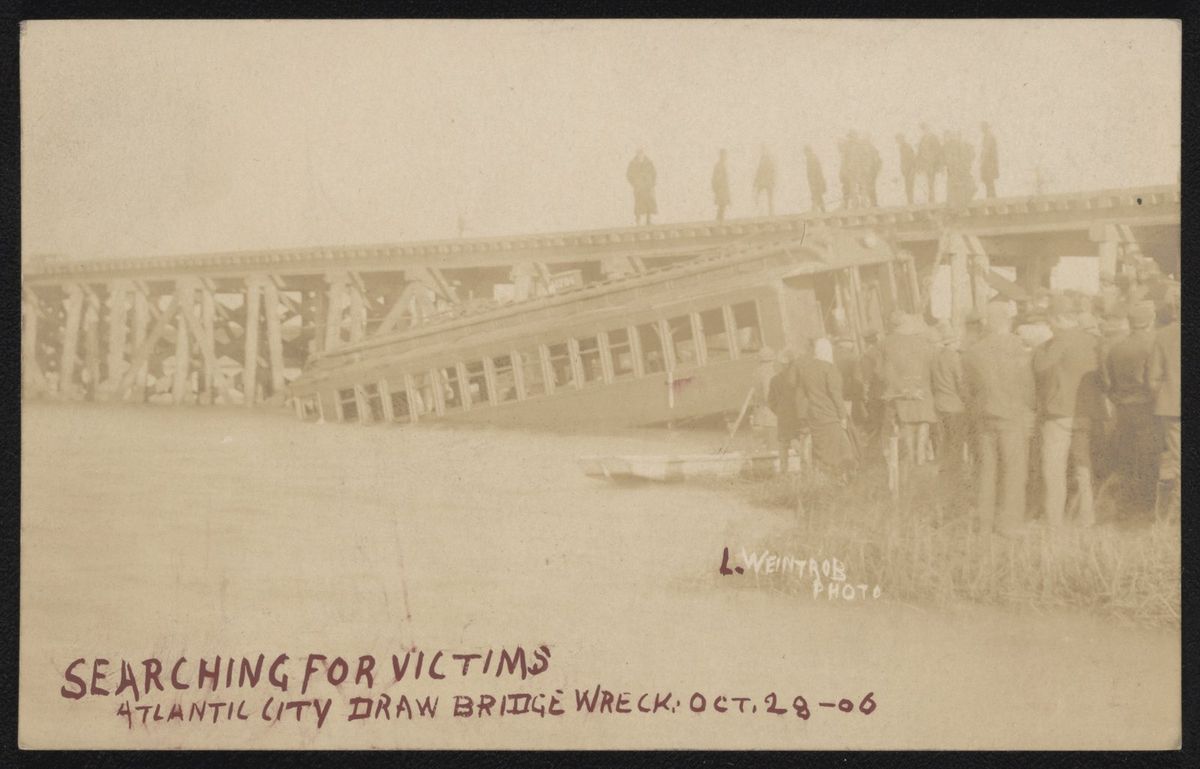
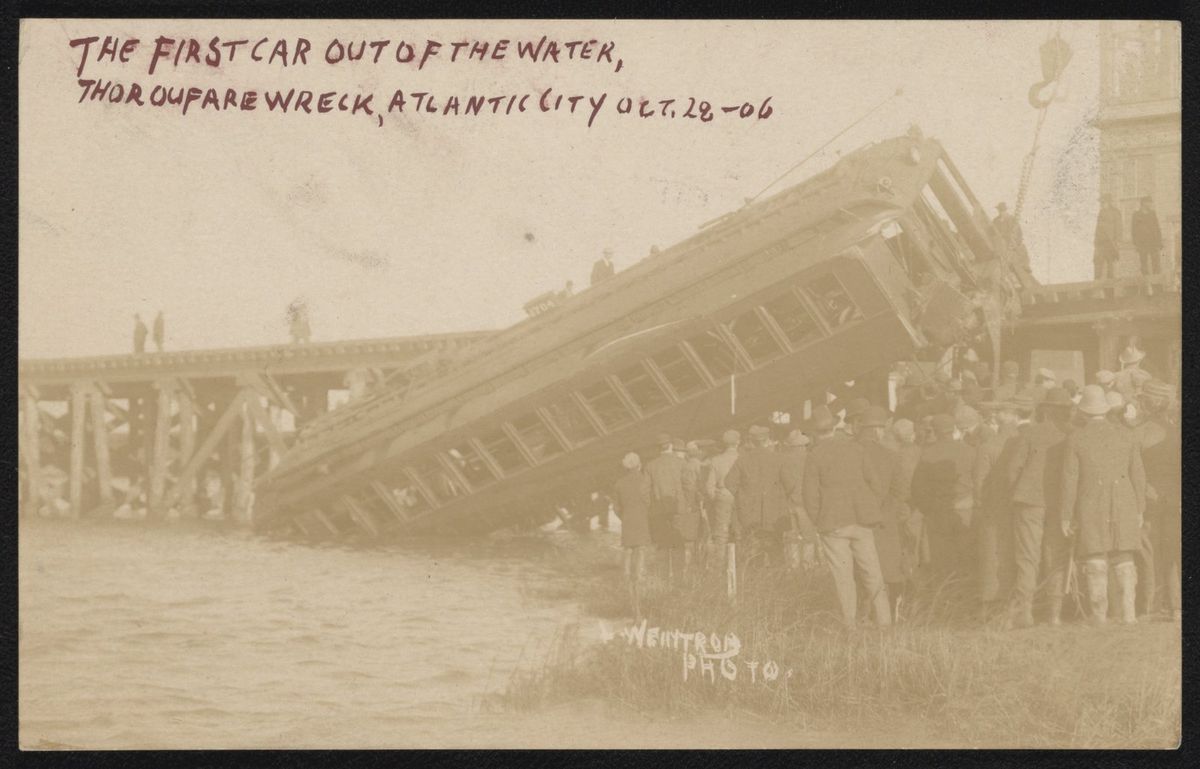
At about 2:23 on the afternoon of Sunday, October 28, 1906, electric train No. 1,085 left the rails at the west end of the drawbridge over the Thoroughfare near Atlantic City1. Its three coaches had been in service only a few weeks. The first two plunged into the water and were entirely submerged, and the third came to rest with its rear end on the cribbing under the bridge1. Divers had to be brought from Camden and Philadelphia before the train could be raised1.

Quick Summary
After the Atlantic City wreck of October 28, 1906, the Pennsylvania Railroad volunteered a detailed account to the press the same night1, and Ivy Lee took reporters to the scene3. The Pennsylvania Railroad had previously barred reporters from accident sites3. The statement became the model for the press release, and it also contained an error: it said the drawbridge was properly closed, and an inquest later found it had not returned to the proper height3. Lee went on to work for the Rockefellers after the 1914 Ludlow Massacre, where he preached "absolute frankness" and then sent out bulletins, one of which badly overstated union salaries5. Upton Sinclair called him "Poison Ivy"8. In 1934 he told Congress about a $25,000-a-year contract with Germany's I.G. Farben9. The form outlived him. In 2013 the SEC used a Netflix Facebook post to set out how companies may announce news on social media12. The lessons: speak first, say only what you have verified, correct errors to everyone who saw them, and make sure the conduct behind the statement can bear scrutiny.
At 10:30 that night, in Philadelphia, the Pennsylvania Railroad issued a statement1. It gave the train's number, the time it left Camden, its speed, the minute it left the rails, and the state of the bridge and the track. It said the cause could not yet be determined, that the dead were being placed with undertakers to await identification, and that the motorman, Walter C. Scott, had drowned1. The next morning the New-York Tribune printed it under the headline "Road Issues Statement"1.
The man behind that approach was Ivy Lee, a former newspaper reporter2 the railroad had recently hired3. His statement is widely considered the first press release3. In 2026 the form turns 120. This is the story of how it began, what Lee built on it, where it went wrong in his own hands, and what a tool that old still asks of anyone who speaks for a company.
Cars leap bridge
The Tribune's front page that Monday gave the story its whole right-hand column. "Cars Leap Bridge; 70 Dead," the headline read, and, below it, "Passengers Held in Trap Drown"4. The early count was too high, and the railroad's own count was too low. Its statement said the train had left Pleasantville with seventy-nine passengers, twenty-three of whom had been accounted for as safe1. Later accounts put the toll at 53 dead of the 87 passengers aboard3.
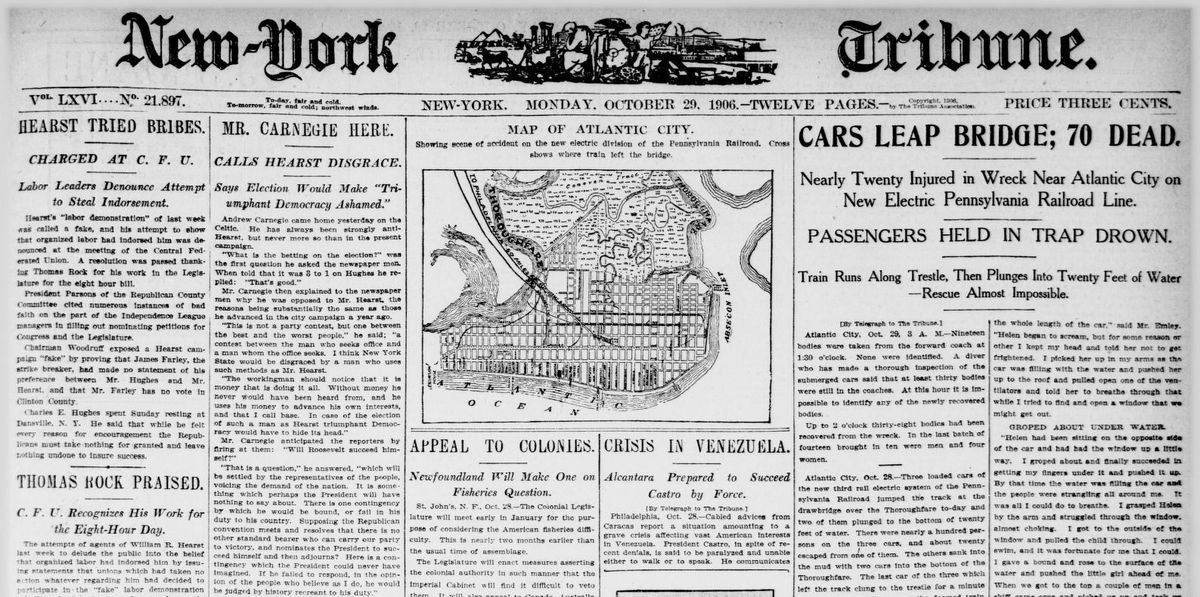
What made the statement unusual was that it existed at all. Before the wreck, according to the scholar Ray Hiebert, the Pennsylvania Railroad had barred reporters from accident sites and volunteered little about the causes of its accidents3. This time the company wrote its own account and handed it out, and Lee arranged for reporters to be ferried to the site so they could see the wreck for themselves3. The New York Times printed the statement two days after the crash3.
The railroad's reasons were practical. It was one of many rail accidents of the period, and the company was taking public criticism for them2. A company that said nothing left the story to rumor. The Tribune described railroad officials at the main station "busy denying wild rumors and explaining the accident"1. A written statement from headquarters gave every paper the same facts at the same hour.
A secret press bureau
Lee came to that night with a reporter's habits. Born near Cedartown, Georgia, in 1877, he studied at Emory College and graduated from Princeton in 18982. He told a federal commission years later that he had worked on the New York Journal, the New York Times and the New York World5. By the mid-1900s he was representing coal operators, and out of that work came a short document now known as his "Declaration of Principles"2.
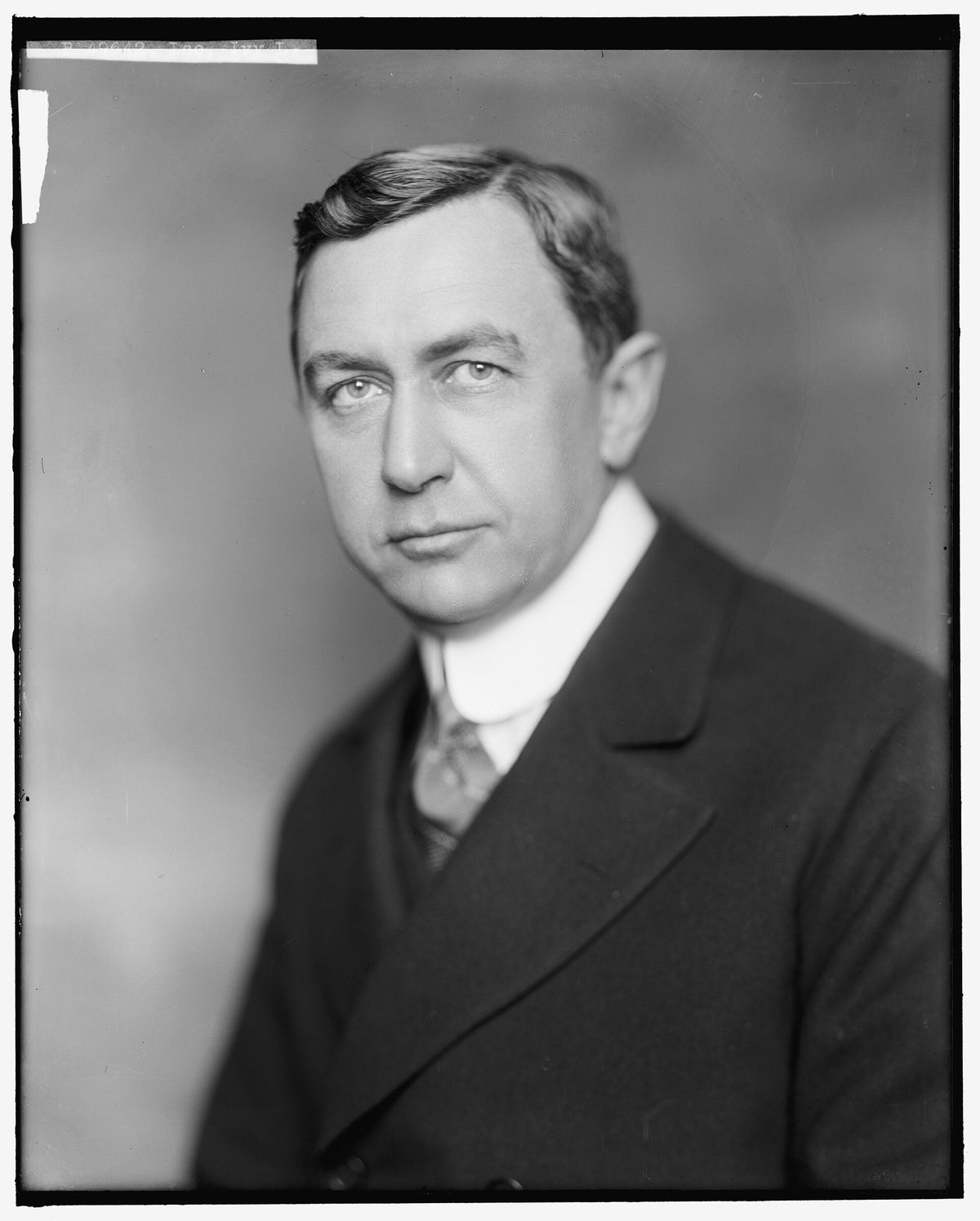
The declaration answered a real suspicion. In September 1906, a month before the wreck, the journalist Charles Edward Russell complained in Everybody's Magazine about the methods of the Standard Oil company's "secret press bureau, of the railroads' news agencies, and of the hired newspaper"6. Editors had reason to distrust anything a corporation sent them. Lee's promise, as the Georgia Historical Society summarizes it, was to give the public "prompt and accurate information concerning subjects which it is of value and interest to the public to know about" and to help any journalist verify a statement of fact2.
The Atlantic City statement is that promise put to work. It was prompt, it was sent to everyone, and it was built from checkable details: a train number, a speed, a time to the minute. It also made a claim that could be checked, and that is where the story takes its first turn.
Properly closed and locked
"The drawbridge was found properly closed and locked, the signal showing a clear movement," the statement said. "The track was in good condition"1. According to the New York Times version, the company doubted there was any "defect in either the drawbridge or its mechanism" and suspected the cars3.
It was wrong. An inquest determined that the bridge had not returned to the proper height, leaving the rails misaligned, and the signal system had not been calibrated to account for the height of the rails, so it gave no warning3. The first public account of the disaster, the one praised for its openness, had pointed away from the railroad's own bridge.
History was kind to the statement anyway. The railroad was widely credited for its openness3, and the press release became a standard tool. The error belongs in the story, because it sits inside the thing Lee got right. Speed and openness earned the railroad trust. A confident claim about the cause, made before the cars had been raised from the water, was the part that did not hold. The statement's own sentence said the cause could not be determined "until the cars can be raised out of the water"1. The claim about the bridge went further than that sentence allowed.
Absolute frankness
Eight years later Lee faced a far harder assignment. Coal miners in Colorado had struck against the Colorado Fuel and Iron Company, which employed about 7,000 workers, and the miners and their families, evicted from company housing, set up a tent colony at Ludlow7. On the morning of April 20, 1914, National Guardsmen aligned with the company attacked the colony, killing 21 people, including 11 children, in what became known as the Ludlow Massacre7.
About the last of May 1914, John D. Rockefeller Jr. asked Lee to come and see him5. Lee later testified that Rockefeller felt the public had "wholly misunderstood his attitude," and that his own first advice was that "the first and most important feature of any plan of publicity should be its absolute frankness"5. He was still working for the Pennsylvania Railroad and advised Rockefeller on the side5.
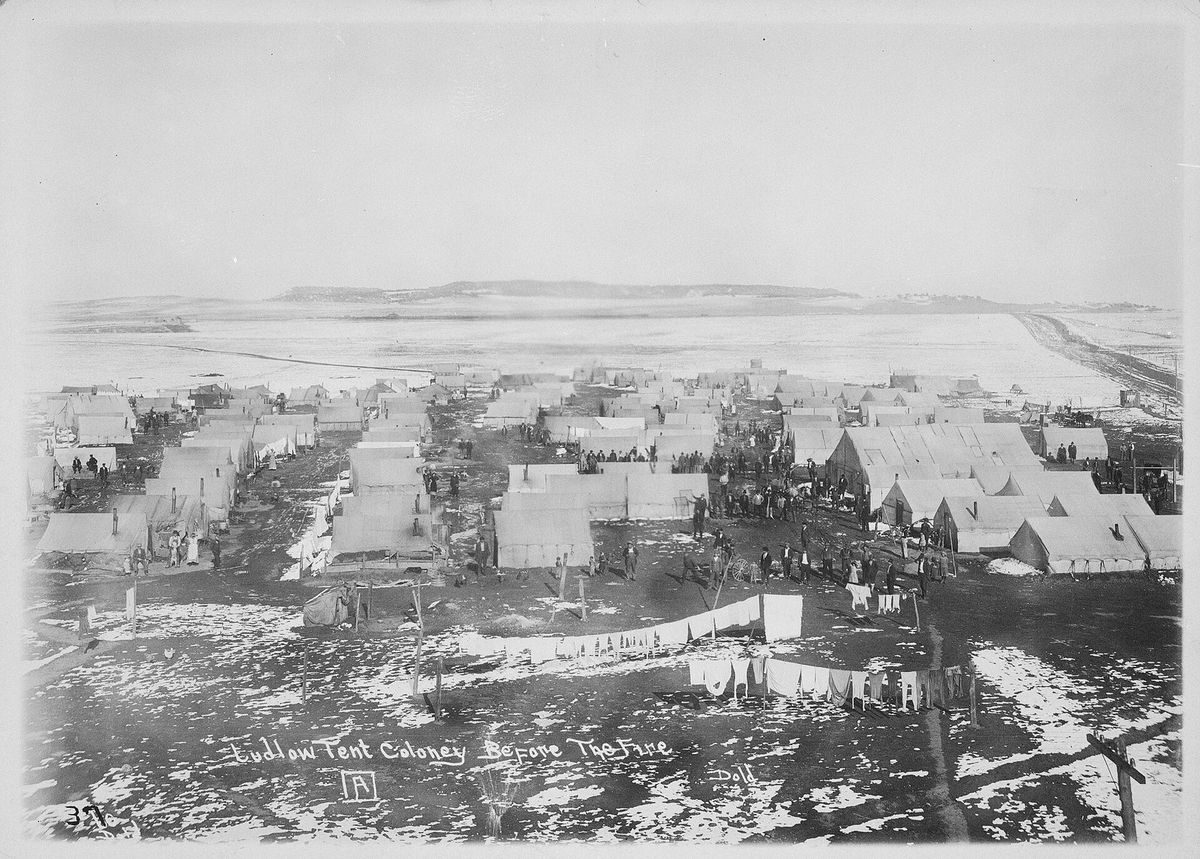
The work took the form of printed bulletins in the operators' name, compiled from material the operators supplied and mailed to members of Congress, state legislators, leading newspapers and labor leaders5. Lee told the commission that approximately 40,000 copies of the bulletins were issued, and that the only summary of the cost he had seen put it at $12,0005. One bulletin carried an error Lee called "serious and unfortunate": salaries paid to union officers for a full year were presented as pay for nine weeks5. A telegram about the error reached him on October 1, 1914. He suggested an errata slip. A full correcting bulletin, sent to everyone who had received the others, went out around the first of January, by which time, Lee said, the reason for continuing the campaign had ceased5.
Poison Ivy
Upton Sinclair was not inclined to call that a mistake. In The Brass Check, his 1919 attack on American journalism, he wrote that after the strikers "had experienced his methods for a while, they referred to him as 'Poison Ivy'"8. Sinclair's arithmetic was harsh. By his account the bulletin turned the union vice-president's salary and expenses into pay for nine weeks, equal to more than ninety dollars a day, and listed the organizer Mother Jones at forty-two dollars a day when, Sinclair wrote, she was paid $2.57 a day8.
Sinclair also quoted Lee's own advice to railroad men from an address to the American Railway Guild: "Success in dealing with crowds, that success we have got to attain if we are to solve the railroad question, rests upon the art of getting believed in"8. That sentence, in Sinclair's hands, was the case against the profession Lee was building. Frankness and the art of getting believed in are different aims, and the Colorado bulletins show what happens when the second outruns the first.
Sinclair was a partisan, and his book is a polemic. Lee's own testimony is enough to make the point. The man who advised absolute frankness issued approximately 40,000 copies of bulletins compiled from the operators' material and learned of its central error by telegram, after the pamphlets had shipped5.
The German Dye Trust
The last chapter of Lee's career was the hardest to explain. On May 19, 1934, he appeared before the House Special Committee on Un-American Activities, sitting in New York9. Asked about contracts in Germany, he named I.G. Farbenindustrie, known as the German Dye Trust, which he described as "the most important corporation in Germany"9. In 1933, he said, its directors had asked him how German relations with the United States could be improved, and he had agreed to advise them for $25,000 a year under a verbal contract9.
Lee insisted he had stipulated that he would disseminate no information in the United States9. He testified that he had met Joseph Goebbels, the propaganda minister, among other officials, and that he had told the Germans repeatedly "they could never in the world get the American people reconciled to their treatment of the Jews"9. The Georgia Historical Society records that members of Congress dubbed him "Poison Ivy" over the work, and that it cast a pall over the last years of his career2.
Ivy Lee died on November 9, 1934, of a brain tumor. He was 5710. The United Press obituary called him a man who "made millions as a publicity agent" for the Rockefellers and other wealthy clients, and then tried to describe what he actually did: "He was not exactly a press agent, but more an expert of 'good will'"10.
One billion hours
The form Lee popularized survived him because it solved a real problem: one account, released to everyone at once. That principle is now part of federal securities rules, and a modern case shows why it still matters.
On July 3, 2012, just before 11:00 a.m. Eastern time, Netflix's chief executive, Reed Hastings, posted on his personal Facebook page that "Netflix monthly viewing exceeded 1 billion hours for the first time ever in June"11. The post went out without a press release, a post on Netflix's own site or a filing11. The page had more than 200,000 subscribers, including analysts and reporters, and Netflix's stock rose from $70.45 at the time of the post to $81.72 at the close of the following trading day11.
The Securities and Exchange Commission investigated. On April 2, 2013, it declined to bring an enforcement action and instead published a report12. Companies could use social media to announce key information, it said, "so long as investors have been alerted about which social media will be used"12. The SEC's Acting Director of Enforcement, George Canellos, put the principle in a sentence Lee would have recognized: "One set of shareholders should not be able to get a jump on other shareholders just because the company is selectively disclosing important information"12. Under the SEC's 2008 guidance, a company discloses publicly when it uses "a recognized channel of distribution"11. The Georgia Historical Society calls the press release the most widely used tool in public relations for conveying announcements to the media2.
The lessons for PR in 2026
Speak first, and speak to everyone. The 1906 statement went out the night of the wreck, to every paper at once, while officials in Atlantic City were still fighting rumors1. The SEC's view of the Netflix post shows that the same idea, one account for everyone at the same time, now carries legal weight for public companies12.
Say only what you have verified. The railroad's statement said the cause could not be known until the cars were raised, then declared the bridge sound1. An inquest found the bridge at fault3. The detail that damages credibility is the confident claim made too early.
Correct the record to everyone who saw the error. Lee's own remedy in Colorado, a correction sent to every recipient of the original bulletins, was the right one. It went out three months after he learned of the error, when the campaign had already run its course5. A correction has to arrive while the error still matters.
Frankness depends on the conduct behind it. Lee's principles were sound. Ludlow7 and I.G. Farben9 show that a communicator's reputation rests on the clients and actions being described. A statement is only as credible as the conduct behind it.
Tell people where you will speak. In 2013 the SEC allowed social media for company announcements on one condition: investors must know which channels will be used12. The medium has changed many times since 1906. The obligation to use a channel the public knows to watch has not.
In 2026 the press release turns 120. Its first famous example began with a train number, a time to the minute and a plain admission that the cause was not yet known. The obituary writers of 1934 could not quite name Ivy Lee's profession. The statement he helped put out on a Sunday night in 1906 still shows what it is for.
Sources
- 1
- 2
- 3
- 4
- 5
- 6
- 7
- 8
- 9
- 10
- 11
- 12

The AMW® Editorial Team covers marketing, business growth and the software AMW builds for businesses.
Frequently Asked Questions
What was the first press release?
The statement the Pennsylvania Railroad issued at 10:30 p.m. on October 28, 1906, after an electric train plunged off a drawbridge near Atlantic City, is widely considered the first press release. Ivy Lee, a former reporter the railroad had recently hired, persuaded the company to volunteer its account to the press and took reporters to the scene. The New York Times printed the statement two days later.
Who was Ivy Lee?
Ivy Ledbetter Lee (1877-1934) was a Georgia-born, Princeton-educated former newspaper reporter who became one of the founders of modern public relations. He worked for the Pennsylvania Railroad and later for John D. Rockefeller Jr. after the 1914 Ludlow Massacre, and he is known for his Declaration of Principles.
What went wrong with the 1906 statement?
The statement said the drawbridge had been found properly closed and locked. An inquest later determined that the bridge had not returned to the proper height, leaving the rails misaligned, and that the signal system gave no warning.
Why was Ivy Lee called "Poison Ivy"?
Upton Sinclair wrote in The Brass Check (1919) that Colorado strikers gave Lee the nickname after bulletins he circulated for the coal operators, one of which misstated union officers' salaries. The Georgia Historical Society records that members of Congress also used the name over his 1933-1934 work advising Germany's I.G. Farben.
Can companies announce news on social media instead of a press release?
In an April 2, 2013 report prompted by a Facebook post by Netflix CEO Reed Hastings, the U.S. Securities and Exchange Commission said public companies may use social media to announce key information so long as investors have been alerted about which social media will be used.
Related Resources
Calculators
Case Studies
Related Services
Related Articles

Nano Banana 2.1 Review: Spelling Right, Details Slip
We gave Google's Nano Banana 2.1 a bakery chalkboard sign and a candle product shot. It spelled every price correctly, then slipped on smaller details worth checking.
How Colonel Sanders Franchised a Recipe Before Fast Food
In 1952 Harland Sanders licensed his fried chicken to a Utah restaurant for four cents a bird. Here's how the deal worked and what service firms packaging their know-how can learn from it.
What Apple's PR Team Does That B2B Launches Can Copy
Apple's launch habits are mostly discipline: checkable numbers, early briefings, named customers. Here's which ones a smaller B2B company can use, and which it can't.