

The 2026 Events Calendar: How the World's Biggest Shows Choose Their Dates and Cities


In 1991 the video game business arrived at the Consumer Electronics Show in Las Vegas and was sent to the back. Tom Kalinske, who ran Sega in the United States, remembered it years later. The show's organisers, he said, "used to put the video games industry way, way in the back. In 1991 they put us in a tent"1. That year it rained. "The rain leaked right over our new Genesis system," Kalinske recalled. "I was furious with the way that CES treated video games, so I started planning to get the hell out of CES"1.
Quick Summary
The big recurring shows chose their dates and cities deliberately. The first CES in 1967 matched the dates of the trade show it wanted to replace4, then settled in Las Vegas every January3. E3 was born when game makers walked out of CES1. Web Summit left Dublin in 2015 over traffic, transport, hotel costs and WiFi7, and Portugal later agreed to pay €11 million a year to keep it in Lisbon9. MWC has a signed agreement with Barcelona's public bodies through 203012. The same plans have broken: MWC was cancelled in 202011, so was SXSW15, CES went digital for 202116, and E3 ended for good in 20232. In 2026, SXSW will run seven days without its convention center18, CES will open in a renovated Las Vegas Convention Center22, and the World Cup will run from June 11 to July 1920 across 16 host destinations21. The lesson for any business planning its own year: pick dates against the calendar your audience already keeps, book the city early, and plan for the year it all goes wrong.
Four years later the games industry had a show of its own, the Electronic Entertainment Expo1. For more than two decades E3 was the industry's central showcase, and in December 2023 its organisers ended it2. Between that leaking tent and that announcement sits most of what there is to know about how an events calendar gets made. Every date that businesses plan around, from CES in January to Web Summit in November, was chosen by someone, for reasons of rivalry, hotel rooms, public money and venues, and every one of them holds only as long as the people who fill the halls keep coming. This is how the biggest recurring events set the 2026 calendar, what happened when their plans broke, and what their history teaches anyone planning a year of events of their own.
A show of its own
The first Consumer Electronics Show opened in New York City on June 25, 19673. Its dates were chosen with care. They matched the dates of the Chicago Music Show, which until then had been the event where consumer electronics makers did their exhibiting4. The industry's trade association, the Electronic Industries Association, had decided it was time for a show of its own, one that would generate revenue to fund the association's programs4. By putting its show on the same days, it forced every exhibitor to choose.
Bob Gerson, who worked on the show daily that first year, described the choice exhibitors faced: "quit the Music Show to support a CES that could be a flop; ignore CES and stick with the tried and true; or split forces and have a presence at both"4. All the American brand majors backed CES, and so did the sales arms of most of the big Japanese manufacturers4. The show filled the Americana and Hilton hotels, with overflow at the Warwick, and opened its first evening with "A Night At The Waldorf," a gala at $10 a head4. CES counts more than 100 exhibitors and 17,000 attendees at that first show3.
The calendar moved again a decade later. Beginning with the January 1978 Winter CES, Las Vegas became the show's permanent home, and CES credits the city's "sprawling convention facilities and round-the-clock energy"3. For years it ran twice, a winter show in Las Vegas and a summer show in Chicago. By 1998 CES had consolidated into one annual show in Las Vegas, where it has stayed3.
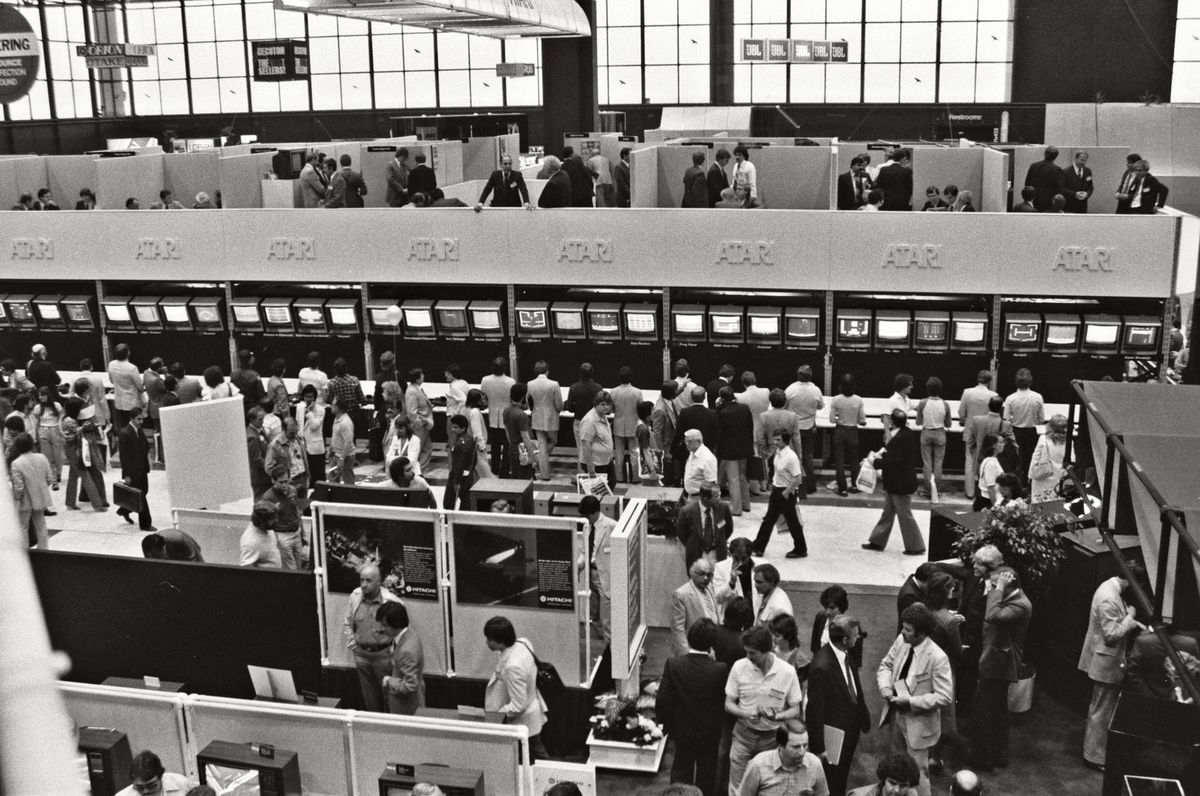
Video games were part of CES in those years. Atari's exhibit at the 1982 summer show was a long wall of game screens under the company's name. Within a decade, by Kalinske's account, the games had been pushed to the back of the hall1.
"Get the hell out of CES"
Kalinske did what he said he would. Sega launched its own independent trade show in 1992, inviting third-party publishers and retailers to the Silverado Country Club. "It was a huge success," he said, and the following year Sega went bigger and even invited its rival Nintendo. "But they didn't show," Kalinske laughed. "We were just so competitive back then"1.
A trade show needs a trade body behind it. Kalinske pushed the industry to form the Interactive Digital Software Association, then a ratings system, and then to create an industry show, "because we were important enough to have one"1. The two rivals paid for it together. "Sega lent the IDSA $300,000 and so did Nintendo," Kalinske said. "We financed the association, the rating system and the first E3"1. The first Electronic Entertainment Expo took place in 1995, the year of the first PlayStation and the Sega Saturn1.
The story shows the first rule of the events calendar. An event holds its date only as long as the people who pay for the floor space believe it treats them well. CES set its first dates to pull exhibitors away from Chicago's Music Show. A quarter of a century later, the games industry left CES by the same route: a show of its own.
"Not looking for a penny, just a plan"
Web Summit's founder, Paddy Cosgrave, has written that the event "started its life in a sitting room in Ranelagh," and that the first edition had just 400 attendees5. By 2014 it had grown to more than 22,000 attendees at Dublin's RDS, and Fáilte Ireland put that year's value to the Irish economy at €100 million6. For November 2015 Cosgrave expected 30,000 attendees, and he said 90% of the event's attendees came from abroad5.
The city was struggling to hold it. The event was plagued with WiFi problems, and there were complaints of price gouging by hotels and guesthouses6. When Web Summit later published its correspondence with the Irish government, the emails showed that Cosgrave had asked for help with four things: traffic management, public transport, hotel costs and WiFi at the RDS7. He said about 10,000 attendees had walked back from the venue the year before because public transport could not carry them7.
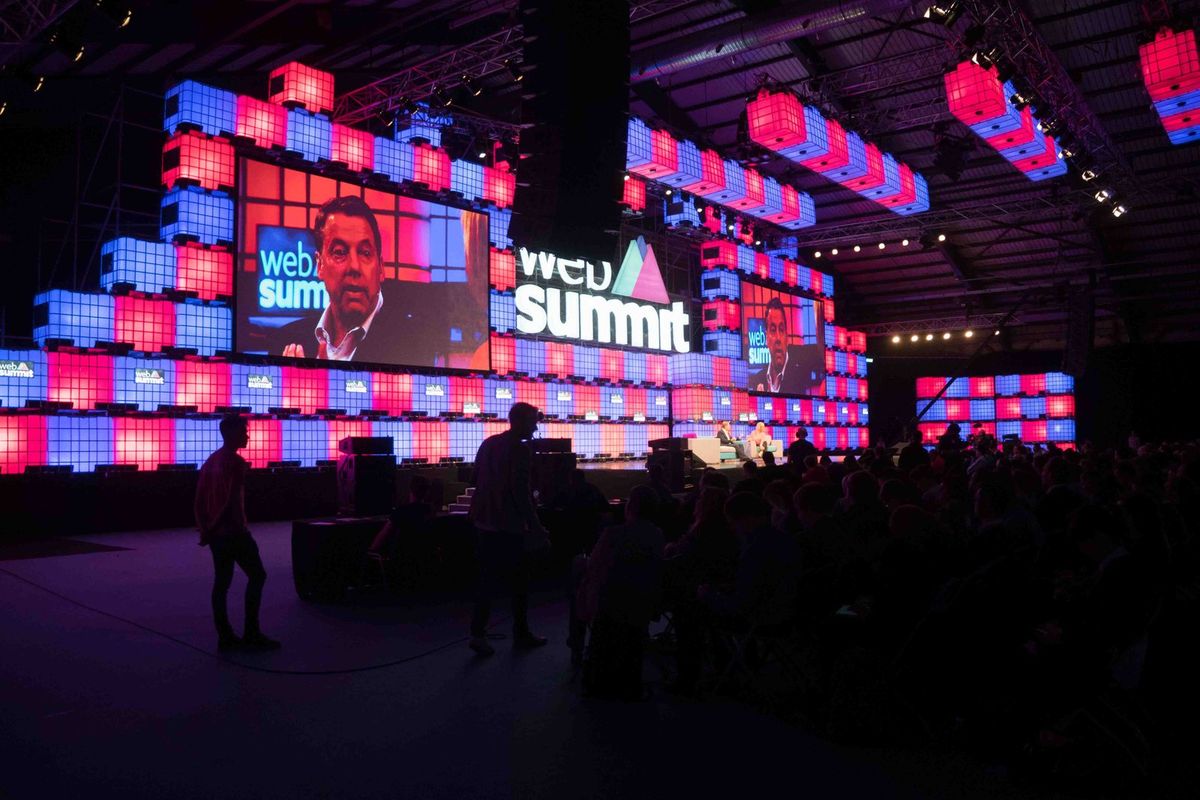
Cosgrave's emails to the Taoiseach's office grew more pointed through August and September 2015. On September 17 he wrote: "We are not looking for a penny, just a plan. Without a plan for Dublin city, even an indicative one page plan for 2016, we cannot remain in Dublin"7. When a draft framework arrived, he answered: "What you have sent is not a plan, but a plan for a plan. There are no specifics"7. The Taoiseach, Enda Kenny, called the move a "commercial decision"7.
On September 23, 2015, Web Summit announced it would move to Lisbon in 2016. "We chose Lisbon because of the strong infrastructure in the city, the world-class venue and the thriving startup community," Cosgrave wrote that day5. Portuguese media reported the government's investment at €1.3 million a year, and Cosgrave said the new venue could take more than 80,000 attendees6.
Twenty cities and a buyout clause
Web Summit moved to Lisbon on an initial three-year basis8. When that deal came up for renewal, more than 20 cities across Europe offered to host the event, among them Berlin, Paris, London and Madrid9. In October 2018 Web Summit agreed a 10-year, €110 million deal with the Portuguese government to stay in Lisbon until at least 2028. The company would be paid €11 million a year, the venue would be expanded, and Web Summit accepted a €3 billion buyout clause, which it said reflected the event's economic impact on Portugal over the decade9.
Cosgrave said staying had looked unlikely. "Even until a few months ago, we never believed it would be possible," he said9. Space was again the deciding factor. "Without a larger venue this would not be possible," he said9.
In 2026, Web Summit will run November 9 to 12 in Lisbon10. It is a date set by a ten-year contract with a national government, and it shows how the largest events now treat a host city: as a partner that bids, pays and builds, and that can be replaced.
The Host City Parties
Barcelona has made that partnership formal. The mobile industry's annual show, run by the GSMA, has been held in the city since 200611. It spent its first six years at Fira de Barcelona's Montjuïc site and moved to the larger Fira Gran Via in 201212.
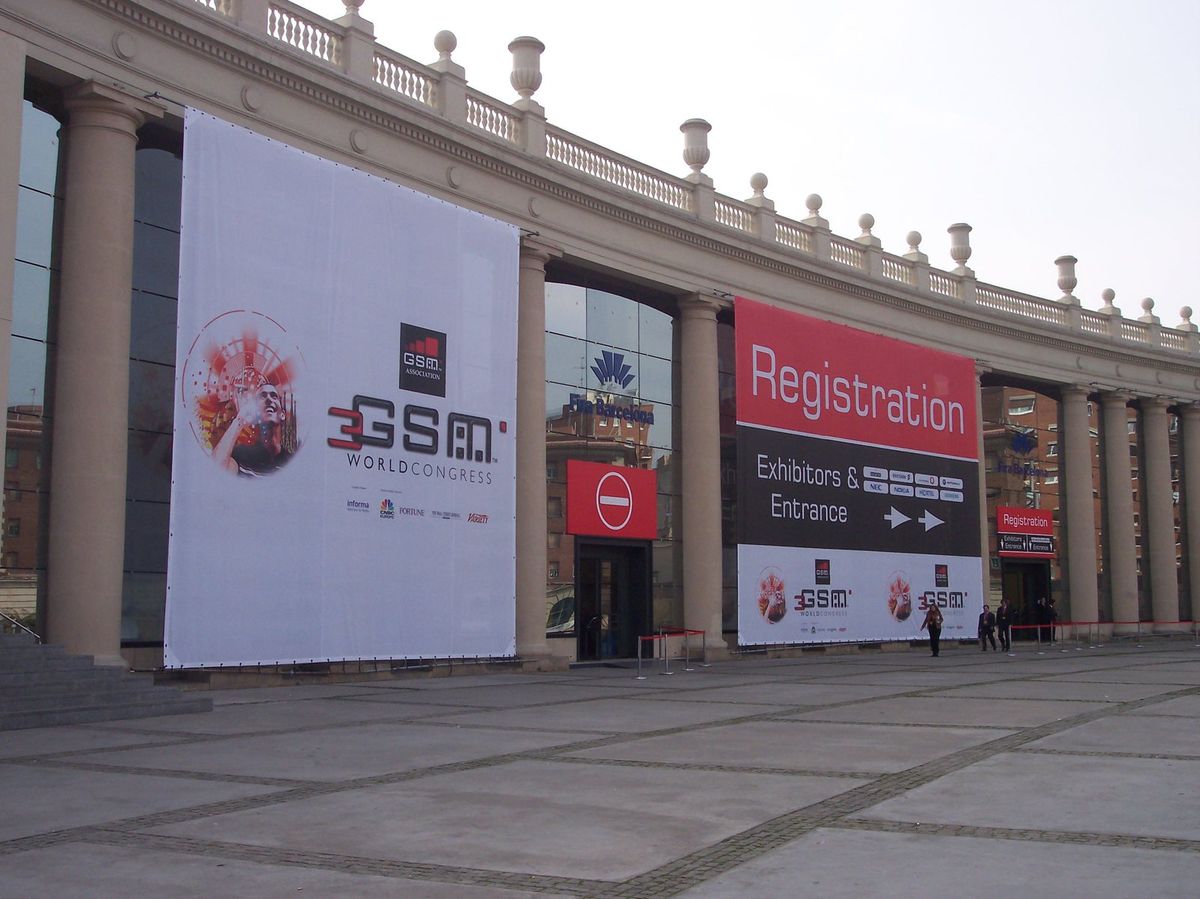
In July 2022 the GSMA signed an agreement to keep the show in Barcelona through 2030, alongside five public and private partners it calls the Host City Parties: Barcelona City Council, the Generalitat de Catalunya, Spain's Ministry of Economy and Digital Transformation, Fira de Barcelona and Turisme de Barcelona12. The GSMA's figures explain why a city signs up. "Since the first MWC Barcelona in 2006, MWC has generated €5.4 billion of economic benefit to the host city and region," said GSMA Ltd's CEO, John Hoffman. The 2022 show alone created an economic impact of €267 million and 7,100 part-time jobs, above the GSMA's forecast of €240 million12.
In 2026 the show will run March 2 to 5 at Fira Gran Via, its 20th year in Barcelona13.
"Impossible for the GSMA to hold the event"
A signed agreement does not guarantee a show. In February 2020 MWC Barcelona was scheduled for February 24 to 27, and it usually drew more than 100,000 attendees from 200 countries14. As the coronavirus spread, LG announced it would stay away, and Nvidia and Ericsson followed14. Within days Amazon, Deutsche Telekom, Facebook, Intel, Nokia, NTT Docomo, Sony and Sprint had pulled out too14. The GSMA brought forward a meeting it had planned for the Friday and held an emergency session14.
On February 12, 2020, the GSMA said it "has cancelled MWC Barcelona 2020 because the global concern regarding the coronavirus outbreak, travel concern and other circumstances, make it impossible for the GSMA to hold the event"11. Exhibitors had spent heavily on space and staff. As TechCrunch's Romain Dillet noted, "companies usually spend millions of dollars to secure exhibit space and send large teams"14.
Three weeks later it was Austin's turn. On March 6, 2020, city officials cancelled SXSW, which had been due to run from March 13 to 2215. "It's really unfortunate to be canceling SXSW, it's tied to who we are in this city," said Austin's mayor, Steve Adler15. The organisers wrote that "this is the first time in 34 years that the March event will not take place"15. Variety's reporting explained why festivals waited for a city to act: insurance "would only kick in if a festival was forced to shut down by the authorities," and caution or public pressure alone would not count15.
Tens of thousands of people in Las Vegas
CES made its call more than five months ahead of its 2021 show. CES 2020 had drawn 171,268 attendees16. On July 28, 2020, the Consumer Technology Association announced that CES 2021 would be digital only. "Amid the pandemic and growing global health concerns about the spread of COVID-19, it's just not possible to safely convene tens of thousands of people in Las Vegas in early January 2021 to meet and do business in person," said Gary Shapiro, the association's president and CEO16.
The 2022 show went ahead, smaller. More than 2,200 exhibitors had committed to exhibit in person, and about 200 cancelled their physical participation as the omicron variant spread, among them Microsoft, Google, Intel, Twitter, General Motors and BMW17. On December 31, 2021, the association cut a day from the show. "We are shortening the show to three days and have put in place comprehensive health measures for the safety of all attendees and participants," Shapiro said17.
In each case the money had been committed long before anyone called off the show. MWC's exhibitors had paid for space and teams14. In Austin, studios and networks had planned panels and brand houses15. More than 2,200 companies had committed to exhibit at CES 202217. The calendar still came back to its old shape. MWC returned to Barcelona, where the 2022 edition beat its economic forecast12, and CES returned to Las Vegas17.
"Companies make individual business and marketing decisions"
E3 did not return. After the pandemic, the Entertainment Software Association tried to revive it for 2023 and scrapped the plan less than three months before the event was due2. The association's president, Stanley Pierre-Louis, said major publishers had stopped treating it as an essential part of the event calendar, in an industry now full of digital showcases and other events such as Summer Game Fest and The Game Awards2.
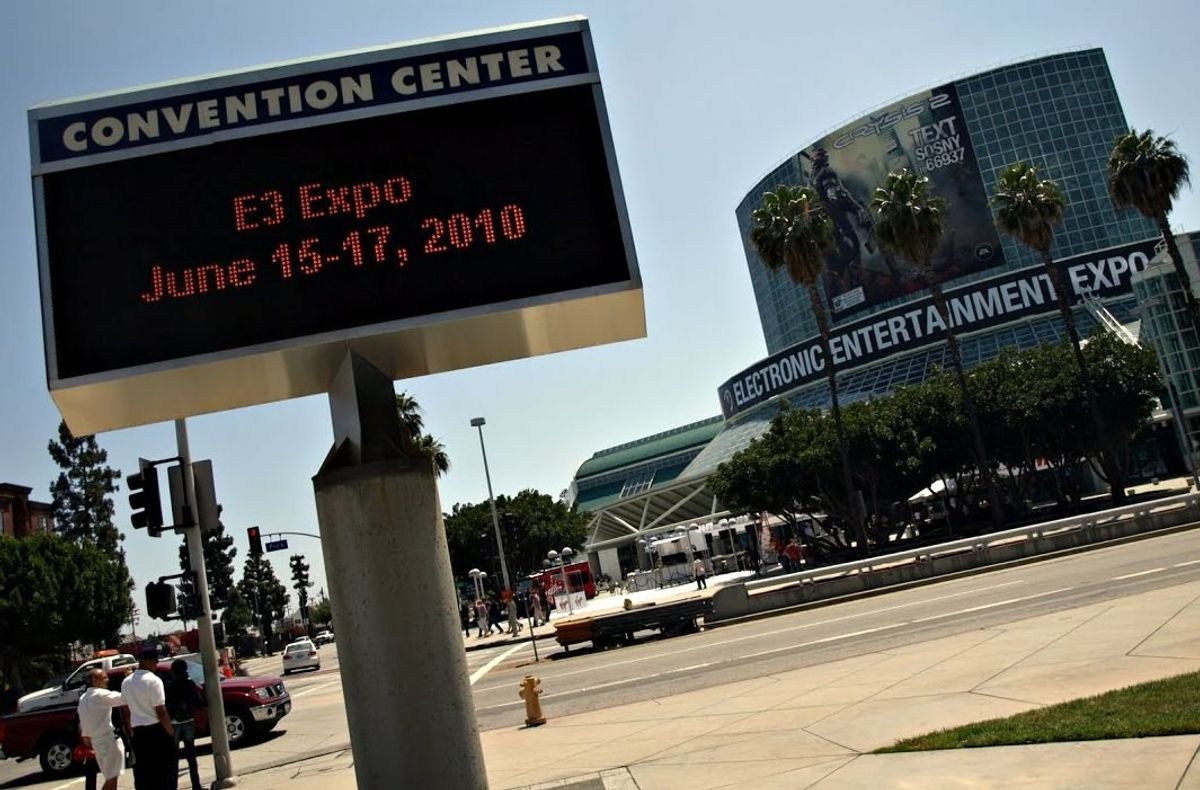
"We did our best to reshape [the event], but in the end, companies make individual business and marketing decisions about what works," Pierre-Louis said2. E3 had been cancelled three times in four years2. In December 2023 the association ended it: "After more than two decades of serving as a central showcase for the video game industry, ESA has decided to end E3"2.
This is the complication in any history of the events calendar. The same force that created E3, exhibitors deciding where their money works hardest, ended it. The publishers found other ways to reach their audiences, through digital showcases and other events2. A date on the calendar is worth what the people who fill it say it is worth, every single year.
A pile of rubble
SXSW enters 2026 without the building at its center. The festival started in 1987 as a four-day music industry showcase, added film and interactive programming in 1994, and grew past a week in 200018. Since 1993 the Austin Convention Center had been its home base for panels, badge pickup and the trade show18. The city is demolishing and replacing it, and its timeline has the new building open in time for SXSW 2029, a deadline the Austin Chronicle called optimistic18.
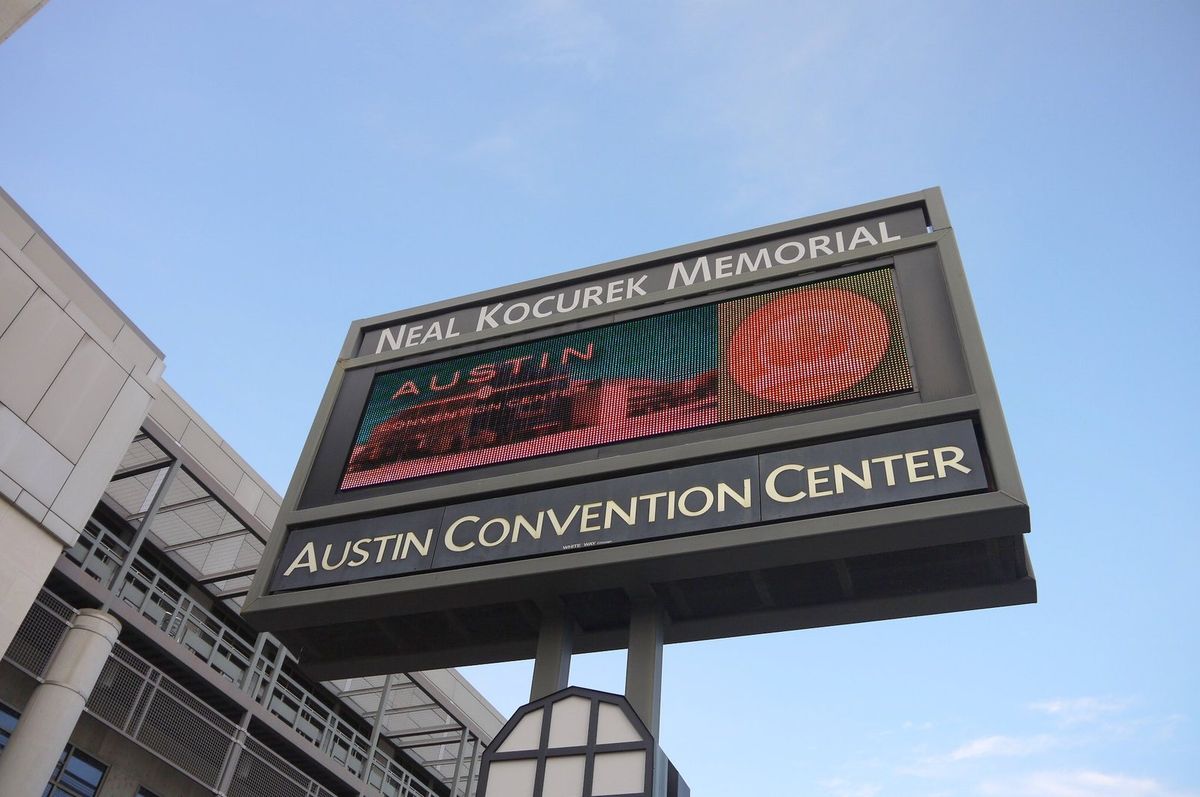
The festival changed its calendar to fit. SXSW 2026 will run seven days, Thursday, March 12 to Wednesday, March 18, instead of the nine days of 2025, with the conference, film and music strands running at the same time rather than staggered18. SXSW EDU will run March 9 to 12, overlapping the main festival by a day18. The Chronicle reported that local hotels had been told about the shift before badges went on sale18.
The venue plan changed too. With the convention center "currently a pile of rubble," in the Chronicle's words, SXSW is setting up three clubhouses, one each for Film & TV, Innovation and Music, and moving panels into downtown hotels including the Fairmont, the Hilton Austin, the Omni and three Marriotts19. Badge holders will be able to reserve seats for sessions19. It will be a large festival rebuilt around the space a city can offer in a given year.
Thirty to 45 days straight
The biggest new date on the 2026 calendar belongs to sport. The FIFA World Cup will open in Mexico City on June 11 and end with the final at MetLife Stadium in New Jersey on July 19, with 104 matches in between20. It will be spread across 16 host destinations in Mexico, the United States and Canada, 11 of them in the United States21.
Tourism officials in those cities have been planning for years. At a Destinations International session in 2023, Monica Paul of the Dallas Sports Commission described the scale for North Texas: "We planned for a week, but we've got 30 to 45 days straight of World Cup action going on"21. Missouri Senator John Rizzo expected the matches to boost the whole western side of the state: "People are going to be staying in hotels as far out as Columbia"21. Adam Burke, head of the Los Angeles Tourism & Convention Board, saw a longer-term benefit, with people considering the city "for meetings and conventions" who had not before21.
For anyone planning an event in June or July 2026 in one of the host cities, the World Cup is part of the calendar whether they follow football or not.
The price of a fixed date
CES shows what a fixed date does to a city's hotels. Ahead of CES 2026, which opens on January 6, a Las Vegas Review-Journal survey of 158 hotels found an average advertised rate of $262.14 a night, and the highest listed rate was $1,207 a night at the Waldorf Astoria22. The show is expected to bring about 140,000 people to Las Vegas across the Las Vegas Convention Center, The Venetian Expo and Aria, and it will be the first show in the convention center after a $600 million renovation22. Resort executives told the paper they expect 2026 to be a record year for conventions and trade shows22.
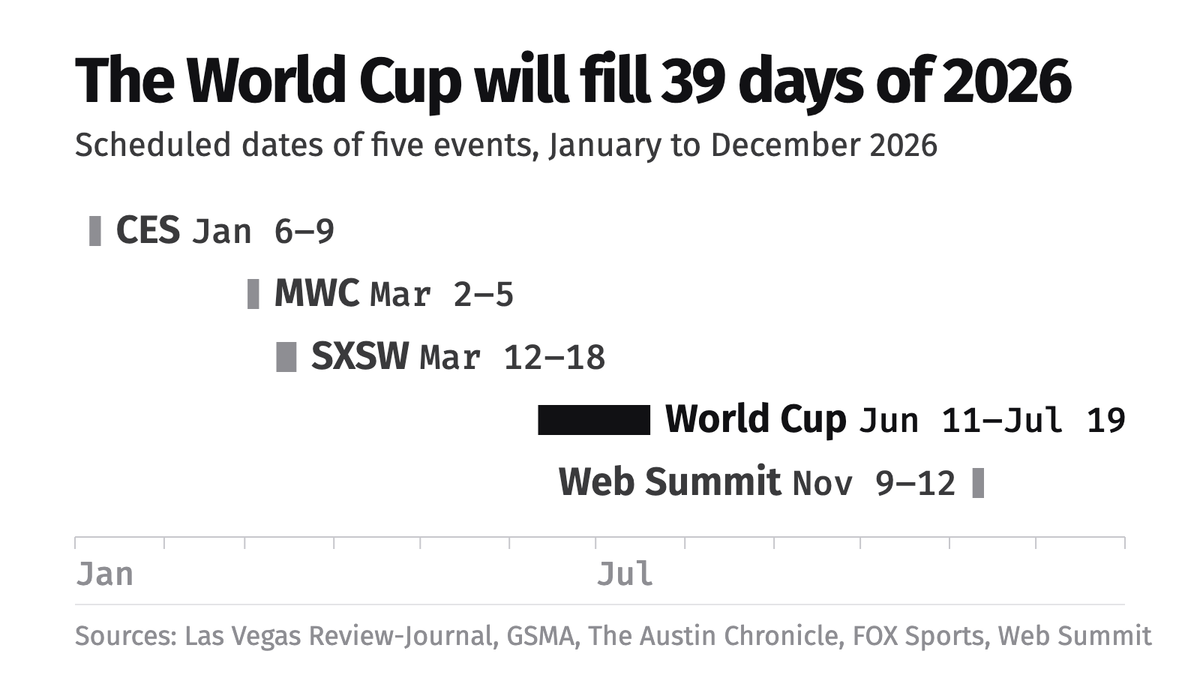
Put the dates from this article on one line and the shape of the year is plain. CES will run January 6 to 922. MWC will follow March 2 to 513, and SXSW March 12 to 1818. The World Cup will fill 39 days from June 11 to July 1920. Web Summit will close the year November 9 to 1210. Each of those dates will carry hotel demand, travel costs and the attention of an industry with it.
What the big shows teach about planning a year
Choose dates against the calendar your audience already keeps. CES picked its first dates to match the show it wanted to replace4, and SXSW's 2026 dates will run SXSW EDU straight into the main festival18. Before fixing a date, list the events your customers already attend and decide whether to sit beside them, before them or well clear of them.
Book the city before the city books up. A fixed date moves hotel prices, as the CES room rates show22, and host cities expect weeks of World Cup demand in 202621. The time to reserve rooms and space near a big event is before the event's own attendees do.
A host city is a partner, and partners want a plan. Web Summit asked the Irish government for help with traffic, public transport, hotel costs and WiFi, and left when it got "a plan for a plan"7. Barcelona kept MWC with an agreement that runs to 203012, and Lisbon kept Web Summit with a ten-year deal that included a bigger venue9. The same logic applies to a hotel ballroom: agree the practical details in writing.
Write the cancellation terms before you need them. In 2020 insurance for festivals depended on who called the cancellation15, and MWC's exhibitors had already spent on space and staff14. Know what your venue contract, supplier deposits and insurance say about a cancellation you did not choose.
A date is only as strong as the reasons to attend. E3 had more than two decades of history and ended when the companies that paid for it chose other ways to reach their audiences2. Every recurring event has to earn its place on its attendees' calendars again every year.
Venues change, so plan for the building you will actually have. SXSW is rebuilding its 2026 festival around hotels and clubhouses while its convention center comes down19. If a venue is under renovation or might be, plan the format around what will stand on the day.
Kalinske's answer to a leaking tent was a show of his own, set on dates his industry chose. Thirty-five years later, every date on the 2026 calendar is somebody's answer to the same questions he faced in the rain: where to be, when, and on whose terms.
Sources
- 1
- 2
- 3
- 4
- 5
- 6
- 7
- 8
- 9
- 10
- 11
- 12
- 13
- 14
- 15
- 16
- 17
- 18
- 19
- 20
- 21
- 22
-
Header image

The AMW® Editorial Team covers marketing, business growth and the software AMW builds for businesses.
Frequently Asked Questions
When is CES 2026?
CES 2026 is scheduled for January 6 to 9 in Las Vegas, at the Las Vegas Convention Center, The Venetian Expo and Aria. It will be the first show in the Las Vegas Convention Center after a $600 million renovation.
When is the 2026 FIFA World Cup?
The tournament will open in Mexico City on June 11, 2026 and end with the final at MetLife Stadium in New Jersey on July 19. It will have 104 matches across 16 host destinations in Mexico, the United States and Canada, 11 of them in the United States.
When are MWC Barcelona, SXSW and Web Summit in 2026?
MWC Barcelona is scheduled for March 2 to 5 at Fira Gran Via. SXSW will run March 12 to 18 in Austin, with SXSW EDU from March 9 to 12. Web Summit will run November 9 to 12 in Lisbon.
Why did Web Summit move from Dublin to Lisbon?
Founder Paddy Cosgrave asked the Irish government for help with traffic management, public transport, hotel costs and WiFi, and said he received a plan for a plan. Web Summit moved to Lisbon in 2016, and a 10-year, €110 million deal agreed in 2018 keeps it there until at least 2028.
What is different about SXSW in 2026?
The Austin Convention Center, SXSW's home base since 1993, is being demolished and replaced. SXSW 2026 will run seven days instead of nine, with its conference, film and music strands at the same time, and will use three clubhouses and downtown hotels for its sessions.
Why did E3 end?
The Entertainment Software Association ended E3 in December 2023 after three cancellations in four years. Its president, Stanley Pierre-Louis, said companies make their own decisions about what works, and publishers had moved to digital showcases and other events.
Related Resources
Calculators
Case Studies
Related Services
Related Articles
Sam Walton's Data Habit: Lessons for Service Businesses
Sam Walton read store sales figures from his hospital bed. The habit behind that began on lunch breaks in Des Moines, and it holds a lesson for growing service firms in 2026.

Howard Schultz and the Starbucks Third Place Strategy
Howard Schultz built Starbucks around a room people wanted to stay in. Seventy percent of orders now skip that room. What changed, and what it means for service firms.

How Phil Knight Sold Shoes From a Car Trunk to Build Nike
In 1964 Phil Knight sold Onitsuka Tigers from his car at Pacific Northwest track meets. Here is what that trunk did for Nike, and which parts still apply now that outreach is cheap.