

The Story of the Michelin Guide: How a Tire Company Wrote the World's Most Wanted Restaurant Book

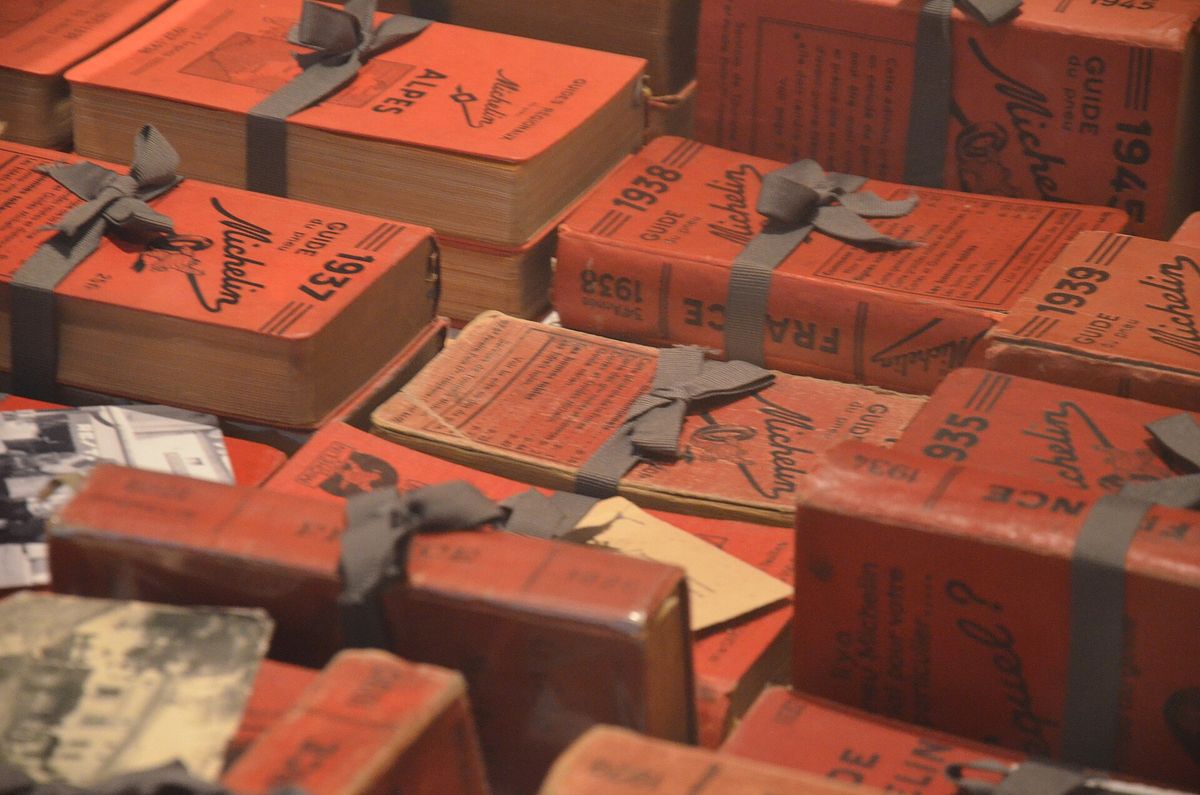
One day in 1920, André Michelin walked into a tire dealer's workshop and saw his life's work holding up a bench. A stack of his red guides, the ones his company had printed and given away to every motorist in France for twenty years, had been shoved under a wobbly workbench to level it1. The company's own history records what he concluded on the spot: "Man only truly respects what he pays for"1. From that year the guide was sold, and the book under the workbench went on to become the most feared and wanted publication in the restaurant world.

Quick Summary
André and Édouard Michelin built a guidebook because a tire wears out only when a car is driven, and in 1900 almost nobody drove1,2. The first Michelin Guide was free, practical and aimed at getting people onto the road1,4. It was sold from 1920, gained its first star in 1926, its three-star scale in 1931 and its written criteria in 1936, and those criteria have stood since1. Along the way the brothers numbered France's roads, mapped them, and built a free travel-planning bureau that answered 155,000 requests a year by 19251,3. The stars made the guide powerful, and that power has a cost that chefs have paid, sometimes by handing the stars back8. The lesson for anyone in marketing: a useful thing given to the right people, then held to a standard for a very long time, can outgrow the product it was built to sell.
The Michelin Guide is a strange object. It is published by a tire company. It began as a free manual on how to repair a puncture, and it now decides which restaurants on five continents are worth a special journey. Its inspectors are so secret that the company's own executives have never met most of them7. This is the story of how it got that way, and of what a marketer can take from a book that was built to sell rubber and ended up outliving every product it was meant to promote.
Fewer than 3,000 cars and fewer than 600 mechanics
The Michelin brothers founded their company in 1888 in Clermont-Ferrand, a rural town about four hours south of Paris2. By 1900 they made pneumatic tires for a market that barely existed. France had fewer than 3,000 motor cars1,2. Roads were poor, fuel was hard to find, and a drive of any length was an adventure1,2. The whole country had fewer than 600 mechanics1. A tire company in that position has one route to growth: more people driving more miles.
The brothers' faith in the motor car was, in the company's own words, absolute1. Their reasoning was simple. If people drove more, tires would wear out sooner, and worn tires meant new tires2. In a market that small, growing the number of drivers mattered more than winning share from other tire makers, so the sensible investment was in driving itself4. In August 1900 they printed close to 35,000 copies of a small red book and gave every one of them away1.
A manual first, a guide second
André Michelin wrote in the first edition that its purpose was to give "a driver all the necessary information for traveling in France, where to fill his tank, repair his car, as well as where to find a place to sleep and to eat"2. The preface made a promise that reads like a boast: this guide "was born with the century, and it will last every bit as long"1. The first edition ran to 399 pages. The opening 33 of them explained how to fit and care for Michelin tires. Then came maps, a list of the country's mechanics, the locations of gasoline sellers and the hotels along the way1,4. Restaurants appeared only when they belonged to a hotel, and they were listed rather than rated4.
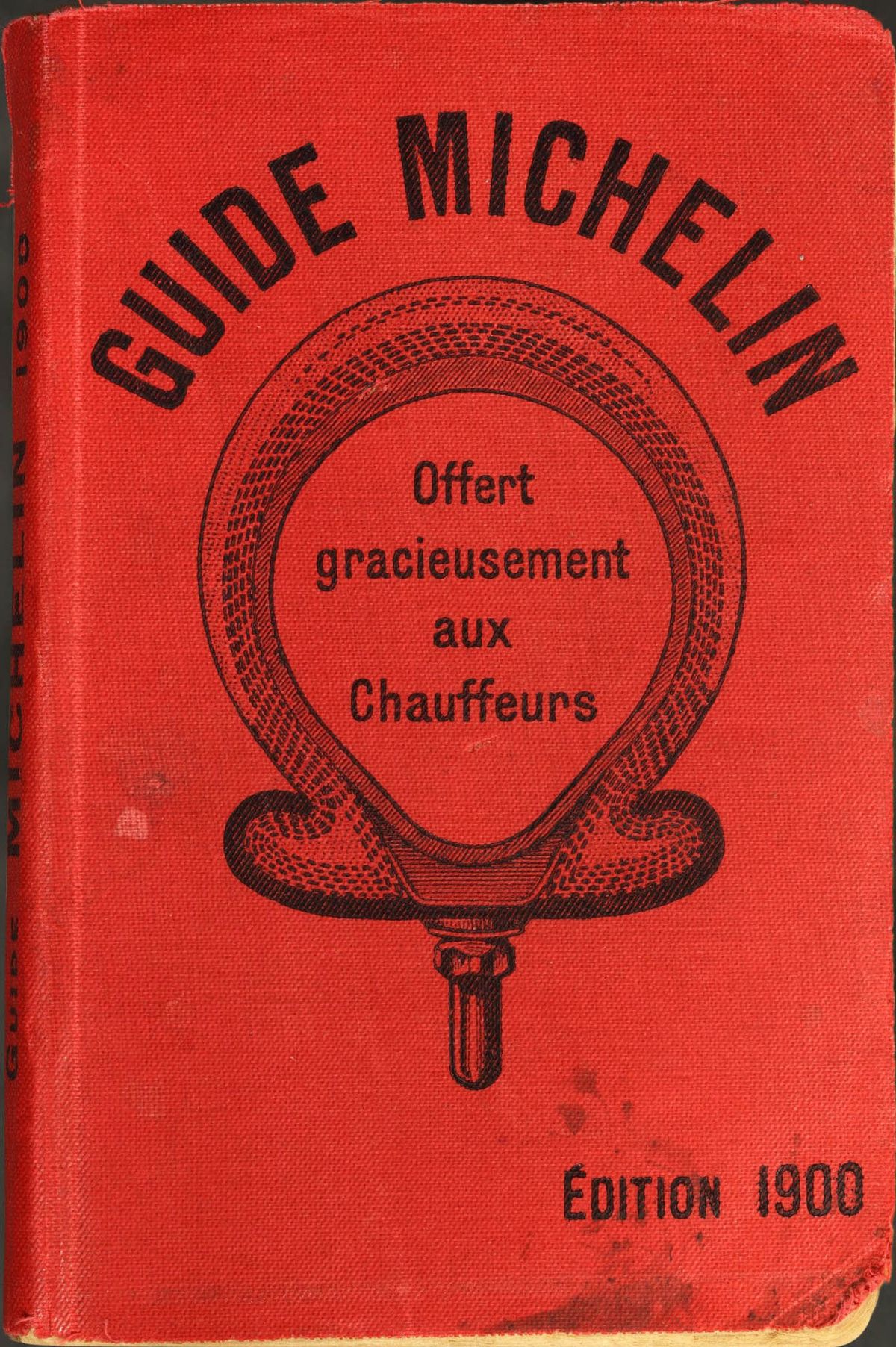
The cover said who it was for and what it cost: "Offert gracieusement aux chauffeurs," offered free to motorists. Much of the practical information came from the company's own traveling tire salesmen, who spent their days on French roads and knew which garages and inns were worth the stop2. The book was a manual first and a travel guide second, and that order is the reason it survived. A motorist in 1900 had far more use for a list of mechanics than for an opinion about lunch.
The guide crossed a border almost at once. A Belgian edition followed in 1904, the first of many published outside France1. By then the brothers had realised that a guidebook alone would only take a driver so far, because the roads it described had no numbers and, in most places, no signs.
The cartographer who numbered France
André Michelin had trained as a cartographer before he went into tires with his younger brother3. While Édouard ran the factory, André, a keen cyclist, rode around the country looking for ways to make the French use more tires3. He is credited with the road number itself. He persuaded the government to enlarge the numerals it painted on roadside posts for the benefit of road menders, so that drivers could read them too3. Between 1906 and 1913 he and a staff of cartographers mapped the roads of France in 47 folding sheets, which became the basis of the Michelin road maps sold to this day3.
In 1908 he opened a Bureau of Itineraries at the company's Paris offices on the Boulevard Pereire. Any motorist could write in and receive a planned route free of charge, and the bureau put up its own signposts wherever the government had neglected to1,3. The service grew with the car. It handled 19,000 requests in 1921 and 155,000 in 19251. The company later described the bureau as the internet before its time, and the comparison holds: a free answer to a real question, paid for by the product it was meant to sell.
A man made of tires
Two years before the guide, in 1898, the company had commissioned a poster from the artist O'Galop. It shows a rotund figure built from a stack of tires, raising a champagne glass filled with nails and broken glass, under the Latin toast "Nunc est bibendum," a line borrowed from the Odes of Horace4,5. The words beneath explained the joke: the Michelin tire drinks up the obstacle.
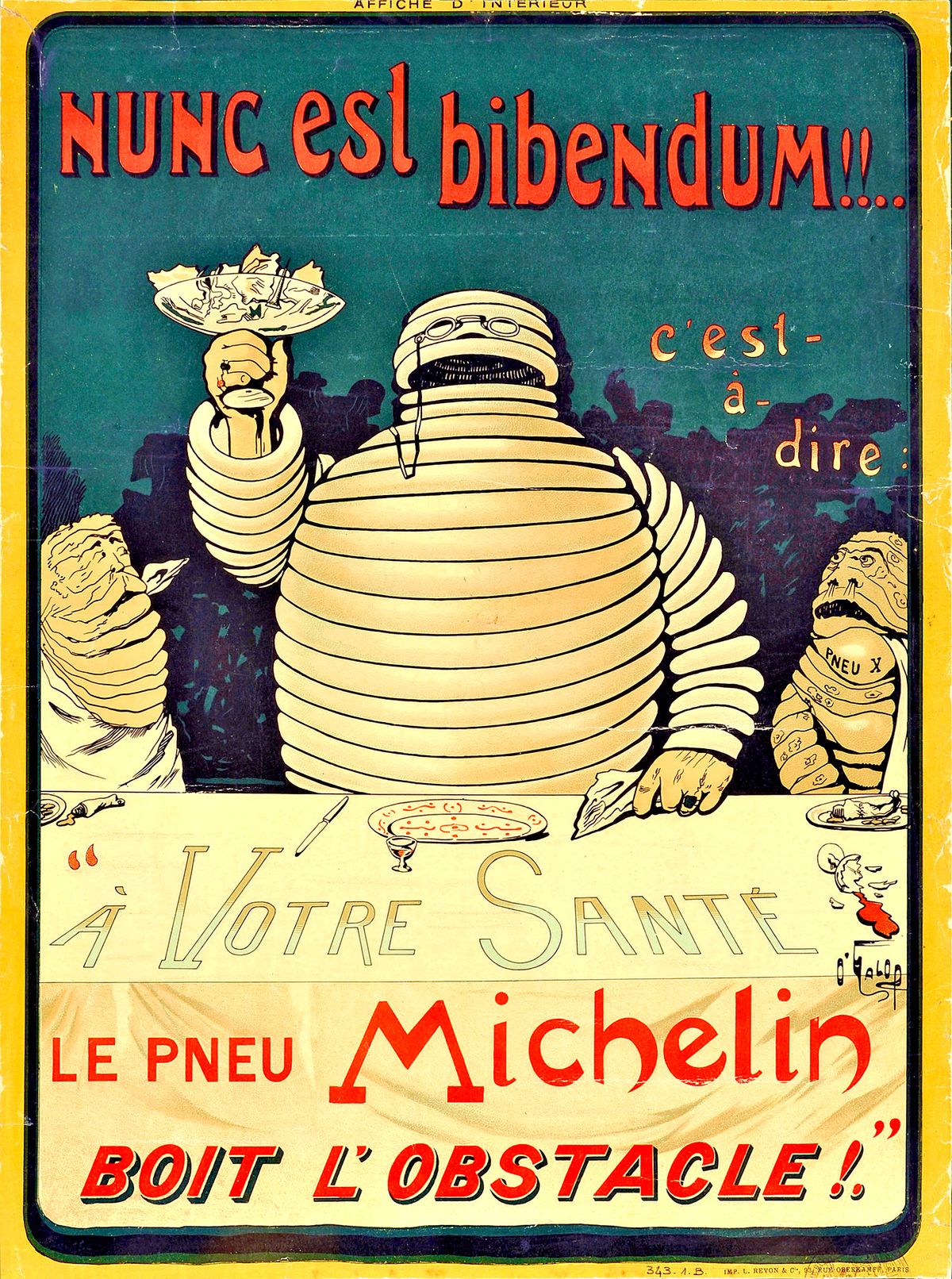
The figure took his name from the poster and became Bibendum. In 1900 he looked like the company's customers: a prosperous gentleman with a cigar and a champagne flute, because cars were a rich man's toy and the guide's first readers were the elite who owned them4. He would slim down and soften over the decades as the car became a family possession, until, as one history puts it, he "looks like a marshmallow today"4.
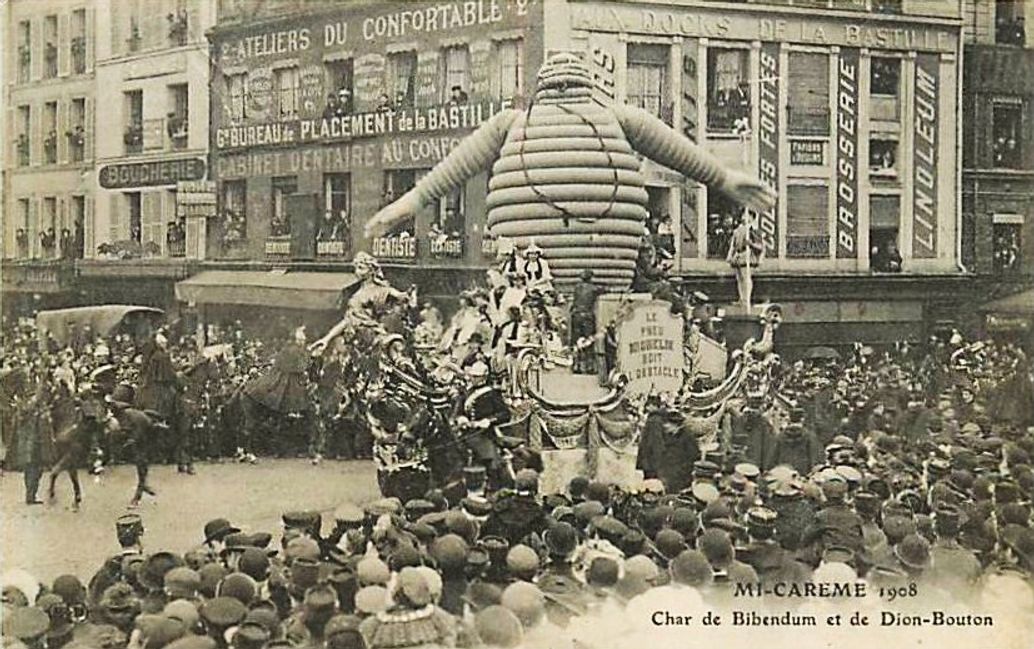
Bibendum and the guide grew up together. By 1908 he was riding through Paris as a giant inflatable on a carnival float, and a postcard of the day shows the crowd that turned out to see him. He has fronted the company's advertising ever since, and in 2018 New York's Advertising Week named him its icon of the millennium6.
The pairing mattered. The guide gave motorists a reason to trust the company, and Bibendum gave the company a face that was warmer than a tire. Between them, a maker of rubber goods became something closer to a companion for anyone who owned a car.
Seven francs
That brings the story back to the workbench. For twenty years the guide had been free, and by 1920 it was being treated the way free things are treated. André Michelin's decision to charge for it was fast, but the timing was right. Cars had become cheaper and more reliable, more French families wanted to tour their own country, and, in the words of the company historian Olivier Darmon, the decision to charge rather than rely on advertising came "as cars became cheaper and performed better"2. By 1922 the guide cost 7 francs1.
The price changed the guide's character as much as its economics. In the same year the advertisements were removed, restaurants began to be listed under a set of classification rules, and Paris hotels appeared for the first time1. A paid guide had to earn its keep, so the pages about tire care gave way to hotels and restaurants, and it still sold close to 100,000 copies a year4. In 1921 there was no French edition at all, because the Paris office was busy producing its guides to the battlefields of the war just ended1.
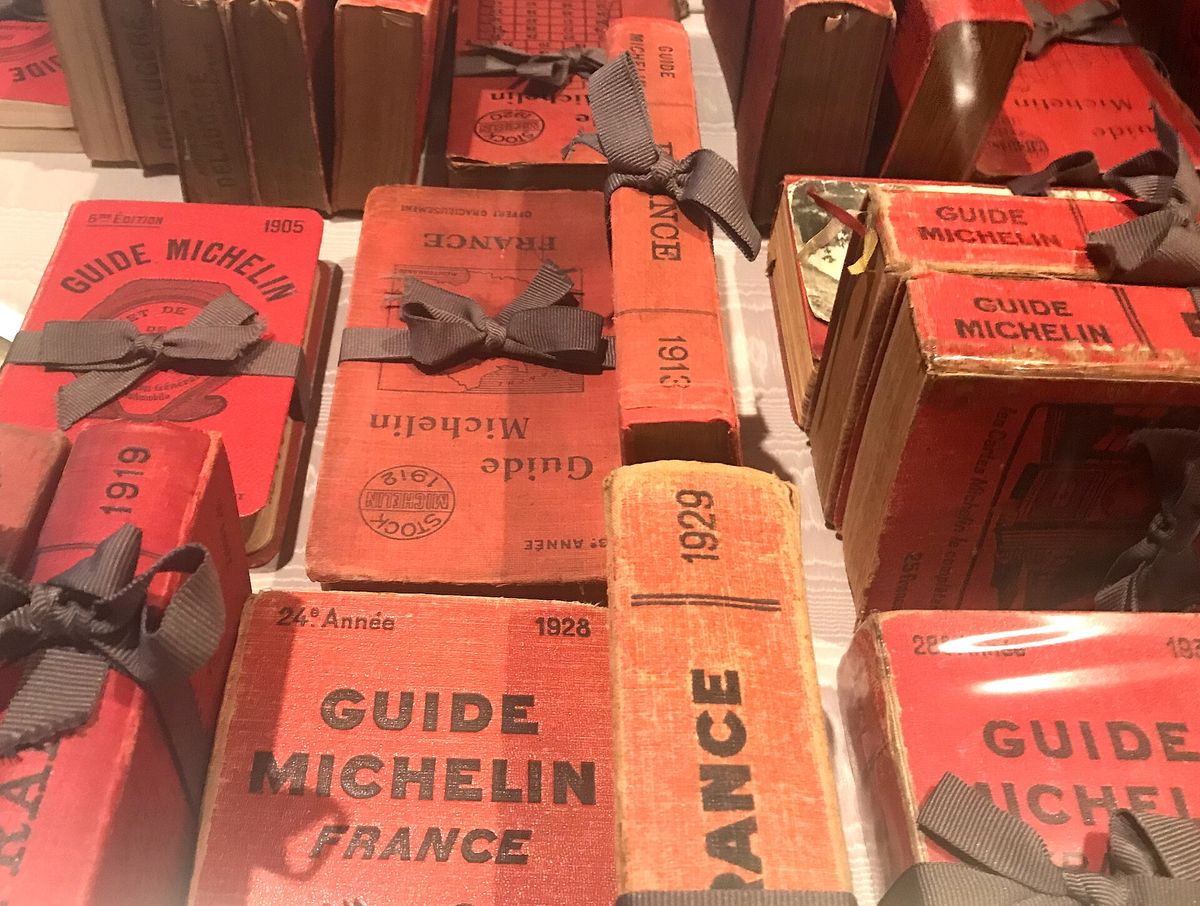
Readers took ownership too. From 1929 every guide carried a questionnaire inviting readers to comment on the establishments chosen1. By 1953 they had sent in some 50,000 comments to correct and improve it, and some wrote every week4. By 2009 the guide's office was receiving more than 45,000 letters and emails a year and answering every one1. A free handout had become a paid product with a community behind it.
Three sentences that have lasted ninety years
The first star for fine dining appeared in 19261. In 1931 the second and third stars arrived for the provinces, and Paris followed in 19331. In 1936 the company wrote down what each star meant. One star was "a very good restaurant in its own category," two was "excellent cooking, worth a detour," and three was "exceptional cuisine, worth a special trip"1. Those three sentences are still the criteria today1,2.
The first three-star chefs included Eugénie Brazier and Marie Bourgeois, two of the women who defined the cooking of Lyon, and Fernand Point, among the first chefs to walk the dining room and greet his guests1. The scale rewarded consistency above everything. Paul Bocuse's restaurant outside Lyon held three stars every year from 19651.
"No pull, no free drinks"
The rules were enforced by people the public never saw. In 1954 the New Yorker sent Charles Wertenbaker to spend two days on the road with a Michelin inspector named Jean Lasbugues3. The company was, he wrote, "very closemouthed about the movements of its inspectors," and it took months of letters before he was told to be in the lobby of a hotel in Arles at nine in the morning3. At every hotel the manager offered his guest a drink, and at every hotel the inspector waved it away, because the company had a slogan for its staff: "Pas de piston, pas de pot de vin," which the writer translated as "No pull, no free drinks"3. The inspector sat down with each manager at a bare table and worked through a long printed form, saving his own comments for the evening3.
The numbers explain the nerves. That year the guide gave one star to 618 restaurants in France, two stars to 53, and three stars to only 123. As Wertenbaker put it, "a man with a three-star restaurant grows rich; a two-star man will prosper, and the man who loses his single star may go out of business"3. Inspectors arrived unannounced to check that a place still deserved what the book said about it, and if it had slipped, the rating fell in the next edition3. Two years earlier the guide had demoted two of the most fashionable restaurants in Paris, Maxim's and the Tour d'Argent, to two stars, and restored them only after the shortcomings had been fixed3. The guide, Wertenbaker concluded, "takes no back talk from the hotel trade, and is not impressed by reputations or influence"3.
It was as quick to reward as to punish. A restaurant called Baumanière, at Les Baux near Arles, had no stars in 1947. It gained two by 1949 and, in the 1954 edition, became the only restaurant in France promoted to three3. The inspector's remark on the way to lunch there sums up the whole method: "It is a question of grave importance whether it deserves its three stars"3.
"For official use only"
The guide has appeared every year since 1900 except during the two World Wars3. In the spring of 1944, with the invasion fleet gathering in England, the Allied command worried that its troops would be lost in French towns where every signpost had been removed. With the agreement of Michelin's Paris management, the 1939 guide to France, with its hundreds of detailed town maps, was reprinted in Washington with one change to the cover: "For official use only." The troops that landed in Normandy carried it1. After the liberation of Paris, the Boulevard Pereire offices printed more than two million maps of northern and eastern France, Belgium and Germany for the advancing armies1.
The first postwar edition reached the shops on May 16, 1945, one week after V-E Day, because the paper had been stockpiled in advance. A notice on the cover admitted that an edition prepared during the war "can not be as complete and precise as our pre-war publications. Nevertheless, it should be useful"1. The stars returned gradually between 1947 and 19511.
"You say you're in publishing"
Half a century after Wertenbaker's trip, the New Yorker tried again. In 2009 John Colapinto became the first journalist Michelin had ever allowed to eat with one of its inspectors, at Jean-Georges in New York, and the terms tell you how little had changed7. The inspector would never visit that restaurant again, because the guide's managing director had been seen with her. She refused to give her name, so Colapinto called her Maxime. She had told her husband what she did, but for everyone else she kept it vague: "We try not to lie. You say you're 'in publishing,' something like that"7. Michelin advises inspectors against telling even their parents, who might boast7.
Inspectors' reports are distilled at annual "stars meetings" in each national office into three stars, two, one or none, and restaurants judged unworthy of a visit are simply left out7. In 2009 there were 26 three-star restaurants in France and 81 in the world7. By then the guide had editions in 23 countries7. It crossed the Atlantic in November 2005 with a New York edition of 500 restaurants1, and when the Tokyo edition appeared in 2007 it sold more than 100,000 copies on its first day7. In Bangkok in 2017 the first edition gave a star to Jay Fai, a street-food vendor in her seventies, the only street stall on the list to be starred9. The book that once listed only the restaurants attached to hotels had come a long way from the Boulevard Pereire.
The weight of a star
The power that makes a star worth having is the same power that makes it heavy, and the guide's history has a darker chapter that an honest account has to include. In February 2003, the three-star chef Bernard Loiseau, who had suffered from depression for years and had read press speculation that his third star was at risk, took his own life, shortly after Michelin had told him he would keep it7. The following year a former inspector, Pascal Rémy, published a diary of fifteen years on the road. He described the job as lonely and underpaid, claimed that Michelin employed only a handful of inspectors in France rather than the hundred it implied, and said that starred restaurants were revisited far less often than the company suggested. Michelin fired him and denied the claims, and the book made the front page of Le Monde7.
Some chefs have chosen to walk away. In September 2017 Sébastien Bras, whose restaurant Le Suquet in Laguiole had held three stars since his father earned them in 1999, asked Michelin to leave him out of the next edition. He cited "the great pressure that results inevitably from the distinction of the three stars," the anonymous visits two or three times a year, and said: "I will be able to feel free, without asking myself whether my creations would please the Michelin inspectors. Maybe I will be less famous, but I accept that"8. Michelin granted the request.
The guide's newest test is its own commercial model. Cities and countries now pay to bring it in. Bangkok's edition arrived with a reported 144 million baht, about 4.4 million dollars, from the Tourism Authority of Thailand9, and Israel's agreement, announced in 2023 at an estimated 1.5 million euros, drew criticism from chefs who questioned whether it was the best use of public money10. Whether that money buys anything beyond the inspectors' presence is the question on which a book built on trust now rests, and readers will answer it one edition at a time.
What the tire company got
Whether the guide ever sold a tire is unproven. Olivier Darmon, who wrote the company's official history, found no evidence that it did2. What it plainly did was give a tire company a second business, a reason for people to drive, and a public standing that no advertisement could buy2. The regional guides that began in 1926 became the Green Guides, a travel series in their own right4. The Bib Gourmand, named after Bibendum, arrived in 1997 to mark good cooking at a fair price1. Today the red guide covers restaurants in more than 30 countries2, and the company that makes tires for the world's cars is better known to most people for a book.
The lessons for marketers
Give people a reason to use the product. The Michelin brothers started with the thing that stopped people from driving, which was fear of the road, and removed it. A guide, a map, a road number and a free route plan each made driving easier, and every mile driven wore a tire. Content that solves the customer's real problem sells the product behind it.
Useful beats clever. The first guide was a manual: where to buy fuel, how to fix a puncture, where to sleep. It earned its place in the glovebox before it earned any authority on food. Authority came later, and it came because the practical promise had been kept for twenty years.
A price is a signal. The guide was ignored while it was free and respected once it cost 7 francs. Charging for something forces it to be worth paying for, and tells the customer it is. The advertisements went in the same year, which is the other half of the signal.
Standards compound, and they cost something. The 1936 criteria have held for ninety years, and the inspectors' refusal of a free drink is the reason a star still moves a restaurant's fortunes. Demoting Maxim's in 1952 cost the guide nothing and earned it everything. The same rigor is what Sébastien Bras walked away from. A standard worth having is one that people can feel.
Trust is the asset, so guard the model. The guide survived a century because readers believed its verdicts were bought by nobody. Every paid edition tests that belief. Whatever a business sells, the thing it must never sell is the reason people trust it.
Play a long game. The brothers promised the guide would last as long as the century. Very little in marketing is planned on that horizon, and almost nothing that is planned on a quarter lasts. The book under the workbench is still in print.
Sources
- 1
- 2
- 3
- 4
-
5
Michelin Poster 1898, O’Galop, Nunc est Bibendum, file record
-
6
History, Bibendum named icon of the millennium by Advertising Week, 2018
- 7
- 8
- 9
- 10
-
Header image

The AMW® Editorial Team covers marketing, business growth and the software AMW builds for businesses.
Related Resources
Calculators
Case Studies
Related Articles
AMW Launches the AMW Suite: The All-in-One Business Platform With AI Agents Built In
AMW has announced the launch of the AMW Suite, a new all-in-one software platform designed to unify business software and AI agents under a single subscription.

4MYTU Reimagines the Carry-On Around the Front Pocket
The Tank Series redefines premium travel luggage — engineered from behaviour, not convention.

Activist Investor Defense: What Seventy Years of Proxy Fights Teach Public Companies
From a Chicago Shrine hall in 1955 to the towers of Procter & Gamble, Disney's 2024 vote and Southwest's settlement with Elliott, the biggest proxy fights show what actually decides an activist campaign, and what winning costs.