

Electronic Press Kit Guide for Musicians (+ 4 Real EPK Examples)
An electronic press kit — EPK — is the single page that journalists, bookers, and labels look at before deciding whether to cover, book, or sign you. It compresses everything someone needs to know about you as an artist into one professional, scannable resource: bio, music samples, photos, video, press coverage, and contact info. Get the EPK right and the rest of the conversation gets easier. Get it wrong and the email goes unanswered.
This guide covers what to include (the 7 essentials), shows 4 real EPK examples from working artists you can model, walks through common mistakes that kill credibility, and explains what professional EPKs actually cost in 2026.
🎯 Need an EPK Built Fast?
AMW builds professional EPKs for musicians at every stage — from emerging artists to label rosters. See AMW EPK packages .
Ready to Promote Your Music?
AMW has run 200+ music campaigns across streaming, radio, and press.
What Is an Electronic Press Kit (EPK)?
An electronic press kit is a digital one-stop resource — usually a single web page or a downloadable PDF — that contains everything an industry professional needs to evaluate you as an artist. It evolved from the old physical press kits of the print-media era (folders with bio, photo, CD, press clippings) and replaced them around 2010 as music journalism moved fully online.
Today, an EPK is the single most-used resource an artist owns when reaching out to journalists, podcast hosts, festival bookers, sync-licensing agents, A&Rs, and venue promoters. It's how you answer the unspoken question every industry person asks before responding: "Is this artist real, professional, and worth my time?"
What an EPK Includes: 7 Essential Components
Every effective EPK has these seven components. Page-1 ranking guides (Bandzoogle, StudioBinder, kit.com) all converge on this same list. Skip any of them and you signal to industry pros that you're not yet ready for serious consideration.
1. Artist Bio
Two lengths: a short bio (50-100 words, used for festival programs and quick pitches) and a long bio (250-400 words, used for press releases and full features). Lead with what makes you distinctive — your sound, your story, your most credible accomplishment. Avoid clichés ("genre-defying," "unique sound," "taking the music world by storm") that signal amateur copywriting.
2. High-Resolution Photos
At least 3 photos: one tight portrait, one full-body or live performance, one band/artist-in-context shot. Minimum 2,000px on the long edge — print publications still use these, and low-res photos are a fast disqualifier. Shoot horizontal AND vertical orientations so editors don't have to crop awkwardly. Credit the photographer in the EPK.
3. Music Samples
Embed your strongest 3-5 tracks via Spotify, Apple Music, SoundCloud, or YouTube. Don't paste raw MP3s or links to file-sharing — every legitimate journalist will skip those. Lead with your single or strongest current track (not a deep cut), and include at least one track that shows range or a different mood. Update this section with every new release.
4. Music Video or Live Performance
At least one video — a music video, live performance, or studio session. Video signals professionalism more than any other component because it requires investment to produce well. If you don't have a music video, a single high-quality live performance video filmed on a decent camera with clean audio will do.
5. Press Coverage and Quotes
Pull quotes from any media coverage you've received — blog reviews, podcast features, magazine mentions. Format each as: short quote, bold publication name, link. If you have less than 3 quotes, supplement with notable playlist placements or radio adds. New artists with no press: skip this section entirely rather than pad with weak entries — empty is better than thin.
Ready to Promote Your Music?
AMW has run 200+ music campaigns across streaming, radio, and press.
6. Tour Dates / Past Performances
Upcoming shows or notable past venues. For new artists: list past venues even small ones, so bookers see you've performed live. For established artists: a Bandsintown widget or simple list of cities and dates. Include capacity numbers for venues that matter ("sold out 500-cap room") because bookers care about your draw.
7. Contact Info
Direct contact for press, booking, and management. Don't make people hunt — list email addresses for each role plus links to socials. If you have a manager or publicist, list them with their contact too. Industry people skip EPKs without contact info because the friction of figuring out who to email is a deal-killer.
4 Real EPK Examples to Model
Looking at examples from working artists is the fastest way to internalize what good looks like. Here are four EPKs that get the components right — each from a different career stage and genre so you can match the model closest to where you are.
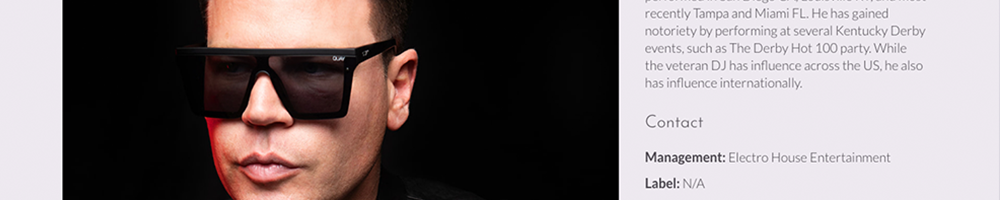
Example 1: Emerging Artist with Limited Press
An emerging artist with a few thousand monthly Spotify listeners and minimal press still has a credible EPK if it's tight. Lead with: clear bio (300 words), 3 hi-res photos, embedded Spotify of your strongest 4 tracks, one live video, and any playlist placements (even small ones — "Indie Coffee Hour, 5,200 followers" is a real signal). Skip the press-quotes section if you have less than 3 quotes. Result: industry pros see a real artist, not someone trying to look bigger than they are.
Example 2: Indie Artist with Some Press Traction
An indie artist with 10K-50K monthly listeners, a few blog reviews, and one or two playlist placements should lead with their strongest pull-quote at the top, then bio, music, video, and a press-coverage section showing 5-10 reviews/mentions with publication logos. Add a short paragraph explaining your story arc — what you've released, where you've toured, what you're working toward. This is the credibility band where bookers and small-label A&Rs start paying attention.
Example 3: Established Artist with Tour History
An established artist with a regional or national tour history adds: tour history (cities, venues, capacity), key playlist placements (numbers matter), label or publishing affiliations if relevant, and a video reel that compiles 60-90 seconds of live highlights. Press section becomes selective — feature the best 3-5 quotes with publication logos rather than a long list. Booking-focused EPKs should also include a tech rider link (PDF) so promoters know what they're committing to.
Example 4: Label / Multi-Artist EPK
Labels and management companies pitching their roster use a multi-artist EPK structure: one landing page with the label's positioning (genre focus, recent wins, signature releases), then individual artist pages for each act with the standard 7 components per artist. Sync-licensing agents and festival programmers use these to evaluate multiple acts in one session — keeping the structure consistent across artist pages cuts evaluation time and increases the chance of multiple bookings.
Common EPK Mistakes That Kill Credibility
1. Hosted on Google Drive or Dropbox.
Industry pros expect a real URL — not a folder share that requires sign-in or download. Use a dedicated EPK page on your own domain, a service like Sonicbids or EPK.bio, or a Bandzoogle/Squarespace/Wix site. Hosted-folder EPKs say "I haven't invested in this."
2. Outdated photos and music.
An EPK with 2-year-old photos and last album's tracks signals dormancy. Update at least once a year, ideally with each release cycle. Industry pros notice immediately when content is stale — they cover artists with momentum.
Ready to Promote Your Music?
AMW has run 200+ music campaigns across streaming, radio, and press.
3. Walls of text with no scannable structure.
Editors and bookers spend 30-90 seconds on a first-pass evaluation. If your EPK requires reading a thousand-word bio to find what you sound like, they leave. Use clear section headings, short paragraphs, and put the strongest material above the fold.
4. No music samples — just streaming-platform links.
Embed players directly. Asking journalists to click out to Spotify, log in, and find your track loses 70% of attention. Spotify, Apple Music, SoundCloud, and YouTube all provide embeddable players — use them.
5. Generic bio full of clichés.
"Genre-defying," "unique sound," "taking the world by storm," "blending influences from..." — these phrases signal amateur copywriting and editors filter past them. Lead with what's actually distinctive: your origin story, your most credible recent moment, your sound described in language fans of similar artists would recognize.
6. Hidden contact info.
If finding your booking email takes more than 5 seconds on the page, you've lost potential bookings. Put contact info in the header or footer of every EPK page — and use a dedicated email like booking@yourdomain.com rather than a personal Gmail.
How to Build an EPK in 2026
Three options, depending on budget and technical comfort:
DIY: Free to ~$300
Use Bandzoogle, Squarespace, Wix, or EPK.bio. They have EPK templates that handle the structure and embed widgets for music and video. Trade-off: you'll spend 8-15 hours getting it right, the design will look templated (industry pros recognize Squarespace EPKs at a glance), and copy quality is on you. Best for early-stage artists with tight budgets.
Done-for-You: ~$500-$2,500
Hire an EPK service (like AMW's EPK package) or a freelance music publicist to build it. They handle the design, copywriting, photo curation, and music embedding. Turnaround is typically 5-10 business days. Best for artists getting ready to pitch press or seek booking representation, where the EPK quality directly affects whether the conversation happens at all.
Custom Design + Strategy: $2,500+
For established artists or labels, full custom EPK design with brand-aligned visual identity, written editorial copy, photo direction, and ongoing updates. Often paired with PR service so the EPK gets immediately put to work. AMW and similar full-service firms operate in this band.
Get Your EPK Built Right
AMW's EPK service builds custom press kits for musicians — bio writing, design, photo curation, and music + video embedding. See AMW EPK packages →
Written by Cristina Arcega-Punzalan
Cristina Arcega-Punzalan is a content writer at AMW®, covering topics in marketing, entertainment, and brand strategy.
Ready to Promote Your Music?
AMW has run 200+ music campaigns across streaming, radio, and press.
Frequently Asked Questions
How much does it cost to make an EPK?
DIY EPKs cost $0-$300 — free if you use Bandzoogle's templates and your own photos and copy, up to $300 for a Squarespace or Wix subscription plus a stock-photo license. Done-for-you EPKs from professional services run $500-$2,500 for a custom-designed press kit with written bio, hosted page, and music/video embeds. Full custom EPK design with branded visual identity for established artists or labels starts at $2,500 and runs to $7,500+ for label-quality multi-artist EPKs. AMW's EPK package fits in the $500-$2,500 band — quote on request.
What should be in a music EPK in 2026?
Seven essentials: (1) artist bio in two lengths — short (50-100 words) and long (250-400 words); (2) at least 3 high-resolution photos (2,000px+, multiple orientations); (3) embedded music samples — your strongest 3-5 tracks via Spotify or Apple Music players; (4) at least one music video or high-quality live performance video; (5) press coverage and pull-quotes (skip if under 3 quotes — empty beats thin); (6) tour dates and past performances with venue capacities where notable; (7) direct contact info for press, booking, and management with role-specific email addresses.
What's the difference between an EPK and a press release?
An EPK is a permanent resource — your always-up-to-date professional landing page that journalists, bookers, and labels reference whenever they need to evaluate you. A press release is a single, time-bound announcement (a new release, a tour, a milestone) sent specifically to media to generate coverage of THAT event. EPK is your standing presence; press release is a one-time pitch. Pros use both: the press release announces a moment, the EPK is what gets clicked when the journalist wants to learn more.
Do I need an EPK if I have a Spotify Artist Profile?
Yes. Your Spotify Artist Profile is great for fans but doesn't replace what an EPK does. Spotify shows your music, top tracks, and follower count — it doesn't include your bio in pitchable format, contact info, downloadable photos, press quotes, or tour history. When a journalist or booker wants to evaluate you, they need everything in one place — Spotify gives them only the music. EPKs and Spotify Artist Profiles work together: link your EPK from your Spotify bio, and link your Spotify from your EPK.
Where do I send my EPK to get media coverage?
Three pitch paths: (1) Direct outreach to music journalists, blog editors, podcast hosts, and curators in your genre — find their email via their publication's About page or LinkedIn, then send a 3-5 sentence pitch with your EPK link. (2) Submission platforms like SubmitHub, Groover, and Musosoup that connect artists with curators for $1-$10 per submission. (3) Hire a PR service or publicist (AMW Music PR is one option) who has existing curator relationships and pitches your EPK for you. New artists almost always start with (1) and (2); artists with budget add (3) when they're shipping a release that's worth a coordinated push.
Related Resources
Calculators
Case Studies
Pricing Guides
Related Articles
What is an EPK? The Ultimate Guide to Electronic Press Kits for Artists
In the entertainment industry, an EPK (Electronic Press Kit) serves as a digital portfolio containing essential promotional materials for artists, musicians, filmmakers, and performers. This comprehen
Music PR Strategies for Aspiring Musicians
In today's competitive music industry, effective Public Relations (PR) is crucial for aspiring musicians looking to build their careers and reach wider audiences. PR is not just about gaining publicit
Music Press Coverage Secrets Every Artist Needs to Know for Breakthrough Success
Music press coverage shapes careers and influences industry trends in ways most artists never fully appreciate. From legendary publications like Rolling Stone and Pitchfork to emerging digital platfor