

Activist Investor Defense: What Seventy Years of Proxy Fights Teach Public Companies

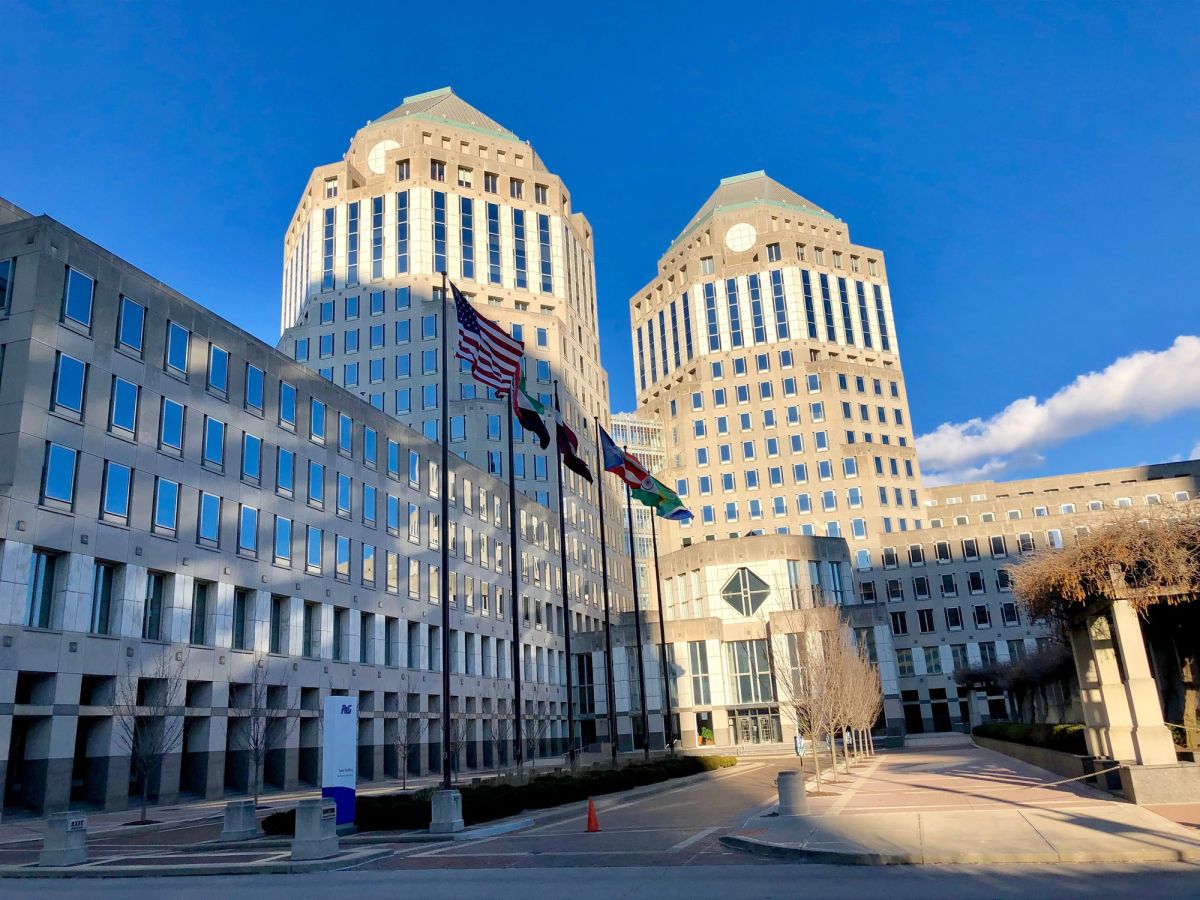
On the morning of October 10, 2017, Nelson Peltz stood outside the twin towers of Procter & Gamble's headquarters in Cincinnati. Inside, around 11 a.m., the company's chief executive, David Taylor, had just told the annual meeting that shareholders had voted to keep Peltz off the board1. Peltz, whose fund owned $3.5 billion of P&G stock, got on the phone to Fortune half an hour later and refused to concede. "The vote is too close to call," he said1. Then he turned to the buildings. "I'm standing in front of these two massive office towers, and nearby there's an office block where the executives work that looks like a giant Soviet-era building. You wouldn't believe this place"1.

Quick Summary
Activist investors buy a stake, argue in public that a company is badly run, and ask shareholders to put their nominees on the board. The rules of that contest have changed: a buyer of more than 5 percent with intent to influence control now has five business days to disclose it, and since 2022 both sides' nominees appear on one universal proxy card7,8. The real cases show a pattern. Montgomery Ward's chairman beat Louis Wolfson in 1955 and resigned within days5. P&G narrowly defeated Nelson Peltz in 2017 after a recount and put him on the board anyway9,3. Disney beat him decisively in 2024 after first doing much of what he had asked11,12. Southwest Airlines adopted a poison pill against Elliott and then settled by adding six directors14,15. Defenses buy time. Shareholders' belief in the plan decides the vote, and the companies that fared best were the ones that had already changed.
It was the biggest proxy fight ever involving a U.S. company, against the largest company ever to face one2,3. The count would take weeks, and the answer, when it came, would be stranger than either side expected. Activist campaigns have never been more common: Lazard counted 297 of them around the world in 2025, a third record year in a row4. So the question every public company's board eventually asks is a practical one. When an activist arrives, what actually decides how it ends? Seventy years of the most public fights in American business give a clearer answer than any checklist.
"Private enterprise in reverse gear"
One of the fiercest proxy fights in American history played out in a Shrine auditorium on Chicago's North Side. In August 1954 the financier Louis Wolfson announced that he would seek control of Montgomery Ward, the country's oldest catalog retailer, by asking its shareholders to vote out management5. "Montgomery Ward, as it stands today, is a glaring and notorious example of private enterprise in reverse gear," he told a press conference5.
His case was simple. Challenged by Sears, Roebuck, the company was closing stores and cutting inventory, and it was sitting on $300 million in cash, debt-free, because its octogenarian chairman, Sewell Avery, was convinced another Great Depression was around the corner5. Wolfson bought 20,000 shares that August6. He then traveled to shareholder gatherings in Florida, California, New York, Chicago and Detroit, and attracted the attention of Time, Life and the Saturday Evening Post5. Management answered by enlisting the company's employees to contact stockholders and by attacking Wolfson personally as a raider who meant to loot the company5.
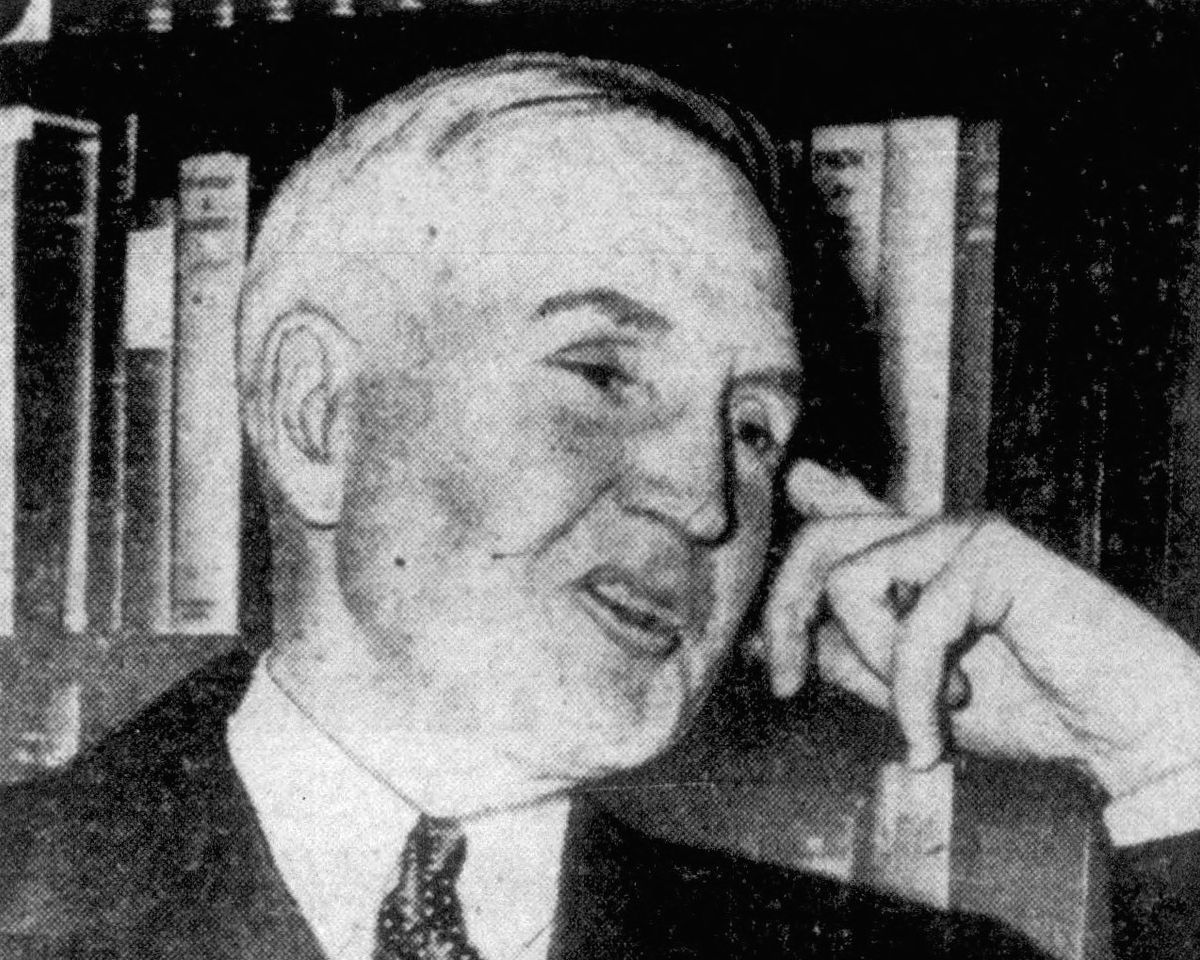
Avery had one structural advantage. Montgomery Ward's nine directors served staggered three-year terms, so only three seats came up for election each year, and even a well-supported challenger could win only a minority of the board5,6. Wolfson went to court. On April 15, 1955, the Supreme Court of Illinois ruled that the staggered board undermined the cumulative voting that the state constitution guaranteed to shareholders, and that the full board had to stand for election6. The meeting was a week away.
It took place on April 22 at the Medinah Temple. The board tried to keep Avery from answering questions himself, and he refused. According to the law professor Alan Weinberger's account, drawing on Robert Sobel's history, he "appeared weary and confused, rambling at times, rarely responding directly," while Wolfson stayed courteous and let the chairman do the damage5. Avery's daughter, watching from the hall, wept5.
Management won the vote. Wolfson received about 30 percent, which under cumulative voting gave him three seats, and the campaign had cost him $500,000 in solicitation expenses5. Days later, Avery resigned as chairman5. Wolfson himself left the board the following winter5. The shape of that 1955 fight has repeated ever since. A company can win the count and still lose the argument, and the argument is usually about whether the people in charge have a credible plan.
Five business days and one ballot
The rules that frame a campaign today grew out of that era. Under Sections 13(d) and 13(g) of the Securities Exchange Act, an investor who owns more than 5 percent of a class of a company's shares must file a public report, and one who intends to influence control files the longer Schedule 13D7. For more than fifty years the deadline was ten days. In October 2023 the SEC cut it to five business days, and required amendments within two. "In our fast-paced markets, it shouldn't take 10 days for the public to learn about an attempt to change or influence control of a public company," said the SEC chair, Gary Gensler7.
The second change went to the ballot itself. Before 2022, shareholders voting by proxy could not vote for a mix of management and dissident nominees, as they could by voting in person. In November 2021 the SEC required both sides in a contested election to use a universal proxy card listing every nominee, for meetings held after August 31, 20228. "Today's amendments will put these candidates on the same ballot," Gensler said8.
For a company, the practical effect of both rules is the same. The window between an activist's arrival and the public campaign is shorter, and a dissident can win a seat without winning control. Shareholders can keep most of management's slate and add one or two challengers, which makes the question in front of them narrower and harder to wave away: is this particular director better than that one?
"The dumbest thing I've ever been involved in"
By the summer of 2017 Trian Fund Management had built a $3.5 billion stake in Procter & Gamble, the maker of Tide, Gillette and Pampers, then worth $235 billion2. Peltz sought a board seat after the company rejected his request9, and from July onward he argued that P&G's transformation was being hindered by its "suffocating bureaucracy"2. P&G replied that his "timing is late to P&G's turnaround" and that "Mr. Peltz does not fit the criteria we are seeking for the P&G Board"2.
Both sides spent as if the company were at stake. Four days before the meeting Peltz said on CNBC that P&G had spent more than $100 million to keep him off the board. "This proxy fight is probably the dumbest thing I've ever been involved in," he said. "And I've said that if I come on the board, no one has to get off"2. Reuters later estimated that the two sides together spent more than $100 million on mailings, phone calls and advertisements3.
At the meeting on October 10, Peltz watched a different story unfold from the one management presented. He described retiree after retiree coming to the microphone to complain until comments were cut off after 30 minutes1. When it ended, Taylor and the director Jim McNerney walked over to shake his hand and say they still wanted to work with him. Peltz told them to put him on the board, win or lose1.
A month later the independent inspector, IVS Associates, finished its preliminary tabulation. Peltz had won by about 43,000 votes, and P&G's shares jumped more than 3 percent in after-hours trading9. P&G recounted nearly two billion votes, many of them paper ballots. The final count showed the company's eleven nominees elected, with the votes for director Ernesto Zedillo "extremely close" to those for Peltz3.
P&G appointed him anyway. "Because the election results were so close, and because a large number of shareholders voted for Nelson Peltz to be a director, the board has engaged in numerous discussions with Mr. Peltz regarding a board seat," the company said on December 15, 20173. It increased the board by two, to thirteen. The two sides agreed that the company would not be predisposed to take on excessive debt, cut research spending, break itself up or leave Cincinnati, and P&G said it would link executive pay to sales and stock performance3. In August 2021, Peltz announced he would not stand for re-election, saying Trian was "highly confident in P&G's continued success" and praising "an extremely strong management team"10.
"Now Disney plans to do everything we wanted them to do"
Peltz's next great campaign ran twice. In January 2023 Trian launched a proxy fight at Disney, criticizing the $71 billion acquisition of Fox and a failed succession plan11. In early February, Bob Iger, back as chief executive since November, unveiled a restructuring with $5.5 billion of cost cuts and 7,000 job losses. Peltz called off the fight. "Now Disney plans to do everything we wanted them to do," he told CNBC11.

He came back the following year, with a stake worth $3.98 billion, most of it owned by the former Marvel chief Ike Perlmutter, and two nominees: himself and the former Disney finance chief Jay Rasulo12. This time Disney fought a full campaign. It brought in support from the founding family, George Lucas, JPMorgan's Jamie Dimon and Laurene Powell Jobs, and spent an estimated $40 million. Peltz was partly on the hook for an estimated $25 million spent on the challenge12. Both big proxy advisers, ISS and Glass Lewis, noted Disney's succession problems, but Glass Lewis sided with the company12.
The vote on April 3, 2024 was decisive. Disney's two largest shareholders, Vanguard and BlackRock, backed management in the final days, and retail investors voted overwhelmingly for the company, giving Iger 94 percent of the vote12. Peltz lost to Maria Elena Lagomasino, one of the two directors Trian had targeted, by roughly two to one, and Rasulo lost to her by five to one12. "We are proud of the impact we have had in refocusing this Company on value creation and good governance," Trian said12.
The scorecard is more complicated than the tally. Disney shares had risen nearly 50 percent since the campaign began12. Weeks after the meeting, Trian sold its entire Disney stake at roughly $120 a share, making about $1 billion on the position13. Disney kept its board. Peltz kept his gains. The restructuring he had called for in 2023 was already in place.
Short of board control
The newest template for these fights is the settlement, and Southwest Airlines is its clearest recent example. In June 2024 Elliott Investment Management disclosed a stake of nearly $2 billion, about 11 percent of the airline, and called for the removal of the executive chairman, Gary Kelly, and the chief executive, Bob Jordan14. Southwest's shares had fallen about 50 percent in three years14.
On July 3 Southwest's board adopted a limited-duration shareholder rights plan, a form of poison pill. If any holder crossed 12.5 percent, every other shareholder could buy stock at a 50 percent discount14. "In light of the potential for Elliott to significantly increase its position in Southwest Airlines, the board determined that adopting the Rights Plan is prudent to fulfill its fiduciary duties to all shareholders," Kelly said14. A pill works on its narrow task. "If it's not invalidated for some reason, there is really no way around a poison pill," the activism defense adviser Keith Gottfried told The Dallas Morning News. From a messaging standpoint, he said, it also gave Elliott a "sound bite"14.
The pill limited how far Elliott could build its stake. It did nothing about Elliott's argument. Elliott trimmed its slate to eight nominees, demanded a special meeting, and even launched a podcast to interview its board candidates15,16. Southwest, meanwhile, announced it would end open seating and add premium seats, reversing policies it had kept for 50 years15,16. In September it said Kelly would retire the following spring. Elliott still wanted Jordan gone16.
On October 24, 2024 the two sides settled. Five Elliott nominees and the former Chevron finance chief Pierre Breber joined a thirteen-member board, Kelly and six other directors accelerated their retirements to November, and Jordan kept his job15,16. CNBC reported that it was the largest board change Elliott had driven in a U.S. fight15. Gottfried called it "a win-win" and noted what the standstill left open: "the standstill does not prevent Elliott from conducting an activist campaign at the 2026 annual meeting"16.
What winning costs
The honest account of activist defense includes the bill. P&G and Trian together spent more than an estimated $100 million on a vote that ended in a near tie and a board seat for the loser3. Disney spent an estimated $40 million to keep a challenger off its board who had already secured most of what he asked for and who walked away about $1 billion richer12,13. Montgomery Ward's management kept control in 1955 and lost its chairman within days5.
The defenses themselves cut both ways. A staggered board protected Avery until a court removed it6. Southwest's poison pill was built to stop Elliott from building a bigger stake and gave it a talking point, and the airline still ended up conceding six seats and its chairman's timetable14,15. Each tool changed the terms of the fight. None of them changed what shareholders thought of the company's plan.
Activists carry their own record. Wolfson, who cast himself as a champion of ordinary stockholders, was later convicted of securities law violations and served time in prison5. Peltz was blunt that the costs at P&G were driven by "egos" on the other side1, and his own side carried a share of the estimated $25 million spent at Disney, where it lost12. The one reliable winner in most of these fights was the shareholder whose company changed course, whoever took the credit.
What the fights teach
The argument is decided before the vote. Disney went into the 2024 vote having already cut $5.5 billion of costs and won it decisively11,12. P&G's case that its turnaround was already working persuaded half its shareholders and no more2,3. The best preparation for an activist is a strategy that investors already believe.
Know your shareholders by name. Disney's margin came from Vanguard, BlackRock and retail holders, and at P&G, by Peltz's own count, 100 million shares were held by employees who could vote either way1,12. Retail votes counted in both fights, and in 2024 they went overwhelmingly to the company.
Defenses buy time, and time has to be used. A poison pill caps a stake, and a staggered board slows a takeover. Neither answers the critique. Southwest used its time to reverse 50-year-old policies and still settled with Elliott14,15,16.
The rules now favor a narrower question. With five business days to disclose and one universal ballot, an activist can win a single seat without winning control7,8. A board has to be ready to defend each director on the merits, and to know which of them it would put forward.
A settlement can be the strategy. P&G's decision to seat Peltz ended a costly dispute with agreements on debt, research spending and its headquarters, and in 2021 he left praising management3,10. Deciding early what a company could accept is cheaper than discovering it after the count.
Candor is a defense. Avery's rambling answers at the Medinah Temple left the hall in little doubt that he was ill-equipped to continue5. The executives who come through these fights well are the ones who can answer hard questions in public, directly, with numbers.
The two towers in Cincinnati are still there, and so is the company Peltz said they symbolized. He served on its board until 2021 and left confident in its management10. The fight he called the dumbest of his career ended, in the end, as a board seat and an agreement, which is roughly what he had asked for in the first place.
Sources
- 1
- 2
- 3
- 4
- 5
- 6
-
7
SEC Adopts Amendments to Modernize Beneficial Ownership Reporting, press release 2023-219, Oct 10, 2023
-
8
SEC Adopts New Rules for Universal Proxy Cards in Contested Director Elections, press release 2021-235, Nov 17, 2021
- 9
- 10
- 11
- 12
- 13
- 14
- 15
- 16

The AMW® Editorial Team covers marketing, business growth and the software AMW builds for businesses.
Related Resources
Related Articles
AI Answers Cite Your Press Before Your Founder Bio
AI models draw mostly on earned media, not brand-owned pages. Learn why press coverage shapes how your founder is described and how to write one press release line that carries over.
The Story of Polaroid: Edwin Land and the Instant Photo
A child's question in Santa Fe in 1943 became the SX-70, the Giant Polaroid and one of America's most admired brands. Then came Kodak, the phone and a factory set for demolition.

Nano Banana 2.1 Review: Spelling Right, Details Slip
We gave Google's Nano Banana 2.1 a bakery chalkboard sign and a candle product shot. It spelled every price correctly, then slipped on smaller details worth checking.