

Nike Branding Beyond the Swoosh and Slogans

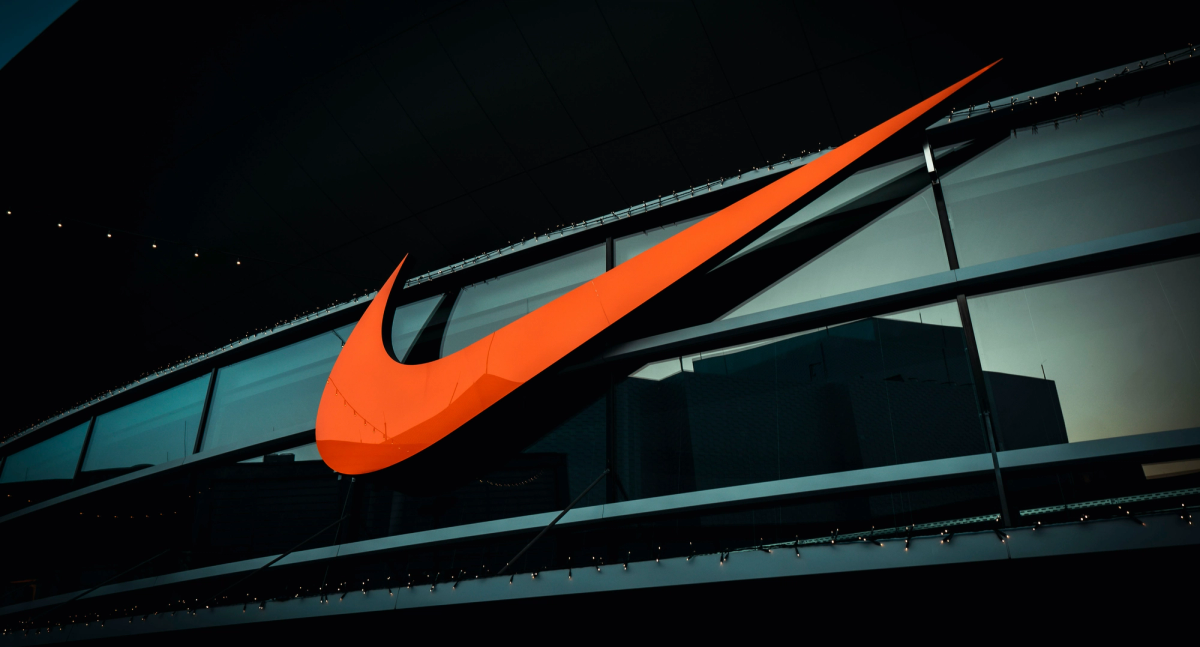
In 1971 Phil Knight had a deadline. Shoe boxes were waiting to be printed in Mexico, and his small company still had no logo to put on them1. Knight was earning extra money teaching accounting at Portland State University, and he had already hired a graphic design student there, Carolyn Davidson, to make charts for a meeting with Japanese executives1. Now he asked her for a shoe stripe. She brought back several designs. None of them excited him, but the boxes could not wait, so he picked the curved one and told her, "I don't love it, but it will grow on me"1. Davidson billed him $351.

Quick Summary
Nike began in 1964 as Blue Ribbon Sports, a handshake partnership between Phil Knight and his old track coach Bill Bowerman that imported Japanese running shoes3. In 1971 a Portland State design student, Carolyn Davidson, drew the swoosh for $35, and the company took the name Nike1,5. "Just Do It" arrived in 1988 from Wieden+Kennedy16, and athlete deals from Michael Jordan in 1984 onward turned sponsorships into product lines13. The brand has also had to answer for factory conditions in the 1990s and for a direct-to-consumer push that it began unwinding in fiscal 2025, when revenue fell to $46.3 billion from $51.4 billion19,2.
That mark is now on the shoes, shirts and storefronts of the company Nike's own annual report calls the largest seller of athletic footwear and apparel in the world2. The swoosh is only part of how Nike got there. The brand was built from a logo, a slogan, a run of athlete deals, a habit of putting its technology on show and a willingness to take positions, and it has also paid for its mistakes. This article follows each of those pieces through the record: the company's own heritage pages and filings, the people who built the campaigns, and the reporters who covered the wins and the damage.
The Evolution of Nike's Brand Identity
From Blue Ribbon Sports to the Swoosh
Phil Knight ran the middle distance at the University of Oregon for coach Bill Bowerman3. Nike's own heritage page describes Bowerman as the coach who "brought jogging to America" and taught his athletes to look for an advantage everywhere, including in their gear3. At Stanford's business school Knight wrote a class paper on an idea he could not shake: low-priced, well-made running shoes from Japan could take on the German brands that dominated the American market3,4. The idea, he said later, "came from running track at Hayward Field in Oregon and out of the classroom at Stanford business school"4. The class was an entrepreneurship course taught by Frank Shallenberger, who asked students to write a business plan for a new company. "In those days, a lot of my classmates were writing about electronics, which was certainly beyond me since when I turn on an electric switch and a light bulb comes on, it's magic for me," Knight told Stanford5. He wrote about shoes instead.
He acted on it with what an Oregonian business reporter later called a Hail Mary: a cold approach to the makers of Tiger running shoes in Japan, made on a post-college trip when Knight was about 256. He met representatives of Onitsuka Tiger in November 1962, received his first samples in December 1963 and showed them to Bowerman in January 19643. A week later the two formed a partnership, each pledging $500, and shook hands on it3. The company was called Blue Ribbon Sports.
Bowerman shaped more than the shoes. Knight has called him his hero, and told Stanford students that Bowerman described himself as a "professor of competitive response" who saw his job as preparing young athletes for hard competition5. Knight's favorite of the coach's sayings was "Do right and fear no man"5. Bowerman had also been hand-building shoes long before the company existed; Stanford notes that a lightweight pair he made for future Olympian Otis Davis carried Davis to wins in the 220-yard and 440-yard dashes at the Pacific Coast Conference championships5. That competitive streak, and the idea that equipment was part of winning, became part of how the company talked about itself.
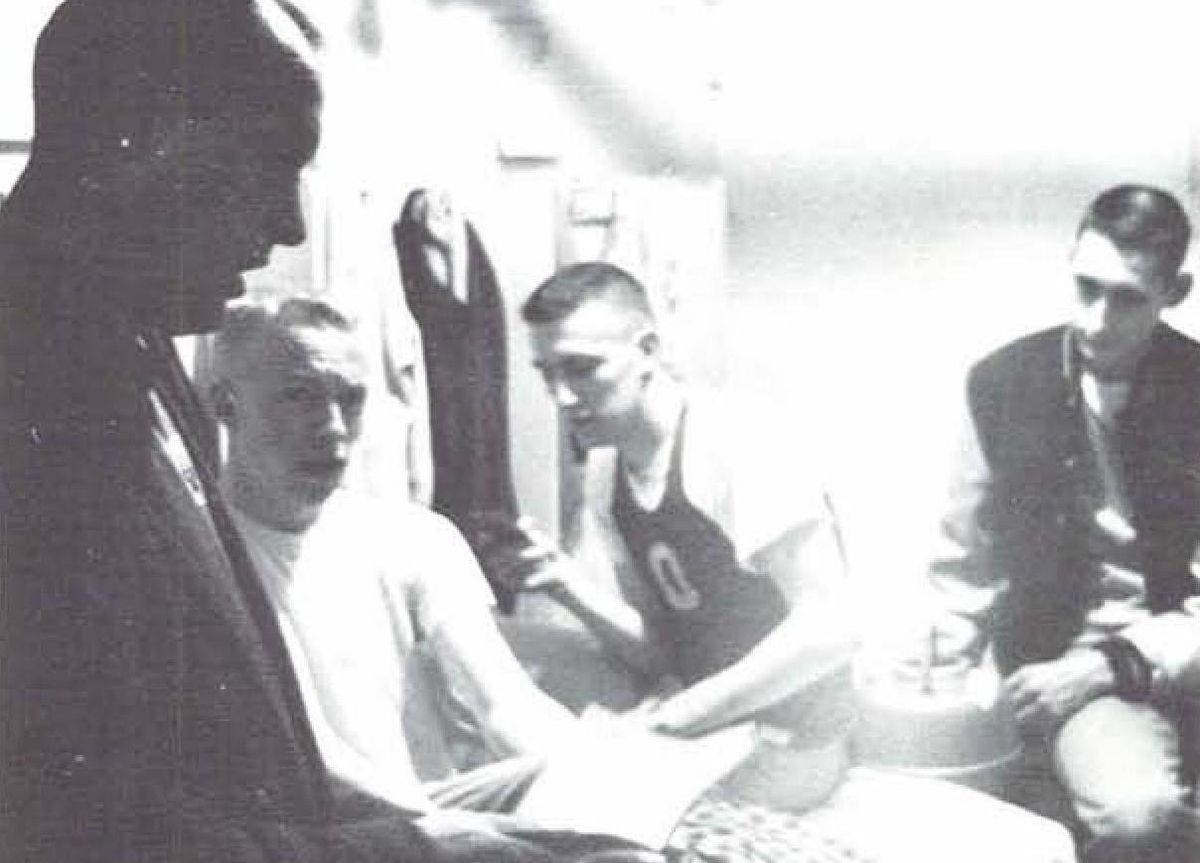
The early business was a sales job done by hand. Knight sold shoes from the trunk of his car, and when the demand was there he ordered more, and then more again, until he had to hire people to keep up4. Jeff Johnson, a runner and anthropology major Knight had met at Stanford, became the first full-time employee in 1965 and sold from the back of his van at high school track meets; in 1966 he opened the company's first store, in a narrow building on Pico Boulevard in Santa Monica3. Bowerman kept tinkering with the Tiger designs, and Steve Prefontaine, a University of Oregon distance prodigy, became the first major track athlete to wear the company's product and influenced the design of its running shoes3.
Nothing about the growth was smooth. Knight's shipments from Japan were rarely on time, and he faced constant financing problems. His sales kept doubling, but banks were reluctant to lend, and two of them dropped him as a customer4. Then the partnership with Onitsuka broke down over exclusivity. Knight and his 45 employees had to find new factories, and they needed a name of their own4.
Knight wanted "Dimension Six." Johnson suggested Nike, the Greek goddess of victory5. "When Jeff Johnson came up with Nike, I didn't know if I liked it too much, but it's better than the other names. It turned out pretty good," Knight told CNBC in 20164. Stanford's account puts the rechristening seven years after the 1964 founding, in 19715.
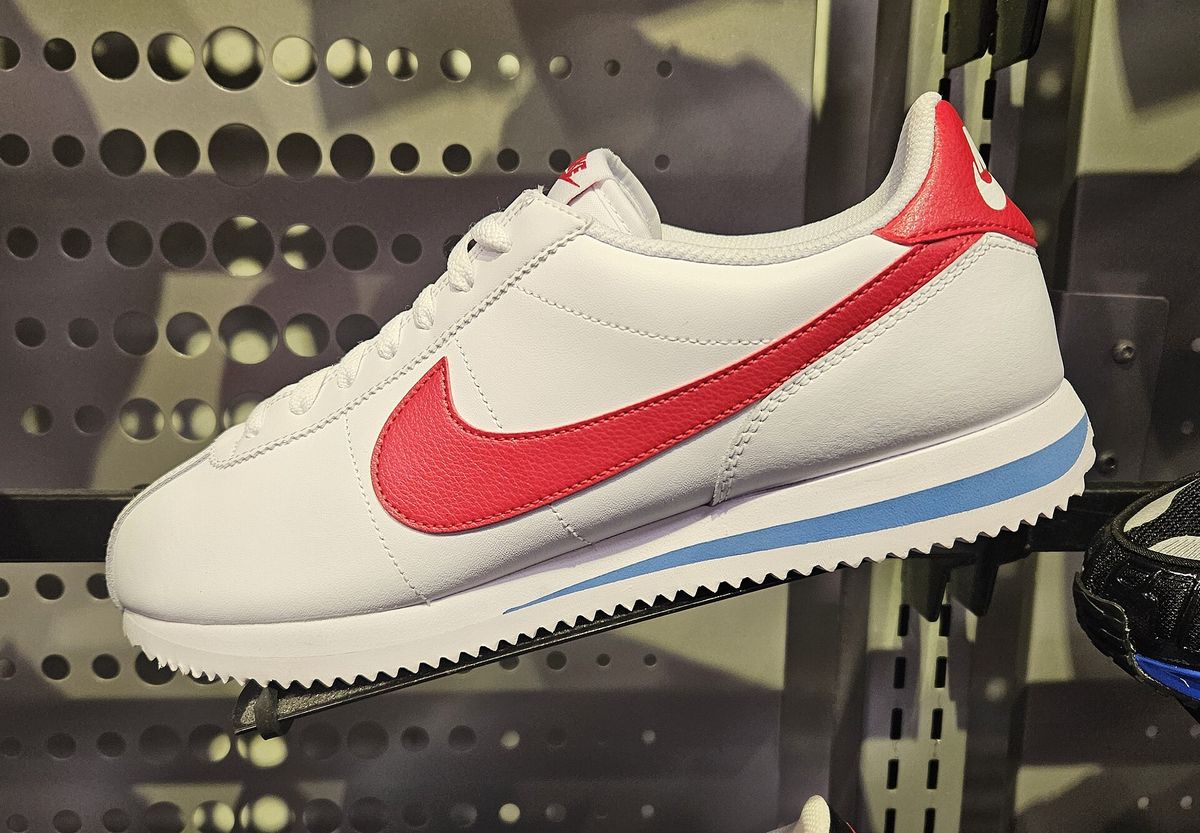
The new brand needed a hit, and it had one ready. The Cortez began as a shoe Bowerman and Knight developed with Onitsuka around 1967; Bowerman named it after the conquistador Hernán Cortés when Adidas objected to his first choice, "the Aztec"7. After the split, both companies wanted the name. Nike kept the rights, and in 1972 it released its own Cortez with the Onitsuka stripe replaced by Davidson's swoosh7. Under Blue Ribbon the Cortez had been so popular that the company could not keep up with demand7. The shoe went on to be worn by Forrest Gump on screen and by Whitney Houston when she sang the national anthem at the 1991 Super Bowl, and Nike has made more than 700 versions of it7.
The Cortez also shows how a brand can be adopted by communities it never targeted. Blue Ribbon's first store was in Santa Monica, and by 1973 four of Nike's ten department stores were in the greater Los Angeles area7. By Nike's own account, "over time, the silhouette became a staple of the city's swap meets, car clubs and schoolyards," and NPR reports that it was embraced most deeply by Black and Hispanic communities in Southern California, where its low price and simple look made it an easy choice for working-class families7. Fifty years after its release, Nike's chief design officer John Hoke told NPR, "Nike Cortez is the quintessential expression of our design philosophy"7.
In December 1980 Knight took Nike public. "We were concerned about losing control," he said, and he later called the listing one of the best things the company ever did4. The founders found a way to keep control anyway. Nike's filings show that Swoosh, LLC, an entity Knight formed to hold most of his Class A shares, owned about 75% of that class in 20208.
The brand's position was not secure through the 1980s. Reebok, riding the aerobics boom with shoes Jane Fonda had adopted, overtook Nike as the top athletic brand in the middle of the decade; Retail Dive reports that its sales rose from $12.8 million in 1983 to $310 million in 1985, and that in 1989 it still out-earned Nike, $1.82 billion to $1.71 billion9. Nicholas Smith, author of a history of sneakers, told Retail Dive that Reebok's rise "kind of caught Nike completely off guard," and that Nike regrouped around Michael Jordan9. By 1997 Nike's net sales had reached $9.2 billion against Reebok's $3.64 billion9. The two brand assets that carried that comeback, the Jordan line and "Just Do It," are covered in detail below. Knight got most of the public credit, but Allan Brettman, who covered Nike for The Oregonian, told NPR that Knight "had a core of employees in the early going who were as passionate as he was about making sure this was a success"6.
The founders eventually stepped back. Knight announced in 2015, at 77, that he would leave the chairmanship, and he handed the role to CEO Mark Parker in 20166,4. Parker was followed as CEO by John Donahoe, the former eBay chief, in January 2020, and by Elliott Hill, a Nike veteran who had joined in 1988, in October 202410,11,2.
Key Milestones in Nike's Branding Journey
- 1964: Knight and Bowerman form Blue Ribbon Sports with $500 each3.
- 1966: Jeff Johnson opens the first store, in Santa Monica3.
- 1971: Carolyn Davidson designs the swoosh for $35, and the company takes the Nike name1,5.
- 1972: The Nike Cortez goes on sale with the swoosh7.
- 1980: Nike goes public4.
- 1982: Dan Wieden and David Kennedy found Wieden+Kennedy in Portland, with Nike as their one client12.
- 1984: Nike signs Michael Jordan13.
- 1985: The Air Jordan goes on sale14.
- 1987: The Air Max 1 puts Nike Air on view15.
- 1988: "Just Do It" launches16.
- 1996: Tiger Woods turns pro and signs with Nike17.
- 1997: Nike launches Brand Jordan as its own division18.
- 1998: Knight announces factory reforms in a speech19.
- 2002: Nike buys Hurley10.
- 2003: Nike completes its $305 million acquisition of Converse and signs LeBron James20,21.
- 2006: Nike and Apple launch Nike+iPod22.
- 2012: Nike launches FuelBand and Flyknit and announces it will sell Cole Haan and Umbro23,24.
- 2015: Nike gives LeBron James its first official lifetime contract21.
- 2017: Nike announces the Consumer Direct Offense and runs Breaking225,26.
- 2018: "Dream Crazy" with Colin Kaepernick marks the slogan's 30th anniversary, and the House of Innovation opens in New York27,28.
- 2019: Nike ends its Amazon pilot and agrees to sell Hurley11,10.
- 2020: Nike announces the Consumer Direct Acceleration8.
- 2021: Nike acquires RTFKT29.
- 2024: Elliott Hill becomes CEO in October, and Nike announces it will wind down RTFKT2,30.
The Power of the Nike Swoosh Logo
Design Origins and Meaning
Carolyn Davidson came to design almost by accident. She enrolled first at Willamette University, moved to Portland State to be close to home, started as a journalism major and took a design course to "fill an empty elective"31. The meeting with Knight was just as unplanned. She had told a classmate in a hallway that she could not afford an oil painting class, and a few minutes later, she recalled, "a tall man in a suit walked up and said, 'Are you the one who can't afford to take oil painting?'"31
The first jobs were charts and graphs for Knight's meeting with the Japanese executives. "I did some design work for him, and then one day he asked me if I wanted to work on a shoe stripe. He said he needed more inventory control," she told Nike years later1. Knight admired the three stripes on Adidas shoes, and Davidson knew her mark had to look entirely different31. "He just wanted it to look like speed," she recalled31. She sketched options on tissue paper and held them against a shoe to judge how each would look31. CNBC's account says she mocked up five designs, and the swoosh was the one that stood out to Knight32. Knight convened a group to look at the choices and made the final call himself31.
She kept working for the renamed company for years, designing ads, brochures, posters and catalogues, until Nike grew too big for a one-person studio and moved to full-service agencies1. In September 1983 she was invited to what she thought was a lunch with former colleagues. Nike gave her a gold swoosh ring set with a diamond, a certificate from Knight and an envelope of Nike stock1. "The stock has split three times since I received it, so I can definitely say that I have been well compensated for my design," she told Nike. "You must remember too, that this was something rather special for Phil to do, because I originally billed him and he paid that invoice"1.
CNBC reports that Knight later recognized he had gotten "a pretty good bargain" for his $35, and that Davidson has reportedly never sold the original stock32. Nike's own heritage page ends its account of the design with a dry line: "And we're fairly certain that the Swoosh grew on Phil"1.
Davidson has always given the credit to the people who used the mark. "It was Phil and the employees at Nike that turned the business into what it was. If they didn't have the savvy, it would have been just another drawing," she said in an interview CNBC quoted in 201832. Asked by her old university how it feels to see her design on millions of shoes, jerseys and storefronts, she answered, "Amazing, isn't it?"31
Logo Recognition and Global Impact
The practical lesson of the swoosh is how little it has changed. Portland State noted in its profile that the mark "lives on exactly the way Davidson drew it"31. What changed was how much work it was asked to do. Nike's 2025 annual report says the company considers its NIKE and Swoosh Design trademarks "to be among our most valuable assets" and has registered them in more than 190 jurisdictions2. It uses trademarks on nearly all of its products and packaging and in its marketing, and it says distinctive, readily identifiable marks are an important factor in creating a market for its goods and distinguishing them from others2. It also claims common law rights in the trade dress of several distinctive shoe designs, and has registered some of them2. The mark has to work across a very wide market: in fiscal 2025 sales in the United States were about 43% of Nike's revenue, and the rest came from outside the country, where Nike and Converse run their own digital stores in more than 40 countries2.
Protecting a mark that valuable shapes where Nike sells. When Nike agreed in 2017 to sell a limited range of products directly to Amazon, CNBC reported, it did so in exchange for stricter policing of counterfeits and of unsanctioned sales; the fear for brands, CNBC noted, is losing control of how the brand is presented11. Nike ended that pilot in 201911. The same concern runs through the company's trademark map: Nike's annual report notes that it does not own the Converse trademarks in Japan and so earns no Converse revenue there2.
The swoosh also sits inside a small family of marks. The Nike Brand sells performance and sport-inspired lifestyle products under the Swoosh trademark, while the Jordan Brand uses the Jumpman, and Converse sells under its own marks, including Chuck Taylor and All Star2. Each brand carries its own identity, and the swoosh stays tied to Nike's sport and lifestyle products.
For many buyers, the mark itself is the product. Nick Engvall, host of the Sneaker History podcast, told NPR why he first bought the Cortez: "I wanted a swoosh on my shoe and [the Cortez] was the way that I was going to be able to have that without spending $100 on a pair of Nike Air Jordans"7. A logo that people will choose a shoe for is the clearest sign that the brand, and the stories behind it, have done their work.
A strong brand identity is usually described in terms of recognition. Nike's history suggests the more useful measure is consistency: the same simple mark, used for more than fifty years, attached to products and stories that gave it meaning.
Nike's "Just Do It" Campaign Success
The Birth of an Iconic Slogan
Wieden+Kennedy opened on April Fool's Day, 1982, with a card table, a few chairs, cardboard file cabinets and one client, Nike12. Dan Wieden, a Portland native who had studied journalism at the University of Oregon and worked in public relations and copywriting, ran it with David Kennedy12. Six years later Wieden wrote the line that defined both companies16.
The source was dark. Wieden said he was inspired by the final words of a death row inmate facing execution: "You know, let's do it"16. "I remember when I read that I was like, that's amazing. I mean how, in the face of that much uncertainty, do you push through that? So I didn't like the 'let's' thing, and so I just changed that, cause otherwise I'd have to give him credit," he joked in a Design Indaba interview16.
The first ad did not feature a star. It showed Walt Stack, an 80-year-old runner, crossing the Golden Gate Bridge. "I run 17 miles every morning. People ask me how I keep my teeth from chattering in the wintertime," he said, and then: "I leave 'em in my locker"27. The message was that the slogan belonged to anyone who ran, which matches the belief Nike still puts in its mission statement: if you have a body, you are an athlete2.
The phrase worked because it was open. ESPN's Nick DePaula told NPR that it was "approachable and vague enough that anybody could apply it to whatever it was they were trying to aspire to do"16. Wieden liked the agency's energy a little out of control. "Our shop was doing its best when we were like a car full of kids going around a corner so fast that if we all didn't lean to one side, the thing was going to tip over," he said in an archived recording NPR played after his death33. Wieden stayed with the agency for the rest of his career, moving to a chairman's role and away from day-to-day work in 2015, and he died in Portland in September 2022 at 7712. His agency's website was turned into a memorial page that closed with his own line: "Excellence is not a formula. Excellence is the grand experiment. It ain't mathematics. It's jazz"16.
Cultural Impact and Brand Association
The timing helped. DePaula pointed out that 1988 was also the year of the Air Jordan 3, the Air Trainer 1 and the Air Revolution, three of the biggest shoes in the company's history. "That campaign, along with those shoes in particular, sort of built the foundation for Nike to take off in the '90s," he told NPR16.
Thirty years later Nike used the slogan to take a stand. For the 30th anniversary in September 2018 it made Colin Kaepernick, the quarterback who had knelt during the national anthem in 2016 to protest police brutality, the face of the campaign, with the line "Believe in something, even if it means sacrificing everything"27. Kaepernick had been on Nike's roster since 2011, and he had been out of the NFL since the end of the 2016 season; in February 2019 he and fellow player Eric Reid settled a collusion complaint against the league27,34. The reaction was immediate. After Kaepernick revealed the campaign on Labor Day, Retail Dive reported that Nike's social mentions jumped 1,400% to 2.7 million the next day, and its shares fell 3% after the market opened27. The criticism reached the White House. "Nike is getting absolutely killed with anger and boycotts," President Donald Trump tweeted. "I wonder if they had any idea that it would be this way?"27 Others read the move differently. NYU marketing professor Scott Galloway called it "the gangster marketing move of 2018" and argued that people are judged by "their convictions, their willingness to sacrifice," and Jeff Greenfield of C3 Metrics told Retail Dive, "Nike is known to base decisions on research and economics"27.
The early data on customers pointed the other way. Retail Dive cited YouGov figures showing that 46% of recent Nike customers had a favorable view of Kaepernick and 23% did not27. Marketing Dive reported an Edison Trends analysis in which Nike's online sales grew 31% from Sunday through Tuesday over the Labor Day weekend, and an Ace Metrix survey in which 13% of consumers said they were less likely to buy from Nike after seeing the ad35. CBS News reported that despite the initial backlash and share dip, Nike added about $6 billion in market value in the weeks after the ad aired36.
Knight later described how the ad was approved. When the advertising team showed it to him and CEO Mark Parker, "Parker looked at it and went, 'Gulp,'" and the team said they had 24 hours to decide5. Part of Knight's reason for saying yes was a conversation weeks earlier with LeBron James, who told him he worried that his son, about to start driving, might be shot by a policeman. "I thought of the top hundred worries I have, and that doesn't make my list. That was a real eye-opener," Knight said5. The blowback did not bother him. "It doesn't matter how many people hate your brand as long as enough people love it," he told Stanford students. "You can't try and go down the middle of the road. You have to take a stand on something, which is ultimately I think why the Kaepernick ad worked"5. The ad, "Dream Crazy," won the Emmy for outstanding commercial in 2019, Nike's first win in that category since 200234. For any brand weighing a public position, it is a useful case in crisis management. Nike accepted the risk of an angry reaction, an analyst quoted by Retail Dive argued that its core customers shared Kaepernick's views, and the company held its ground27. Taking a position also meant taking requests. In July 2019, CNBC reported, Kaepernick asked Nike to pull a sneaker featuring the "Betsy Ross" flag, which he and others associated with a period of slavery, and Nike did34.
The anniversary campaign kept going. In February 2019 Nike ran "Dream Crazier," a 90-second film from Wieden+Kennedy Portland directed by Kim Gehrig and narrated by Serena Williams, during the Academy Awards37,36. "If we show emotion, we're called dramatic," Williams says. "If we want to play against men, we're nuts. And if we dream of equal opportunity, delusional"36. The film features Simone Biles, Chloe Kim, Ibtihaj Muhammad, members of the U.S. women's soccer team and others, and ends: "So if they want to call you crazy, fine. Show them what crazy can be"37. The Drum reported that it was the start of a run celebrating women in sport ahead of the Women's World Cup in France that summer37.
In May 2020, as protests spread after the killing of George Floyd, Nike turned its own slogan around. A plain text video opened, "For Once, Don't Do It... Don't pretend there's not a problem in America... Don't turn your back on racism"38. CNBC reported more than 35,000 retweets and two million views by the next morning38. "Nike has a long history of standing against bigotry, hatred and inequality in all forms," the company said38. CEO John Donahoe wrote to employees the same morning: "Let me be as clear as I can: Nike is opposed to bigotry"39. Three decades after Walt Stack, the line had become flexible enough to carry a message about sport, about gender and about race.
Nike's Celebrity Endorsement Strategy
Michael Jordan and the Air Jordan Revolution
Nike was mainly a running company when Michael Jordan left North Carolina in 1984, and basketball belonged to someone else. "Converse was the pre-eminent shoe brand," Nike executive Howard White told NBA.com. "Anyone who was anyone wore Converse: Magic, Bird, Isiah [Thomas]. Then Nike came along. We got a few players but we still needed more"13. Jordan had worn Converse at North Carolina, and the brand he wanted was Adidas13.
He did not want to meet Nike at all. "He didn't want Nike," said his agent, David Falk. "He didn't even want to get on the plane to meet with Nike"13. Jordan's parents talked him into the trip. Nike showed him a highlight montage of his college career set to two different songs called "Jump," and Falk says Jordan loved it13. Falk then told Nike it would need to create a line of shoes and clothes, and when Nike asked what to call it, "I thought for about 30 seconds and it just popped into my mind: Air Jordan"13. The name borrowed from "Air Coryell," the nickname of the pass-happy San Diego Chargers13.
The money was new for the sport. Nike paid Jordan $500,000 a year for five years, five times what any NBA player earned in shoe endorsements, with a catch: if his shoes had not sold $4 million by the third year, Nike could void the deal13. Nike had originally expected to sell about 100,000 pairs of Air Jordans in the first year, according to a 1985 Chicago Tribune report cited by Complex40.
The catch never mattered, although success brought its own problem. Complex, citing the Tribune report, notes that Nike went on to flood the market with Air Jordan 1s, and the shoes went from wait-listed items to clearance-rack regulars40. Nike sold $70 million worth of Air Jordans in the first three months they were in stores13. "In the first year they sold $126 million worth. They outsold every basketball shoe in the first year," Falk said13. The commercials, some featuring Spike Lee as Mars Blackmon shouting "Gotta be the shoes!", made Jordan's line as much a character as a product13.
The most famous early spot was built on a controversy that was only partly true. It panned down Jordan's body while a voice said: "On September 15th, Nike created a revolutionary new basketball shoe. On October 18th, the NBA threw them out of the game. Fortunately, the NBA can't stop you from wearing them. Air Jordans from Nike"14. The league had objected to a black-and-red shoe that broke its uniform rules, but Complex's Russ Bengtson found that the shoe Jordan wore in that preseason was an earlier Nike model, the Air Ship; the Air Jordan was not ready yet, and Jordan's first Nike contract was dated October 26, 198414. Sotheby's describes the same sequence: the NBA wrote to Nike in February 1985 about Jordan's colorful shoes, and Nike turned the letter into an ad campaign41. The only evidence Bengtson found of Jordan playing in black-and-red Air Jordans that first season was the 1985 dunk contest, where the normal uniform rules did not apply14.
The Air Ship itself was a quiet piece of product history. Nike creative director Peter Moore told Complex the black-and-red pairs were ordered just for Jordan: "It would have been a special make up, and they might have made, say, 25 pairs or something only for him"14. Jordan started the regular season in white-based Air Ships that met league rules, scored a then career-high 45 points against the Spurs in them on November 13, and moved into the Air Jordan sometime in late November14. The first Air Jordans reached stores in March 1985 at $65 a pair14. Nike's early orders and sales passed $55 million, and it was projecting 3 million to 4 million pairs for the first year, according to the Tribune report40.
That dunk contest was its own marketing moment. Jordan arrived in Indianapolis in 1985 wearing Nike gear instead of a team warmup. "No other player could've asked that question because nobody else had their own stuff. Nobody else had their own line," Falk said13. "For a guy to show up in his own stuff, well, none of those guys had that. He was going against the norm. He caught a lot of flak from the guys," Howard White recalled13. Dominique Wilkins, who won the contest, took Jordan's side: "Sometimes, when you're the first to do something, others might say, 'Why didn't I think of that?'"13 Some veteran stars resented it, and Falk's explanation of why the deal worked is simple. "Nike at the time was tiny, just trying to grow," he said. "The history of the company was in running, not basketball, because the owner, Phil Knight, was a track guy. They were just looking to expand the business and they signed the right guy"13. NBA.com's Shaun Powell calls the combination of the outfit, the rumored "freeze-out" in the All-Star Game and Jordan's 49-point reply against Detroit "the kind of marketing Nike couldn't buy"13.
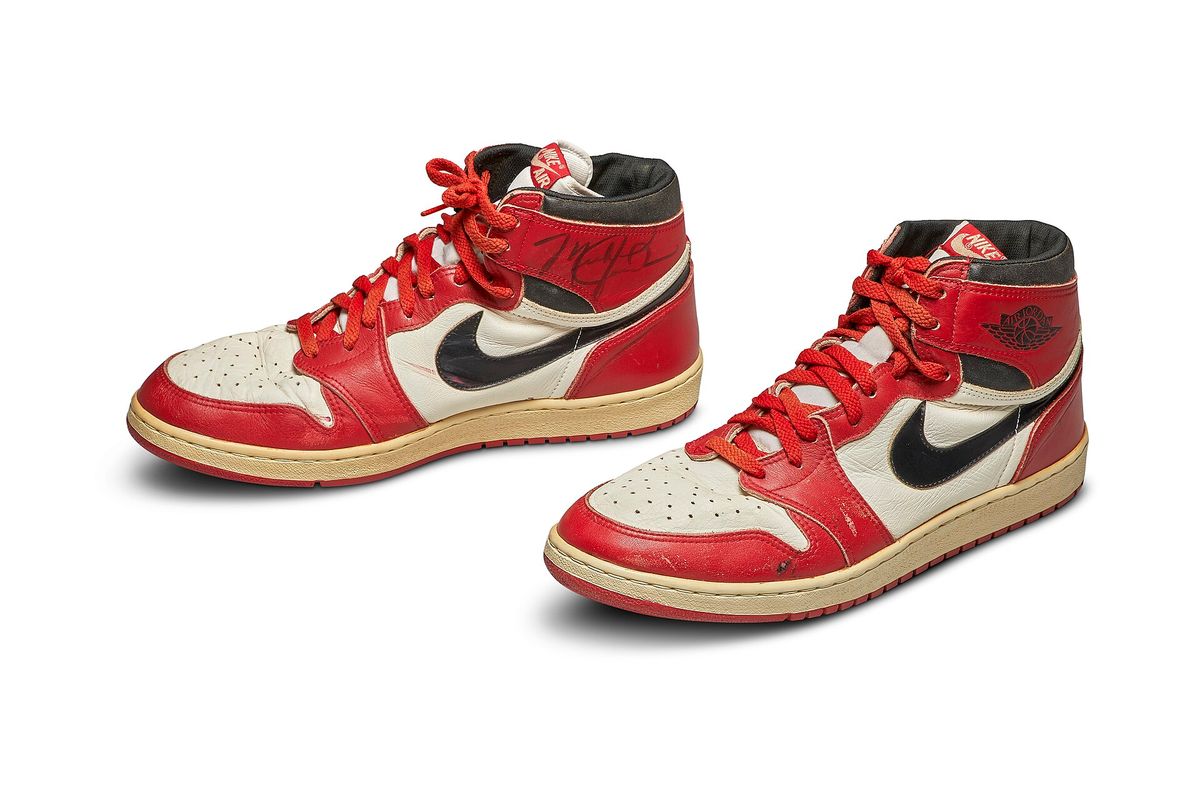
The shoes from that first season became artifacts. In May 2020 a pair of Jordan's game-worn, autographed Air Jordan 1s from 1985 sold at Sotheby's for $560,000, a world auction record for sneakers and more than three and a half times the $150,000 high estimate, after a bidding war added $300,000 in the final twenty minutes41. Sotheby's noted details that set Jordan's own pair apart from the public release: his were Mids, while Nike sold only Highs and Lows in 1985; the swooshes were longer and leaner; and his pair had red laces, where retail pairs came with black or white41. The previous record, also set at Sotheby's, belonged to a 1972 Nike "Moon Shoe" racing flat that sold for $437,500 in 201941.
Jordan's line grew into a brand of its own. On September 9, 1997, Jordan appeared in New York with Ray Allen, Vin Baker, Eddie Jones, Michael Finley and Derek Anderson to launch "Brand Jordan" alongside the Air Jordan 1318. Today the Jordan Brand designs and sells footwear, apparel and accessories under the Jumpman trademark2, and in fiscal 2025 it had revenue of $7.27 billion, down 16% from the year before42. Falk once told Jordan that "the young people who will be buying his shoes one day will have no idea he played basketball"13.
Building Athlete Partnerships for Brand Growth
Jordan set a pattern Nike repeated. In 1996 it signed Tiger Woods to a five-year deal worth $40 million when he turned pro after his third straight U.S. Amateur title, a figure the Associated Press called shocking money at the time17. Woods had turned pro after an unprecedented third straight U.S. Amateur title, and within eight months he had won four times, including a record-breaking Masters17. One of the first campaigns after he turned pro, in 1997, showed young, aspiring athletes repeating "I am Tiger Woods"43. The partnership lasted 27 years; the most recent 10-year agreement was reportedly worth about $200 million, and it ended in January 202443. "Over 27 years ago, I was fortunate to start a partnership with one of the most iconic brands in the world," Woods said43. NPR's retrospective of the ads includes a later spot built on his father Earl Woods' voice: "You don't really instill anything into a child. You encourage the development of it"43. Across Jordan and Woods the approach was the same: sign the athlete early, then tell a story that is about the person as much as the product.
In 2003 Nike signed LeBron James out of high school for a reported $90 million21. In December 2015 it gave him a lifetime contract, which CNBC's sources described as the first Nike had officially given, and CNBC reported that Nike sold $340 million of his shoe line in the 12 months through January 2015, according to SportsScanInfo21. CNBC's sources said Nike aimed to build its brand around James beyond his playing career, and was adding executives and advertising for his line21. Nike also uses its athletes' calendars to sell. On its fiscal 2018 earnings call the company described "LeBron Watch," which released LeBron's on-court player edition shoes through the SNKRS app as he wore them44.
The picks were not always stars at signing, and Nike did not always get the one it wanted. Knight told Stanford that Nike had an arrangement with Jimmy Connors' agent, and Connors wore Nike shoes, but after Connors won Wimbledon and the U.S. Open without signing a formal deal, Nike walked away5. The next year Knight went to Wimbledon looking for a star, was told John McEnroe was too much of a hothead, and signed him after watching him erupt at a line judge: "This kid's not afraid"5.
The scale of these commitments is now a line in Nike's accounts. As of May 31, 2025, the company had endorsement contract obligations, including associated marketing commitments, of $16.2 billion, with $1.6 billion payable within 12 months, mostly base pay and minimum royalties owed to athletes, public figures, teams and leagues2. Some contracts pay more than those amounts through bonuses for performance2. The logic behind these deals is the one explained in AMW's guide to endorsement vs sponsorship : the athlete's personality carries the product, and a signature line gives fans something to buy.
Nike's Digital Branding Innovation
Social Media Marketing Excellence
Nike's digital work has often been about turning a customer into a participant. Nike ID, which let buyers customize their own shoes, was one of the first services of its kind, and in 2019 the New York agency Gretel rebranded it as Nike By You45. "Nike's audience craves creative input and the chance to be heard," said Gretel strategy director Daniel Edmundson45. The identity Gretel built shows how Nike stretches its core assets without breaking them. It has two layers: a black-and-white "Nike" layer that uses the swoosh and the Futura Extra Bold Condensed typeface to stand for Nike's expertise, and a "You" layer of color and personality that can change for every product and collaborator45. Gretel design director Simon Chong said the challenge was delivering "something that is recognisably Nike" that could still flex "across endless, unique applications"45.
The big campaigns of the last decade were launched as much on social platforms as on television. Kaepernick revealed "Dream Crazy" himself with a tweet on Labor Day, and the 1,400% jump in mentions followed the next day27. "For Once, Don't Do It" was a text-only film released on Twitter, where it passed two million views within a day38. Nike also built social mechanics into its own apps. On the fiscal 2018 earnings call, executives described SNKRS "Stash Drops" triggered at venues on Kendrick Lamar's tour, which made his Cortez Kenny 3 shoe available only to fans at the show, and said: "The SNKRS app is creating incredible demand and capturing more value from that energy is one of NIKE's largest upside opportunities for fiscal 2019 and beyond"44.
Membership sat under all of it. On the same call Nike said NikePlus membership was "the key to an elevated consumer experience," that it had relaunched the program the previous November, and that it had exceeded its membership targets for the year44. Once someone joined and filled in a profile, the company explained, it knew what sports they liked, how active they were and what styles they preferred, and could offer exclusive products and rewards in return44.
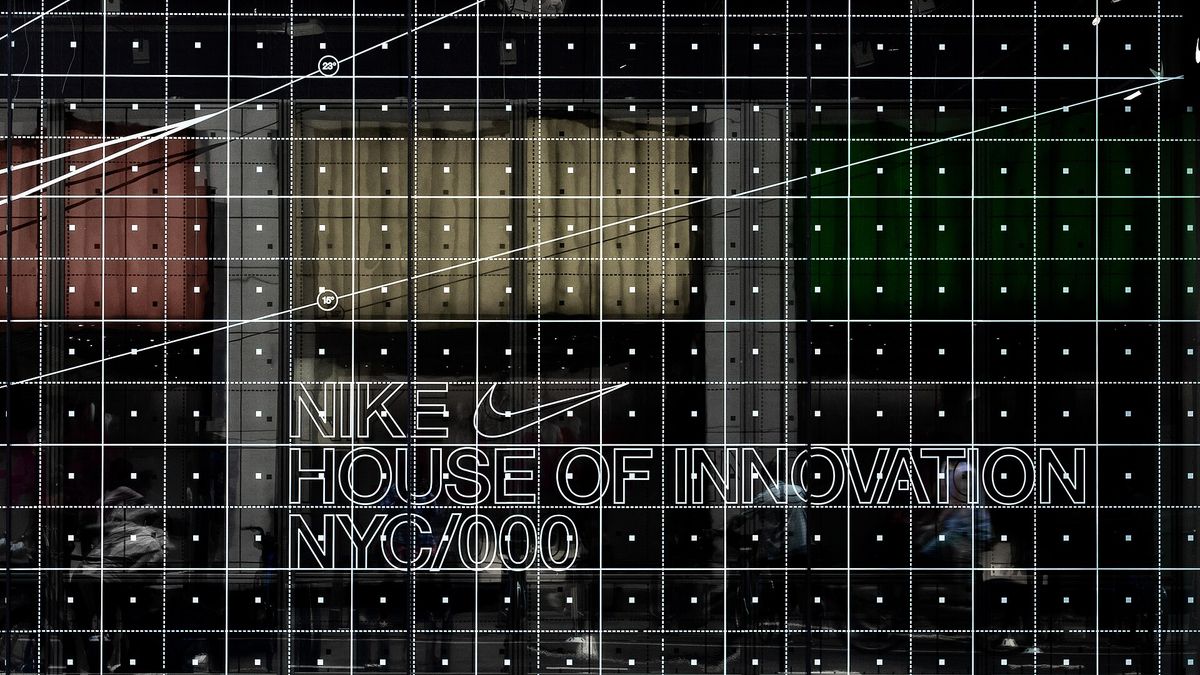
The New York flagship that opened in November 2018 was designed around those members. Nike's House of Innovation 000 covers more than 68,000 square feet over six stories at Fifth Avenue and 52nd Street46. Shoppers can scan codes on mannequins with the Nike app to check sizes and send items to a fitting room, and there are no cash registers; NikePlus members can also reserve items by phone and pick them up from an in-store locker28,46. The store also sells personal touches: a Sneaker Bar offers dip-dyeing, printing, embroidery, patches and lasering, and a Speed Shop floor uses local data to decide what to stock28,46. "We are finding consumers just can't get enough of customization experience," said Heidi O'Neill, then president of Nike Direct. "This store is more than a store for us. It's a connection and immersion into the brand and a way to serve members"28.
Nike+ Technology and Customer Engagement
In May 2006 Nike and Apple announced Nike+iPod, a sensor in the shoe that talked to an iPod nano and recorded time, distance, calories burned and pace, with audio feedback through the runner's headphones22. The Sport Kit was priced at $2922. "Nike+iPod will change the way people run," said Mark Parker, then Nike's CEO22. The first shoe built to talk to the iPod was the Nike+ Air Zoom Moire, Nike planned to make many of its leading styles "Nike+ ready," and the launch came with a Nike Sport Music section on the iTunes Music Store and a nikeplus.com site for runners' data22. Lance Armstrong and marathon world record-holder Paula Radcliffe appeared at the New York launch22. It was an early example of a shoe company selling an ongoing experience along with the product.
In fiscal 2012 Nike went further into hardware. On that year's fourth-quarter call Parker, who told investors Nike aimed to be a $28 billion to $30 billion company by the end of fiscal 2015, listed "game-changing digital products like FuelBand and NIKE+ for Basketball and Training" next to "a radical new approach to shoe creation called Flyknit," along with new uniforms for all 32 NFL teams, and described himself as "a designer and a self-avowed product geek"23. The FuelBand wristband did not last as a hardware line, even though Nike's ties to Apple ran deep: Apple CEO Tim Cook sat on Nike's board47. In April 2014 CNET reported that Nike was laying off as many as 55 people from a 70-member hardware team and shelving a new version. The report came just days after Nike announced a Fuel Lab in San Francisco to work with other digital services for athletes47. Nike confirmed "a small number of layoffs" and said it would keep selling and supporting the FuelBand SE47.
The bigger digital bet was on selling directly. In June 2017 Nike announced the Consumer Direct Offense, a reorganization meant to serve consumers "personally, at scale," using digital channels, key cities and one-to-one connections25. "Through our Consumer Direct Offense, we're putting even more firepower behind our greatest opportunities in Fiscal 2018," Parker said48. In fiscal 2017 Nike's digital commerce sales grew 30% on a currency-neutral basis25. In November 2019 Nike ended its Amazon pilot. "As part of Nike's focus on elevating consumer experiences through more direct, personal relationships, we have made the decision to complete our current pilot with Amazon Retail," a spokeswoman told CNBC11. At the time Nike's direct-to-consumer sales were $11.8 billion of $39.1 billion in fiscal 2019 revenue, and Nike said it would keep using Amazon Web Services to run its website and apps such as SNKRS11. Analysts read the exit as a signal. "Brands don't need Amazon," Jefferies analyst Randy Konik told CNBC, and Evercore ISI's Omar Saad wondered "if many other brands follow"11.
In June 2020 the company announced a faster phase, the Consumer Direct Acceleration, which it said would lead with Nike Digital and its own stores plus select partners, organize product around Men's, Women's and Kids', and unify its investment in data and analytics8. "Two years into executing our Consumer Direct Acceleration, we are better positioned than ever to drive long-term growth while serving consumers directly at scale," CFO Matt Friend said in June 202249. By fiscal 2022 Nike Direct made up about 42% of Nike Brand revenue, and Nike Brand Digital sales had reached $10.7 billion, up from $9.1 billion the year before50. In December 2021 Nike bought RTFKT, a studio founded in 2020 that made virtual sneakers and collectibles using game engines, NFTs and augmented reality. "This acquisition is another step that accelerates Nike's digital transformation," Donahoe said29. Nike also launched its own web3 platform, .SWOOSH51.
The limits of that push showed up later, in both the numbers and the portfolio. In December 2024, under Elliott Hill, RTFKT announced "the plan to wind down RTFKT operations," with services ending by January 202530. Hypebeast reported that the value of RTFKT's NFTs had fallen after the crypto boom and the brand had struggled to keep its community engaged51. The sales figures that followed are covered below.
Brand Positioning in the Athletic Market
Premium Quality and Performance Image
Nike has always tied its image to athletes and to invention. Its annual report describes the company's principal business as the design, development and worldwide marketing and selling of athletic footwear, apparel, equipment, accessories and services, and says it aims to fulfill its mission through groundbreaking sport innovations2. It lists Nike Air, Zoom, Free, Dri-FIT, Flyknit, FlyEase, ZoomX, Air Max and React as examples of "our dedication to designing innovative products"2.
The most visible of those ideas was literally made visible. Tinker Hatfield, a former university pole vaulter trained as an architect, joined Nike in 1981 to design showrooms and stores, and moved into shoe design in 1985 on Bowerman's advice15. Nike Air, pressurized air in the sole, had been patented in 197915. On a trip to Paris Hatfield went to see the Centre Pompidou, the building by Renzo Piano and Richard Rogers that wears its pipes and escalators on the outside. "The Centre Pompidou was a must-see for me, I had to go!" he recalled15. He came back proposing to show the air unit through a window in the midsole. Nike executives resisted, worried that customers would see the sole as fragile, but the Air Max 1 launched in 1987 in red and white and became a hit15. Hatfield also borrowed the building's color logic, in which blue marked air, yellow electrical, green water and red people movement, and pushed the Air Max 1 further than Nike's already bright running shoes15. "I wanted to push things as far as possible without being fired!" Hatfield said15. The Air Max went on to sell millions of pairs in dozens of limited editions, and for its 30th anniversary in 2017 Nike released a version in colors taken from the Pompidou itself15. Hatfield said later of his move into design, "I discovered almost by accident that I was good at drawing, it was a real surprise to me!"15 He went on to design several Air Jordan models and the self-lacing Nike Air Mag from Back to the Future Part II, which Nike made real in 201515.
Nike has kept staging its technology as a public event. In May 2017 its Breaking2 project, which Live Science described as a multi-million-dollar attempt to run a marathon in under two hours, ended with Eliud Kipchoge crossing the line at the Monza racetrack in 2:00:2526. The three runners started at 5:45 a.m. behind an arrowhead-shaped formation of elite pacers; Desisa dropped off the pack after about 30 minutes, and Tadese began to fall behind around mile 2026. The time did not count as a record because of the rotating pacers, but it was 2 minutes 32 seconds faster than the world record of the day26. Nike built a custom shoe for the attempt, the Zoom Vaporfly Elite26. The other two runners, half-marathon world-record holder Zersenay Tadese and two-time Boston Marathon winner Lelisa Desisa, finished in 2:06:51 and 2:14:1026. The following year Kipchoge set an official world record of 2:01:39 at the Berlin Marathon wearing Nike's Vaporfly 4%52.
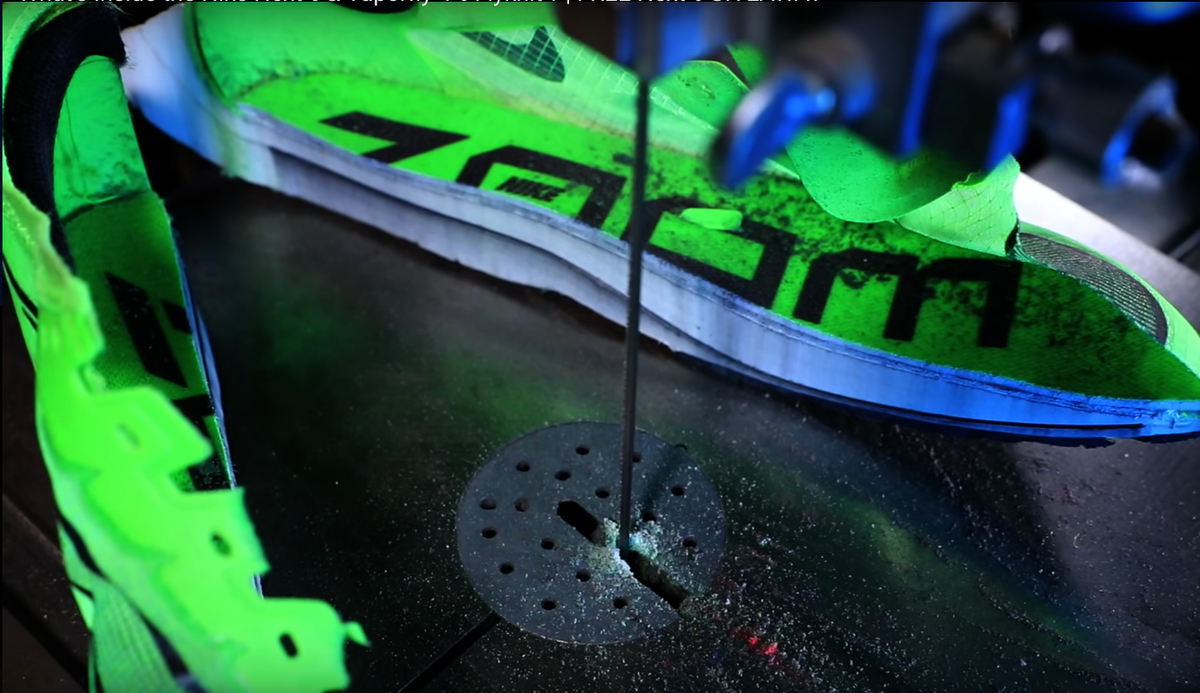
The Vaporfly line then became the center of a real argument about fairness. Sports Illustrated reported that critics said the shoes' carbon fiber plate and foam gave an unfair advantage, and that a New York Times analysis of Strava data found runners in Vaporflys were 3% to 4% faster than similar runners in other shoes52. In January 2020 World Athletics set new limits: a maximum sole thickness of 40mm, no more than one plate, and a requirement that shoes be "reasonably available to all in the spirit of the universality of athletics," with a four-month retail window before use52. The Vaporfly Next%, at 40mm, stayed legal52. The controversy dated back to 2016, when several Nike athletes raced in prototypes at the U.S. Olympic marathon trials and in Rio de Janeiro52. Nike had said throughout that its shoes met the rules52.
The company's spending reflects this positioning. Demand creation expense, which covers advertising, digital marketing, endorsement contracts and sports marketing, was $4.69 billion in fiscal 2025, up from $4.29 billion the year before, with the increase driven by higher brand marketing and sports marketing2.
When the Brand Took a Hit
The same visibility that made Nike's marketing work also made it a target. Nike's business model relied on outsourced manufacturing, and in 1991 activist Jeff Ballinger published a report documenting low wages and poor working conditions at factories in Indonesia19. In 1992 his Harper's article described an Indonesian worker at a Nike subcontractor earning 14 cents an hour, below the local minimum wage19. Protests at the 1992 Barcelona Olympics and a 1993 CBS interview with factory workers brought mainstream attention, and by 1997 new Niketown stores were drawing protests19. Nike set up a department to improve factory workers' lives in 1996, and in 1997 it asked diplomat Andrew Young to review its overseas labor practices; his report was criticized for not addressing low wages and for using Nike interpreters, with Nike officials along on factory visits19.
In May 1998 Knight addressed it directly. "The Nike product has become synonymous with slave wages, forced overtime, and arbitrary abuse," he said. "I truly believe the American consumer doesn't want to buy products made under abusive conditions." He announced that Nike would raise the minimum age of workers, increase monitoring and apply U.S. clean air standards in its factories19. In 1999 Nike began creating the Fair Labor Association with other companies and human rights and labor groups, to set a code of conduct and independent monitoring, and between 2002 and 2004 it carried out about 600 factory audits19. By 2004, according to the same account, human rights activists acknowledged that increased monitoring was dealing with some of the worst problems, such as locked factory doors and unsafe chemicals, while other issues remained19. In 2005 Nike became the first company in its industry to publish a full list of its contract factories19. Its 108-page report that year admitted serious problems, including restricted access to toilets and water in some South Asian plants and weeks of more than 60 hours in more than half of its factories53. The Guardian reported that the report covered about 700 factories and 650,000 contract workers, and that it was Nike's first since the company paid $1.5 million to settle allegations that it had made false claims about how well its workers were treated53. "We do not believe Nike has the power to single-handedly solve the issues at stake," the company wrote53. Michael Posner of Human Rights First called the report "an important step forward," but added: "The facts on the ground suggest there are still enormous problems with these supply chains and factories"53. The World's summary of the episode put the branding lesson plainly: "Nike wasn't the only or worst company to use sweatshops. But it was the one everybody knew"19. The scale is still large. As of May 31, 2025, contract manufacturers ran 97 finished footwear factories in 11 countries and 303 apparel factories in 34 countries, and factories in Vietnam, Indonesia and China made about 51%, 28% and 17% of Nike Brand footwear2.
The brand's image took another hit from inside the company. In March 2018 Trevor Edwards, president of the Nike Brand, resigned; CNBC, citing The Wall Street Journal, reported that CEO Mark Parker's memo referred to reports of "behavior occurring within our organization that do not reflect our core values of inclusivity, respect and empowerment"54. Parker did not say whether the complaints involved Edwards, and a Nike spokesman told the Journal there were no allegations against him54. Stanford's 2019 profile of Knight notes that allegations of sexual harassment and discrimination in 2018 led to the departure of about half a dozen male executives5. A brand's brand equity is built by marketing, and these chapters showed it can also be spent by what happens far from the ads.
Competing Against Adidas and Other Rivals
Adidas was the benchmark from the start. Knight's original idea was to break the German brands' hold on American running shoes3, and Davidson's swoosh was drawn to look nothing like Adidas's stripes31. The Cortez name itself came out of an Adidas objection7. Nike's 2025 annual report describes the athletic footwear, apparel and equipment industry as highly competitive worldwide2.
The rivals have changed over time. In the 1980s the threat was Reebok, which overtook Nike before the Jordan line and "Just Do It" helped Nike pull away9. Reebok's later decline is a warning about what happens when a leader stops setting its own agenda. Paul Litchfield, who developed Reebok's Pump basketball shoe, told Retail Dive that the company "started looking over their shoulder a bit" and began worrying whether rivals would catch up9. By 2021, Retail Dive reported, Reebok held 1.1% of the sports footwear market according to Euromonitor International, and Adidas was preparing to sell it9. In 2024 Adidas reported revenue of €23.68 billion, up 11% in euros and 12% on a currency-neutral basis, with operating profit of €1.34 billion; its marketing and point-of-sale spending rose 12% to €2.84 billion as it kept investing behind its global "You Got This" campaign55. Newer running brands have grown quickly: Deckers reported that its Hoka brand's net sales rose 23.6% to $2.23 billion in the fiscal year to March 2025, and its chief executive, Stefano Caroti, described Hoka and Ugg as "industry leaders, each with iconic and innovative products"56.
The most recent competitive pressure came partly from Nike's own choices. In fiscal 2025 revenue fell to $46.3 billion from $51.4 billion2. Sales through Nike Brand Digital dropped 20%, from $12.1 billion to $9.6 billion2. The company said it was repositioning its digital store as a full-price platform, reinvesting in wholesale distribution, clearing inventory and increasing spending on brand and sports marketing2. Its three largest U.S. customers accounted for about 25% of U.S. sales that year2. Elliott Hill said of the results that "they are not where we want them to be," and described a new "sport offense" to focus the company on key sports and stories that connect with consumers42.
Nike's Brand Consistency Across Products
Maintaining Visual Identity Standards
For all the change in products and channels, the core assets have barely moved. The swoosh is the one Davidson drew31. "Just Do It" has run since 198816. The mission still claims every athlete, with the same broad definition of who counts2.
Nike's stores are where those assets are held to the most consistent standard. The House of Innovation release describes the New York store as a return to the immersion many locals remember from the city's original Niketown, which opened more than 20 years earlier46. In the United States at the end of fiscal 2025 Nike ran 213 Nike Brand factory stores, 85 Nike Brand in-line stores and 78 Converse stores2. Wholesale partners still sell most of the product: Nike Direct accounted for $18.8 billion of the Nike Brand's $44.7 billion in fiscal 2025 revenue, which is part of why the company's 2025 plan puts money back into those relationships2.
Product Line Extensions and Brand Integrity
Nike has extended its reach through separate brands, each with its own marks, and it has repeatedly pruned the ones that did not fit. In late 2007 it sold the Starter brand to Iconix Brand Group for $60 million and put Nike Bauer Hockey up for sale, saying neither aligned with its long-term growth priorities57. In the same quarter it agreed to buy the English football brand Umbro for about £282 million, or roughly $570 million, to expand in football57. "We are confident that our divestiture decisions this quarter are the right ones for Bauer Hockey, for Starter, and for Nike," Parker said57.
Five years later Umbro went the other way. On May 31, 2012, Nike announced it would divest Cole Haan and Umbro, a move its annual report said would allow it "to focus our resources on driving growth in the NIKE, Jordan, Converse and Hurley brands"24. Parker called the decisions "much tougher" than investing in digital products and said he was confident the remaining brands had "virtually unlimited growth potential"23. The 2012 annual report explained the logic: Nike continually evaluates its portfolio "to ensure we are investing in those businesses that are accretive to the NIKE Brand, and with the largest growth potential and highest returns"24. Hurley, the Southern California surf brand Nike had bought from founder Bob Hurley in 2002 when it had about $70 million in annual sales, was sold to Bluestar Alliance in a deal announced in October 201910,8. WWD noted that the purchase had given Nike automatic credibility in surf, skate and snowboarding, which was new terrain for Nike in 200210.
Converse is the extension that stayed. Nike completed the purchase in September 2003 for about $305 million20. Today it reports Converse as its own segment, selling casual sneakers under Converse, Chuck Taylor, All Star, One Star, Star Chevron and Jack Purcell marks, while the Jordan Brand is reported inside the Nike Brand but sold under its own Jumpman mark2. Converse is also a reminder that separate brands carry separate risks: its revenue fell 19% in fiscal 2025, to $1.69 billion from $2.08 billion, as unit sales dropped 12% and heavier discounting lowered the average selling price2.
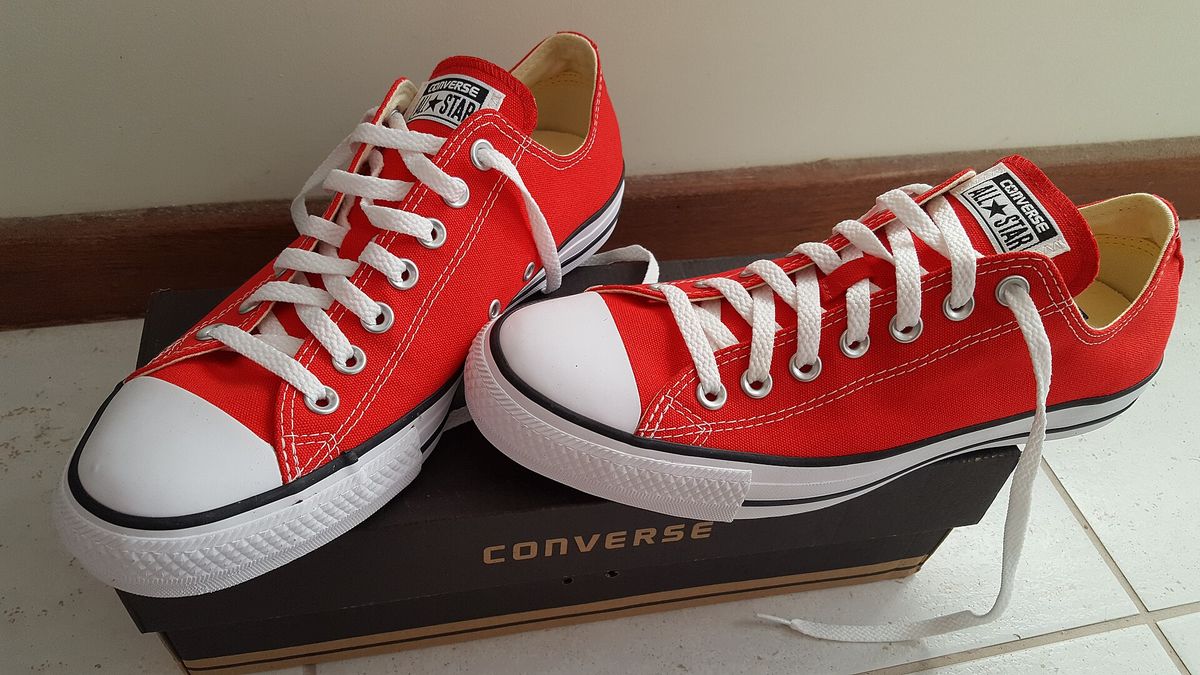
The pattern is consistent. Nike now describes its business as three brands, NIKE, Jordan and Converse2, and each keeps its own story. The swoosh stays tied to sport.
Conclusion
Choose a simple mark and keep it. Knight did not love the swoosh, and he kept it anyway. More than fifty years later it is unchanged, registered in more than 190 jurisdictions, and it has absorbed every story Nike has attached to it1,31,2.
Write a line that customers can finish. "Just Do It" works because it leaves the goal to the listener. Nike launched it with an 80-year-old runner, which said the brand was for everyone before a single star appeared, and three decades later the same words carried campaigns about gender and race27,37,38.
Bet on people, and structure the bet. The Jordan contract carried a sales test in year three. It became a $7 billion brand, and Nike's endorsement commitments now run to $16.2 billion13,42,2.
Show the product working. From the window in the Air Max 1 to a marathon run on a racetrack, Nike has made its technology into something people can see, and it has had to defend that technology in public when rivals and regulators pushed back15,26,52.
Take positions you are willing to hold. Dream Crazy brought an angry reaction and a 3% drop in Nike's shares at the open, and a year later it won an Emmy27,34. Knight's view was that enough people loving the brand mattered more5.
Own the problems in public, and correct course. The factory crisis damaged the brand for most of a decade. Knight's 1998 admission and the 2005 factory list were the start of the repair19,53. The fiscal 2025 reset, with wholesale partners back in the plan and RTFKT closed, is the latest test of the same discipline2,30.
Sources
- 1
- 2
- 3
- 4
- 5
- 6
- 7
- 8
- 9
- 10
- 11
- 12
- 13
- 14
- 15
- 16
- 17
- 18
- 19
- 20
- 21
- 22
- 23
- 24
- 25
- 26
- 27
- 28
- 29
- 30
- 31
- 32
- 33
- 34
- 35
- 36
- 37
- 38
- 39
- 40
- 41
- 42
- 43
- 44
- 45
- 46
- 47
- 48
- 49
- 50
- 51
- 52
- 53
- 54
- 55
- 56
- 57

Cristina Arcega-Punzalan is a content writer at AMW®, covering topics in marketing, entertainment, and brand strategy.
Frequently Asked Questions
Who designed the Nike swoosh and how much was she paid?
Carolyn Davidson, a graphic design student at Portland State University, designed the swoosh in 1971 and billed $35 for it. Phil Knight told her, "I don't love it, but it will grow on me." In September 1983 Nike gave her a gold swoosh ring set with a diamond and an envelope of Nike stock.
When did Blue Ribbon Sports become Nike?
Phil Knight and Bill Bowerman founded Blue Ribbon Sports in 1964 to import Onitsuka Tiger shoes. After the company split with its Japanese supplier it needed a new name, and in 1971 it was rechristened Nike, after the Greek goddess of victory. The name came from Jeff Johnson, the company's first full-time employee.
How did the Just Do It campaign start?
Dan Wieden of Wieden+Kennedy wrote the line in 1988. He said it came from the final words of a death row inmate facing execution, "let's do it," and he dropped the "let's." The first ad showed 80-year-old runner Walt Stack crossing the Golden Gate Bridge. For its 30th anniversary in 2018 Nike ran "Dream Crazy" with Colin Kaepernick, which won the Emmy for outstanding commercial in 2019.
How much did the first Air Jordan sell?
Nike signed Michael Jordan in 1984 for $500,000 a year over five years, with the right to end the deal if his shoes had not sold $4 million by the third year. According to NBA.com, Nike sold $70 million of Air Jordans in their first three months, and Jordan's agent David Falk has said first-year sales reached $126 million. In fiscal 2025 the Jordan Brand brought in $7.27 billion.
What is Nike's brand mission?
In its fiscal 2025 annual report Nike states that its mission is to bring inspiration and innovation to every athlete in the world, which includes the belief that if you have a body, you are an athlete.
How big is Nike today?
Nike describes itself as the largest seller of athletic footwear and apparel in the world. Revenue was $46.3 billion in fiscal 2025, which ended May 31, 2025, down 10% from $51.4 billion in fiscal 2024. The company had about 77,800 employees.
Related Resources
Related Articles
The Prestige Factor: Why Porsche Branding Dominates Luxury & Creates Automotive Icons
Explore how Porsche's unparalleled branding strategy blends heritage, innovation, and sustainability to craft a luxury identity. Learn how this iconic automotive brand captivates affluent...
Inside the Oreo Marketing Strategy That Keeps the Brand Relevant Across Generations
From a 30-cents-a-pound biscuit in 1912 to the blackout tweet of 2013 and the celebrity cookies of 2025, how Oreo picks its target market, runs its marketing mix and keeps a century-old cookie in the conversation, told from the record.