

The Allure of Private Member Clubs NYC in Manhattan’s Social Scene

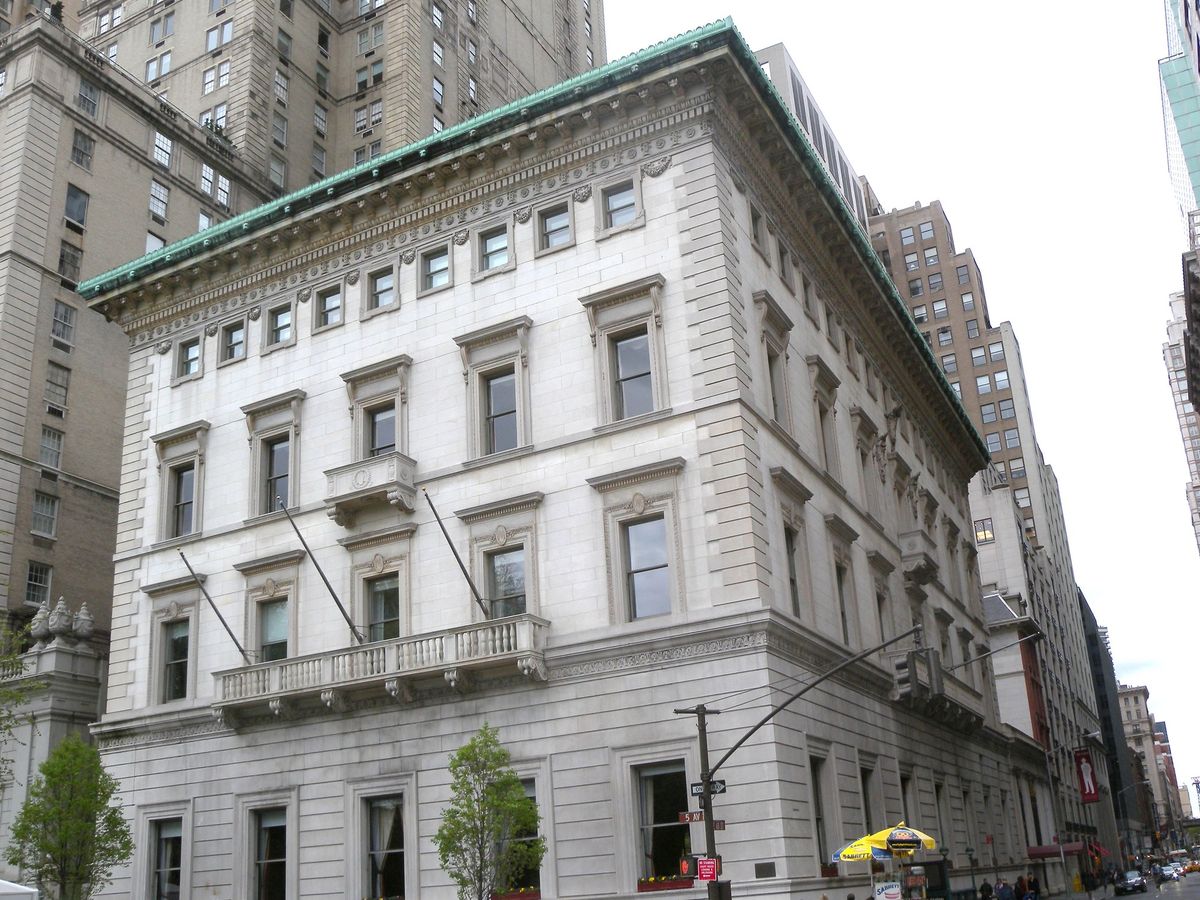
On the night of February 20, 1891, J. P. Morgan, members of the Vanderbilt and Goelet families and a group of their friends met to start a new club. Shortly before, the Union Club had voted down two men put up for membership: John King, president of the Erie railroad, whom Morgan had nominated, and Dr. W. Seward Webb, president of the Wagner Palace Car Company and a Vanderbilt son-in-law1. The New York Times, as quoted by the architectural historian behind Daytonian in Manhattan, reported that King was turned down because "he ate with his knife"2. The new club was named the Metropolitan, Morgan was chosen as its first president, and Stanford White gave it a marble palazzo on Fifth Avenue that the architecture critic Montgomery Schuyler called "the largest, most imposing, and most luxurious of the club-houses of New York"1.

Quick Summary
New York's private clubs began with the Union Club in 1836, modeled on the clubs of London3. Many later clubs were founded by people who were turned away from, or unhappy with, an older one: the Knickerbocker in 1871 over lax admissions at the Union, and the Metropolitan in 1891 after the Union rejected a candidate nominated by J. P. Morgan6,1. The Century Association has gathered authors and artists since 1847, and the Brook, founded in 1903, took its name from Tennyson and promised a door that would never be locked8,24. A 1984 city law, upheld by the Supreme Court in 1988, treats large clubs that serve meals and take business payments as public accommodations9. Since 2020 newer clubs such as Core, Zero Bond and Casa Cipriani have grown, while the Friars Club lost its clubhouse at a foreclosure auction in December 20244,39.
That story holds most of what makes private member clubs in New York City interesting. Clubs here are formed by people who want a room of their own, and new clubs are often formed by people who were left out of, or unhappy with, an older one. The Union Club of 1836 produced the Knickerbocker, the Metropolitan and others. A new wave that includes Core, Zero Bond and Casa Cipriani has grown since 20203,4.
The clubs have also been a mirror for the city. They followed wealthy New Yorkers up Fifth Avenue, commissioned some of the best buildings of the Gilded Age, fought the city over whom they could keep out, and in the 21st century turned into businesses that sell workspace, spa treatments and dinner reservations as much as company.
This guide covers the best-known Manhattan clubs: when and why each was founded, where it has lived, how members get in, what membership has included and cost at different points in time, and what has changed, including the closure of the Friars Club. Every fact comes from the sources listed at the end.
What Makes Private Member Clubs in NYC Special
New York borrowed the idea from London. In the summer of 1836 a group of leading New Yorkers, including former mayor Philip Hone, invited 250 "gentlemen of social distinction" to join a new Union Club. Hone wrote in his diary that it would "be similar in its plan and regulations to the great clubs of London"3. After the first 250, membership was to be expanded to 4003.
London's own clubs had grown out of coffeehouses. Coffee reached London in 1652, the coffeehouses took on political identities, and one of them, Mrs. White's Chocolate House, adopted a members-only policy and became White's, one of the first true clubs3. Club life in London took off after the Napoleonic Wars, and New Yorkers soon wanted the same exclusivity3.
The English writer Anthony Lejeune, visiting in 1992, found the two cities' clubs still very alike more than 150 years later. He noted that the older New York clubs had "evolved from groups of friends who met in coffee houses and taverns," and that American clubs "tend to be more luxuriously appointed than their British equivalents; the leather armchairs are less shabby." He also thought the New York clubs "more socially exclusive than the London clubs and stricter in their rules"5.
Lejeune listed the range: "clubs for the old upper-class, clubs for alumni of Ivy League colleges, clubs for actors, clubs for writers, predominantly sporting clubs, small intimate clubs like the Coffee House" and "architecturally magnificent clubs like the Metropolitan." He quoted Sumner Welles grumbling in the 1950s that "there's no such thing as Club Society anymore. They can't even keep in the men they used to keep out." And he summed up the point of the whole enterprise in two sentences: "the point about a club is that it should be private. Publicity is anathema"5.
Exclusion drew the club map
Exclusion shaped the city's club map from the start. When German Jewish merchants were blackballed by the Union Club in 1852, they founded what became the Harmonie Club. In 1863, seventy Union Club members walked out over the club's support for members in the Confederacy and formed the Union League Club3.
The Century Association, a club for artists and writers, had been founded in 1847. University alumni clubs such as the Harvard Club (1865) and Princeton Club (1866), the University Club (1865), and more artists' clubs such as the Lotos Club (1870) and the Salmagundi Club (1871) followed3. By the Gilded Age the Union Club itself had simply run out of room, with a two-year waiting list even after it expanded beyond its original cap of 4003.
The 1902 edition of Club Men of New York listed 38,000 memberships in 157 clubs, a roster that Curbed described as reading "like a Who's Who of the city's elite"3.
The move uptown
The clubs moved with the city. In the 1860s and 1870s they clustered around Union Square, because it was still considered unfashionable to live above 34th Street. Most of those original buildings are gone3. A few downtown clubs survived. In 1888 the actor Edwin Booth bought 16 Gramercy Park and had Stanford White turn it into the Players, a club for "the promotion of social intercourse between the representative members of the dramatic profession...and the patrons of the arts," keeping an apartment upstairs that is still preserved as it was when he died there in 1893. Next door, the National Arts Club bought Samuel J. Tilden's double town house in 19063. As wealthy New Yorkers moved uptown in the last decades of the 19th century, 43rd and 44th Streets became a "club row," and grand clubhouses rose on Fifth Avenue3.
The Knickerbocker Club's history shows how the moves worked. It opened in 1871 at 249 Fifth Avenue at 28th Street, which was then considered a move uptown, since most of the city's life centered on 14th Street. In 1881 it moved four blocks north to 319 Fifth Avenue at 32nd Street, and after three decades of hard use, with no elevator and a declining neighborhood, it began looking again. Its members at first rejected a site at Fifth Avenue and 62nd Street as too far uptown, then bought exactly that corner in 1913 because nothing was available below 59th Street6.
The Union Club made the same journey in stages: Broadway at No. 343 in 1836, No. 376 in 1842, No. 691 in 1850, Fifth Avenue and 21st Street in 1855, Fifth Avenue and 51st Street in 1903, and Park Avenue and 69th Street in 19337.
Buildings as statements
Many clubs hired the best architects of their day, often from among their own members. McKim, Mead & White designed the Century Association (1889-91), the Metropolitan Club (1892-94) and the Harvard Club (1894)1,3. Delano & Aldrich later "gradually usurped the monopoly on New York club design" from McKim, Mead & White, according to the Landmarks Preservation Commission, with the Knickerbocker (1913-15), the Colony Club (1924) and the Union Club (1932)6.
The style they chose was a statement too. The Commission notes that English architects had first used the Italian Renaissance palazzo for London clubhouses in the 1830s and 1840s, and that the Century Association was McKim, Mead & White's first New York clubhouse built entirely in that manner1. The influence became so strong that Le Corbusier, after visiting in 1935-36, wrote: "in New York, then, I learn to appreciate the Italian Renaissance. It is so well done that you could believe it to be genuine"1. Delano, by contrast, reached back to America's own Georgian and Federal architecture, and according to the Commission "hailed the privacy afforded by the more traditional house plan"6.
Those buildings remain some of the city's landmarks. The Landmarks Preservation Commission designated the Century Association in 1967 and the Metropolitan and Knickerbocker club buildings on the same day in 19798,1,6.
Decline and survival
Curbed dated the peak of club building to around 1915, when the Yale Club opened its 22-story building on Vanderbilt Avenue. The skyscraper was "a hedge against future insolvency": if the move proved ruinous, it could easily be turned into a hotel steps from Grand Central. Curbed called it a club "hoping for success, but building for failure"3. After World War I, interest in club life began to wane, and one thing that kept many clubs afloat was their guest rooms, which could be rented to out-of-town members at bargain rates. "Most city clubs still have these rooms," Curbed noted in 20153. Most clubs also own their buildings and have kept their tax-exempt status as social clubs, which Curbed said helped them balance their books3.
Lejeune saw other pressures by 1992: "Rising costs, staff problems, and changing patterns of urban life have affected both New York and London," he wrote, and bar profits were falling5.
The law arrives
The modern era arrived through the law. In 1965 New York City adopted a Human Rights Law that banned discrimination in places of public accommodation but exempted any club "which is in its nature distinctly private"9. The city adopted it soon after Congress passed the Civil Rights Act of 1964, which barred discrimination in places of public accommodation9. In 1984 the city passed Local Law 63, which says a club is not "distinctly private" if it "has more than four hundred members, provides regular meal service and regularly receives payment" from nonmembers "for the furtherance of trade or business"9.
The City Council explained why. It found that "one barrier to the advancement of women and minorities in the business and professional life of the city is the discriminatory practices of certain membership organizations where business deals are often made and personal contacts valuable for business purposes, employment and professional advancement are formed"9.
The New York State Club Association, representing 125 clubs, challenged the law. The trial court, the Appellate Division and the New York Court of Appeals all upheld it, and the U.S. Supreme Court upheld it on June 20, 19889,3.
The Court's opinion noted that the Council had deliberately left out small clubs, benevolent orders and religious corporations, because they "have not been identified in testimony before the Council as places where business activity is prevalent"9. Justice Sandra Day O'Connor, concurring, wrote that "in such a large city a club with over 400 members may still be relatively intimate in nature, so that a constitutional right to control membership takes precedence." But she added that "predominately commercial organizations are not entitled to claim a First Amendment associational or expressive right to be free from the anti-discrimination provisions triggered by the law"9.
A new wave
After 2020 a different kind of club took over the headlines. CNBC counted more than a dozen new clubs that had opened or announced plans to open in Manhattan by September 2023, and described "an arms race of amenities" among them4. Vanity Fair counted at least eight private clubs opened in New York since the pandemic by May 202410. Industry watchers told CNBC the U.S. "may be moving toward the London model of social clubs," where institutions such as Annabel's, 5 Hertford Street and White's play a central role in social and professional life4.
The model most of the new clubs were measured against was Soho House. CNBC noted that it was founded in London in 1995 by the restaurateur Nick Jones and had expanded "to become the global goliath of the private club world, with dozens of locations around the world and a publicly traded stock"4. Vanity Fair reported in 2024 that Soho House had nearly 200,000 members globally and had faced criticism from some that it had grown too large10. Not everyone expected the boom to last. CNBC reported that some members worried New York was "becoming over-saturated with club offerings, especially if the economy plunges into recession," while club owners said they saw no slowdown in demand4.
Top Tier Private Member Clubs in Manhattan
The three clubs in this section are among the oldest in the city. Each began with a clear idea of who belonged: society men at the Union, artists and writers at the Century, and Harvard graduates at the Harvard Club.
The Union Club
The Union Club, founded in 1836, is the oldest club in New York City3. In the early 20th century The Evening World called it "the most exclusive in the city," the club "in which proud and happy fathers of the aristocracy enter their sons for prospective membership when the sons are but a few hours" old7. Its first three homes were rented buildings on Broadway, and from the start it had dining rooms that required formal attire and gaming rooms kept exclusively for card games such as whist, écarté, euchre, bezique and cribbage3. When it moved into a mansion at the northwest corner of Fifth Avenue and 21st Street in April 1855, members felt they finally had a permanent home7.
The club grew in the decades after the Civil War. It raised its membership beyond its original cap of 400, and there was still a two-year waiting list for admission3. Arguments over who should get in produced breakaway clubs, including the Knickerbocker in 1871 and the Metropolitan in 18916,1.
By the end of the century commerce had reached 21st Street. On December 21, 1899, the club announced it would buy lots at the corner of Fifth Avenue and 51st Street, facing St. Patrick's Cathedral, and a New York Times headline read "Union Club Goes Up Town." The club agreed to a $700,000 price for the land in January 19007. The Vanderbilts were buying up the rest of the block at the same time, and George W. Vanderbilt built a pair of matching marble houses there, which The Times said were "built by the family in an effort to keep business away from their front doors"7.
Choosing a design split the club. Older members wanted a copy of the 21st Street house. The building committee deadlocked between a near-copy and an Italian Renaissance palazzo, and called in Charles McKim, who was not a member, to break the tie. McKim chose the copy. The committee chose the palazzo anyway, and plans were filed in 1901 by Cass Gilbert and John Du Fais7,3.
The new clubhouse opened in 1903 and disappointed its members at once. The lots had been chosen for the view down Fifth Avenue, but the lounging room where members sat in leather chairs faced a ten-foot alley. McKim, whose advice had been ignored, said that "no one who knows attempts to deny that the interior is decidedly faulty," and noted that the floor facing the cathedral was given over to "the entrance, a strangers' room, coatrooms, a cab stand, and the office"7. Some members pushed for money to rebuild the interiors, but in time they grew used to the building7.
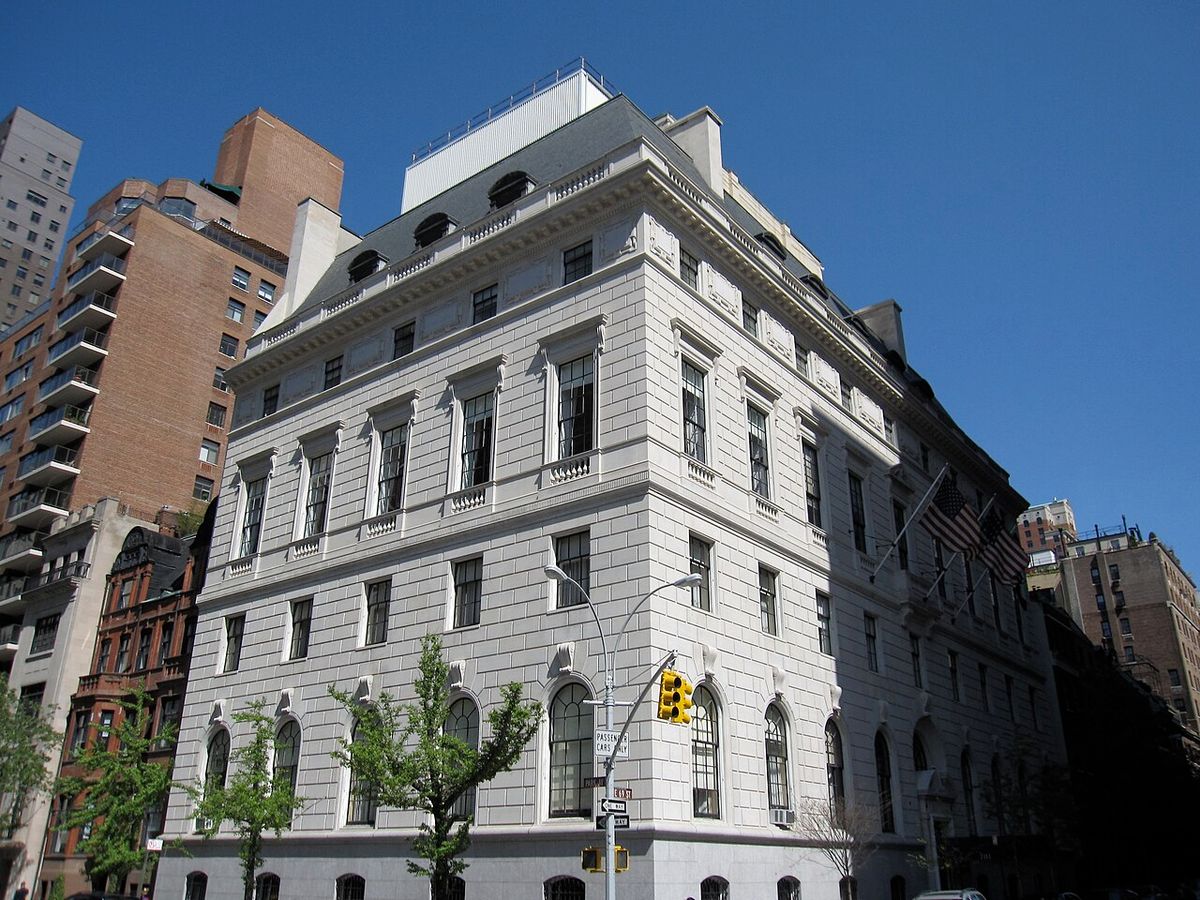
Membership in those years followed strict rules. According to Daytonian in Manhattan, candidates were presented by existing members, "stringent investigation was conducted and voting was held," and membership was limited to 1,5007. Club etiquette meant no reasons were given for a rejection. In 1912 the Standard Oil heir H. H. Rogers, a National Guard captain, was quietly kept out after a dispute in the Guard in which he alone among several officers refused to apologize to a colonel who had been cleared by a court of inquiry7.
The club changed in small ways during World War I. In 1918 it hired women as waitresses so that 12 to 15 male waiters could do war work, and The New York Times reported that "as far as is known the Union Club is the first uptown club to use waitresses in the dining room"7.
The club's wealth also made it a target. On June 23, 1916, a crowd of thousands marched up Fifth Avenue to protest outside the clubhouse. When a member leaned out of a window and shouted "Go back to work!", the crowd shouted back "Go back to work yourself!" and police reserves were called7. The club flew the flags of France and Britain beside the American flag through World War I and was still flying them in November 1920, when a crowd leaving a mass at St. Patrick's Cathedral for Terence MacSwiney, the Lord Mayor of Cork, threw stones and bricks and broke its windows. The flags were taken down, but Arthur W. Weeks, chairman of the house committee, ordered them put back "as a matter of principle"7.
Commerce caught up with the club again on Fifth Avenue. On June 20, 1927, The New York Times reported that "the northward course of trade along midtown Fifth Avenue is driving another landmark off the famous thoroughfare," and that the club had bought land on Park Avenue at 69th Street, "a strictly residential district"7. On May 29, 1933, 400 members attended a farewell dinner at 51st Street and sang "Auld Lang Syne" while the rugs were being taken up downstairs. Members pasted bids on leather chairs they hoped to keep as mementoes, one bid $300 for the marble fountain at the foot of the staircase, and portraits of club presidents going back to 1836, silver desk sets, candlesticks and the club seal were moved to the new building7.
The new clubhouse, a large Delano & Aldrich palazzo at Park Avenue and 69th Street, is still the club's home. The 51st Street building became the Grand Central Art Galleries, and was later demolished; the site is now part of Olympic Tower7,3. When Curbed surveyed the city's clubs in 2015, it said the Union Club "holds onto its reputation as the top New York club"3.
The club kept some old rules longer than others. In 1992 Lejeune noted that most clubs by then provided rooms for women guests, "who, as the Union says firmly, being ladies, would not wish to intrude on those parts of the building reserved for men"5.
The Century Association
The Century Association was organized in 1847 "to promote the advancement of art and literature." It was named for its original limit of one hundred members, and its founders included the poet William Cullen Bryant, the painter Asher B. Durand, William Kemble and William H. Appleton8,11. Its early membership was offered to "Artists, Literary Men, Scientists, Physicians, Officers of the Army and Navy, members of the Bench and Bar, Engineers, Clergymen, Representatives of the Press, Merchants and men of leisure"11.
The association preferred not to call itself a club, and its early members included Calvert Vaux, Winslow Homer, Edwin Booth, Joseph W. Harper and Thomas Cole11. Henry Holt, who joined in 1870, later recalled that "there was in the city hardly a man of eminence in literature, art or science who did not belong to the Century"11. After the Civil War the club took its first permanent home on East 15th Street11.
When the Century formed a committee to find a site for a new clubhouse uptown, one committee member explained that a prominent corner was unnecessary because "we are not in any sense a 'window club,'" and that the goal was "a good and commodious picture gallery and a handsome library, besides, of course, the usual parlors and sleeping apartments"11.
The club chose a midblock lot at 7 West 43rd Street, and its member Stanford White of McKim, Mead & White designed a four-story Italian Renaissance palazzo of granite, terra-cotta and brick11,8. The new "magnificent quarters," as The New York Times called them, opened on January 10, 1891. The building had cost $227,673, of which the club owed only $7,327. A special exhibition in the new art gallery was opened to women "by card" three days later, but women could not become members11. The fine woodwork in the building was by V. J. Hedden & Sons, a firm that later also worked on the Metropolitan Club1.
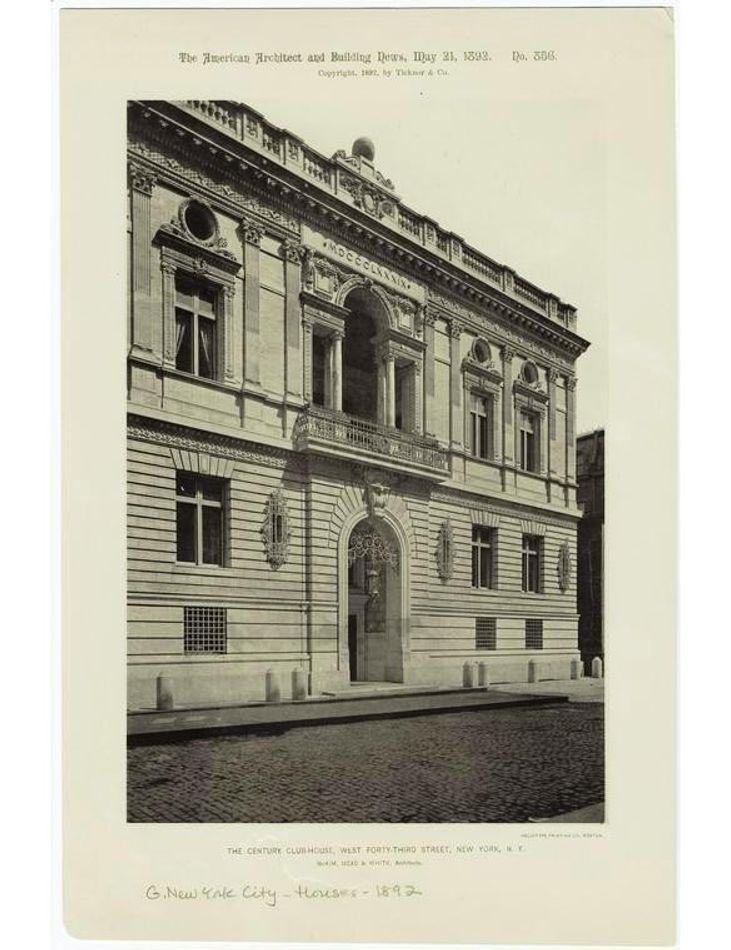
The Landmarks Preservation Commission designated the clubhouse a landmark in 1967, praising its two-story rusticated base, its arched entrance, its Palladian window and "the four handsomely wreathed round windows." It called the building "a restrained, dignified expression of the cultured membership which produced it"8.
Some of the club's history happened at the front door. In 1896 the Century hired Elijah Hicks as its hallman. He greeted members until his death in 1934, and members attended his funeral in Harlem. "For even the youngest member, the idea of a Century Club without an Elijah Hicks was inconceivable," The Times wrote11.
In the 1930s the club went to court in a dispute over whether it had to pay taxes. The question, as Daytonian in Manhattan describes it, was whether its library and art gallery made its members "followers of art and letters" or whether its bar and billiard room made it a "convivial social group." The case was decided by a one-man jury, a deputy United States marshal, who had to weigh the club's art exhibitions and lectures against what Daytonian calls the "inordinate number of Federal Judges" among its members. The association won11.
When Local Law 63 forced the question of admitting women, a petition inside the club warned that women would "break down the effortless, unconstrained companionship" among members3. Curbed reported that the membership voted in favor of admitting women, and The New York Times later said the club first admitted women, "by court order, in 1989"3,12. Susan Morrison, an author and editor, served as the club's first woman president from 2016 to 202013.
The club describes itself today as "more than two thousand authors, artists, and amateurs of letters and fine arts." Amateurs "may be of any occupation" as long as they are "sympathetic, stimulating, and congenial companions in a society of authors and artists." Its main activity "is conversation, although other activities include musical and dramatic performances, art exhibitions, and lectures." Mark Twain, after a visit in 1867, called it "the most unspeakably respectable club in the United States, perhaps"13.
The Harvard Club of New York City
The Harvard Club was founded in 1865 as part of the first wave of university alumni clubs3. Daytonian in Manhattan reports that it began with four alumni and had 16 members by the end of 1865 and 431 by 1886. For years it met in rented dining rooms in restaurants. In 1887, the year it incorporated, it rented a four-story brownstone at 11 West 22nd Street with ten bedrooms14.
Membership rose by 25 percent within a year, and the club bought a lot at 27 West 44th Street. Club member Charles McKim designed the new building14,3. At a Delmonico's dinner for 500 members and guests, club president Edward King promised, according to The New York Times, that there "would be ample accommodations for the Harvard baseball nine, the boating crews, and the football team"14.
McKim drew on early Harvard buildings for a neo-Georgian clubhouse of dark red "Harvard brick" and limestone, with the Harvard seal above the second-floor balcony, and Colonial Revival interiors inside14. It opened in 18943.
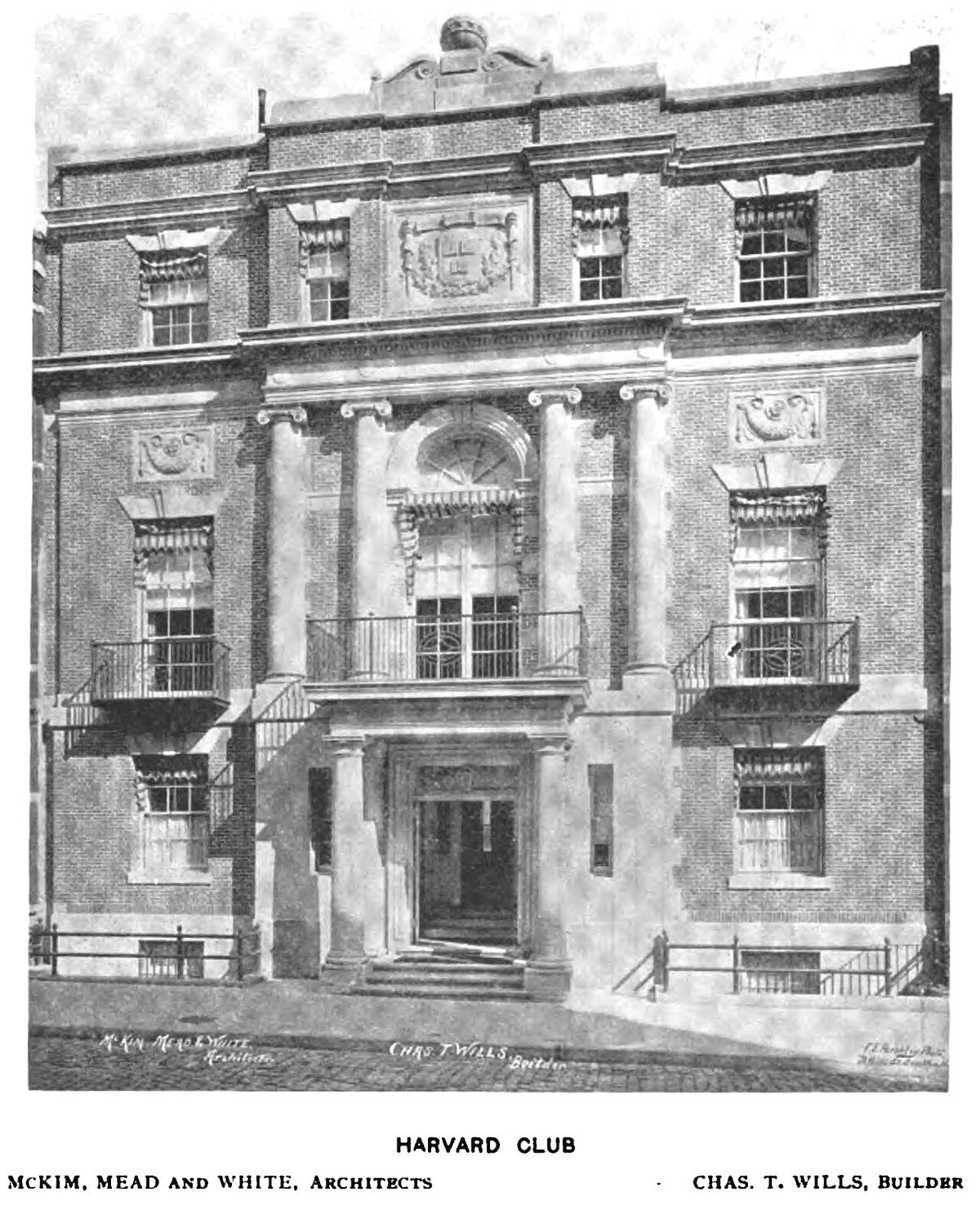
The club kept growing. Members bought neighboring lots and sold them to the club at cost. A 1905 addition by McKim, Mead & White added the three-story Harvard Hall, a library, billiard room, grill room and bedrooms, and the club called the result "the finest clubroom in the Western Hemisphere, if not the world"14,3. In 1915 a seven-story addition brought a formal dining room, banquet rooms, a swimming pool, squash courts, more bedrooms and a bar. The pool did not last: during World War II its area was floored over to create more sleeping rooms14. The club spent six years negotiating to buy the neighboring house at No. 33 West 44th Street, only for the Depression to halt its building plans. After World War II the upper three floors of that house were taken down and the lower two became an extension, with a facade redesigned by an architect member14. In 1901 the New York Yacht Club had opened next door3.
The question of women came to a vote in 1972. At a meeting in Harvard Hall, members heard a letter from Eleanor Holmes Norton, chair of the City Commission on Human Rights, who said she "did not believe an issue of this kind should have to be settled by force of law." The motion won 1,654 votes to 854, which was 18 votes short of the two-thirds majority needed15. In January 1973 the club voted again, 2,097 to 695, and admitted women as full members16. The Harvard Crimson reported that the resolution still kept women out of the club's men's bar16. At the 1972 meeting a lawyer had pointed out that, while a court was unlikely to order a club to admit anyone, there might be grounds for denying privileges granted by the state, notably the club's liquor license15. Other men's clubs moved at different speeds. Daytonian in Manhattan notes that the Yale Club opened its membership to women in 1969 and the University Club voted to do so in 198711.
Exclusive Social and Networking Clubs
Where the older clubs were built around family, profession or college, the clubs in this section were started by entrepreneurs as businesses. They are newer, they talk openly about their spaces, and their fees have been reported in the press.
The Core Club
Core was founded by Jennie Enterprise, then known as Jennie Saunders, and opened in 2005 on East 55th Street12,4. In 2011 The New York Times described it as "a quiet six-story annex of a Midtown office building, unmarked and inconspicuous," and quoted its founding idea, reported before it opened, as a place where a geographically and socially diverse set of wealthy people might "gather and meet others of the same disparate tribe"12.
Founding members, among them Vornado's Steven Roth, Blackstone's Stephen A. Schwarzman and the Ari Emanuel of William Morris Endeavor Entertainment, put up $100,000 each when the club was conceived12. Enterprise told Entrepreneur in 2016 that she hand-picked the founding members, asked each to nominate one more person, and that Core had since become "a self-selecting community" in which members nominate new members17.
Core set itself against the older clubs. "In a more traditional gentlemen's club, even bringing out a piece of paper, let alone a cellphone, is looked down on," founding member Paul Austin told The Times. "Here people are very much encouraged to network, to have working meals"12. "Time optimization is part of the DNA of the Core club," Enterprise, then Saunders, said12. The food company executive Irwin D. Simon told The Times he had never wanted to join the Met, the Harvard Club or the Harmonie: "At those other clubs, you had to know the same people and have gone to the same schools. The Core club felt different and not at all stodgy"12. Richard David Story, the editor of Departures, compared it with his other club, the Century: "This is a much younger, hipper crowd"12. Art was everywhere: paneling for the library commissioned from the artist Richard Wood, a light installation by Leo Villareal in the elevator, and Barnaby Furnas's red painting "Flood" above the bar12. The Times also described a conference dining room with teleconferencing, "a secret entrance and private stairway to accommodate members who travel with security details," a spa, a private theater, and art by Alexander Calder, Andy Warhol, David Salle and Richard Prince12.
By 2016 Entrepreneur reported about 1,400 members and a staff of 80 who had gone through "emotional-intelligence testing" as part of hiring. Staff knew members' families, assistants, drinks and whether out-of-town members would need one of the club's four suites17. The club had added about 380 cultural programs, including a gallery through which "some $80 million worth of art has come through," private screenings in its theater, and lectures with guests such as Google's Eric Schmidt and the artist Jeff Koons. Members could also visit the club's skin-care institute, run by Enterprise's partner Dangene17.
In 2022 WWD reported that Core would relocate within New York to 711 Fifth Avenue and open in Milan in a restored palazzo on Corso Matteotti, a 40,000-square-foot building that includes a former convent, with a theater, a library, eight suites and a longevity clinic, the Dangene Institute. A San Francisco location was planned for late 202318. "We are known as the anti-club for our different approach," Enterprise said18. Enterprise told WWD not to call Core a club, describing it as "a community, before being a physical location." WWD reported that members "are split between men and women," and that new ones "are presented by Core's existing members or selected by an international committee"18.
The New York move took place in 2023. Core leased the top four floors of 711 Fifth Avenue, the former Coca-Cola building, and spent two years and "tens of millions of dollars" building a new club there, which CNBC toured in September 2023 ahead of a scheduled mid-October opening4. The new club covers more than 60,000 square feet, with over 6,000 square feet of outdoor terrace19,4.
Robb Report listed 11 suites of 500 to 750 square feet, spa treatment rooms, a salon and barbershop, a gym, a "wine library" overseen by sommelier Yannick Benjamin, a speakeasy lounge and a "culinary lab" where chefs rotate in to cook for members19. Chef Michele Brogioni, formerly executive chef at Giorgio Armani, runs the kitchen4.
Enterprise told CNBC that the club's main draw is its community, and that Core produces between 150 and 200 cultural events a year. "I think the proliferation of private clubs is a reflection of an exceptional business model," she said4. Core does not disclose its members' names4.
Zero Bond
Zero Bond's founder, Scott Sartiano, came from nightlife. Vanity Fair reports that he grew up partly in South Carolina, came to New York to play tennis at Columbia, and after a wrist injury began promoting clubs full-time. With his partner Richie Akiva he started the restaurant Butter in 2002 and later the nightclub 1Oak, which Vanity Fair reported grossed $250 million across its outposts in its first decade10. After the two men split, Sartiano looked for a new project10.
In 2017 a real estate broker kept telling him over dinner that the building at 0 Bond was available. "We walked like two days later, and he was right. And the rest was history," Sartiano told Vanity Fair. The space was too small for a hotel, so he settled on something between a nightclub, a hotel and a restaurant10.
Zero Bond was due to open in April 2020. The pandemic pushed the opening to October 2020, and it had to close again for about eight weeks that winter20,10. It occupies an 1874 building in NoHo, at the corner of Bond Street and Broadway, that first housed a Brooks Brothers factory, with interiors by designer Bill Sofield that kept the original brickwork20,10.
Sartiano told Fortune he wanted "a London-style social club in New York" that catered "to creatives and actors as well as doctors, bankers, athletes, and more." The club has a café built for daytime work, soundproof phone booths, a salon, a lounge and a private dining room for 18 to 20 people. Members may bring three guests20. Fortune also described a library stocked with books from the publisher Assouline that doubled as a pop-up space for brands, a locked room where members could keep their own wine, and a rooftop and cocktail bar that earned the club significant revenue from third-party events20.
Privacy became its selling point. "Most private members clubs ban pictures of any kind inside the premises. Zero Bond is perhaps the most discreet of all," Vanity Fair wrote in 202410. "The people that are there on a daily basis, you never read about what they eat, who they're with," Sartiano told the magazine. "That's something I'm very proud of"10. Vanity Fair reported that the club hosted Met Gala after-parties in 2022 and 2023, and that its fourth-floor Jones Bar appeared in the closing scenes of the Succession finale10.
Inside, an elevator runs straight to a fifth-floor loft with beamed ceilings and walls of 1870s red brick cut with accents of black marble. Nooks behind partitions give some members extra privacy, and the Baccarat Room, reached through a fingerprint scanner, is used by members to sign deals, according to Vanity Fair10. Sartiano also said the club was among the city's biggest hospitality employers during the pandemic: "We hired 80 people when you can only have 50 people inside"10.
The walls carry a serious art program. Because the Andy Warhol Foundation is a block away and the Keith Haring Foundation is next door, Warhol and Haring were natural choices, and Sartiano asked Sophia Cohen of Gagosian to curate a contemporary collection10. By 2024 he was building a second Zero Bond in a former private villa at the Wynn in Las Vegas10.
Spring Place
Spring Place grew out of Spring Studios, the photographic studio complex that opened in a former Verizon building in Tribeca in September 2015 and became a home to fashion shows, the Independent art fair and the Tribeca Film Festival21. In the spring of 2016 the owners unveiled a workspace and members' club inside the building21,22.
Co-founder Francesco Costa described it to W magazine as "a second office for a community of people who travel constantly and have specific needs for a workspace"22. "The idea is to sell a community of people that already exists," he told The Daily Beast. "They travel among cities. They all know each other and have active social lives"23.
The club spread across three floors, two for business and one for pleasure. The business floors had boardrooms, executive suites, temporary showrooms, insulated booths for private calls, production and editing suites, a reference library and tech support. A concierge could find a member a personal assistant for the day or send a messenger with photo proofs21,23. The social floor had an all-day restaurant, bar and lounge, two private dining rooms, a music room and a sunken screening room with a floating fireplace23,21. Members could rent the dining rooms; the fashion designer Jason Wu used one for a jungle-themed dinner launching his Grey collection23.
The club was built around its host building. Staff described the relationship with Spring Studios this way: "Their clients are our members, our members are their clients"23. Costa said Spring Place wanted to be exclusive, but "not in a snobbish way," and a place where famous members could "work or have a drink without people stopping and wanting to talk to you"23. Wallpaper reported that the concierge had already managed to get tickets to Hamilton at short notice21.
A month after opening, The Daily Beast reported that the club had accepted about 200 members and planned bigger locations in Red Hook and Los Angeles23. Wallpaper listed Los Angeles, Brooklyn, London, Paris and Milan as locations "looming on the horizon," along with a private cinema and a roof deck still to come in New York21.
Historic and Traditional Private Clubs
Three of the city's most private clubs were founded between 1871 and 1903 by men who already belonged to other clubs. Each one was a reaction to something the older clubs lacked.
The Metropolitan Club
In 1891 The New York Times described changes inside the Union Club that upset its older members: "the youthful element which had crept into the club and which didn't care a rap for traditions"2. According to the Landmarks Preservation Commission, the younger members had pushed for elections of the board of governors by the whole membership, and older members complained that the young governors were "abusing their powers of blackballing prospective members"1. The rejections of John King and W. Seward Webb followed1.
The founders met on February 20, 1891. The press called the group the "Millionaires Club," and a founding committee of 25 included Cornelius Vanderbilt, William C. Whitney, Robert Goelet and Adrian Iselin Jr.1. On March 7, 1891, the members adopted a constitution and the name Metropolitan Club, and elected J. P. Morgan president1.
The name caused its own stir, because another Metropolitan Club already existed at 58th Street and Fifth Avenue. The Times suggested, sarcastically, calling them "Metropolitan Club, Sr." and "Metropolitan Club, Jr."2. There was also open doubt in the press about whether a club so like the Union could survive. The founders argued that experienced officers, members "of A-1 social standing" and "a more innovative program" would carry it1.
The founders paid $420,000 for a site at Fifth Avenue and 60th Street facing Central Park1. McKim, Mead & White were hired in May 1891, but the members took their time: excavation had been under way for two months by August without any decision on the style, and Stanford White and his assistant produced about fifty facade sketches1,2. The building committee took separate cabs to the architects' office in November 1891 to avoid publicity1. William K. Vanderbilt even mailed White his own plans from Europe, based on a French house with a central courtyard, writing, "I have worked hard on them for the past week and you can imagine they have taken some time for a novice to make"1.
The press credited Morgan with moving the entrance from Fifth Avenue to a courtyard on 60th Street, which left room for a great lounging room overlooking the park1. When the design was released in February 1892, White said the clubhouse "will stand unrivaled in its size" and would look "unlike that of any building in New York"1.
The building was built between 1892 and 1894 of Vermont marble with Tuckahoe marble trim, under a marble and copper cornice that projects six feet from the facade1. Inside, a vaulted vestibule built with Rafael Guastavino's thin masonry leads to an entrance hall lined in marble. The Parisian decorator Gilbert Cuel did the major rooms, and the American painter Edward E. Simmons painted the library ceiling1. The wrought iron gates on 60th Street were made by John Williams, who had started in Tiffany & Company's brass and bronze department and whose firm also made the entrance gates to Harvard University1.
The club was selective from its first year. Daytonian in Manhattan reports that after 400 invitations went out in 1891 no further effort was made to recruit, and the club had 700 members by May 18922.
The club planned for women from the start. Its two-story rear wing held a ladies' restaurant, which the Commission called "innovative"1. The Times predicted that "every woman in town whose husband is of the necessary social standing will exert all her powers of persuasion and compulsion with a view to making her spouse a Metropolitan Club man"2. Daytonian in Manhattan lists 22 suites for overnight guests, a bowling alley and wine rooms in the original plan, with a 15-foot-wide marble staircase, painted ceilings and walls of cherry, oak or mahogany2.
In 1912 Ogden Codman Jr., co-author with Edith Wharton of The Decoration of Houses, turned a neighboring house on 60th Street into a six-story annex of bachelor apartments1. The Landmarks Preservation Commission designated the building a landmark in 19791.
When it opened, The New York Times found it "difficult to imagine this interior restful and companionable." That did not stop people from joining3. Even labor disputes stayed polite: when 56 housekeeping employees struck in 1953, The Times said they were on "an appropriately discreet and decorous sit-down strike"2.
The Knickerbocker Club
The Knickerbocker Club was organized on October 31, 1871, "as a reaction against the relaxation of admissions standards" that had followed the Civil War at the Union Club6. According to the Landmarks Preservation Commission, the war had created new wealth, the Union Club had expanded its membership in response, and many members wanted "a new club modelled on the Union Club of former times"6.
Its eighteen founding members included Alexander Hamilton Jr., August Belmont and John Jacob Astor. They met at Delmonico's to draft a constitution and considered names such as Crescent, Half Moon and Federal before choosing Knickerbocker, the pseudonym Washington Irving had used for his History of New York6,3.
The first clubhouse was the former William B. Duncan house at 249 Fifth Avenue and 28th Street. From its founding the club "gained a wide reputation for being a very exclusive institution," although the Commission notes that the troubled economy of the late 1870s also discouraged applications. The club became the favorite haunt of 240 members who were content to abstain from gambling and pipe smoking on the premises6.
In 1881 it moved to 319 Fifth Avenue at 32nd Street, a brownstone with a bay window over the avenue, and stayed 32 years6. In June 1913 it bought the Fifth Avenue chateau of the Princess del Drago, built for the Lion Brewery owner August Schmid, at the corner of 62nd Street, and then the William Lanman Bull house next door. The two parcels had 75 feet of frontage on Fifth Avenue and 125 feet on 62nd Street and were assessed at $780,0006. Both were demolished in 1914, and Delano & Aldrich, whose partners came from old Knickerbocker families, were hired to design the new clubhouse6,3.
William Adams Delano was born in the parsonage of the Madison Square Presbyterian Church, graduated from Yale in 1895, studied at Columbia and worked as a draftsman for Carrère & Hastings on drawings for the New York Public Library before five years at the Ecole des Beaux-Arts in Paris. He returned in 1903 and formed a partnership with Chester Aldrich, and in 1949 he was appointed architectural consultant to the commission renovating the White House. He was himself a member of the Century, the Knickerbocker and the Coffee House. The builder, John I. Downey, was a Yale graduate and banker who later sat on the building committee for the Union Club's new clubhouse6.
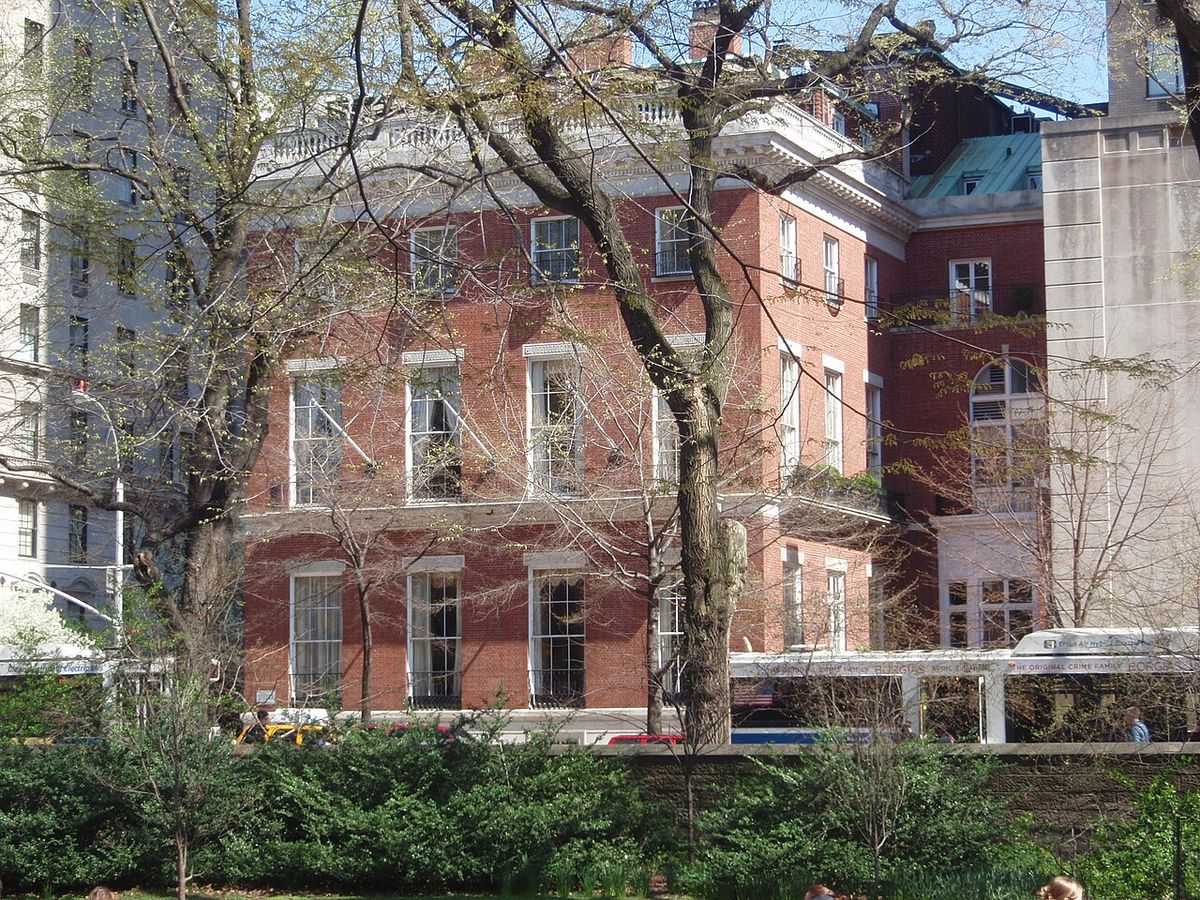
The red brick building, finished in 1915, is described in its landmark report as "one of the finest examples of the neo-Federal style in New York City." In 1923 the architect William Lawrence Bottomley wrote of the firm's work that it had "a small amount of ornament, very telling because well placed and brought into strong accent by contrast with simple planes and wide wall spaces"6. The Commission compared the club's massing to Samuel McIntire's Pingree House of 1805 in Salem, Massachusetts, and pointed to its limestone base, wrought iron balconies and a doorway with a broken segmental arch pediment6. A newspaper at the time called it "one of the most attractive of the newer buildings on Fifth Avenue," with "a simplicity combined with rich dignity" that was "expressive of the conservatism, if not the seclusiveness of the club"6.
The Knickerbocker in turn produced its own breakaway. In 1914, a group of members who were "fed up" with its "brass-buttoned flunkies, silver duck presses, and gold-plated table conversation" left to found the much smaller Coffee House, whose entire constitution Lejeune reported as "No Officers No Charge Accounts No Liveries No Tips No Set Speeches NO RULES"5. Lejeune also recalled finding himself alone in the Knickerbocker at two o'clock "because everybody has rushed back to Wall Street"5.
The Brook
On April 2, 1903, The New York Times reported that "some of the most prominent clubmen in this city have launched a new club, like no other in New York." Each founder belonged to the Union, Knickerbocker, Metropolitan "or other well-known clubs," and the organizers included William K. Vanderbilt Jr., Oliver H. P. Belmont, Louis Stuyvesant Chanler and Stanford White24.
The new club had two innovations: it had no by-laws, and it offered 24-hour service, so the front door would never be locked. A member told The Sun they needed no laws to "see that we behave ourselves like gentlemen. We think we can do that." The name came from Tennyson's poem "The Brook": "Men may come and men may go, / But I go on forever"24.
McKim, Mead & White remodeled a brownstone at 7 East 40th Street for the first clubhouse, with Stanford White in charge24. In May 1924 the club bought two houses at 111-113 East 54th Street, and Vincent Astor bought the old 40th Street property. William Adams Delano, a member, designed the new neo-Federal clubhouse, completed in 1925, with a rusticated base, engaged columns and upper floors of Flemish bond brick24.
The upper floors held bedrooms for out-of-town members and for local members whose town houses were closed for the summer24. In 1931 Alfred Tennyson, grandson and namesake of the poet, visited the club on a trip to New York, and the New York Evening Post noted that he had "recently presented the club with one of his grandfather's original manuscripts"24.
Lejeune, writing in 1992, found the Brook "a much grander club, physically and socially" than the Coffee House, "but no less friendly," and noted that members and guests sit at a single long table. He also noted that the name "is supposed to mean that the club is always open and the conversation flows on forever. Neither is strictly true, which may be just as well." The bar, "all polished wood," reminded him "a little of Cheers"5. He passed on a story about an old member who would rise silently and leave for a neighboring restaurant whenever someone he disliked sat down at the long table. "He's had a great many Brook Club soups," a fellow member said, "but he's never yet gotten to the demitasse"5.
Modern and Contemporary Member Clubs
CNBC counted more than a dozen new clubs that had opened or announced plans to open in Manhattan between 2020 and September 2023. Some were offshoots of hotel brands, like Aman. Others, like ZZ's Club and Casa Cipriani, grew out of restaurant groups. Many were expansions of existing clubs from other cities4. CNBC described the whole group as having "created safe spaces for today's privacy-minded, highly mobile wealthy"4.
ZZ's Club New York shows how far the restaurant model went. Major Food Group, the company behind Carbone, opened the first ZZ's Club in Miami's Design District in 2021, and the New York club at Hudson Yards in 202325. Designed by Ken Fulk, it greets members with Andy Warhol's portrait of Jack Nicklaus in the foyer and holds ZZ's Japanese restaurant, with sushi flown in daily from Tokyo, a Clam Bar, Leo's lounge, Carbone Privato and a Founders' Room reserved for founding members25. "Doing a membership club affords the opportunity to stretch our legs a bit. It's much more of an ecosystem than a traditional restaurant," chef Mario Carbone said25.
The three clubs below each took over a historic building.
Casa Cipriani
Casa Cipriani opened in the summer of 2021 in the Battery Maritime Building, a 1909 Beaux-Arts ferry terminal at 10 South Street, next to the Staten Island Ferry terminal26. Architectural Record described the building as "once the hub of an active waterfront, harboring ferries that shuttled Brooklyn commuters to and from an elevated train that fed into the building." It was designed by Walker & Morris, became a city landmark in 1967 and was listed on the National Register of Historic Places in 197627.
The building had been largely ignored since the 1930s, used for municipal offices and storage, a homeless shelter, and Army and Coast Guard launches to Governors Island27. There had been attempts to reimagine it in the 1980s and 1990s, including an unrealized plan by Diller Scofidio + Renfro. Its skin of stamped zinc and copper, rolled steel and cast iron, painted green and yellow with blue tile insets, had faded, and at the turn of the 21st century the city hired the preservation architects Jan Hird Pokorny Associates to stabilize and restore the facades and roof27. Several developers had gone bankrupt trying to reopen it before a partnership led by Cipriani USA took over the project in 201726. The city's Economic Development Corporation worked with developers Midtown Equities and Centaur Properties, the architects Marvel, the interior designer Thierry Despont and Cipriani, which Architectural Record described as a 90-year-old hotelier and restaurateur with experience in historic properties27. Radiant floor heating was laid under the slabs, and an upgraded sprinkler system meant the ornamental structural steel did not have to be hidden27.
The architects found the interior "still completely gutted," in the words of Marvel's Tim Fryatt. They showed that the original building had an open-air rooftop pavilion with a pergola and cupolas, which had been replaced in the 1950s by an office shed, and won approval to rebuild the cupolas and pergola and add a glass-walled fifth floor27. They also rebuilt a ceremonial steel stair from drawings of one removed years earlier27.
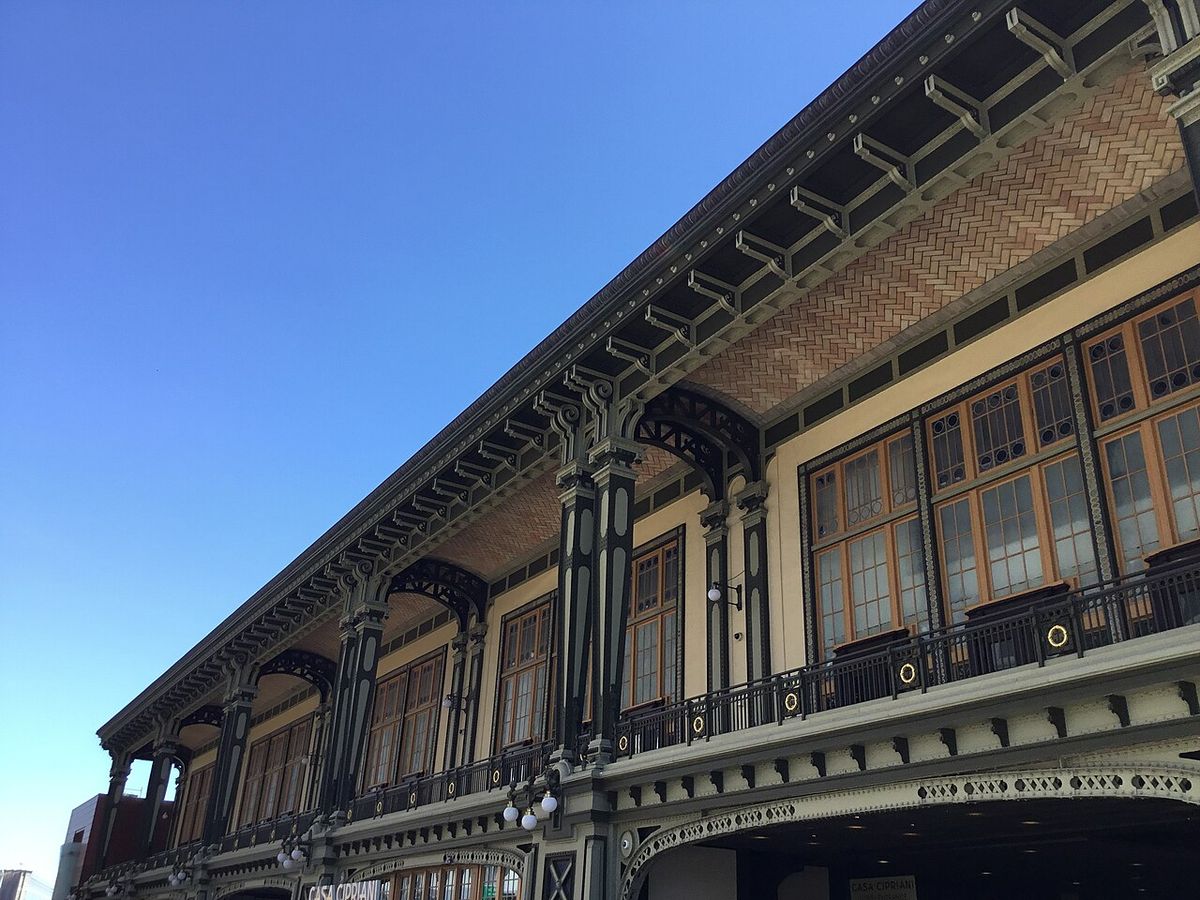
The building combines a hotel, restaurant, private club and event space26. The Great Hall, which once served waiting ferry passengers, is an event space under a 130-foot-long laylight recreated from an old photograph, and the porch faces Lower Manhattan under a vaulted ceiling lined with Guastavino tiles27,26. The designers fitted a 47-room hotel into the third floor and a new fourth floor, with lacquered mahogany that Architectural Record said lends "the aura of an elegant Art Deco ocean liner," and placed the club, with a lounge, a jazz café and terraces facing the Brooklyn Bridge and the Statue of Liberty, on the glass-walled fifth floor27.
The deal with the city has had its critics. In July 2024 The Broadsheet reported that Manhattan's Community Board 1 had asked the State Liquor Authority to reject the club's application to expand onto part of the fifth floor and all of the sixth. Board members said the operators had not delivered the public access promised in their lease with the city, and noted that the building is an interior landmark26. The same report said the club charged an initiation fee of $2,000 and annual dues of $3,90026.
The Ned NoMad
The Ned NoMad occupies the Johnston Building at 1170 Broadway, at the corner of 28th Street. Caroline H. Johnston, who lived in Stuttgart, assembled the site between 1897 and 1900 and hired Schickel & Ditmars, whose 1902 plans estimated a cost of $500,000. The limestone building, with a rounded corner rising to a cupola, looked more like a hotel than an office building28.
For decades it housed architects, builders, the Atlantic Terra Cotta Company, a corset trade journal and garment firms28. In 2012 the Sydell Group turned it into the NoMad hotel, with interiors by Jacques Garcia28.
The Ned NoMad opened there in 2022. It is the second Ned, after the London original of 2017, and the brand's first location outside the UK. Globetrender described it as "part of Soho House"29. Wallpaper reported that the New York practice Stonehill Taylor restored the communal spaces and members' areas while keeping the 1903 building's original features, and drew on the building's past as offices and on the neighborhood's closeness to Tin Pan Alley, the early home of American popular music30.
The hotel has 167 rooms over ten floors, open to the public, and a branch of the Italian restaurant Cecconi's. Ned's Club membership covers members-only spaces including the Dining Room, a rooftop terrace, Ned's Club Upstairs, the Library, which is a workspace by day and a bar by night, and the Magic Room event space29. Ned's Club Upstairs has direct views of the Empire State Building, and the building's original cupola is a private dining room29,30. When it opened, Globetrender reported room rates from $875 a night and a collection of more than 150 artworks29. Wallpaper noted a gym but no spa, a 1920s-style bar called Little Ned, and a duplex Johnston Terrace Suite with 1,100 square feet indoors and a 700-square-foot private terrace30.
NeueHouse
NeueHouse opened in Manhattan in May 2013 as a private coworking space with a membership committee that chose members from a waiting list31. Rockwell Group designed the Madison Square flagship across five floors of a 12-story early 20th-century building on East 25th Street, leaving its concrete slabs and clay tiles exposed32,31.
By 2014 it had about 800 members, and partner Oberon Sinclair told Fortune that "being nice" was the first rule of membership. "We don't want to be a tech ghetto. We don't want to be a fashion ghetto," she said31. Members had access to a canteen, a recording studio, a screening room and a program of film screenings, performances, science lectures and artist talks. Fortune summed it up as "a bit like members-only club Soho House, but with desks instead of swimming pools"31. Sinclair said half of the companies in the 50,000-square-foot space were run by women, and 40 percent of members held an EU passport. The company planned buildings in Los Angeles and London that year, and wanted 20 locations by 202031.
NeueHouse bills itself, in Architectural Record's words, as a "private work and social space for creators, innovators, and thought leaders." Besides desks and offices, the magazine noted, it offers hotel-style amenities, including a concierge, a restaurant and bar, and catering32. Rockwell Group also designed its Hollywood house in William Lescaze's 1938 CBS radio building on Sunset Boulevard32. After the Madison Square basement, which had held a conference room, a broadcast booth, a library and a 47-seat theater, flooded in spring 2021, Rockwell rebuilt it as a cinema level with a 90-seat theater, a bar and a lounge, completed in 2024. David Rockwell said his inspiration was 1960s Italian movie houses32.
Industry-Specific Private Member Clubs
Two of the best-known New York clubs were built around a profession or a pursuit: show business at the Friars, and exploration at the Explorers Club. Both were founded in 1904. Their stories went in opposite directions.
The Friars Club
The Friars Club was formed in 1904 by press agents and within a few years opened its membership to men in all parts of show business. Its rules required that at least two-thirds of members work in the entertainment industry, its newsletter was called the Epistle, and its officers had monastic titles such as abbot, dean and prior33.
To raise money for a clubhouse, the club began its annual Friars Frolics in 1911. Will Rogers, Victor Herbert and George M. Cohan worked on the entertainment, and Irving Berlin wrote "Alexander's Ragtime Band" for the event, according to Daytonian in Manhattan. The money went toward a permanent clubhouse, "the monastery," which opened in 1916 on West 48th Street34. During the Great Depression the club was evicted from its clubhouse for failing to pay a grocer's bill of just over $1,00034.
Its later home had a long history of its own. The house at 57 East 55th Street, between Madison and Park Avenues, was built in 1908-09 to designs by Taylor & Levi, a young firm of two Ecole des Beaux-Arts graduates, as an English Renaissance Revival town house33. The banker Martin Erdmann, a retired partner of Speyer & Company, bought it for $300,000 in 1909 and filled it with 18th-century English mezzotints, Chinese porcelain and antiques33. Erdmann had served on the governing committee of the New York Stock Exchange and was a trustee of Montefiore Hospital33. After his death in 1937, the American Institute of Physics made the house its headquarters in 194333. On October 29, 1945, Daytonian in Manhattan reports, the Association of Manhattan District Scientists, named for the Manhattan Project, issued a statement there calling for international control of the atomic bomb34.
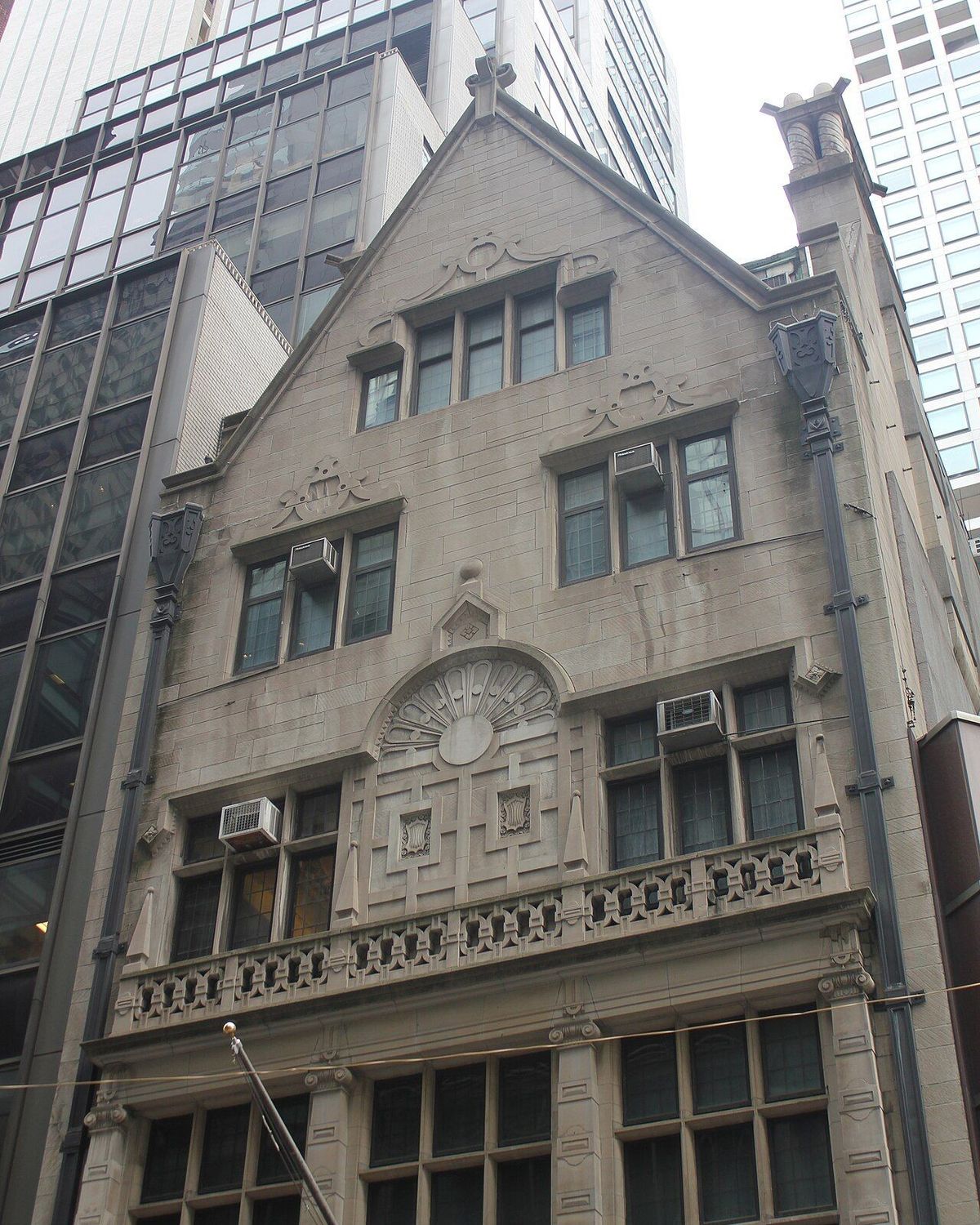
In 1957 the Friars bought the house. An article at the time said they chose it because its medieval facade suited their name33. Daytonian in Manhattan reports that at the opening that November, Abbot Joe E. Lewis led a procession from the old clubhouse and threw the keys into the street, a sign that the doors would always be open34. The Friars changed little of the facade, adding signage, lighting and awnings, but inside they installed air conditioning, a solarium, a rehearsal hall, a gymnasium and more dining rooms33. Rooms were named for members, including the Milton Berle Room and the Ed Sullivan Reading Room, and the Round the World Bar took its name from former abbot Mike Todd's film Around the World in Eighty Days34. Plaques at the entrance read "Friars Club" and "Jerry Lewis Monastery"33. The city renamed that block of East 55th Street "Friars Way," and designated the house a landmark in 201633.
The club became famous for its comedy roasts, and counted Johnny Carson, Irving Berlin, Jimmy Fallon and Carol Burnett among its members35. Daytonian in Manhattan reports that in 1983 Phyllis Diller attended a roast disguised as a man, the first woman to do so34. In June 1988, after the board changed the constitution to admit women, the club approved Liza Minnelli for regular membership and elected Lucille Ball, Carol Burnett, Barbra Streisand, Elizabeth Taylor and others to honorary membership36. The Friars added a locker room that year for their new women members33.
Its decline was long. According to The Real Deal, the club lost its tax-exempt status in 2010, and flooding and the pandemic ended regular hours in 202035. The club's registered trademark, "Prae Omnia Fraternitas Friars Club," was cancelled on October 22, 2021, because the registrant "did not file an acceptable declaration under Section 8"37. In May 2023 The Real Deal, citing The New York Times, reported that the lender was threatening to foreclose over a missed payment on a $13 million mortgage, that an inspection in March had found the building in disrepair, and that the club's dean, Arthur Aidala, said there had been several offers of $18 million that would let the club stay under different management35. Kairos alleged the club had defaulted on the loan, and a court later found Kairos was owed $17.1 million38. At a foreclosure auction in early December 2024, Kairos made a credit bid of $17.2 million and took ownership of the building. The New York Post reported the club had been shuttered for good39. When the sale was announced, The Real Deal noted that the five-story building was being marketed as vacant, and suggested uses including a private social club, a single-family mansion, a boutique hotel or a consulate38.
The Explorers Club
The Explorers Club's first written mention dates to April 1904, and it was incorporated in 1905. It has been at 46 East 70th Street since 196540. It describes itself as "a multidisciplinary society dedicated to the advancement of field research, scientific exploration and resource conservation"40.
Its headquarters was built as a mansion for Stephen Carlton Clark, an heir to the Singer Sewing Machine fortune. Frederick Junius Sterner filed the plans in 1911 and the six-story neo-Jacobean house was finished a year later, faced in brick laid in Flemish bond with large leaded windows and a Tudor-style entrance41. Clark filled it with paintings by Rembrandt, Renoir, Cézanne, van Gogh and others, and kept a room on the top floor devoted to Henri Matisse. He also paid for the building of the Baseball Hall of Fame in Cooperstown, which opened in 193941.
By the late 1930s Clark was chairman of the board of the Museum of Modern Art and a director of the Metropolitan Museum of Art. During the Depression the family opened the house several times so the public could see the Matisse collection for charity, starting in November 1932 with a $2 admission41. Clark died in the house in 1960, and the Explorers Club acquired it in 1965, carefully preserving the interiors41. Daytonian in Manhattan lists some of what hangs and stands there now: Albert Operti's painting Rescue at Camp Clay, bought by the club in 1946; Thor Heyerdahl's globe from the Kon-Tiki; polar bear mittens worn by Matthew Henson on the North Pole expedition; and a replica of a Yeti scalp41.
In 1913 the club took onto its rolls all members of the Arctic Club of America, and the first issue of The Explorers Journal was published in 192140. Its members over the decades have included Robert E. Peary, Charles Lindbergh, Lowell Thomas, Sir Edmund Hillary, Theodore Roosevelt, Neil Armstrong and Sally Ride41.
The club flag was first carried on an expedition to Venezuela in 1918, an early draft of what would become the Explorers Club Flag dates to 1925, and women were admitted as members in 1981, "following an impassioned letter from Carl Sagan"40. The club lists five "famous firsts" by its members, among them Robert Peary and Matthew Henson's 1909 North Pole expedition, Roald Amundsen's arrival at the South Pole on December 14, 1911, Tenzing Norgay and Edmund Hillary's 1953 ascent of Everest, Don Walsh and Jacques Piccard's 1960 descent to the deepest point of the ocean aboard the bathyscaphe Trieste, and the 1969 Apollo 11 landing, when Neil Armstrong and Buzz Aldrin walked on the Moon40.
Membership Requirements and Application Process
Each club sets its own rules, and most of the older clubs publish very little about them. What the record shows is that membership has always been defined by who a club was for, and by how existing members chose to share it.
Nomination, investigation and the blackball
The older clubs admitted new members by nomination and vote. At the Union Club in the early 20th century, names were presented by existing members, "stringent investigation was conducted and voting was held"7. A rejection needed no explanation. To spare a candidate public embarrassment, Daytonian in Manhattan reports, a hint of likely rejection would be passed to him so that he could withdraw7.
The blackball could be used as a weapon. The Metropolitan Club exists because two nominees were voted down at the Union Club, where younger governors were accused of "abusing their powers of blackballing prospective members"1. Daytonian in Manhattan notes that the rejections insulted the candidates and also the members who had sponsored them2.
Who a club is for
Many clubs define their members by a shared calling. The Friars required that at least two-thirds of members work in entertainment33. The Century admits authors, artists and amateurs "of any occupation" who make congenial companions in "a society of authors and artists"13. The Harvard Club began as a club for Harvard alumni, and in the 1972 debate on admitting women one longtime member argued that it had been founded "as a gathering place for holders of Harvard degrees"3,15.
For the Knickerbocker, the name itself signaled who belonged. Curbed noted that although admission "was not based on family lineage," the choice of a nickname for New York's founding families "reflected the idea that only a certain type of New Yorker need apply"3.
Committees and nominations at the new clubs
The new clubs kept some of the old methods. At Core, founding members each nominated one more person, and members still nominate new members; WWD reported in 2022 that new members are also "selected by an international committee"17,18. Enterprise told WWD that "affiliation has nothing to do with wealth, ethnicity, religion or politics"18. NeueHouse used a committee to pick members from its waiting list, and said it picked them by hand, instead of in the order they applied, to build a varied community31. Spring Place screened applicants before they paid its initiation fee23. Core said in 2023 that its larger building would let it take more members and that it was reviewing new applications4.
The law and business at the table
Local Law 63 changed the terms for large clubs. Since 1984, a club with more than 400 members that serves regular meals and regularly takes payments from nonmembers for business purposes is treated as a public accommodation under the city's anti-discrimination law9. The City Council said it did not intend "to dictate the manner in which certain private clubs conduct their activities or select their members," except to ensure that clubs "do not automatically exclude persons from consideration for membership" on account of invidious discrimination9.
Some clubs responded by tightening rules on business use. Lejeune quoted a Racquet Club letter telling members that "business discussions of any kind" must not take place in the building and that they should not be reimbursed for dues by any business5. Core took the opposite line. "Here people are very much encouraged to network, to have working meals," a founding member told The Times in 201112.
Women's admission came club by club. At the Harvard Club, a 1972 vote fell 18 votes short before the 1973 vote passed15,16. The Friars changed their constitution in 198836. The Explorers Club admitted women in 198140.
Benefits and Amenities of NYC Private Member Clubs
For the old clubs, the core benefits were a dining room, a bar, a library and company. Lejeune thought conversation was the point, and noted that at the Brook and the Coffee House members sit at a single long table so no one can be unsociable5. Many clubs also kept bedrooms for members; Curbed noted that guest rooms rented to out-of-town members helped keep clubs afloat after World War I, and that most city clubs still have them3. The Brook's upper floors held bedrooms for out-of-town members24.
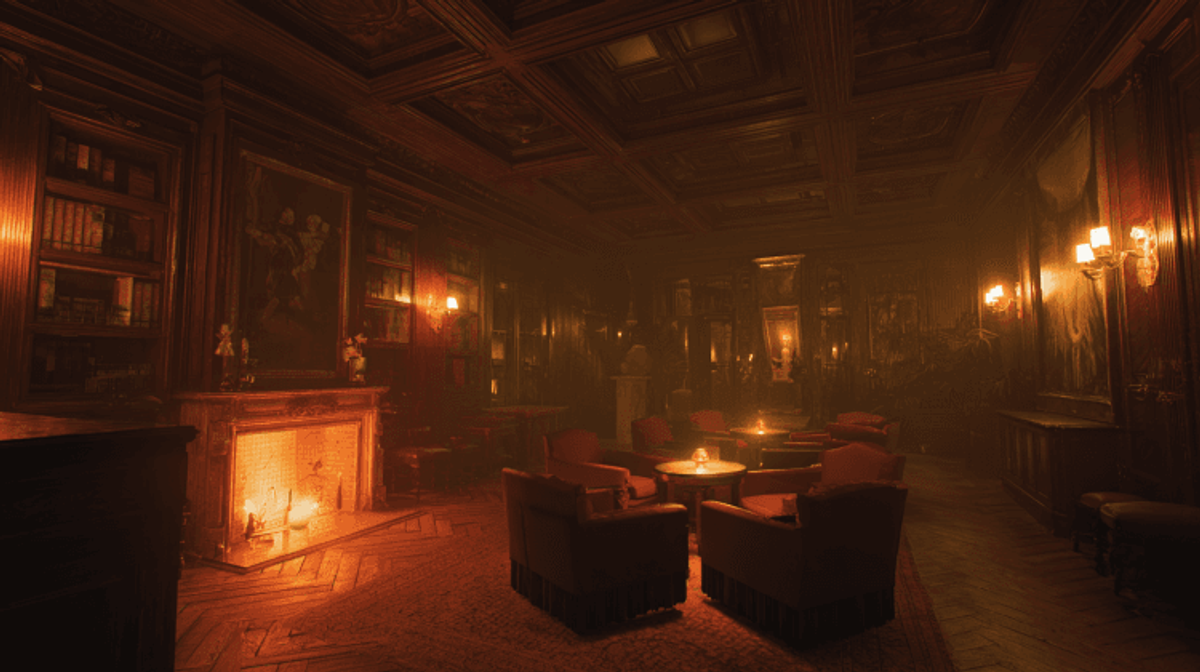
The grand clubs of the 1890s built for more. The Metropolitan Club's plan included a great hall of marble, a reading room, card rooms, a billiard room, a large library, a dining hall, private dining rooms, 22 suites for overnight guests, a bowling alley, wine rooms and a ladies' annex2. The Century's site committee wanted "a good and commodious picture gallery and a handsome library, besides, of course, the usual parlors and sleeping apartments"11. The Harvard Club added squash courts and, for a time, a swimming pool14. The Friars fitted their town house with a rehearsal hall, a gymnasium and a solarium33. The Explorers Club's rooms double as a museum of expeditions, with Heyerdahl's Kon-Tiki globe and Henson's polar bear mittens on display41.
The new clubs compete on facilities. CNBC described "an arms race of amenities," with clubs offering "dining spaces, celebrity chefs, wellness spas, gyms, bars, pools, nightclubs, plush hotel suites and high-tech board rooms"4. Core's suites were priced at around $1,500 a night when CNBC toured the building4. Casa Cipriani combines a 47-room hotel, a wellness center, a jazz café and a restaurant27.
Food became a selling point too. ZZ's Club in Hudson Yards, from Major Food Group, has ZZ's Japanese restaurant, Carbone Privato, a Clam Bar, Leo's lounge and a Founders' Room, and a "culinary concierge" team that will cook dishes members request25,4. "The Achilles heel of the private club business is always the food. The place is cool but the food is only ok," Major Food Group's Jeff Zalaznick told The Hollywood Reporter25.
Work space is the other big change. Zero Bond built its café and phone booths for members working remotely20. Spring Place offered boardrooms, editing suites and courier services21,23, the Ned NoMad's Library is a members' workspace by day29, and NeueHouse began as a coworking space31.
Programming fills the calendar. Core said it produced between 150 and 200 cultural events a year, and Entrepreneur reported in 2016 that the club had staged about 380 cultural programs, from gallery shows to lectures4,17. NeueHouse's program in 2014 included film screenings, performances, science lectures and artist talks, and its rebuilt cinema has hosted film previews and directors' talks31,32. The Century's own activities include "musical and dramatic performances, art exhibitions, and lectures"13.
Privacy is a benefit in itself. Vanity Fair noted that most private members clubs ban photographs inside10. The Core Club, The Times reported in 2011, built a secret entrance for members who travel with security12.
Cost and Pricing Structure
Club fees are set by each club, change over time, and are often not published. The figures below are the ones reported in the sources cited here, with the date of each report. None of the sources here gives current fees for the Union Club, the Knickerbocker, the Brook or the Metropolitan Club.
What the old clubs charged
In the early years of the 20th century, according to Daytonian in Manhattan, a new Union Club member paid a membership fee of $300 and annual dues of $757. The same clubs spent heavily on buildings: the Union Club paid $700,000 for its Fifth Avenue land in 1900, the Metropolitan's founders paid $420,000 for their site, and the Century's clubhouse cost $227,673 when it opened in 18917,1,11.
The first modern clubs
When The New York Times profiled Core in 2011, its 1,500 members paid a $50,000 initiation fee and $15,000 in annual fees12. Entrepreneur reported in 2016 that the initiation fee was $50,000 and annual dues were $17,00017. At NeueHouse in 2014, Fortune reported memberships from $200 a month for evening access to $1,600 a month for a private office31. When Core was being formed, its founding members each put up $100,00012. Spring Place, in 2016, charged a $2,000 initiation fee and $900 a month for local members, $600 for members under 30, or $3,600 for 36 days a year for travelers, according to The Daily Beast. The same article put Soho House's annual "every house" fee at $2,800 and said NeueHouse annual fees started at $1,80023.
The post-2020 clubs
Newer clubs spread across a wide range. Zero Bond was $1,000 to join and $3,000 a year in November 202120, and Casa Cipriani was $2,000 to join and $3,900 a year in July 202426. In November 2023 The Hollywood Reporter put ZZ's Club New York at a $20,000 initiation fee and $10,000 a year25.
At the top, CNBC reported in September 2023 that the Aman Club in Manhattan charged $200,000 for membership plus $15,000 a year in dues, and that Core's memberships ranged from $15,000 for an individual to $100,000 for a family, with dues of $15,000 to $18,0004. Enterprise described the model to CNBC plainly: "The annuity subscription-based business model in any industry is attractive"4.
Conclusion
New York's private clubs have a long habit of splitting and starting over. Morgan's friends were turned away at the Union Club, so he built the Metropolitan. The Knickerbocker thought the Union too lax, and the Coffee House thought the Knickerbocker too stuffy. The same pattern runs through Core, Zero Bond and Casa Cipriani, each started by someone who wanted a different kind of room.
The clubs also kept moving and building. The Union Club has had six homes since 1836, and the Century, the Metropolitan and the Knickerbocker commissioned buildings that are now designated landmarks7,8,1,6. The newest clubs took over a ferry terminal, a Beaux-Arts office building and a Brooks Brothers factory.
The Friars Club shows that a landmark and a famous name do not keep a club open by themselves. The Brook's founders took Tennyson's lines for a club whose door would never be locked, and the clubs that last are the ones that keep finding people who want to walk through it.
Sources
- 1
- 2
- 3
- 4
- 5
- 6
- 7
-
8
The Century Association, designation report, Jan 11, 1967
- 9
- 10
- 11
- 12
- 13
- 14
- 15
- 16
- 17
- 18
- 19
- 20
- 21
- 22
- 23
- 24
- 25
- 26
- 27
- 28
- 29
- 30
- 31
- 32
- 33
- 34
- 35
- 36
- 37
- 38
- 39
- 40
- 41

Cristina Arcega-Punzalan is a content writer at AMW®, covering topics in marketing, entertainment, and brand strategy.
Frequently Asked Questions
What is the oldest private club in New York City?
The Union Club, founded in 1836. A group of leading New Yorkers, including former mayor Philip Hone, invited 250 men to join a club modeled on the great clubs of London3.
Why was the Metropolitan Club founded?
The Union Club voted down John King, whom J. P. Morgan had nominated, and W. Seward Webb, a Vanderbilt son-in-law. Morgan, the Vanderbilts, the Goelets and others then met on February 20, 1891 to start a new club, and Morgan became its first president1.
How did The Brook get its name?
From Tennyson's poem "The Brook" and its lines "Men may come and men may go, / But I go on forever." The club, founded in 1903, offered 24-hour service, and its front door was never to be locked24.
Is the Friars Club still open?
Do private clubs in New York City have to admit women?
Under Local Law 63 of 1984, a club with more than 400 members that provides regular meal service and regularly receives payment from nonmembers for business purposes is not considered distinctly private, so the city's anti-discrimination law applies to it. The U.S. Supreme Court upheld the law in 19889.
Who can join the Century Association?
The club describes its members as authors, artists and "amateurs of letters and fine arts." Amateurs may be of any occupation if they are "sympathetic, stimulating, and congenial companions in a society of authors and artists"13.
Related Resources
Calculators
Case Studies
Pricing Guides
Related Articles

Networking Events Ideas That Work
In the bustling corridors of the business world, the impact of networking can hardly be overstated. For many, the journey to professional growth and business development begins at a networking event.
Conference Types: A Guide for Your Next Event
Planning a successful conference can be a complex process, especially when choosing the right format. With various types of conferences available, each serving unique objectives, understanding the
Global PR Agency - How They Grow Brands
In today's interconnected world, businesses increasingly recognize the importance of building and maintaining a strong global presence. As companies expand their reach across borders and continents, t