

IR Best Practices for Newly Public Companies: Lessons From Facebook's First Year

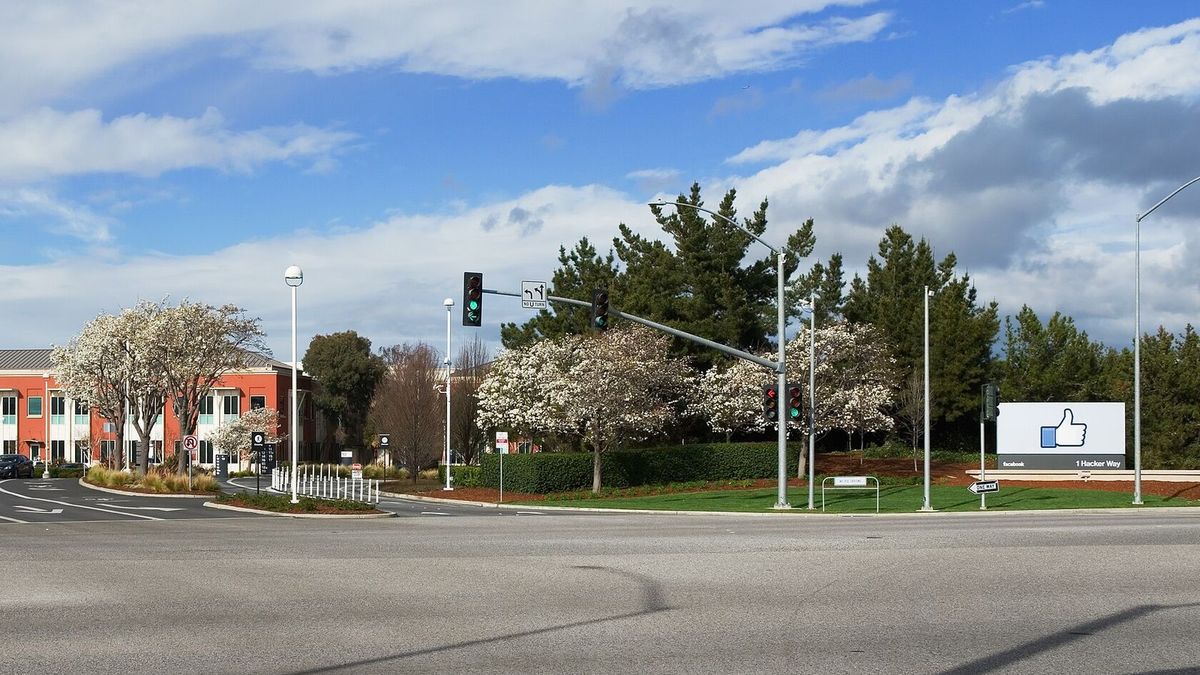
On the evening of May 7, 2012, the first day of Facebook's IPO roadshow, the company's chief financial officer told the lead banker at Morgan Stanley that his confidence in the revenue projections he had shared with analysts in April had weakened1. Mobile use was growing faster than the ads Facebook could show on it1. The next evening, on a call with lawyers from both firms, the banker proposed a fix: amend the registration statement, then let Facebook confirm the new picture with the syndicate analysts who had heard the old one1. The amendment was filed at 5:03 p.m. on May 91.

Quick Summary
A newly public company's first year sets how the market will read it. Facebook's shows the main tests. During its IPO roadshow, revised guidance reached analysts by phone, and Massachusetts later fined its lead underwriter $5 million over the episode2. Its first earnings report matched estimates and the stock still fell more than 10% after hours8. Its first lock-up release, 271 million shares on August 16, 2012, took the stock below $2010, and research on 1,948 lock-ups finds a three-day abnormal return of -1.5% and a lasting 40% rise in volume when lock-ups end11. Facebook responded by filing a dated calendar of every coming release and saying its CEO would not sell for at least 12 months12, and in October 2012 it disclosed for the first time that 14% of its advertising revenue came from mobile16. That figure reached about 41% by mid-201319, and the stock returned to its IPO price5. The lessons: put guidance changes in filings, explain one-time charges before they land, publish the lock-up calendar, make management available, and report the metric the market is worried about.
Then Facebook's treasurer picked up the phone. Working from a script the banker had drafted, the treasurer told each analyst, "you can decide what you want to do with your estimates, our long term conviction is unchanged, but in the near term we see these trends continuing, hence our being at the low end" of the April revenue range1. The banker later testified that he "was far down the hall so I wouldn't hear anything"1. Seven months later Massachusetts fined Morgan Stanley $5 million, and its top securities regulator, William Galvin, said retail investors had been given no similar information2.
Facebook's offering was 421,233,615 shares3, priced at $38. By September the stock had touched $17.554, and its first close above the offering price came on August 2, 20135. In between, the company reported its first quarters, worked through a calendar of lock-up expirations, put its chief executive on a public stage and began disclosing the number investors most wanted to see. This article follows that year to answer a practical question for any management team that has just rung the bell: what does investor relations need to get right in the first twelve months, and what does it look like when a company learns it in public?
"Far down the hall"
The episode on the roadshow is worth reading closely, because Facebook's first instinct was a good one. According to the Massachusetts findings as summarized by the CFA Institute, the CFO was concerned about how to give analysts permissible guidance, and accurate information on the roadshow, without appearing to disclose selectively1. He told Facebook's board that the amended filing would "help us to continue to deliver accurate messages at the road show meetings without someone claiming we are providing any selective disclosure to big accounts only"1. The amendment itself added a sentence to the risk factors: "we believe the increased usage of Facebook on mobile devices has contributed to the recent trend of our daily active users (DAUs) increasing more rapidly than the increase in the number of ads delivered"1.
The trouble was what came after the filing. The risk-factor sentence did not give a revenue number. The phone calls told analysts where in their range revenue was heading, and those analysts' firms then passed the revised figures to their institutional clients2. Massachusetts charged that a senior Morgan Stanley banker "rehearsed with Facebook's Treasurer and wrote the bulk of the script," and Galvin said the banker "did everything he could to ensure research analysts received new revenue numbers which they then provided to institutional investors"2. Morgan Stanley paid the fine without admitting or denying the allegations1.
There is a technical footnote that matters for newly public companies. Regulation FD, the SEC rule against selective disclosure, applies to public companies, and as the CFA Institute's review of the case points out, Facebook was still a private company when the calls were made1. From the first day of trading that changes. From then on the rule governs what the company says to analysts and investors, and the safest channel for anything new is the one Facebook had already used: a public filing that says the thing itself.
The first report card
Facebook reported its first quarter as a public company on July 26, 2012. Revenue was $1.18 billion, up 32% from a year earlier, and advertising brought in $992 million of it. Monthly active users reached 955 million, and 543 million of them used Facebook on mobile devices6. The company posted a net loss of $157 million7, largely because the IPO triggered $1.3 billion of share-based compensation and related payroll tax expense6. Excluding those charges it earned 12 cents a share, in line with Wall Street's expectations, and revenue slightly beat the $1.15 billion analysts had forecast8.
None of it helped the stock. Shares fell more than 10% after hours to around $24, nearly 40% below the offering price8. Some of the pressure had arrived the night before, when the game maker Zynga, "a source of 15% of Facebook's first quarter revenues," missed its forecasts and cut its outlook; Facebook fell more than 8% on the day8. Mark Zuckerberg "surprised some investors by showing up on the company's conference call with analysts" and opened by talking about mobile8.
One part of that report was handled well, and it is easy to miss. The $1.3 billion compensation charge came with a reminder that it had been flagged "in the company's initial public offering prospectus"6. Explaining it in the prospectus, and pointing back to that explanation in the release, meant the loss headline arrived with its reason attached. The report left open the question hanging over the stock: how Facebook would make money from the more than half of its users who reached it on mobile devices9.
The lock-up calendar
Like many IPOs, Facebook's came with lock-up agreements that kept insiders and early investors from selling for a period after the offering, typically 90 to 180 days10. Its prospectus laid out what CNNMoney called an "unusual staggered system"10: 271,123,815 shares held by selling stockholders other than Zuckerberg became eligible 91 days after the IPO, followed by further releases at 151 to 180 days, 181 days, 211 days and 366 days3.
The first release came on August 16, 2012. About 271 million shares became eligible, the stock hit an intraday low of $19.69 and closed down 6.3% at $19.87, and nearly 157 million shares changed hands10. CNNMoney noted that other newly public internet companies had been through the same thing: LinkedIn "slumped as much as 7% on its lockup expiration day," and Groupon "fell 10% to hit a new low"10.
The pattern is well documented. Laura Casares Field and Gordon Hanka studied 1,948 lock-up agreements and found "a permanent 40 percent increase in average trading volume, and a statistically prominent three-day abnormal return of −1.5 percent" when lock-ups expire, with larger effects at venture-backed companies, where venture capitalists "sell more aggressively than executives and other shareholders"11. The event is predictable. What a company controls is how clearly the market can see it coming.
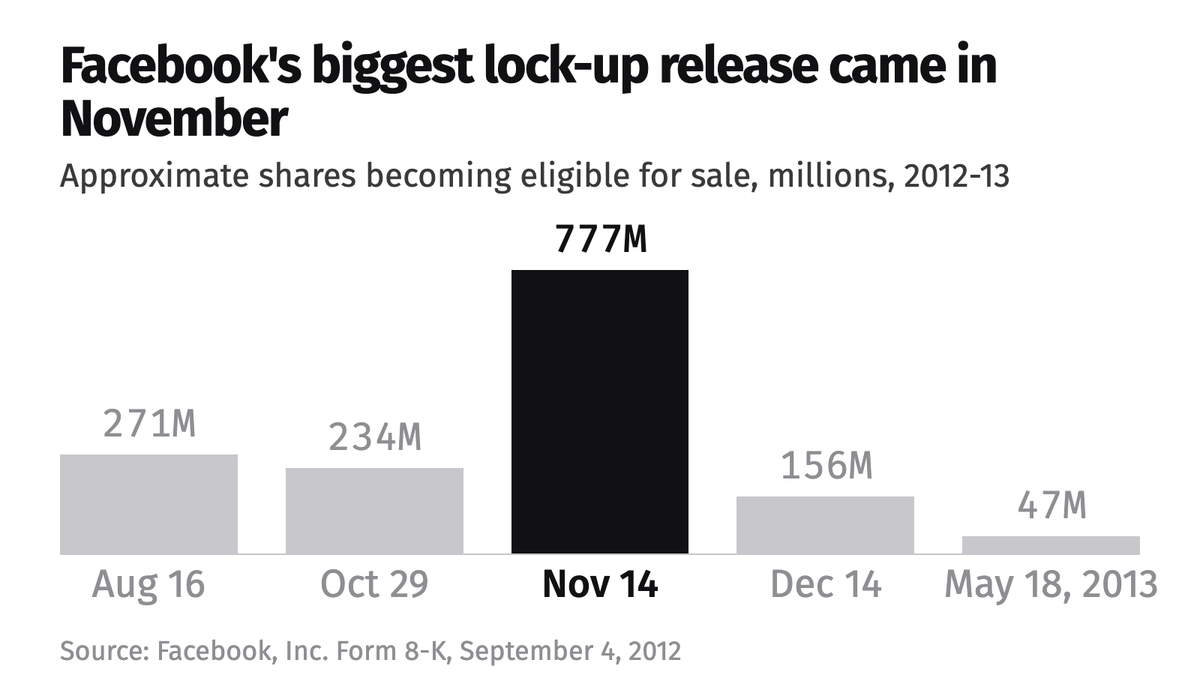
On September 4, 2012, Facebook filed an 8-K that did exactly that. It put dates on every remaining release: about 124 million shares underlying employees' restricted stock units plus about 55 million shares and 55 million options held by employees on October 29, about 749 million outstanding shares and 28 million shares underlying other restricted stock units on November 14, about 156 million held by the IPO's selling stockholders on December 14, and about 47 million held by Mail.ru Group and DST Global on May 18, 201312. It explained how it would settle employees' restricted stock units, estimated the resulting tax obligation at about $1.9 billion at the late-August share price, and said it intended to pay it "by using our existing cash and borrowings from our credit facilities" and did not expect to sell new shares to fund it12.
The same filing addressed the biggest holder. Zuckerberg, it said, "has informed us that he has no intention to conduct any sale transactions in our securities for at least 12 months," and directors Marc Andreessen and Donald Graham had "no present intention to sell" shares beyond sales to cover taxes12. The employee release, delayed two days when Hurricane Sandy closed the markets, still moved the stock: on October 31 shares opened 5.02% lower as 234 million employee shares became eligible13. This time the number had been public for eight weeks.
"Well, you know it doesn't help"
For almost four months after the IPO, Facebook's chief executive said little in public. On September 11, 2012, he sat down with Michael Arrington at TechCrunch Disrupt in San Francisco for his first on-stage interview since the offering, with the shares at $19.4314. CNNMoney's reporter watched him take "a visibly deep breath" as he walked on9.
Arrington started with the stock, and Zuckerberg took the question head-on. "Well, the performance of the stock has obviously been disappointing," he said, adding, "It's not the first up and down that we ever had"14. Asked whether it had hurt morale, he said, "Well, you know it doesn't help," and argued it was "a great time for people to join and also for people to stay and double down"14. He also admitted a strategic error: betting on HTML5 for mobile was "one of the biggest, if not the biggest, strategic mistakes we've ever made"9.
The interview did two things a newly public CEO's first appearance should do. It named the problem, and it pointed to the measure that would decide it. Zuckerberg said Facebook's performance over the next three to five years would depend on its ability to move its audience to mobile and make money there14, and he argued that "those mobile ads perform better than the regular column ads on desktops"9. Looking back a year later, TechCrunch's Romain Dillet wrote that at first "Zuckerberg didn't communicate a lot," and that "Building a public company demands a lot of communication efforts"15.
Fourteen percent
On October 23, 2012, Facebook released its third-quarter results with a line that had not appeared before: the company "generated 14% of advertising revenue during the third quarter from mobile"16. Revenue was $1.26 billion, up 32%, and mobile monthly users had grown 61% to 604 million16. The next day the shares posted their biggest daily gain since the IPO, up as much as 24% at the high, and had rebounded 38% from the all-time low of $17.55 set the month before4.
The number was small, and from then on investors could track it. Facebook kept reporting it every quarter: about 23% of advertising revenue in the fourth quarter of 201217, about 30% in the first quarter of 201318 and about 41% in the second quarter of 201319. When the second-quarter figure came out in July 2013, the stock followed. On August 2, 2013 it closed at $38.05, its first close above the IPO price and its highest since the $38.23 it finished at on its first day of trading5.
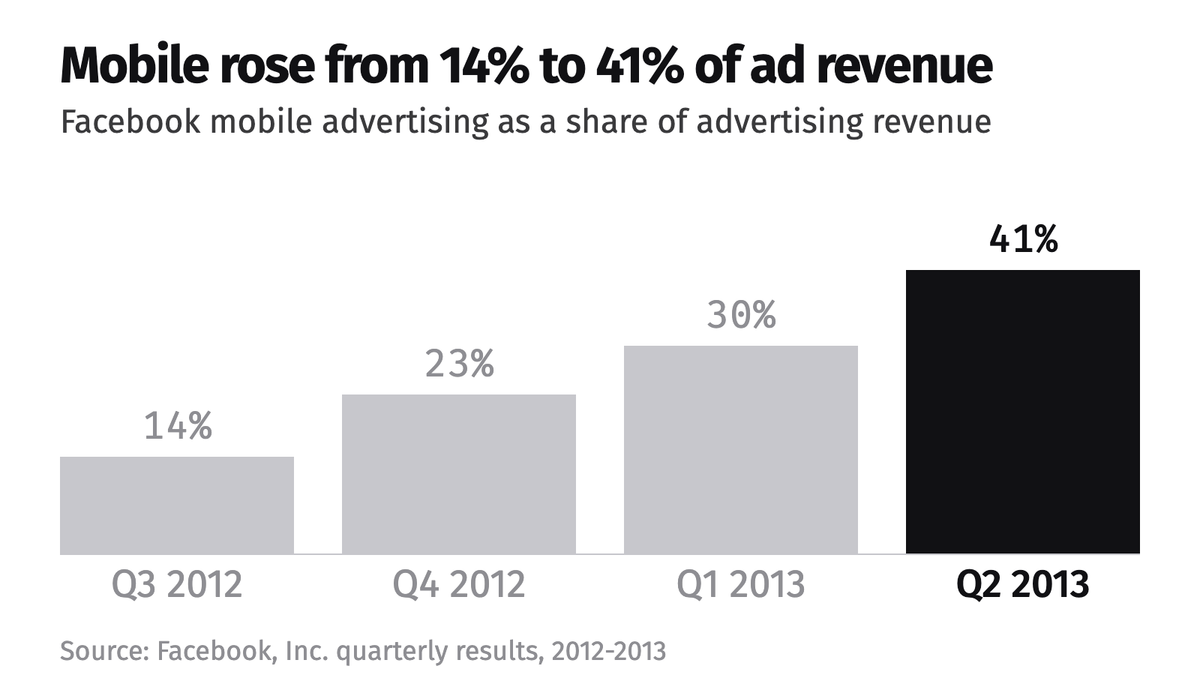
When Facebook reported that second quarter, Zuckerberg put the change in plain terms: "The work we've done to make mobile the best Facebook experience is showing good results and provides us with a solid foundation for the future"19. By then 819 million people used Facebook on mobile each month19, and the question that had hung over the IPO was being answered one quarter at a time.
The lesson here is specific. Facebook knew which question the market was asking, because its chief executive had named it on stage14. The answer was a percentage the company could calculate, and once it was in the release, each quarter became a public progress report on the market's biggest doubt.
What investor relations could not fix
An honest account has to include the limits. Facebook's recovery came from the business: the Associated Press attributed the return to $38 to results showing the company "is selling more ads on smartphones and tablet computers," after "worries about Facebook's growth prospects triggered a sell-off"5. Disclosure let investors watch the recovery happen. The recovery itself came from the business.
Some of the damage was also out of the company's hands. Trading problems hurt the debut5, and the lock-up pressure that CNNMoney described as "only the first in a series of lockup expirations," with 1.8 billion shares that could come to market over nine months, was built into the capital structure before the first share traded10. And the roadshow calls, the episode that led to the Massachusetts fine, happened on the roadshow, before Facebook had spent a single day as a public company, with a banker drafting the script1.
Rules that start on day one
Several obligations begin when a company lists, and a first-year IR plan should put each on the calendar.
The research quiet period. FINRA Rule 2241 requires underwriters' firms to observe a period "of a minimum of 10 days following the date of an initial public offering" during which they must not publish research on the issuer and their analysts must not make public appearances about it20.
Regulation FD. As the Facebook calls show, a newly public company's guidance belongs in public channels2. Any change in outlook goes in a press release or 8-K before it is discussed with an analyst or investor.
Insider trading plans. Lock-up expirations are the first chance for many officers and directors to sell3. In December 2022 the SEC amended Rule 10b5-1 to add cooling-off periods before trading can begin under a plan, to require directors and officers to certify they are not aware of material nonpublic information when adopting one, and to require quarterly disclosure of directors' and officers' plans21. Looking back, TechCrunch wrote that "Zuckerberg had to reassure investors by saying that he wouldn't cash in on his shares"15.
The lessons for a company's first year
File it, then say it. Facebook's amended registration statement was the right channel. The phone calls that followed were the part regulators pursued2. A guidance change belongs in a filing or release before any conversation about it.
Explain the first report before it arrives. The IPO compensation charge produced a $157 million loss headline, and the prospectus had already explained it6. Walk investors through one-time charges and accounting effects in advance so the first quarter is judged on the business.
Publish the lock-up calendar with dates and share counts. Lock-up expirations are predictable market events11. Facebook's September 2012 filing named every date, the approximate shares, the plan for the RSU tax bill and its CEO's intentions12.
Put management in front of the market early. Zuckerberg's first interview named the stock's performance as "disappointing," admitted a mistake and pointed to the metric that mattered9. Silence in the months after an IPO leaves the story to the stock price.
Report the metric the market is worried about. Facebook's first mobile disclosure was 14%16. Reporting it every quarter turned the market's biggest doubt into a trend investors could follow, up to about 41% by mid-201319.
Keep the long view in the room. Facebook's first year ran from $38 to $17.55 and back to $38.055. The habits it built in that year, clear filings, a visible chief executive and a tracked metric, were in place when the stock came back, less than three months after the last scheduled lock-up release12.
Sources
- 1
- 2
- 3
- 4
- 5
- 6
- 7
- 8
- 9
- 10
- 11
- 12
- 13
- 14
- 15
- 16
- 17
- 18
- 19
- 20
- 21

The AMW® Editorial Team covers marketing, business growth and the software AMW builds for businesses.
Frequently Asked Questions
When does Regulation FD start to apply to a newly public company?
Regulation FD applies to public companies, so it governs a company's conversations with analysts and investors from its first day of trading. Before the IPO, as in Facebook's 2012 roadshow, other rules apply.
What happens to a stock when IPO lock-ups expire?
A study of 1,948 lock-up agreements by Laura Casares Field and Gordon Hanka found a three-day abnormal return of -1.5% and a lasting 40% increase in average trading volume at expiration, with larger effects at venture-backed companies. Facebook's first release of about 271 million shares in August 2012 took its stock below $20.
How long is the research quiet period after an IPO?
FINRA Rule 2241 requires underwriting firms to observe a quiet period of at least 10 days after an initial public offering, during which they do not publish research on the company and their analysts do not make public appearances about it.
What should a company disclose about lock-up expirations?
Facebook's September 4, 2012 Form 8-K is a useful model: it listed each coming release date with approximate share counts, explained how employee stock units would be settled and how the tax obligation would be funded, and stated that its CEO had no intention to sell for at least 12 months.
Related Resources
Calculators
Case Studies
Pricing Guides
Related Articles
AI Answers Cite Your Press Before Your Founder Bio
AI models draw mostly on earned media, not brand-owned pages. Learn why press coverage shapes how your founder is described and how to write one press release line that carries over.
The Story of Polaroid: Edwin Land and the Instant Photo
A child's question in Santa Fe in 1943 became the SX-70, the Giant Polaroid and one of America's most admired brands. Then came Kodak, the phone and a factory set for demolition.

Nano Banana 2.1 Review: Spelling Right, Details Slip
We gave Google's Nano Banana 2.1 a bakery chalkboard sign and a candle product shot. It spelled every price correctly, then slipped on smaller details worth checking.